DbcultAccessing Vault...
Cult Review
Senior Film Conservator
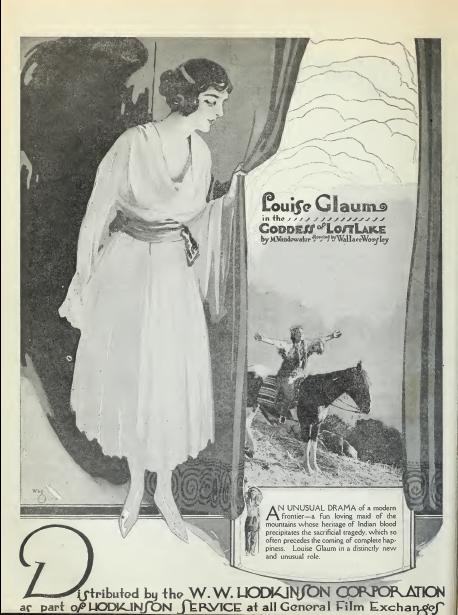
The year 1918 was a transformative epoch for the nascent celluloid industry, and The Goddess of Lost Lake stands as a testament to the era's fascination with the 'passing' narrative and the dichotomy between the civilizing East and the primordial West. Directed with a keen eye for atmospheric tension, the film serves as a vehicle for Louise Glaum, an actress who famously navigated the 'vamp' archetype but here pivots toward a role of profound psychological layering. Unlike the tragic inevitability found in Anna Karenina, Glaum’s Mary Thorne is a woman of agency, even when that agency is expressed through the dangerous artifice of cultural masquerade.
The premise is deceptively simple: Mary, a quarter-breed Native American with a college degree, returns to her father's mountain cabin. The script by M. Van de Water and Jack Cunningham immediately establishes a tension between Mary’s refinement and her environment. This isn't the typical 'backwoods' story; it is a sophisticated interrogation of how society perceives ethnicity and class. When Mark Hamilton (Monte Blue) and Chester Martin enter the frame, they aren't just hunters; they are proxies for two different facets of the male psyche. Mark represents the idealized, transformative power of love, while Chester embodies the dark, colonizing impulse of possession.
One of the most compelling sequences involves Mary’s decision to don traditional indigenous clothing. This isn't merely a prank; it is a litmus test. By performing a 'full-blooded' identity, she exposes the prejudices of her guests. Chester’s immediate shift toward contempt—coupled with a terrifying sexual attraction—mirrors the problematic tropes often explored in films like The Little Gypsy. Here, the 'other' is viewed as fair game, a commodity to be taken rather than a person to be courted.
The cinematography during these scenes utilizes the natural shadows of the mountain cabin to emphasize Mary’s vulnerability and her power. Glaum’s performance is electric; she moves with a fluidity that suggests a deep connection to the land, yet her eyes betray the calculated intelligence of a woman who has mastered the social graces of the urban elite. It is a performance of subversion. When Chester eventually attacks her, the film moves from a social drama into a visceral thriller. The rescue by Mark is not just a heroic beat; it is the moment the veil is lifted. The 'modern décor' of Mary’s room—a stark contrast to the rustic exterior—serves as a visual revelation of her 'civilized' status, a trope that, while dated, provides a fascinating look at the era's obsession with markers of class.
While the romantic plot unfolds, a parallel tragedy brews at the titular Lost Lake. Marshall Thorne’s obsession with gold serves as the narrative’s grounding in the American mythos of the frontier. The lake itself is depicted as a liminal space, a site of both potential wealth and certain doom. The Indian guard who kills Marshall represents the lingering, often violent, friction between the encroaching prospectors and the original stewards of the land. This subplot elevates the film beyond a simple romance, touching on the themes of inheritance and the heavy price of colonial expansion, much like the sweeping historical arcs seen in Attila, the Scourge of God.
The resolution, where Mary inherits the gold and marries Mark, might seem like a tidy Hollywood ending, but it carries a bittersweet resonance. Her father is dead, and her 'refined' life is bought with the blood of the mountain. The film doesn't shy away from the cost of this transition. The synthesis of her two worlds—the mountain cabin and the college degree—is finally achieved through the wealth of the lake, suggesting that in the American landscape, capital is the ultimate equalizer.
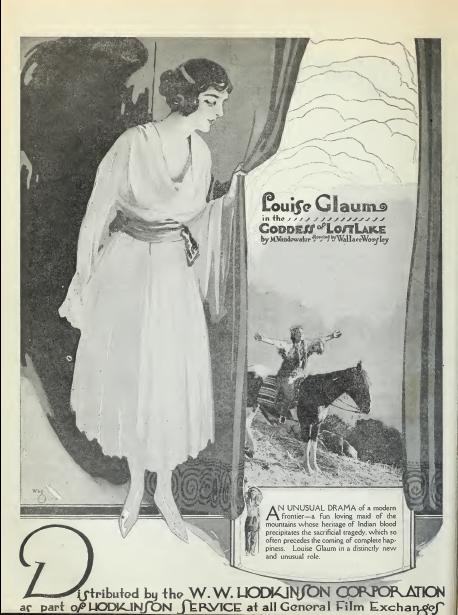
From a technical standpoint, the film excels in its use of location. The rugged terrain isn't just a backdrop; it’s a character. The contrast between the open, airy mountain vistas and the claustrophobic, dark interior of the cabin creates a visual language of entrapment and freedom. The editing, handled with a rhythmic precision unusual for 1918, builds tension during the attack and rescue scenes with a proficiency that rivals the work in The Pursuing Shadow.
Louise Glaum’s wardrobe also deserves a critical mention. The shift from her 'Indian' attire to the modern, sophisticated gowns she wears in the latter half of the film serves as a visual shorthand for her character’s journey. It’s a metamorphosis that is handled with more subtlety than the broad strokes often seen in Salome or other contemporary vamping spectacles. Glaum proves she is a formidable dramatic actress, capable of carrying a film that demands both physical grit and emotional vulnerability.
Ultimately, The Goddess of Lost Lake is a film about the performance of the self. Mary Thorne is a woman caught between two worlds, belonging to both and neither. Her prank is a defense mechanism, a way to navigate a world that wants to categorize her as either a 'savage' or a 'lady.' By the end of the film, she has rejected these binary choices, emerging as a figure of immense wealth and personal autonomy. While it shares some DNA with the social climbing narratives of Marrying Money, the stakes here are significantly higher, rooted in survival and ancestral legacy.
For modern viewers, the film offers a window into the complexities of early 20th-century racial politics. While it inevitably falls into some period-specific traps, its central character remains remarkably progressive. Mary Thorne is not a victim of her heritage, but a master of it. She uses the perceptions of others to reveal their true nature, making her one of the most intellectually engaging heroines of the silent era. The film’s blend of melodrama, social commentary, and frontier grit ensures its place as a significant, if underappreciated, work of cinematic art.
In the pantheon of 1918 releases, it may not have the swashbuckling scale of The Three Musketeers, but it possesses an interiority that is rare for the time. It invites the audience to look beneath the surface, to question the 'goddess' and see the woman. As the credits roll, we are left with the image of a woman who has conquered the mountain, the lake, and the men who sought to define her. It is a triumph of spirit and a masterclass in silent storytelling that rewards close viewing and thoughtful reflection.
IMDb 7.8
1931
Community
Log in to comment.