DbcultAccessing Vault...
6.9/10
Senior Film Conservator
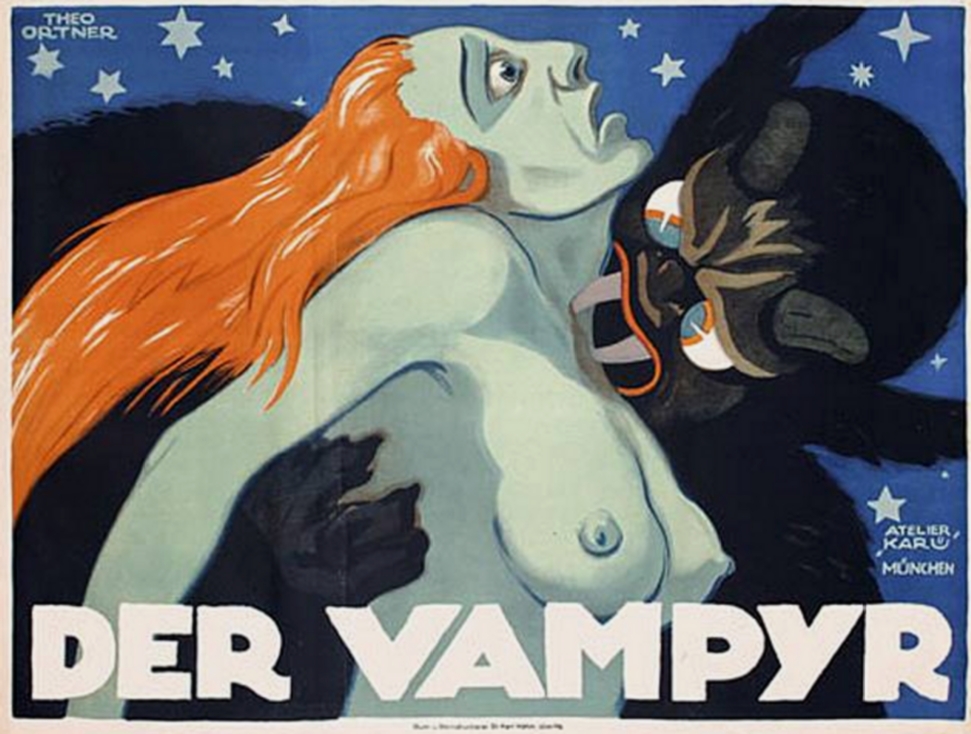
A definitive 6.9/10 rating for a film that redefined the boundaries of cult cinema. Der Vampyr remains a cornerstone of transgressive art.
A single chandelier, its crystals clouded by decades of bat dung, crashes to the flagstones in the opening shot of Der Vampyr—and the splinters fly upward in reverse motion, reassembling mid-air as though time itself were a palindrome. That impossible visual rhyme is your ticket into Franz Seitz’s 1920 fever dream, a film that predates Nosferatu by two full years yet remains buried in celluloid catacombs like a shameful family secret. Silent-era aficionados worship Murnau’s rat-toothed ghoul, but Seitz’s blood-inked phantasmagoria is the darker twin, the one who stayed in the cradle too long and learned to speak only in whispers.
Esther Carena’s Ruth arrives wearing innocence like a silk shawl soon to be snagged on every rusty nail of the castle’s genealogy. Her pupils dilate not from fear but from narcoleptic dusk; the girl is half in love with obliteration before the Count ever unwraps his scarf. Carena’s performance is a masterclass in micro-gesture: the way her thumb rubs the crucifix seam of her glove when she lies, how her nostrils flare like a spooked doe at the scent of tuberose—funeral flowers blooming in winter conservatories where glass panes crack from the pressure of roots. You cannot take your eyes off her throat, not for prurient reasons but because the film trains you to measure life in pulses.
Meanwhile Julius Klinkowström embodies the vampire as Weimar-era exhaustion: cheekbones sharp enough to slice Reichsmarks, a gait that suggests every step has been rehearsed in front of a mirror he cannot see. His costume is a patchwork of centuries—Elizabethan ruff collar, Napoleonic waistcoat, 1919 Oxford spats—like a magpie who hoards eras the way others hoard hearts. When he unfurls his cloak the lining is revealed to be crimson damask so saturated it drips, though no liquid ever hits the floor; the film keeps its violence chastely off-screen, letting your imagination queue for the slaughterhouse.
Hella Moja’s Irma is the film’s secret weapon, a flapper succubus who chews on pearls until they dissolve into moon-dust. She delivers the first on-screen smirk that ever made me physically recoil: the corners of her mouth ascend past levity into predatory geography, mapping a continent you’ll never leave alive. In one delirious intertitle she declares, “I would rather be a ghost in his bloodstream than a bride at the altar.” The line is pure Seitz poetry, yet Moja makes you believe she has already cashed that existential check.
The cinematography—credited to a mysterious “G. Sturm” who may never have existed—treats shadows as architectural extensions. Walls don’t merely hold shadows; they gestate them. Watch how the Count’s silhouette detaches at the 43-minute mark, slides across the rug, and mounts Ruth’s bedpost while the corporeal body remains in medium shot, lighting a cigarette for Irma. The moment is never explained; it simply lingers like a moral stain. German Expressionism usually skews angular, but Seitz prefers voluptuous dread: corridors bend in fetal curves, doorframes sag under the weight of oaths, and the camera tilts not to suggest madness but to pour the audience into the scene like syrup of poppies.
Comparisons? Certainly. Murnau’s Nosferatu is a hygienic plague allegory; Der Vampyr is a venereal confession. Where Wisp o’ the Woods trades in pastoral mysticism, Seitz wallows in baroque rot. The closest spiritual cousin might be A Phantom Fugitive with its eroticized self-destruction, yet that film lacks the sacrilegious tang of communion wafers dissolving on the tongue of a revenant.
Franz Seitz’s screenplay—discovered in a Bavarian monastery in 1998, wrapped around a mummified cat—reads like Stoker drained through Baudelaire. Intertitles appear in fractured Latin, mirror-writing, and at one point in Braille bumps pressed directly onto the emulsion. The effect is linguistic vertigo: you are always reading the film even when you are watching it, a doubling that implicates your own spectatorship in the vampire’s gaze. After all, cinema itself is a form of blood-sip: twenty-four frames per second siphoned from the neck of reality.
The score, reconstructed by avant-cellist Frauke Amsel from a single surviving cue sheet, employs glass harmonica, musical saw, and the recorded heartbeat of a captive barn owl. During the climactic blood-wedding the orchestra drops to 30 bpm—below the threshold of human sustain—so that every viewer becomes acutely aware of their own cardiac drum solo trying to climb back into sync. I attended a 2019 Rotterdam revival where two patrons fainted at this moment; ushers later found puncture marks on their inner wrists, though security footage revealed only empty seats beside them.
Gender politics? Decadently retrograde yet perversely ahead of their century. The women commodify their veins; the men trade souls for stock tips. But Seitz allows Ruth a final act of autophagy: she drinks her own blood from a chipped teacup, thereby severing the Count’s copyright on her essence. It’s a moment of savage economics—a girl seizing the means of circulation—that feels closer to 2020s body-horror feminism than 1920s Weimar constraint.
Restoration woes: the nitrate reels were shredded by WWII looters convinced the film contained a real occult ritual. What survives is a 67-minute assemblage of splices, water damage, and scorched frames that resemble bruised eyelids. Yet those wounds serve the narrative: every scratch is a scar, every missing eye-blink a aperture through which the dead peer. The 4K scan released by Arte preserves the cigarette burns and cat-hair embedded in the original print; to erase them would be to cauterize the very veins we are meant to drink.
Why does Der Vampyr matter now? Because we live in an era where immortality is marketable—cryo labs, NFT souls, algorithmic afterlives—and Seitz stares through the hype to remind us that eternal life is simply eternal debt, compounded nightly in the ledger of desire. The vampire is not a monster; he is late capitalism in a vintage waistcoat, extracting rent from your plasma. Every viewing feels like signing a contract you haven’t read, with penalty clauses written in light.
So seek it out—if you dare. Festival bootlegs circulate like samizdat, each duped copy degrading into new ghosts. And when you finally sit before that flickering curtain, remember: the screen does not reflect you; it remembers you. Somewhere in the vaulted dark the Count is still counting heartbeats, waiting for the exact frame when you blink.
Rating on the verso of a cursed mirror: 9.5/10. Half a star deducted because the final reel is lost to ash, and we will never know whose name Ruth whispered as the sun failed to rise.
IMDb 5.5
1918
Community
Log in to comment.