DbcultAccessing Vault...
Cult Review
Senior Film Conservator
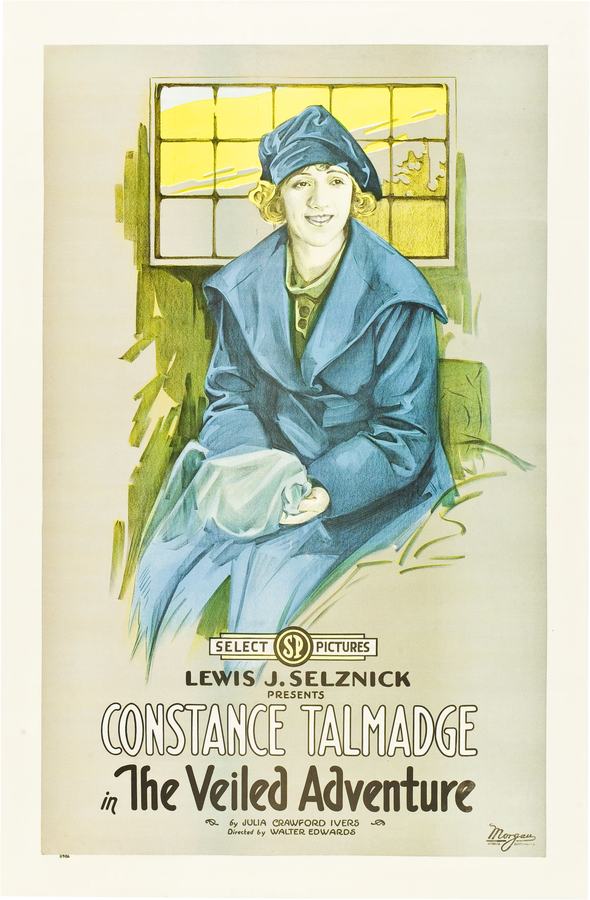
In the bustling tapestry of early 20th-century cinema, where narratives often gravitated towards stark melodramas or broad physical comedies, a film like 'The Veiled Adventure' emerges as a refreshing and surprisingly nuanced gem. Directed by the prolific and often overlooked Julia Crawford Ivers, this silent era production, featuring the effervescent Constance Talmadge, offers more than just a fleeting glimpse into the social mores of its time; it presents a spirited interrogation of personal ethics, societal expectations, and the liberating power of a well-placed nudge towards delightful transgression. It’s a narrative that, even a century later, retains a compelling charm, inviting us to ponder the rigidity of self-imposed rules versus the fluid unpredictability of life’s grand adventure.
The central conceit of 'The Veiled Adventure' is deceptively simple, yet it blossoms into a truly engaging character study. We are introduced to a young man, whose name, while perhaps less significant than his unwavering moral compass, defines his existence. He is a steadfast proponent of absolute rectitude, a man who views even the slightest deviation from honesty or convention as an egregious offense. His pronouncements against stealing from one's family, uttering even a 'tiny' lie, or the romantic impulsivity of elopement are not mere preferences; they are foundational tenets, unshakeable pillars of his personal philosophy. One might almost imagine him as a character straight out of a morality play, perhaps a distant, more rigid cousin to the earnest protagonist in The Adopted Son, albeit with a comedic rather than dramatic destiny.
It is into this meticulously constructed world of ethical purity that Geraldine Barker, brought to vibrant life by the inimitable Constance Talmadge, descends like a delightful whirlwind. Geraldine is not just a character; she is a force of nature, a charming provocateur whose very existence seems designed to challenge complacency. When she encounters our protagonist and becomes aware of his unyielding moral code, a spark ignites within her. It’s not malice, nor cruelty, but rather a playful, almost philosophical, desire to test the boundaries of his convictions. Her mission, self-appointed and executed with an infectious zest, is to make him commit each of his cardinal sins—stealing, lying, and eloping—not just casually, but in a manner that is both grand and unforgettable. The plot's genius lies in this audacious premise, transforming a simple wager into a journey of self-discovery, or perhaps, self-unmasking.
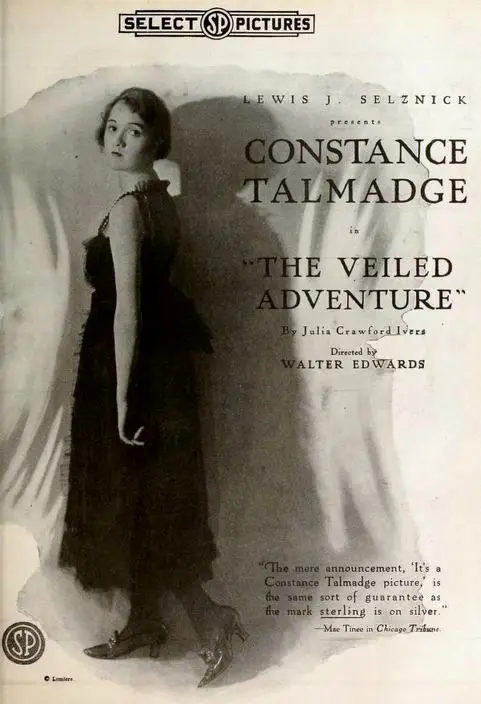
Constance Talmadge, a star whose charisma often overshadowed her sisters' more dramatic turns, shines with an unparalleled brilliance as Geraldine. Her performance is a masterclass in silent film acting, conveying a spectrum of emotions and intentions with subtle gestures, expressive eyes, and a captivating physicality. Geraldine is not a villain; she is an architect of experience, a benevolent trickster who believes that true character is forged not in rigid adherence to rules, but in the adventurous navigation of life's complexities. Talmadge imbues Geraldine with an irresistible blend of wit, charm, and a touch of impishness that makes her quest utterly compelling. She’s far from the damsel in distress, or even the purely romantic lead; she’s a catalyst, a modern woman forging her own path, much like the independent spirits we might glimpse in films such as Miss Crusoe or The Little School Ma'am, though with a distinctly mischievous bent.
The dynamic between Geraldine and the unnamed young man, played with commendable earnestness by A. Edward Sutherland (or possibly Harrison Ford, depending on historical records and extant prints, though Sutherland is often credited for this specific role), is the engine of the film. His initial resistance, born of deeply ingrained principles, slowly but surely begins to crack under the relentless, yet charming, pressure applied by Geraldine. This isn’t a battle of wills so much as a gentle erosion of self-imposed limitations. The film expertly avoids making the young man seem foolish or easily manipulated; instead, it portrays his transformation as a natural, almost inevitable, progression once exposed to a different philosophy of life. His journey is one from theoretical purity to practical, if slightly unorthodox, experience, reminiscent in its forced re-evaluation of values, though in a much lighter vein, to the central premise of Brewster's Millions, where a protagonist must shed ingrained habits for a specific goal.
Beyond the delightful comedic antics, 'The Veiled Adventure' delves into surprisingly resonant themes. At its core, it’s a commentary on the nature of morality itself. Is virtue truly virtuous if it has never been tested? Does an unblemished record truly reflect strength of character, or merely a lack of exposure to temptation? Geraldine's actions, while seemingly designed to corrupt, can also be viewed as a form of liberation. She forces the young man to confront the arbitrary nature of some rules and to understand that life often demands flexibility, compromise, and a willingness to step outside one's comfort zone. The 'grand style' of his transgressions underscores the film’s playful tone; these aren't criminal acts, but rather elaborately staged scenarios designed to push boundaries without causing genuine harm. It's a far cry from the weighty moral dilemmas presented in something like Der Stellvertreter, instead opting for a lighter, more humanist approach to ethical exploration.
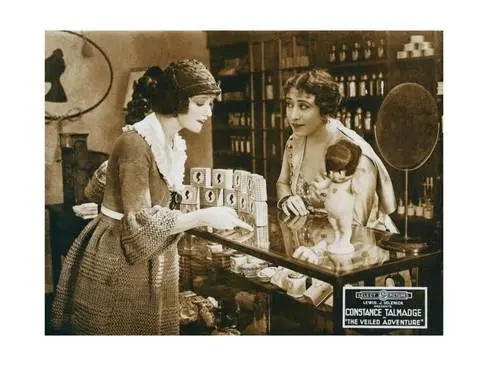
The film also subtly critiques societal expectations, particularly for young men. The pressure to uphold an unyielding moral standard, to be seen as unimpeachable, can be as stifling as any overt repression. Geraldine, in her own way, acts as a subversive force against this pressure, suggesting that a little rebellion, a little spontaneity, can be vital for personal growth. This theme of breaking free from constraints, albeit in a different context, can be seen in other silent films depicting characters striving for personal agency, though 'The Veiled Adventure' tackles it with a distinct comedic lens.
It is imperative to acknowledge the significant contribution of Julia Crawford Ivers, both as the writer and director of 'The Veiled Adventure'. Ivers was a pioneering figure in early Hollywood, a woman who not only penned screenplays but also confidently took the reins as director, a rarity for her era. Her directorial touch in this film is evident in its brisk pacing, clear narrative progression, and the nuanced performances she elicits from her cast. She understands the rhythm of comedic timing in the silent medium, allowing scenes to breathe while maintaining a forward momentum that keeps the audience engaged. Her writing, too, is sharp and insightful, crafting a story that is both entertaining and thought-provoking without ever becoming preachy. The script avoids the pitfalls of heavy-handed moralizing, opting instead for a light touch that allows the characters' journeys to speak for themselves. This deft handling of potentially weighty themes with a light touch is a hallmark of her skill, setting her apart from many contemporaries who often leaned into broader, less subtle narratives.
The ensemble cast, featuring talents such as Vera Doria, Rosita Marstini, Eugenia Tuttle, T.D. Crittenden, Margaret Loomis, Vera Sisson, and Stanhope Wheatcroft, each contribute to the film’s rich texture. While Talmadge and Sutherland carry the primary narrative weight, the supporting players flesh out the world with believable reactions and additional comedic beats. The film's success is a testament to Ivers' ability to orchestrate these performances, creating a cohesive and engaging cinematic experience. The subtle interplay between characters, often communicated through expressions and body language, is a joy to behold, showcasing the artistry of silent acting at its best.
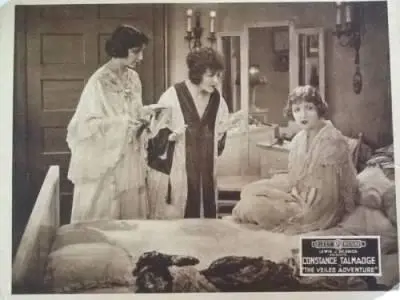
Visually, 'The Veiled Adventure' benefits from competent cinematography that effectively captures the period's aesthetic and supports the narrative. The sets and costumes, while not overly extravagant, are appropriate for the film's milieu, helping to immerse the viewer in the world of early 20th-century society. The use of intertitles is judicious, providing necessary dialogue and exposition without interrupting the flow of the visual storytelling. Indeed, the film’s visual language is articulate, allowing the actors’ expressions and actions to convey much of the story’s emotional and comedic content. This economy of storytelling, where every frame and gesture counts, is a hallmark of well-crafted silent cinema, distinguishing it from lesser productions that relied heavily on expository intertitles.
In an era where films often explored the darker side of human nature, as seen in the grim realism of The Life Story of John Lee, or The Man They Could Not Hang, or the social commentary in The Hoodlum, 'The Veiled Adventure' offers a refreshing counterpoint. It champions a lighter touch, proving that profound questions about character and ethics can be explored through the lens of romantic comedy. It's a film that leaves you with a smile, a thoughtful chuckle, and perhaps a gentle prod to examine your own unyielding principles. Its enduring appeal lies in this delicate balance: it entertains thoroughly while subtly inviting introspection. The film's narrative structure, where a character is systematically nudged out of their comfort zone, can be loosely compared to the transformational journey in Happiness of Three Women, where circumstances force characters to redefine their lives and values, though 'The Veiled Adventure' executes this with a more direct, playful intent.
Ultimately, 'The Veiled Adventure' stands as a testament to the sophistication of silent cinema and the enduring power of well-told stories. It’s a delightful reminder that even the most steadfast individuals can benefit from a little adventure, a little chaos, and a little push towards embracing the messiness of life. Geraldine Barker isn't just a character who challenges a man's morals; she's an embodiment of the spirit of freedom and playful rebellion, encouraging us all to occasionally step outside the lines drawn by convention and self-imposed rules. Her 'grand style' of moral transgression is not about advocating for dishonesty or theft, but for an openness to experience, a willingness to adapt, and perhaps, a recognition that true virtue lies not in rigid adherence, but in compassionate understanding and a nuanced engagement with the world.
The film’s legacy, while perhaps not as widely celebrated as some of its contemporaries, is significant. It showcases the talents of Julia Crawford Ivers as a director and writer who understood how to craft engaging narratives with thematic depth. It further solidifies Constance Talmadge's status as a formidable comedic talent, capable of carrying a film with her sheer vivacity and charm. For enthusiasts of silent film, or anyone with an appreciation for clever storytelling and character-driven comedy, 'The Veiled Adventure' is an absolute must-see. It’s a film that, like its protagonist, eventually sheds its veil of perceived simplicity to reveal a rich, engaging, and utterly charming exploration of what it truly means to live a principled, yet adventurous, life. It encourages us to find the joy in the unexpected, the wisdom in the unconventional, and the thrill in a journey that might just make us 'steal from family,' 'tell a tiny lie,' and 'elope' – all in grand, glorious style, of course. For those seeking a film that both entertains and subtly provokes thought, this Julia Crawford Ivers masterpiece remains a compelling watch, offering a timeless narrative about the beautiful absurdity of human nature and the delightful journey towards self-acceptance and liberation.
IMDb —
1923
Community
Log in to comment.