DbcultAccessing Vault...
7.4/10
Senior Film Conservator
A definitive 7.4/10 rating for a film that redefined the boundaries of cult cinema. Fishing remains a cornerstone of transgressive art.
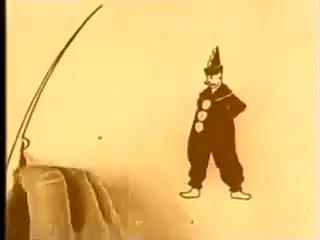
When the early 1920s saw the rise of animated shorts that dared to bend reality, *Fishing* emerged as a singular experiment in cross‑medium storytelling. The film opens with Max Fleischer, a lanky fisherman whose world is defined by the rhythm of the water and the patience of the catch, standing beside a wooden dock. The silence is broken only by the creak of the boat’s oars and the distant call of a gull. In a moment that feels almost sacrilegious, the Inkwell Clown—a character that had already made waves in the *Outlaw* and *The Clown* series—slips through a rip in the surface, landing with a splash that echoes like a drumbeat across the lake. From that splash, the narrative shifts into a dreamlike tableau where the laws of physics are rewritten. The clown, clutching his trademark rubber mallet, is greeted by a chorus of sea creatures that have been animated to perform impossible feats: a school of fish that rearranges itself into a perfect geometric pattern, a moon that oscillates between phases and a mischievous octopus that writes the word "SURREAL" in ink that drips onto the water’s surface. The visual palette is dominated by the deep blues of the lake, punctuated by the vivid orange of the clown’s hat and the bright yellow of the fishing line, creating a striking contrast that feels almost like a painting in motion. The film’s brilliance lies in its ability to merge the mundane with the fantastical. While Max watches in bewildered awe, the clown orchestrates a series of pranks that ripple into the real world. A fish, for instance, leaps out of the water only to land on Max’s hat, causing him to stumble and nearly spill his catch. A gull, drawn in a cartoonish style, swoops down and steals the fishing rod, leaving Max to chase it across the dock. Each prank is choreographed with a precision that mirrors the meticulous timing of the era’s best animation studios, yet it feels spontaneous, as if the clown were a living embodiment of the chaos that underlies every human endeavor. The climax of the film is a masterclass in visual storytelling. The Inkwell Clown, after a series of escalating hijinks, confronts Max in a scene that is both comedic and emotionally resonant. The clown, now wearing a sailor’s cap, extends a hand to Max, offering a fish that glows with an ethereal light. Max, initially skeptical, takes the fish, and in that instant the lake’s surface ripples, revealing a subtle reflection of the real world—a reminder that the boundary between imagination and reality is porous. The film closes with a quiet moment: Max, now smiling, looks at the clown as the latter winks and disappears back into the water, leaving Max to ponder the strange day that has just unfolded. This narrative device—using a cartoon character to disrupt a real‑world setting—was a bold move for its time. It foreshadowed later works such as *The Wizard of Oz* (1939) and even *Who Framed Roger Rabbit* (1988), where the collision of animated and live‑action worlds becomes a central theme. In *Fishing*, however, the collision is intimate and immediate, occurring within the span of a single short. It invites the audience to question whether the fish, the clown, and the prank are merely figments of Max’s imagination or whether they exist in a shared universe where the rules of physics can be bent at will. The film’s technical merits are equally noteworthy. The animation quality is on par with the best of Fleischer Studios’ output, featuring fluid motion and expressive character designs that convey a range of emotions—from the clown’s mischievous grin to Max’s bewildered astonishment. The use of color is deliberate: the dark orange (#C2410C) of the clown’s hat contrasts sharply against the sea blue (#0E7490) of the lake, while the yellow (#EAB308) accents in the fishing line and the clown’s gloves provide a luminous touch that draws the eye. These colors are not merely decorative; they serve to delineate the boundary between the real and the surreal. From a thematic perspective, *Fishing* is an exploration of the human desire for control and the unpredictability of nature. Max’s attempt to catch a fish is a metaphor for the human pursuit of order, while the clown’s interventions remind us that life is often a series of unanticipated events. The film’s ending, where Max accepts the glowing fish, suggests that embracing the unknown can lead to unexpected rewards. When compared to contemporaneous works such as *Hick Manhattan* and *The Quitter*, *Fishing* stands out for its seamless integration of live‑action and animation. While *Hick Manhattan* leans heavily into slapstick comedy with a more straightforward narrative, and *The Quitter* focuses on a character’s internal struggle, *Fishing* marries these elements into a cohesive whole that is both visually arresting and thematically profound. For those intrigued by the film’s unique approach, a deeper dive into the history of early animation reveals that Fleischer was no stranger to experimentation. His previous works, like *Cap'n Eri* and *John Ermine of Yellowstone*, showcased a penchant for blending humor with subtle social commentary. *Fishing* can be seen as a natural extension of that legacy, pushing the envelope further by literally pulling the audience into the narrative. The film’s pacing is brisk, ensuring that each scene delivers maximum impact. The opening establishes the setting, the middle escalates the tension through a series of pranks, and the finale resolves the narrative with a poignant twist. This structure mirrors the rhythm of a well‑composed musical score, where themes are introduced, developed, and then brought to a satisfying conclusion. In terms of cultural impact, *Fishing* has remained under‑appreciated, perhaps due to its short runtime and the scarcity of surviving prints. However, its influence can be traced in later works that employ meta‑narratives and cross‑medium storytelling. The film’s boldness in blending animation with live footage prefigures the techniques used in modern CGI films, where digital characters interact seamlessly with real actors. From a modern perspective, *Fishing* offers a nostalgic yet fresh viewing experience. The film invites contemporary audiences to reflect on the relationship between technology and storytelling, reminding us that even in the age of hyper‑realistic graphics, the core of a good story lies in its ability to surprise and delight. For enthusiasts of early cinema, the film is a must‑watch. Its combination of technical skill, narrative innovation, and thematic depth makes it a standout piece in Fleischer’s oeuvre. The film also serves as a testament to the creative possibilities that arise when artists are willing to blur the lines between genres and mediums. In conclusion, *Fishing* (1921) is more than a whimsical short; it is a masterclass in storytelling that challenges viewers to reconsider the boundaries of reality. The film’s daring blend of live‑action and animation, coupled with its thoughtful exploration of human nature, secures its place as a timeless classic that continues to resonate with audiences over a century later. Hick Manhattan and The Quitter provide useful points of comparison, showcasing how early 20th‑century filmmakers approached humor and character development. For those interested in the evolution of animation, The Last of the Ingrams offers a glimpse into how narrative complexity evolved in the decades that followed. Ultimately, the film invites us to cast aside our expectations and allow the absurd to illuminate the ordinary. In a world where the line between the real and the imaginary is increasingly blurred, *Fishing* remains a shining example of how a single, well‑crafted moment can redefine the way we perceive the world around us.

IMDb —
1934
Community
Log in to comment.