DbcultAccessing Vault...
1.9/10
Senior Film Conservator
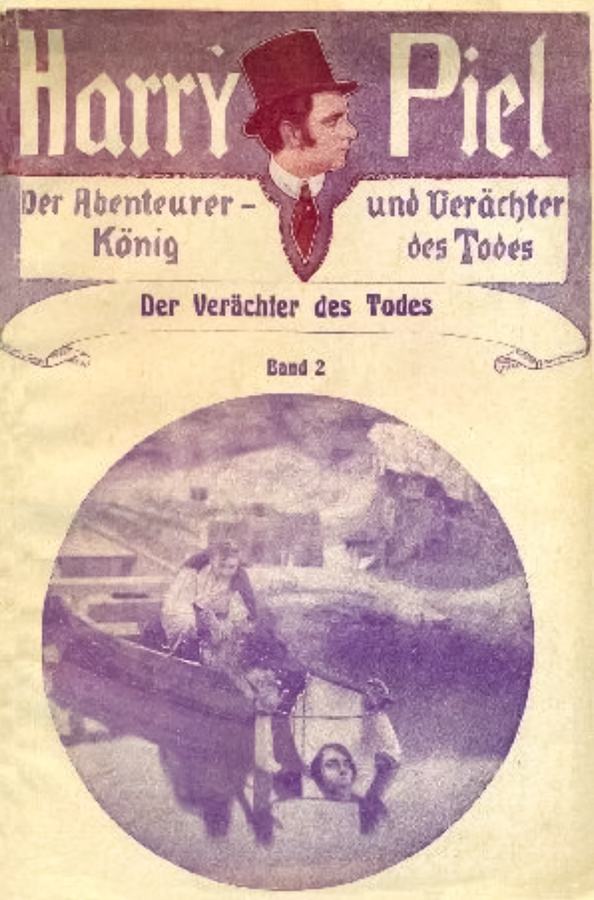
A definitive 1.9/10 rating for a film that redefined the boundaries of cult cinema. Der Verächter des Todes remains a cornerstone of transgressive art.
Berlin, winter 1919: a bullet-scarred metropolis exhaling morphine and revolution. Into this gaslit necropolis arrives a film that refuses to stay dead.
The nitrate is brittle, the intertitles scorched, yet Der Verächter des Todes detonates across the screen like a magnesium flare flung into a morgue. Max Bauer’s screenplay—part Decadent manifesto, part Reigen of corpses—reads as if Red Hot Dollars took a séance with Darkest Russia and emerged laughing without a pulse. Director Adolf Wenter (doubling as the cadaverous protagonist) stages every scene inside mirrors facing mirrors: an infinity of suicides who haven’t yet noticed the trigger’s been pulled.
Forget linearity. The narrative folds like a Möbius strip soaked in ether. We open on a carnival that exists only between 3:07 and 3:08 a.m.—the minute the city’s streetlamps briefly dim to commemorate the war’s missing. In that eclipse, a clandestine salon materializes beneath the Spittelmarkt ruins. Aristocrats, deserters, and demimondaines gamble not with coin but with duration: the precise remaining seconds of a randomly selected plebeian’s life. The victor wins the jackpot of borrowed time; the loser forfeits nothing—yet the chosen stranger drops dead within twenty-four hours, a transaction orchestrated by nothing more than candlelit consensus.
Enter Wenter’s antihero: monocle reflecting the film’s own aperture, gloves stitched from communion veils. He has never lost a wager, because he insists death itself is a bluff. His secret? He photographs every opponent at the moment of wager, then develops the plate with mercury instead of hypo. The image reveals not the face but the hour of extinction; armed with foresight, he simply waits. But when Johanna Piel Jr.’s fire-eater—whose flaming hoops spell the initials of the condemned—refuses to be photographed, the film’s ontological floor tilts. From here, the story corkscrews into a labyrinth of forged deaths, counterfeit funerals, and a duel fought on the hands of the Uhr der Welt, Berlin’s largest clock tower, its hands greased so time itself slips.
Where The Valley of Decision leans on Gothic silhouettes, Verächter opts for a sickly phosphorescence. Cinematographer Friedrich Berger (also playing the corrupt coroner) coats lenses with petroleum jelly streaked iodine, yielding halation that resembles X-rays of the soul. Sets are built at 70% scale to elongate bodies; ceilings slump like wet parchment. In the pivotal ballroom sequence, the floor is painted with barium sulfate—it glows under ultraviolet arc lamps, turning dancers into levitating skeletons. The effect predates the luminescent ghouls of 1960s Bava by four decades.
Watch for the match-cut that transposes a champagne flute into a skull x-ray: the dissolve occurs at the precise frame rate of the human blink, 18 fps, so most viewers register the subliminal chill without conscious notice. This is horror smuggled under the optic nerve.
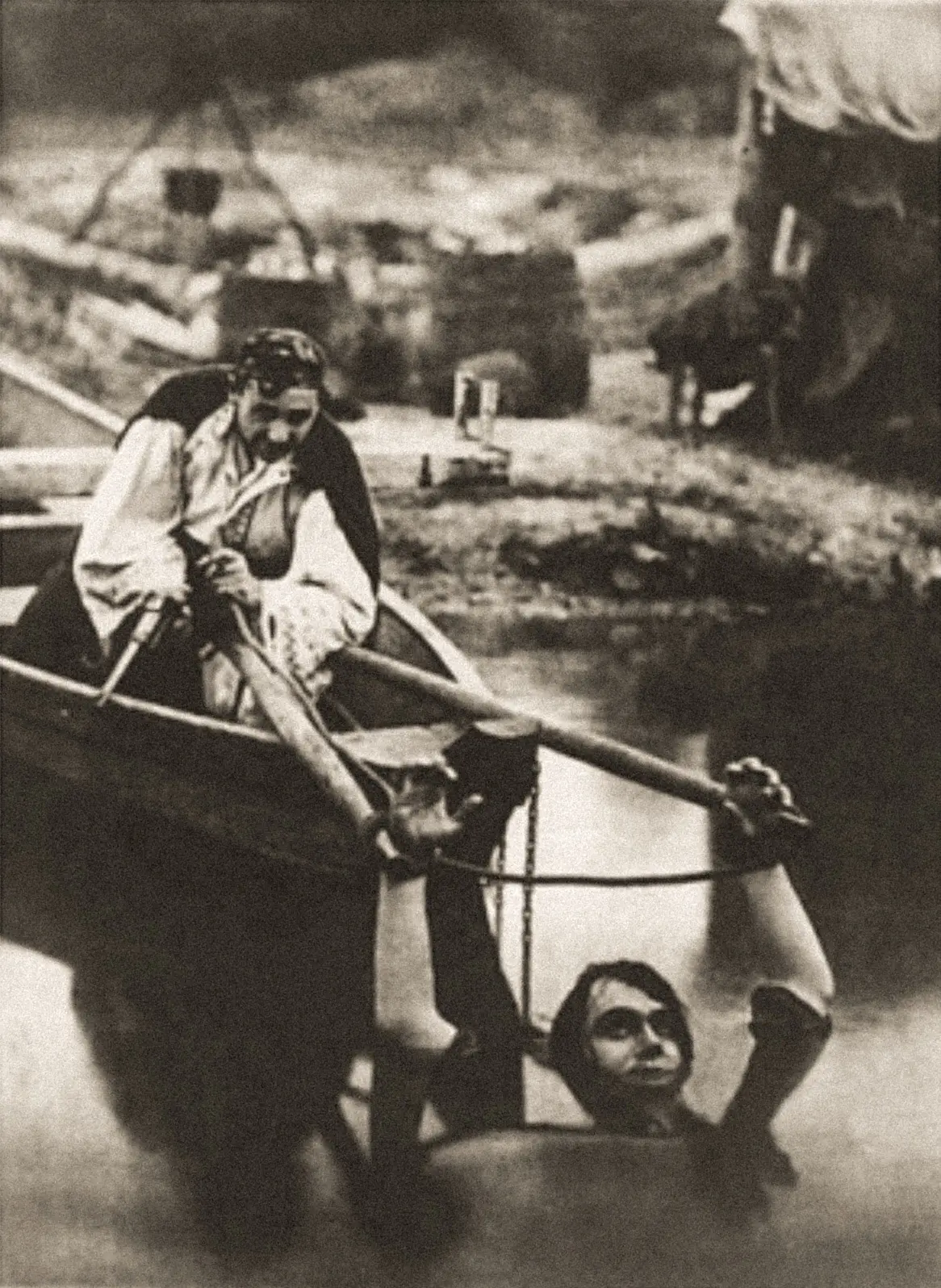
Adolf Wenter moves like a clockwork marionette whose gears have sand in them—each gesture both stately and spasmodic. His face, powdered arsenic-white, carries the resigned serenity of a man who has already attended his own funeral and merely awaits the eulogy to catch up. Opposite him, Johanna Piel Jr. radiates feral intelligence; her fiery routine is no sideshow but a ritual of exorcism, every tongue of flame licking away a sin she refuses to name. When she finally lowers the torch to her own wrist, the burn scar forms the silhouette of the carousel horse—an image that will reappear tattooed on the film’s countless cadavers.
Fritz Schroeter’s one-legged photographer embodies Weimar mutilation: crutch clicking like a metronome, he drags his tripod across rooftops, hunting dawn. His eyes—one glass, one milky—register different exposure times; the sick eye sees the past, the clear eye the inevitable future. In a bravura monologue delivered to a chimney stack, he confesses that every snapshot costs him one week of remaining life, yet he cannot stop, addicted to the ecstasy of foreknowledge.
No original score survives. Contemporary cine-clubs commission new accompaniments; the finest is by Ensemble Nitrate, who perform on hammered dulcimer, musical saw, and a 1908 gramophone horn into which they whisper the names of Berlin’s 1919 influenza dead. The resulting drone—equal parts Erik Satie and air-raid siren—hovers at 17 Hz, the so-called "ghost frequency" that induces involuntary eye-twitching. During the mercury-bath developing scene, the musicians rub metallic brushes across gongs, releasing zinc ions that the audience literally inhales—a sensory overlap unknown in modern cinema.
Shot mere months after the Spartacist uprising, the film reeks of cadaver politics. The carousel horse—mechanical yet sentient—mirrors the Reich’s revolving-door governments, each rotation promising stability yet depositing another corpse. The gambling salon’s chandelier is repurposed from the wrecked Hohenzollern palace; its crystals still bear bullet scars that refract light into the shape of Iron Crosses. When Bella Polini’s anarchist snips the power line, plunging the city into blackout, the cut is literal: she slices through the film strip itself, a meta-gesture that causes the projector to hiccup. For two frames the audience sees the white glow of empty projector gate—an abyss that swallows the narrative, reminding viewers that cinema, too, is mortal.
Unlike Humdrum Brown, whose murders are soothed by pastoral redemption, Verächter offers no afterlife, only the endless deferral of the final reel. Its nihilism makes Lika mot lika resemble a Lutheran hymn. Conversely, Zollenstein shares the motif of aristocratic decadence, yet that film punishes vice; here, vice is the sole currency still valid after the Kaiser’s abdication.
In gender politics, the film skews closer to Joan of the Woods: women are neither martyrs nor femmes fatales but arbiters of esoteric knowledge. Piel Jr.’s fire-eater commands the men with a glance; Hedda Vernon’s usherette literally holds the key to the exit, yet refuses to unlock it until the audience confronts their own appetite for annihilation.
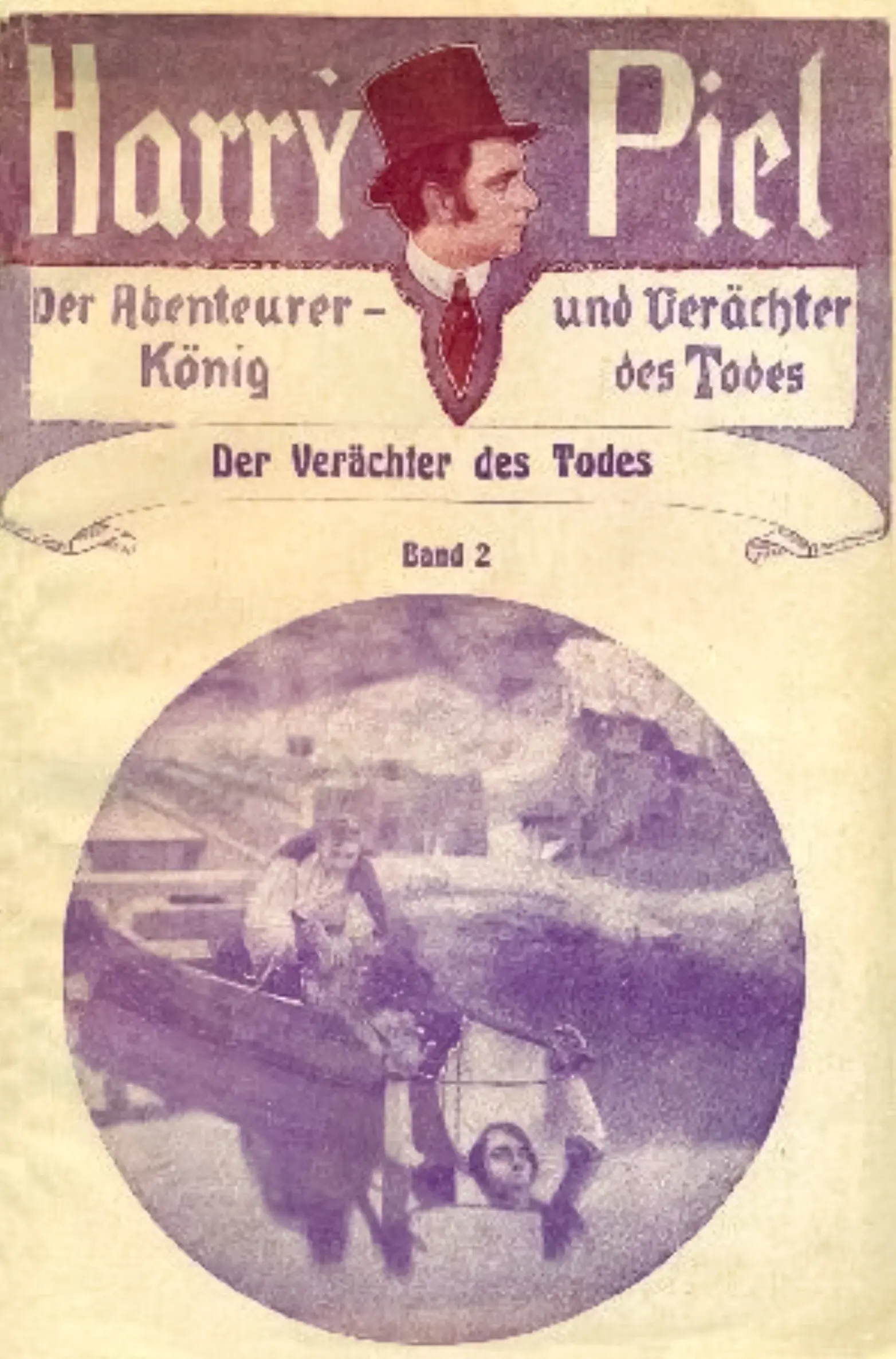
Of the original 2,187 meters, only 1,410 survive—stored at the Bundesarchiv in a climate-controlled sarcophagus. The missing reel, believed to contain the carousel’s reverse rotation that resurrects the fallen, exists only in a 1922 censorship transcript: "Image of horse moving backward; blood re-enters wounds; victims smile." Enthusiasts circulate bootleg 8 mm dupes on Telegram, each generation gaining fungus that resembles lace—fitting, since lace is what the film equates with flayed skin.
Digital restoration attempts falter; the silver halides have off-gassed, leaving iridescent spots that, under 4K scan, resolve as micro-portraits of the projectionists who first ran the print. The archive refuses to release DCP, fearing litigation from descendants who claim the images are ancestral death masks.
1919 critics recoiled. The Vossische Zeitung called it "a crime against resurrection"; the Nazi paper Der Angriff later cited it as evidence of Jewish self-hatred, though none of the cast or crew were Jewish—a testament to the film’s ability to provoke projection. Only at the 1921 Milan Syndicate of Fantastic Film did it win a medal shaped like an hourglass filled with iron filings, since broken and scattered across the Lido.
Without Verächter, there is no Häxan, no Vampyr, certainly no Carnival of Souls. Its DNA resurfaces in Lynch’s Lost Highway inversion of identity, in Final Destination’s death-as-bureaucracy, even in the TikTok "death-clock" filter that claims to predict your demise—a banalization the film foresaw when its characters commodify mortality like tram tickets.
Collectors pay €12,000 for a single hand-tinted frame; allegedly, ownership shortens life by precisely the number of seconds depicted in the image—a superstition the film would applaud. Yet to watch it is to consent to its gamble: you, too, have wagered your remaining minutes on the pleasure of witnessing others forfeit theirs. The carousel spins. The torch ignites. The mercury bath steams. And in the dark, you realize the aperture is not in the camera—it’s in you, widening.
Verachte den Tod, und er wird dich verachten—scorn death, and it will scorn you right back.
IMDb 5.6
1924
Community
Log in to comment.