DbcultAccessing Vault...
Cult Review
Senior Film Conservator
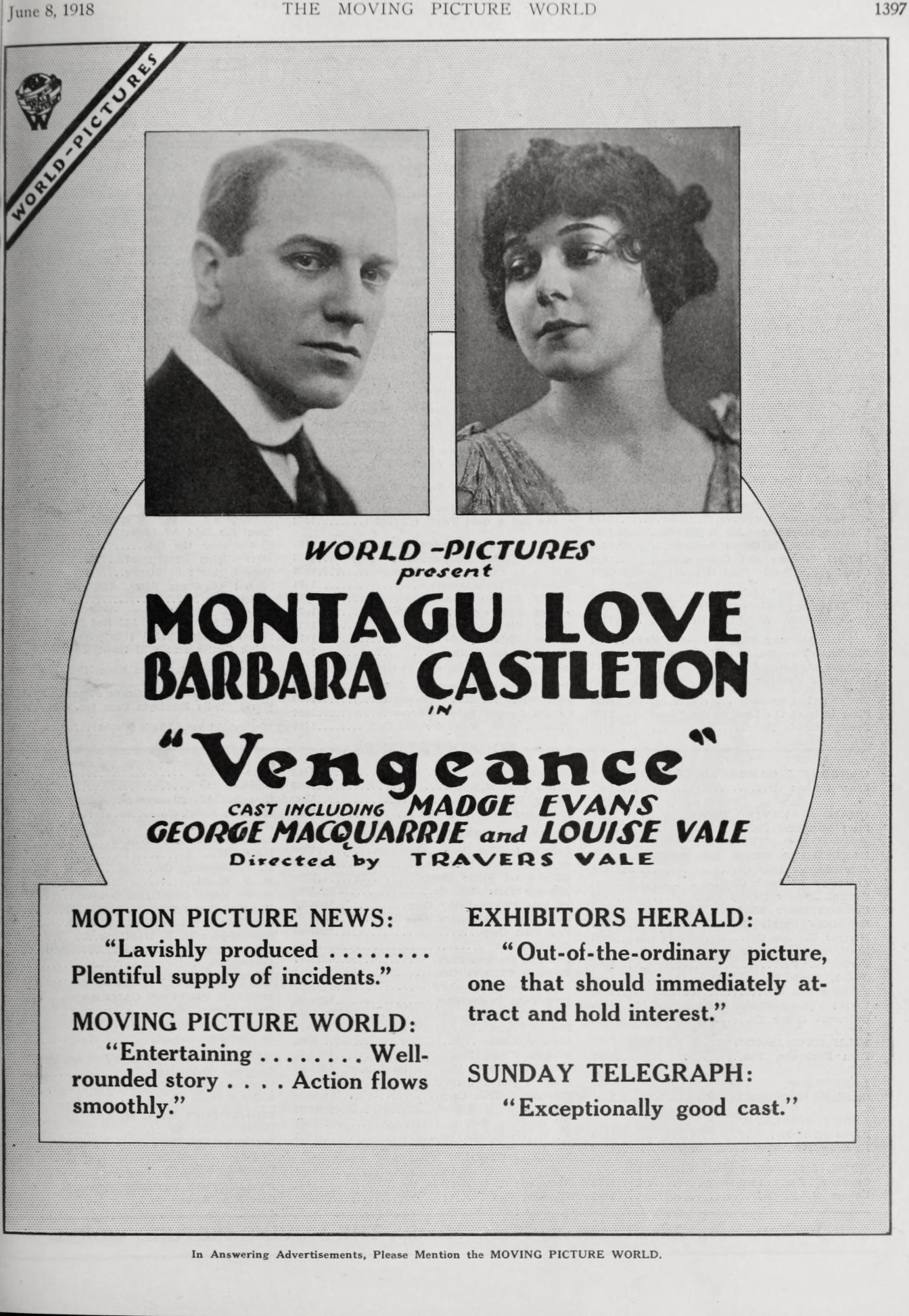
Vengeance
is a film that lingers in the mind like a half-remembered dream, its narrative threads weaving through the colonial shadows of India and the gilded decay of British society. Directed with a painterly eye for contrasts, the film’s 1930s production—despite its modest budget—achieves a haunting grandeur, particularly in its depictions of Himalayan monasteries and London’s drawing rooms. The script, penned by George Morgan and Robert Sterrett, is a labyrinth of moral ambiguities, where every character’s motive is both clear and maddeningly opaque.
At its heart is the character of Lorin, a man whose identity is as constructed as the swami persona he adopts in England. Played with brooding intensity by Henry Warwick (though the casting credits list him as Henry Warwick, a name that feels as much a mask as his role demands), Lorin is a figure of paradoxes: a Buddhist monk who wields vengeance like a sword, a man raised in the serenity of temples who thrives in the chaos of card tables. His journey from the Himalayas to London is less a physical trek than a psychological descent into the heart of familial shame. The film’s opening act, set in India, is its most visually arresting. The tiger hunt that kills John Cuddlestone is a masterclass in tension, the jungle’s lush greenery a stark canvas for the violence that shatters the family’s fate. The cinematography here—credited to an unlisted crew—captures the interplay of light and shadow in a way that feels almost preternatural for the era.
Madge Evans, as Nan, steals the film in moments that are as subtle as they are resonant. Her decision to steal the sacred eye of Buddha—a relic that the film never fully explains—is the first act of rebellion that propels her toward Lorin. The gem itself becomes a symbol of the collision between devotion and desire; its theft is both a sin and a sacrament. When Nan returns it in England, the gesture is not absolution but a tacit acknowledgment that love, like vengeance, is a form of currency with no inherent value. Her chemistry with Lorin is understated, a series of glances and hesitations that speak louder than the script’s occasional melodrama.
The film’s exploration of colonialism is as implicit as it is unavoidable. The Buddhist priests who raise Lorin are depicted with a reverence absent from the English characters, whose moral compass seems to spin aimlessly in the film’s third act. Andrew Cuddlestone (Montagu Love), the patriarch of the family’s disgrace, is a figure of both pathos and ridicule. His death by shock upon recognizing Lorin’s true identity is the film’s most audacious twist, a punchline that doubles as a critique of the British class system’s inability to absorb the truths it tries to suppress. Lady Elsie Drillingcourt (Lila Chester), the heiress caught in the crossfire of this familial drama, is a cipher for the film’s themes of inheritance—not just of wealth, but of guilt and legacy.
Technically, Vengeance is a product of its time, with its reliance on intertitles and stagey performances. Yet its ambition transcends these limitations. The tiger hunt sequence, for instance, employs editing techniques that anticipate the freneticism of later action cinema, while the use of color in the Buddhist temple scenes—though limited by Technicolor’s infancy—hints at a visual language that would fully bloom in the 1940s. The score, though uncredited, is a quiet marvel, with sitar-like motifs that echo the film’s spiritual undercurrents.
Comparisons to contemporary works like After Death are inevitable, particularly in its examination of life after loss. But Vengeance diverges in its focus on the performative aspects of identity. Where The Honeymoon revels in the chaos of new love, Vengeance is a study in the rituals of rage. The film’s climax, in which the sacred gem is returned just as the swami’s identity is revealed, is a masterstroke of symmetry. It suggests that redemption, like vengeance, is a cycle—one that can only be broken by the willingness to confront the past, not deny it.
In the pantheon of 1930s British cinema, Vengeance occupies a curious niche. It is neither a straightforward thriller nor a deep-cut art film but something in between—a work that uses its melodramatic framework to explore the psychological toll of colonialism and the futility of retribution. The film’s greatest triumph lies in its restraint; it trusts the audience to sit in the discomfort of Lorin’s choices, to ponder whether his vengeance is cathartic or corrosive. In an age where films often shout their messages, Vengeance whispers, and in that whisper lies its power.
For those seeking similar narratives, The Ghosts of Yesterday offers a more explicit deconstruction of memory and guilt, while Malombra shares Vengeance’s fascination with the spiritual and the mundane. Yet none capture the precise alchemy of cultural critique and personal drama that defines this film. Vengeance is a relic, yes, but one that continues to cast long shadows over the genre of revenge cinema.
IMDb —
1926
Community
Log in to comment.