DbcultAccessing Vault...
6.5/10
Senior Film Conservator
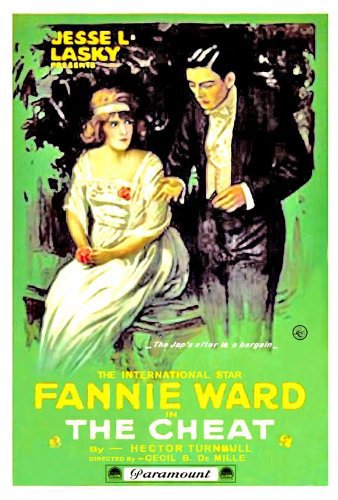
A definitive 6.5/10 rating for a film that redefined the boundaries of cult cinema. The Cheat remains a cornerstone of transgressive art.
Cecil B. DeMille’s fifth feature arrives like a nitrate fever dream: a society melodrama lacquered in chiaroscuro, dripping with racialized dread, and punctuated by a sizzling iron that forever scarred American cinema. When MoMA first screened a tinted 35 mm print in 1975, the audience gasped not merely at the branding sequence but at how ruthlessly the film indicts its own white leisure class. The Cheat is not a relic; it is a live wire.
1915 audiences had barely absorbed Griffith’s racist epic when Paramount unfurled this compact 59-minute stick of dynamite. DeMille, still apprenticing, already understood that cinema’s true subject is what polite society refuses to utter. The film’s opening intertitle—“A woman’s heart is an abyss”—might read as Victorian cliché until you realize the abyss belongs to Edith Hardy, a character whose moral crater is matched only by the film’s own willingness to plumb it.
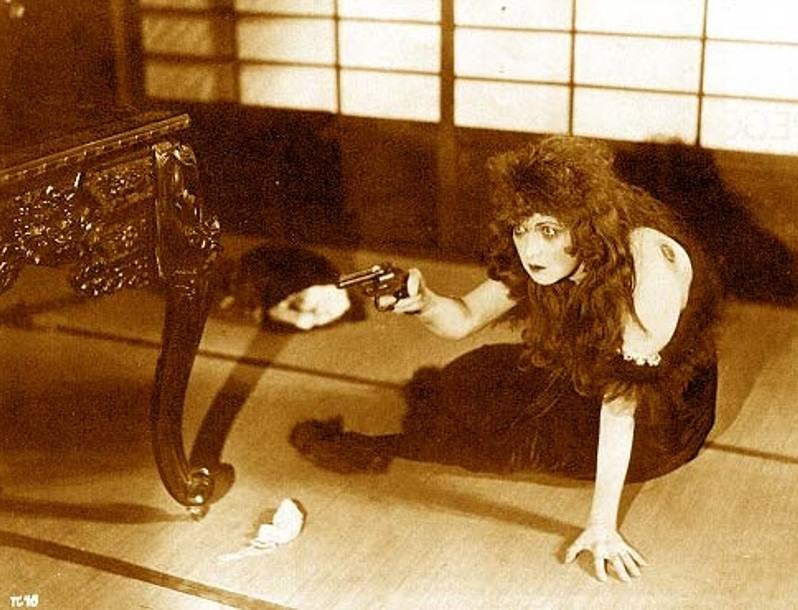
Notice how cinematographer Alvin Wyckoff treats Fannie Ward’s face: a porcelain oval lit from below by candlelight so that her cheekbones cast predatory shadows. She is both victim and vampire, a stockbroker’s wife who gambles with the same aplomb she applies to selecting a hatpin. When she rifles the charity safe, DeMille inserts a close-up of her gloved hand trembling over the bills; the glove is a second skin, the theft a second nature.
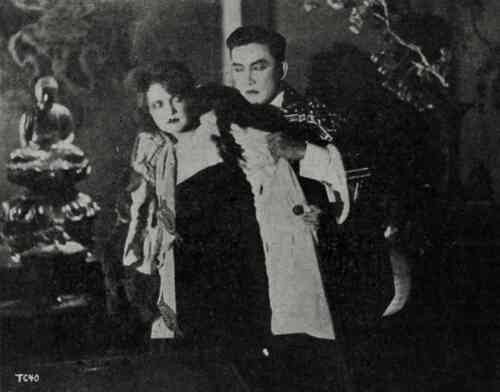
Sessue Hayakawa’s Tori—listed in the credits only as “The Ivory King”—enters through a doorway backlit so that his silhouette consumes the frame. Critics often discuss the erotic menace he radiates, but what chills is his economy of movement: a slight bow, a half-smile, the unblinking stare that measures Edith’s worth like tusks on a scale. In 1915 America, where miscegenation laws still haunted 28 states, Tori’s Orientalized sexuality was both titillation and terror. Yet Hayakawa, a Kyoto aristocrat turned Hollywood heart-throb, undercuts caricature by playing Tori as a man who knows the ledger of power is written in skin tone. His final snarl—“You have forfeited—yourself”—is less lust than legal contract.
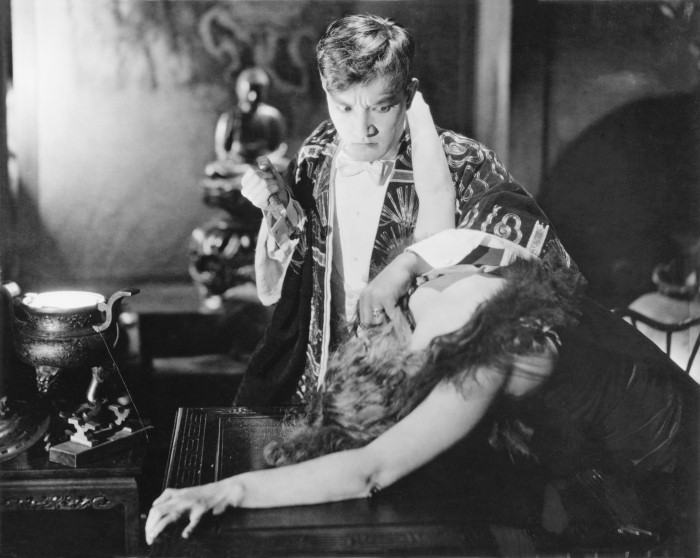
When the red-hot seal presses into Ward’s shoulder, DeMille cuts four times in four seconds: the iron, Tori’s ecstatic eyes, Edith’s twisted mouth, the smoking flesh. Censors in Pennsylvania demanded the removal of the intertitle “The mark of a beast,” but the image itself—an inverted stigmata—proved unerasable. The scar is a text: ivory meets flesh, colonizer meets colonized, white womanhood meets the price of its own fantasy. In that instant, The Cheat anticipates Frantz Fanon’s Black Skin, White Masks by four decades.
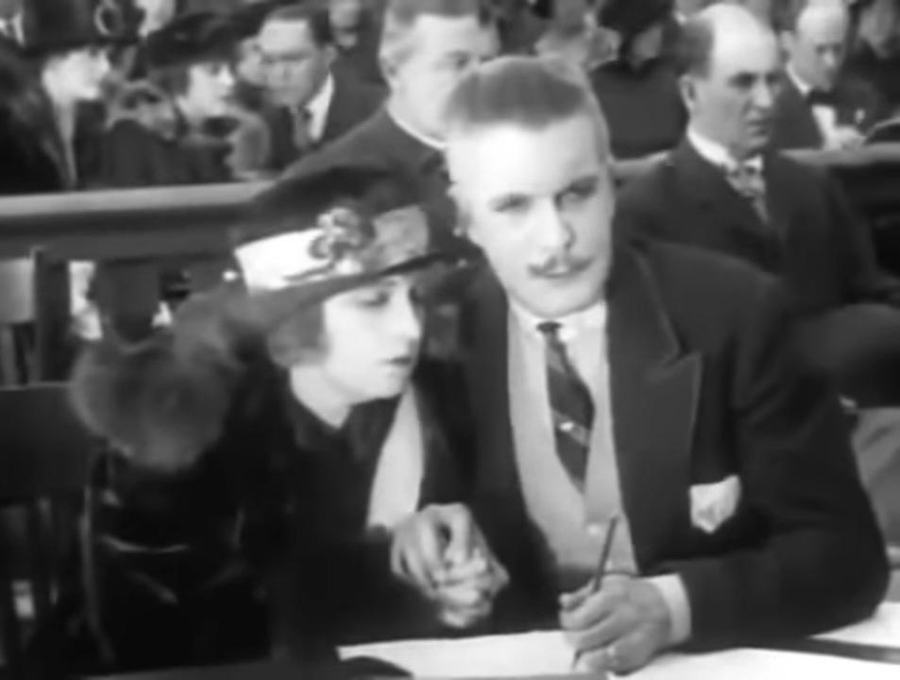
The courtroom sequence, staged like a Baroque opera, pivots on Edith’s perjury: she claims Tori assaulted her to absolve herself of embezzlement. The jury—twelve grim puritans—believes her because whiteness is its own alibi. DeMille frames her testimony in a low-angle shot that elongates her figure into a monument of injured virtue, while Tori, relegated to the defendant’s box, is photographed from above, shrinking beneath the patriarchal gaze. The verdict—innocent by reason of passion—throws the husband into prison instead, a narrative sleight-of-hand that lets the white woman walk and the Asian man bear both guilt and bullet.
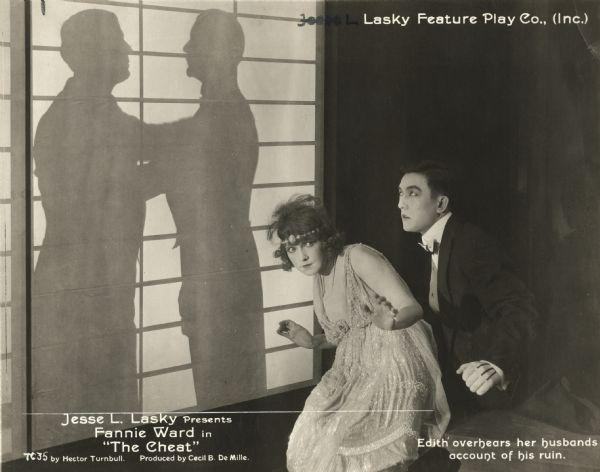
DeMille’s lighting scheme is a moral ledger. Interiors swing between tenebrous mahogany and sudden bursts of magnesium flare—each flashbulb a moral reckoning. The charity bazaar is awash in white, a snow-blindness of virtue, while Tori’s den is all umber and obsidian, the colors of buried tusks. When Edith signs the promissory note, her pearl necklace catches the lamp’s reflection so that the beads look like a noose of light.
Fannie Ward, a 40-year-old socialite moonlighting as actress, brings the brittle hysteria of a woman who has never heard the word no. Her gestures—flung gloves, trembling cigarette, the way she clutches her own throat as if to strangle her pulse—form a lexicon of entitlement collapsing under its own weight. Opposite her, Hayakawa’s stillness is surgical; the less he moves, the more the frame tilts toward him. Their duet culminates in the branding scene where Ward’s scream seems to rip the nitrate itself.
Though silent, the film orchestrates rhythm through text. Intertitles arrive like drumbeats: “The reckoning,” “A woman’s price,” “Forgiven—perhaps.” Each card is set against a black background rimmed with yellow, the colors of caution and corruption. Note how DeMille withholds Tori’s name until the final reel, referring to him only as “the man from the East,” a typographical void that renders him both ubiquitous and unnamable.
Place The Cheat beside Dzieje grzechu (1911) and you see how Polish cinema treats the fallen woman with Slavic fatalism; contrast it with The Taint (1914) where Australian bush morality offers redemption through landscape. DeMille rejects both transcendence and tragedy—his ending is a handshake across prison bars, a capitalist transaction in which guilt is swapped like stock.
The film’s success birthed a cycle of “yellow peril” thrillers, yet Hayakawa’s stardom complicates the ledger. By 1920 he was earning $5,000 a week, owning a gold-plated bathtub and refusing roles that demeaned Asian identity. Meanwhile, the branding sequence became a meme of its era: vaudeville sketches, pulp novels, even a New York Times editorial titled “When Women Cheat.” The scar migrated from fiction to cultural DNA.
In 1993, the Library of Congress reconstructed a 35 mm negative from a Czech print and an American paper roll. The restored tinting reveals hues unseen since 1915: amber for greed, viridian for jealousy, crimson for the brand. At the 2018 Pordenone Silent Film Festival, a packed Teatro Verdi sat rapt as the final shot—Edith’s gloved hand covering her brand through prison bars—flickered, and the silence that followed felt like a collective bruise.
Because every era has its ivory traders—those who commodify race, gender, charity itself. Because DeMille understood that cinema’s most explosive special effect is not the iron but the gaze that watches it descend. Because the scar Ward bears is also the scar America refuses to examine, a keloid of empire and appetite. Stream it, project it, argue over it, but do not embalm it; The Cheat is not a museum piece. It is a branding iron, still glowing.
“To possess is to bruise.” – Tori’s unspoken motto, etched on celluloid forever.
Watch it here in 4K restoration, then read my comparative essay on how Doyle’s Victorian London treated criminal branding. For a deeper dive into Hayakawa’s career, see my piece on his 1916 vehicle Fantasma. And if you crave more pre-code scandals, scroll through The Root of Evil where greed also wears a woman’s face.
IMDb —
1936
Community
Log in to comment.