DbcultAccessing Vault...
Cult Review
Senior Film Conservator
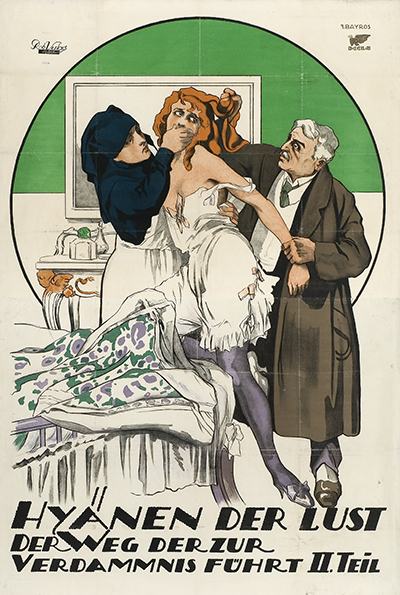
The year 1919 represents a seismic shift in the history of German cinema. With the abolition of imperial censorship following the collapse of the monarchy, the nascent Weimar Republic witnessed the explosion of the 'Aufklärungsfilm'—the so-called enlightenment film. Among the most culturally significant, if visually harrowing, artifacts of this era is Der Weg, der zur Verdammnis führt, 2.Teil - Hyänen der Lust. Produced by the Gesellschaft zur Bekämpfung des Mädchenhandels, this sequel serves as a visceral warning against the insidious machinations of girl trafficking.
While modern audiences might initially mistake the film's title for a lurid exploitation piece, its origins are rooted in a stern, almost Puritanical desire to protect the social fabric. The screenplay, penned by Julius Sternheim, operates with a surgical precision, deconstructing the methods used by traffickers to deceive the unwary. Unlike the escapist fantasies found in The Soul of Buddha, which leaned into Orientalist mystique, 'Hyänen der Lust' is grounded in a terrifyingly mundane reality. The 'hyenas' of the title are not monsters of myth, but well-dressed men and women in cafes and railway stations.
In the broader landscape of 1919, cinema was grappling with its own identity. We see a stark contrast between the gritty social realism here and the more adventurous, episodic nature of Panopta I. Where other films sought to thrill with mystery, 'Hyänen der Lust' sought to chill with the truth. It shares a certain thematic DNA with The Social Leper, focusing on the marginalization of those who fall outside the safety net of bourgeois respectability.
The performance of Emil Albes and Grete Weixler anchors the film in a palpable sense of dread. Weixler, in particular, portrays the descent from hope to despair with a nuanced physicality that avoids the over-the-top theatricality common in the silent era. Her transformation is a microcosm of the film's larger thesis: the erosion of the human soul under the weight of systemic abuse. The way the camera captures her isolation reminds one of the tragic protagonists in The Divorcee, yet the stakes here are significantly more lethal.
Directorially, the film utilizes light and shadow to demarcate the 'safe' world of the home from the 'perilous' world of the street. The interiors are often crowded, suggesting a suffocating domesticity that ironically drives the characters into the open arms of their captors. This visual tension is far more sophisticated than the straightforward action of Atta Boy's Last Race. There is a recurring motif of the 'journey'—trains, ships, and carriages—which, rather than representing progress or freedom, become mobile prisons moving the victims toward their 'damnation'.
The film’s portrayal of South America as a destination of no return serves as a fascinating look into the European anxieties of the time. It is a land of lawlessness in the eyes of the German moralists, a stark contrast to the more localized tragedies explored in Tidens Barn or the rural hardships of Uden Fædreland. Here, the distance is the enemy; once the girls cross the Atlantic, they are effectively erased from the world they knew.
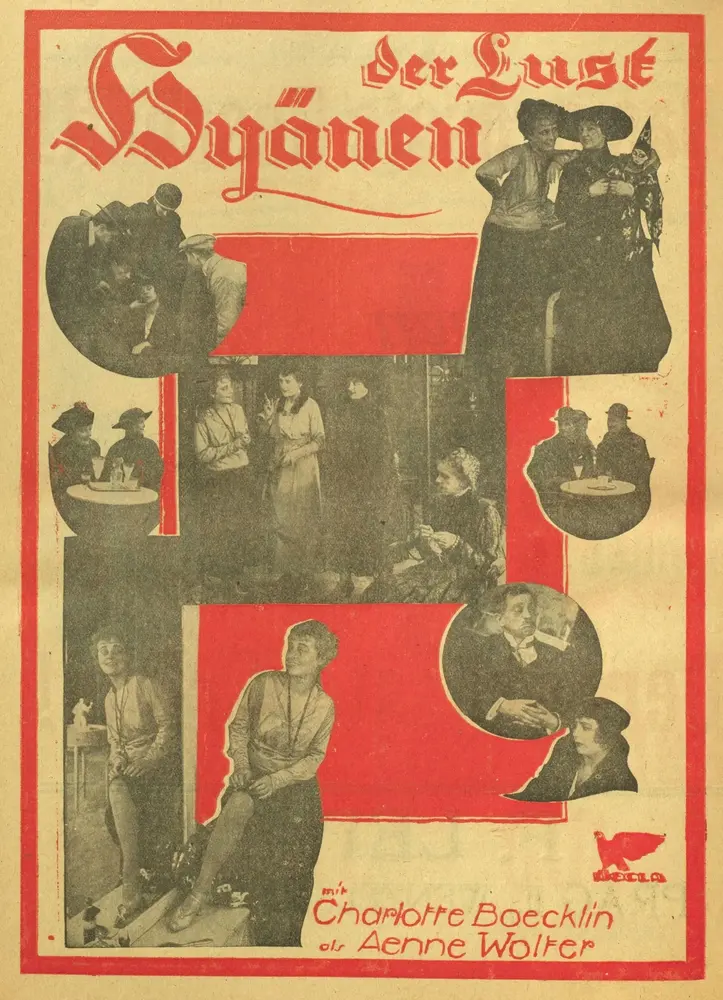
Critics of the time often accused these films of hypocrisy—claiming to educate while actually profiting from the depiction of vice. However, 'Hyänen der Lust' maintains a certain austerity that sets it apart from more prurient works like Vampire. Its connection to a legitimate social organization lends it a gravity that is hard to ignore. It doesn't offer the easy sentimentality of The Hushed Hour or the loyal companionship found in Your Obedient Servant. Instead, it offers a cold, hard stare into the abyss.
The casting of Guido Herzfeld and Margarete Kupfer adds a layer of seasoned gravitas to the production. These were performers who understood the weight of the subject matter. The ensemble creates a tapestry of a society in flux, where the old rules of protection have vanished, leaving the young and the poor to fend for themselves against sophisticated criminal networks. This sense of societal breakdown is much more profound here than in the more comedic or lighthearted fare like Harrison és Barrison.
The film's pacing is deliberate, almost agonizingly so. It allows the viewer to sit with the characters in their moments of doubt and eventual realization. This slow-burn approach to horror is far more effective than the explosive conflicts found in The Volcano or the emotional turbulence of Wrath of Love. By the time the victims reach their destination, the audience is as exhausted and hopeless as they are. This psychological immersion is a testament to Sternheim’s writing and the collective vision of the cast.
Furthermore, the film's refusal to provide a neatly packaged happy ending distinguishes it from many of its contemporaries. While The Ne'er Do Well might offer a path to redemption, 'Hyänen der Lust' suggests that for many, the path to damnation is a one-way street. This bleakness is not nihilism, but a call to action—a demand that the 'Society for the Struggle Against White Slavery' be taken seriously by the state and the public alike.
In retrospect, 'Der Weg, der zur Verdammnis führt, 2.Teil - Hyänen der Lust' is more than just a film; it is a scream from the past. It captures a moment when cinema believed it could change the world by exposing its darkest corners. It lacks the pastoral beauty of Die Insel der Seligen, but it possesses a raw, unvarnished power that remains unsettling over a century later. To watch it today is to witness the birth of the social-issue documentary, wrapped in the aesthetics of the silent melodrama, and driven by a desperate, noble fury.
Final Verdict: A haunting, essential relic of Weimar social consciousness.
Community
Log in to comment.