DbcultAccessing Vault...
5.9/10
Senior Film Conservator
A definitive 5.9/10 rating for a film that redefined the boundaries of cult cinema. Sweet Daddy remains a cornerstone of transgressive art.
Within the golden age of American cinema's silent era, few films dare to dissect marital dynamics with both surgical precision and slapstick levity as effectively as Sweet Daddy. This 1926 comedy-drama, directed with a deft touch by an uncredited hand, positions itself as both a farcical romp and a microcosm of early 20th-century gender politics. The film's central conceit - a woman literally chaining her husband to domestic duties - is simultaneously absurd and profoundly revealing about the power dynamics within marriage.
At its core, Sweet Daddy presents a domestic scenario that is as much about control as it is about liberation. Wilna Wilde's portrayal of the hapless husband is a masterclass in physical comedy, her wide-eyed expressions and exaggerated movements conveying both the character's infantilization and his latent agency. The film's mechanical contraption - a Rube Goldberg-like apparatus that binds her to housework - serves as both literal and metaphorical prison, a device that is as ridiculous as it is effective in its social commentary.
The narrative's true brilliance emerges in its parallel between domestic entrapment and romantic temptation. When the protagonist escapes his mechanical bonds, his encounter with Kit Guard's character in the film's pastoral setting becomes more than mere romantic interlude. This bucolic interlude, shot with painterly precision by the film's cinematographer, contrasts sharply with the claustrophobic domestic scenes. The juxtaposition of these two worlds - the prison of routine versus the chaos of passion - forms the film's central metaphor.
What elevates Sweet Daddy above its contemporaries is its refusal to condescend to its characters. Rather than depicting the henpecked husband as a buffoon, the film presents him as a creature shaped by societal expectations. His eventual rebellion isn't portrayed as heroic, but as a necessary evolution in his self-awareness. This nuanced approach to character development is reminiscent of themes explored in Whom the Gods Destroy, though here the destruction is both literal and figurative, targeting the very institution of marriage as a site of power struggle.
The film's visual language is particularly noteworthy. The use of shadows in domestic scenes creates a chiaroscuro effect that mirrors the protagonist's internal conflict. When he ventures outside his wife's control, the lighting becomes more diffused, with a noticeable increase in natural light - a visual motif that recurs in The Girl from Rector's during its romantic sequences.
Dorothy Earle's performance as the domineering wife is a revelation. She portrays the character not as a villain, but as a product of her time - a woman who has internalized patriarchal expectations to such an extent that she seeks to control her husband through the very means society has used to control women. This inversion of power dynamics is handled with remarkable subtlety, particularly in scenes where she literally adjusts the chains binding her husband, her expressions shifting from maternal concern to steely determination.
The film's comedic timing is impeccable, particularly in a set piece involving a malfunctioning washing machine that becomes an absurdist battleground between husband and wife. This scene, reminiscent of the mechanical chaos in Her Unmarried Life, uses physical comedy to comment on the futility of trying to control domestic labor through technology.
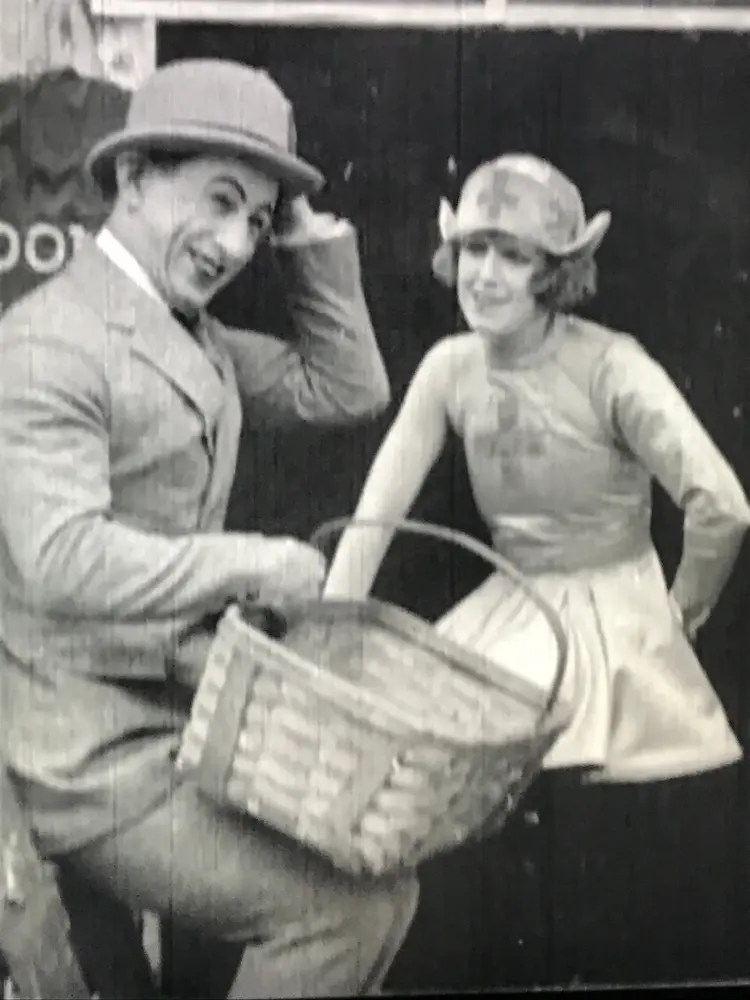
Marcel Perez's supporting role as the neighbor adds crucial depth to the narrative. His deadpan observations serve as the film's moral anchor, providing a contrast to the protagonists' escalating theatrics. In a particularly poignant moment, he delivers a monologue about the cyclical nature of domestic power struggles that echoes themes later explored in The House of Tears, though with a distinctly comedic slant.
Technically, the film showcases a remarkable understanding of silent film conventions. The use of intertitles is minimal, with the majority of storytelling accomplished through expressive physical performances. This is particularly effective in the film's climax, where the protagonist's internal conflict is conveyed through a series of exaggerated facial expressions that rival the expressiveness seen in Ashes of Love's most dramatic scenes.
The soundtrack, though added in later restoration, enhances the film's absurdist tone with a mix of vaudevillian tunes and ominous leitmotifs for the mechanical contraption. This musical scoring strategy, similar to An Old Fashioned Boy, helps to maintain tonal balance between the film's farcical elements and its more serious social commentary.
What makes Sweet Daddy particularly fascinating is its prescient exploration of themes that would become central to 20th-century cinema. The power struggles depicted in the film prefigure the domestic dramas of the 1950s, while its absurdist elements anticipate the screwball comedies of the 1930s. The mechanical contraption that binds the husband can be read as a metaphor for the invisible constraints placed on both genders in the domestic sphere, a theme that resonates powerfully in modern discussions about work-life balance.
The film's ending, while somewhat abrupt by modern standards, is thematically consistent. Rather than providing a tidy resolution, the film leaves its characters in a state of unresolved tension, suggesting that the power dynamics within marriage are cyclical rather than linear. This narrative choice, while unconventional for its time, demonstrates a sophistication that places the film in dialogue with the more complex character studies found in The Joe Gans-Battling Nelson Fight's exploration of rivalry and identity.
In terms of cinematic legacy, Sweet Daddy occupies an interesting space between slapstick comedy and social satire. Its influence can be seen in later films that use domestic settings as battlegrounds for ideological conflict, particularly in the works of Preston Sturges and screwball comedians of the 1940s. The film's exploration of power dynamics within marriage also finds echoes in the domestic dramas of the 1950s, particularly in the films of Douglas Sirk.
For modern viewers, Sweet Daddy offers both entertainment and insight. The film's physical comedy remains effective, with several set pieces that still elicit laughter through their sheer absurdity. At the same time, the film's social commentary invites multiple viewings, rewarding those who engage with its layered metaphors about control, autonomy, and the paradox of domestic freedom.
IMDb —
1921
Community
Log in to comment.