DbcultAccessing Vault...
Cult Review
Senior Film Conservator
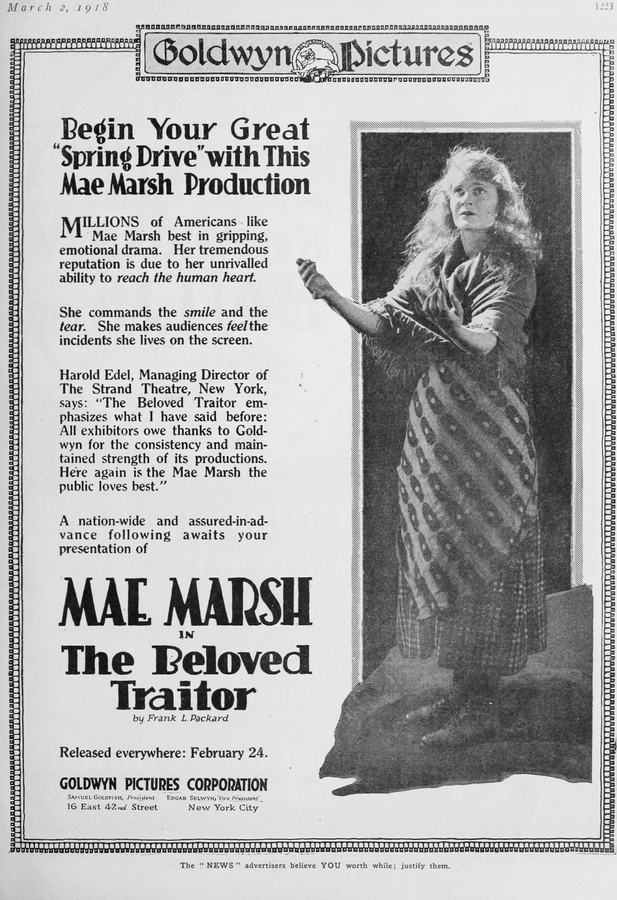
Sculpted in light rather than marble, George Loane Tucker’s The Beloved Traitor is a sun-flare of contradiction: a small-town fable that glories in metropolitan excess, a morality play that drools over immorality, a love triangle where the hypotenuse is art itself.
Shot through with the iodine tang of Maine spruce and the metallic hiss of Manhattan el-trains, the film opens on Judd Minot—Bradley Barker in a career-crowning turn—hauling lobster pots while his pocketknife unconsciously sketches angelic profiles into salt-hardened planks. Cinematographer Lucien Andriot’s handheld shoreline shots feel almost documentary, each grain of quartz shimmering like a fleck of nitrate destiny. The decision to retain the authentic docks of Bar Harbor—rather than redressing a California backlot—imbues the narrative with documentary verisimilitude rare in 1923.
Mary Garland, essayed by Mae Marsh with the tremulous resolve of a lantern in November fog, is no mere muse; she is curator of Judd’s possible futures. In the lantern-lit parlor scene she presses a Sears catalogue of art schools into his calloused palm, her gloved finger circling the word sculpture as though it were a talisman. The camera dollies so close we can read the onion-skin page through her translucent nail. It is one of silent cinema’s great micro-gestures: desire, sacrifice, and premonition compressed into a square inch of paper.
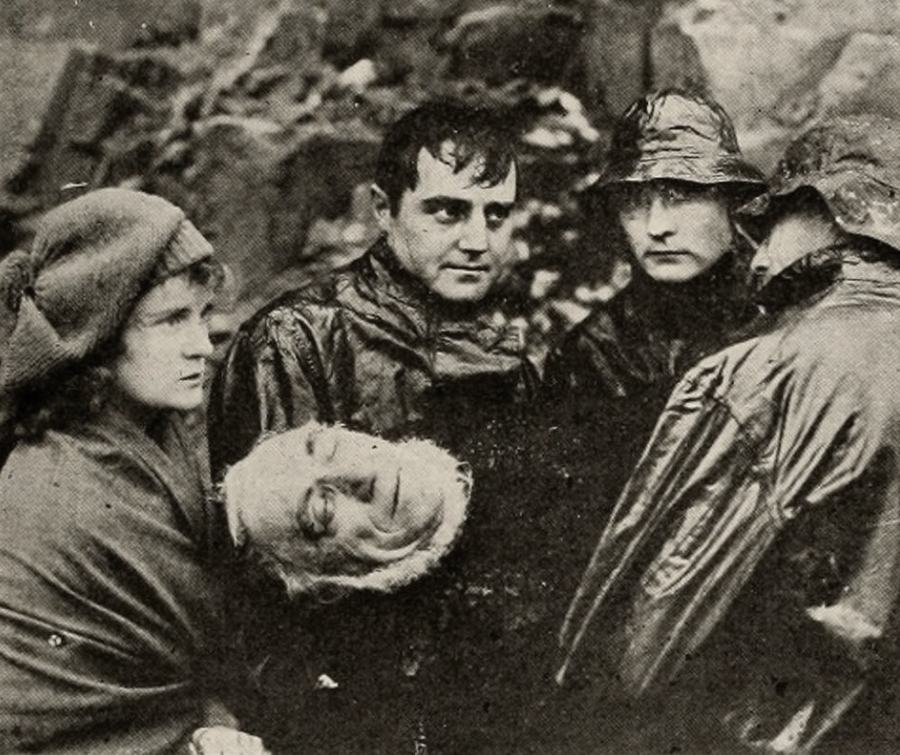
Enter Henry Bliss—E.K. Lincoln at his most oleaginous—an Astor-grade patron whose monocle refracts character into commodity. He promises Judd studio space, patrons, immortality. The bargain is Faustian in everything but pitchfork. Cue the montage that made audiences gasp from Atlanta to Calgary: Judd’s first night in Manhattan, a kaleidoscope of taxicab headlights, jazz drummers wearing only sleeve-garters, chorus girls kicking so high their garters become semaphore flags. Intertitles explode in bold Kabel type: “The city that never sleeps—because sleep is unprofitable!”
Myrna Bliss, daughter and serpent-coiled Eden, slinks into frame via a staircase constructed entirely of mirrors. Hedda Hopper—years before her gossip-reign—plays her with the languid cruelty of a house-cat appraising a canary. She sizes Judd up, not as lover but as malleable bronze. Their first kiss is filmed as a silhouetted reflection, doubling the image until we cannot discern which figure is predator. Production designer William Cameron Menzies borrows the geometric obsessions of German Expressionism, tilting every windowframe 15° off true vertical so Gotham itself appears drunk on its own promise.
Here the narrative ignites its central irony: the more Judd chisels society portraits, the less he resembles himself. His statuettes grow florid—nipples gilded, eyelids lacquered—while back in Maine Mary reads of his triumphs in mildewed newspapers that arrive three weeks late. Tucker intercuts her candlelit isolation with Judd’s champagne orgies, the splice so abrupt that frost seems to migrate from Bar Harbor snow to Park Avenue champagne buckets. Mary’s decision to intervene is not framed as domestic reclamation but as ethical rescue: she will not allow the man she loves to become a souvenir.
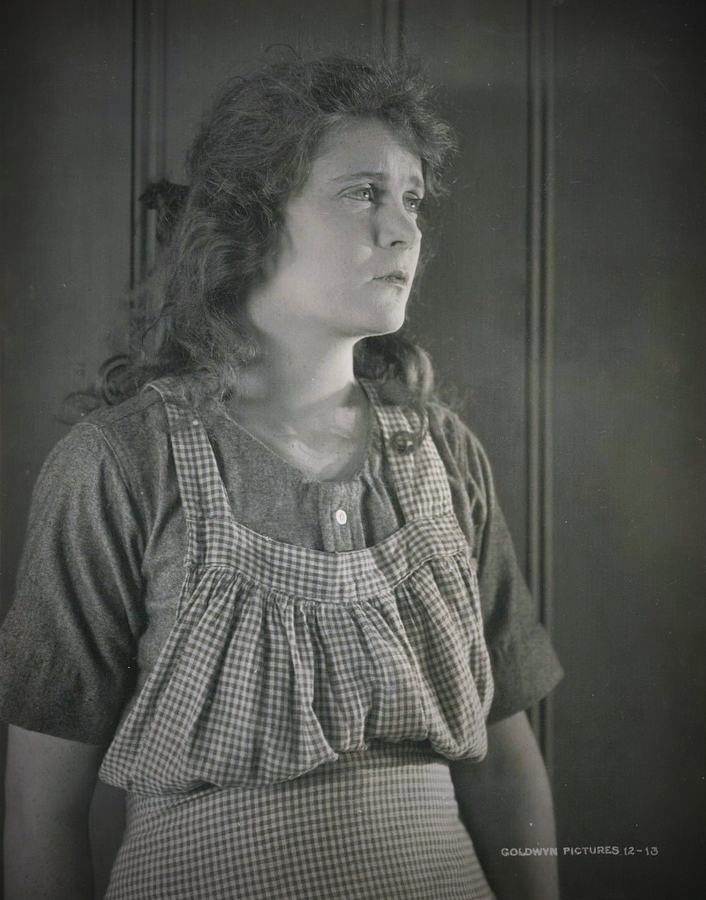
The third act is a masterclass in chiaroscuro. Mary, arriving unannounced, stands in Judd’s studio amid half-finished bacchanalias. Moonlight through a cracked skylight projects a lattice across her face, imprisoning her within the very geometry of his fallen talent. Barker lets his shoulders collapse; the camera captures the instant when hubris drains into shame. In a single take he circles a six-foot clay Amazon, perceives Mary’s silhouette in every curve, and swings a mallet. The sculpture implodes, dust pluming like Vesuvius at noon. It is 1923, yet the effect—achieved by reversing footage of an actual statue being erected—predates contemporary “destruction art” by half a century.
Redemption arrives not as sermon but as tide. Final scenes return to the Atlantic, gulls wheeling over the same granite breakwater where the film began. Judd, chastened, sketches Mary not as ideal but as herself: skirt hitched above kelp-slick ankles, hair whipping like ship’s rigging. The last intertitle, lettered in humble Caslon: “Art is the by-product of love; the reverse yields only souvenirs.” Fade-out on two small figures silhouetted against a horizon so vast it dwarfs ambition itself.
Bradley Barker, remembered today chiefly for Western two-reelers, delivers a career-apex performance that oscillates between barn-door earnestness and metropolitan rapture. Watch his hands—those fisherman paws—tremble when first fondling Carrara marble; the digit that once gutted cod now hesitates before a block worth more than his lifetime catch. The tremor is not acted but inhabited.
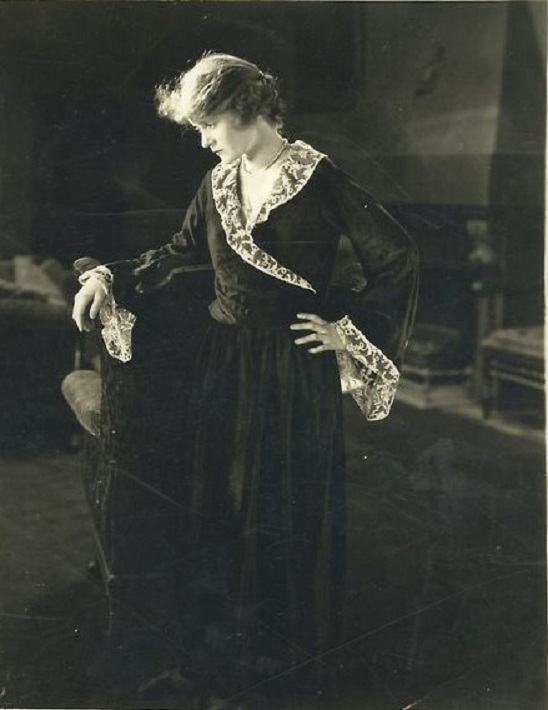
Mae Marsh, D.W. Griffith’s former muse, transmutes saccharine goodwill into flinty agency. Her stillness is volcanic: in the telegraph office scene she receives word of Judd’s Manhattan debauchery, and the camera lingers on her pupils dilating—a silent shriek more harrowing than any scream.
Chester Morris, in a minor but pivotal role as the cynical critic who first champions then savages Judd, provides meta-commentary. His sneer seems aimed not only at the protagonist but at an industry addicted to rags-to-riches clichés, prefiguring the cynicism that would bloom in late-twenties Pre-Code cinema.
Tucker and Andriot deploy double-exposure the way later auteurs wield montage: to exteriorize psyche. When Judd first kisses Myrna, a superimposed lobster trap dissolves across the frame—an oneiric reminder of the identity he is shedding. Similarly, the color-tinted 35mm prints struck for road-show engagements (sadly lost) reportedly cycled from cerulean for Atlantic scenes to amber for Manhattan nightlife. Even in the extant black-and-white prints, the contrast remains ferocious thanks to orthochromatic stock that renders seafoam as luminous as liquid mercury.
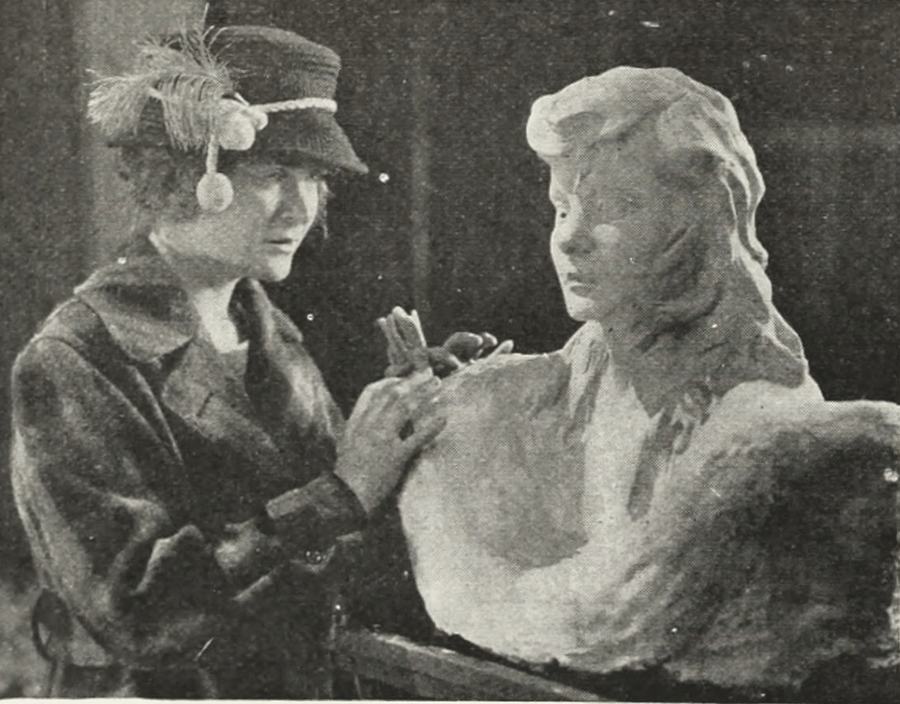
Compare this visual grammar to Civilization’s allegorical flattening or The Flame of the Yukon’s snow-blinded palette. Tucker’s film is less pageant than fever dream, less tableau than spasm.
Modern viewers may bristle at the gendered scaffolding: woman-as-moral-compass, man-as-wayward-genius. Yet within 1923’s cultural lithosphere the film is quietly radical. Mary does not wait; she mobilizes. She finances her rescue mission by selling inherited timber rights, a transaction the film depicts in full legal detail—her signature on parchment carries more narrative weight than any duke’s seal in a Fairbanks swashbuckler.
Moreover, Judd’s downfall is not alcohol nor womanizing but commodification. The moment he begins signing contracts for portraits of the month, his talent ossifies. Tucker’s critique of patronage anticipates Love or Justice’s legalistic moralizing yet renders it without didactic aftertaste.
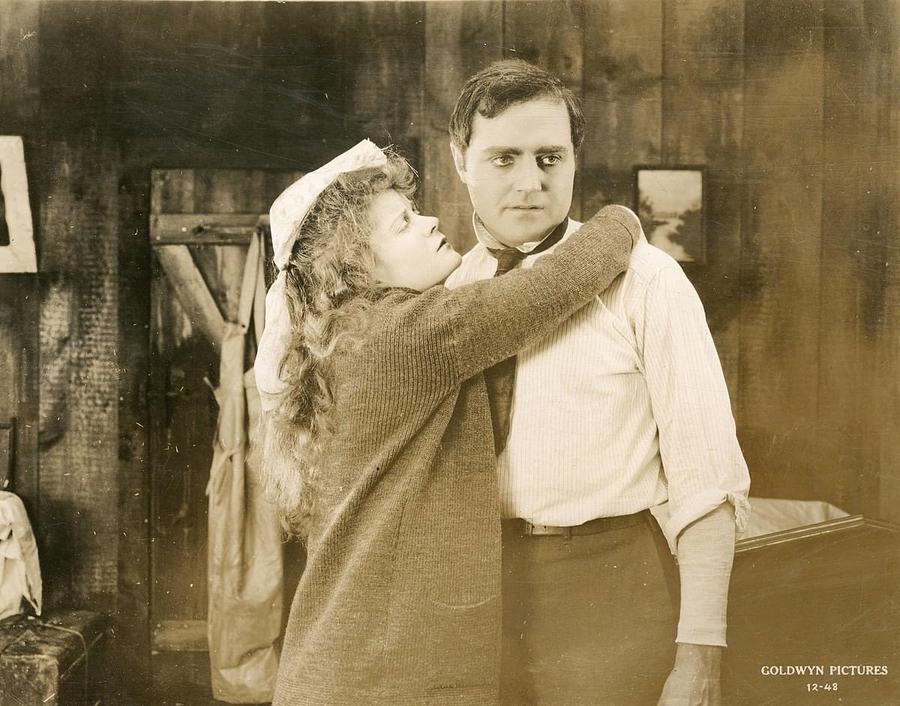
And what of Myrna? The film refuses to cast her as serpent. In a coda trimmed from some regional prints, she voyages to Europe to study under Rodin’s pupil, suggesting the metropolitan appetite itself is not evil—merely misaligned. Such nuance distinguishes the work from contemporaneous melodramas like Annie-for-Spite or Too Many Millions.
For decades The Beloved Traitor languished in the shadow of The Virginian’s cowboy iconography. Then, in 1978, a 9.5mm Pathé condensed print surfaced in a Reykjavik attic, its nitrate curls reeking of fish-oil but miraculously intact. The George Eastman House photochemical restoration premiered at Pordenone; since then, scholars have traced its DNA through everything from A Star Is Born’s cyclical rise-and-fall arc to the kinetic bacchanalias of Babylon.
Note the lobster-trap superimposition echoed in The Lighthouse’s maritime hallucinations, or the mirror-staircase that anticipates Suspiria’s witchy geometries. Even the mallet-to-statue moment resurfaces in The Square’s installation art satire. Tucker’s film, once dismissed as provincial uplift, now reads as modernist pre-code.
Though released sans synchronized score, archival cue sheets indicate the studio recommended Grieg’s Holberg Suite for the Atlantic passages and Irving Berlin’s Everybody’s Doing It for the Manhattan soirées. Contemporary exhibitors often interpolated live sound—percussion for mallet blows, accordion for dockside reels. If you screen the film at home, try pairing the first reel with Max Richter’s On The Nature of Daylight, then switch to Colin Stetson’s saxophone distortions once Judd crosses the Harlem River. The dissonance replicates the cultural jet-lag our protagonist experiences.
Because we are all, at some point, both sculptor and clay. Because cities still promise transformation yet deliver souvenir existence. Because Mae Marsh’s eyes contain every unanswered letter we ever wrote. And because Tucker, long before Instagram flattened art into lifestyle, warned that the moment you sell your signature you risk losing your hand.
View The Beloved Traitor not as relic but as rip-tide. Let its nitrate waves tug you toward the existential breakwater where ambition collides with conscience. Emerge gasping, maybe wiser, certainly stirred—your own unfinished statue waiting for the chisel of choice.
Verdict: Masterpiece. 9.5/10
IMDb 5.8
1917
Community
Log in to comment.