DbcultAccessing Vault...
Cult Review
Senior Film Conservator
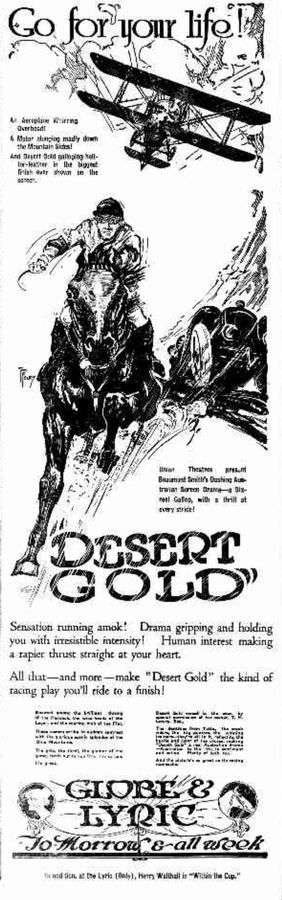
Stepping back into the cinematic landscape of 1919 is akin to unearthing a time capsule, a glimpse into the nascent storytelling techniques that captivated audiences over a century ago. Among these early treasures, Beaumont Smith’s Desert Gold emerges as a compelling example of the burgeoning Western genre, a silent film that, despite its age, pulses with timeless themes of loyalty, avarice, and the indomitable spirit of the frontier. It’s more than just a historical artifact; it’s a vibrant narrative tapestry woven with the threads of human ambition and the raw beauty of an unforgiving landscape.
At the narrative’s epicenter stands John Forsythe, portrayed with a stoic sincerity by Gerald Harcourt, a figure embodying the quintessential frontiersman. He’s not merely a prospector; he’s a custodian of a dream, his gold claim representing not just wealth, but a future, a stake in the vast, untamed American promise. Forsythe’s character is painted with broad, clear strokes, a necessity in the silent era where nuance often had to be conveyed through gesture and expression. His unwavering moral compass and steadfast resolve against the encroaching shadows of deceit make him an instantly sympathetic hero, a man whose integrity is his most valuable possession, far surpassing the glittering ore he seeks to extract from the earth.
Perhaps the most captivating 'character' in this early Western epic is the titular racehorse, Desert Gold itself. This magnificent animal transcends the role of a mere prop or plot device; it is a symbol, a confidante, and ultimately, a pivotal agent in the unfolding drama. The bond between John Forsythe and his horse is depicted with a tenderness that speaks volumes without a single word, highlighting the profound connection between man and beast in the harsh realities of frontier life. This isn't just about winning races; it's about mutual trust, shared struggle, and an unspoken understanding that forms the bedrock of survival. The horse’s very existence is intertwined with Forsythe’s fortunes, a living embodiment of his hopes and his vulnerability to the machinations of others. Such a powerful animal presence was not uncommon in early cinema, often serving as a focal point for action and emotion, much like the heroic steeds in countless subsequent Westerns, though few imbued their equine stars with such narrative weight.
The film’s antagonist, a scoundrel whose name is perhaps less important than his pervasive malevolence, injects a potent dose of conflict into Forsythe’s idyllic, if challenging, existence. This villain, brought to life with appropriate theatricality by Bryce Rowe, represents the darker side of the frontier dream: unchecked ambition, ruthless opportunism, and a willingness to corrupt any institution for personal gain. His schemes are multifaceted: not only does he covet Forsythe’s gold claim, a straightforward act of theft, but he also sets his sights on Forsythe’s sweetheart, played by Marie Ney. This adds a deeply personal, emotional layer to the conflict, transforming a simple dispute over resources into a battle for love, honor, and the very fabric of Forsythe’s personal world. The scoundrel’s attempts to rig the horse races further underscore his insidious nature, demonstrating a contempt for fair play and a desire to manipulate systems for his own nefarious ends. This kind of villainy, driven by both material greed and personal spite, is a classic trope, resonating with the struggles against corruption seen in films like Lost Money, where financial chicanery is the central conflict, or even the more overtly criminal undertakings in Trapped by the London Sharks, albeit in a vastly different setting. The universal nature of battling a morally bankrupt adversary remains a compelling draw.
The sweetheart, a character often relegated to the role of damsel in distress in early cinema, here serves as a crucial emotional anchor. Her presence elevates the stakes, transforming Forsythe’s fight from one of mere possession to a defense of his future happiness and the woman he loves. Marie Ney imbues her with a vulnerability and quiet strength that, while constrained by the conventions of the era, still manages to convey the depth of her connection to Forsythe and her peril at the hands of the villain. This romantic entanglement, while perhaps predictable by modern standards, was a powerful motivator for audiences of the time, providing a relatable human element amidst the rugged action. The threat to her safety and happiness is a classic dramatic device, effectively amplifying the tension and giving Forsythe’s struggles a profound personal resonance. One might draw parallels to the enduring loyalty depicted in films like The Eternal Magdalene, where steadfastness in relationships, even under duress, forms a core thematic element.
The gold claim itself is more than just a mineral deposit; it is a symbol of the American dream, a tangible manifestation of hope and opportunity in a land where fortunes could be made and lost overnight. The struggle to defend it speaks to the broader historical context of the West, a period of relentless expansion and the clash between those who sought to build and those who sought to exploit. This foundational conflict fuels much of the narrative, providing a clear, visceral motivation for Forsythe’s actions. It’s a classic battle for resources, a theme as old as civilization itself, and one that resonates deeply within the Western genre. The desert, with its vast, indifferent beauty, acts as a silent witness to these human dramas, its harshness mirroring the ruthlessness of the scoundrel and the resilience required of Forsythe. This interplay between human ambition and the formidable power of nature is a recurring motif, elevating the film beyond a simple good-versus-evil tale.
The horse races, far from being mere sporting events, function as crucial narrative devices, escalating the tension and providing a public arena for the clash between justice and deceit. The scoundrel’s attempts to rig these races are not just about monetary gain; they are an assault on the very concept of fair play, a subversion of the honorable competition that, ideally, underpins such contests. This element allows the film to explore themes of integrity and the corrupting influence of greed in a highly visible and dramatic manner. The climactic race, undoubtedly a highlight of the film, transforms into a metaphor for Forsythe’s entire struggle – a desperate sprint against overwhelming odds, where not just a prize, but honor, love, and his entire future hang in the balance. The excitement of the race, even in its silent depiction, is palpable, a testament to the filmmakers' ability to convey kinetic energy through visual storytelling. This kind of high-stakes competition, where personal integrity is pitted against unscrupulous tactics, is a timeless narrative engine, reminiscent of the moral quandaries explored in a film like The Crucible, if one considers the societal pressures and ethical dilemmas at play, albeit in a dramatically different context. The pursuit of victory through deception is a universal flaw, compellingly showcased here.
Beaumont Smith, as the credited writer, crafted a narrative that, while adhering to many genre conventions, also allowed for moments of genuine character development and thematic depth. His ability to weave together the threads of romance, action, and moral struggle within the constraints of silent cinema is commendable. The story’s structure, with its clear delineation of heroes and villains, its escalating conflicts, and its eventual, satisfying resolution, speaks to a foundational understanding of dramatic storytelling. It’s a testament to the enduring power of a well-told tale, regardless of the technological limitations of its era. This foundational storytelling, focused on clear motivations and high stakes, is what makes many early films, even those with seemingly simple plots like Young Mr. Jazz or When My Ship Comes In, still resonate with audiences seeking clarity and emotional impact.
From a purely cinematic perspective, Desert Gold offers a fascinating insight into the visual language of 1919. The acting, characterized by exaggerated gestures and emotive facial expressions, was a necessity in an era devoid of spoken dialogue, yet it possesses a raw theatricality that is often compelling. The use of intertitles, while sometimes lengthy, efficiently conveys crucial plot points and character motivations, guiding the audience through the narrative. The cinematography, though basic by today's standards, likely aimed for sweeping vistas to capture the grandeur of the desert, a staple of the Western genre from its inception. These visual choices, combined with the expected live musical accompaniment of the era, would have created an immersive experience for contemporary audiences, drawing them into Forsythe’s struggle against the odds. The film’s ability to build suspense and convey emotion without dialogue speaks to the ingenuity of early filmmakers, their mastery of purely visual storytelling. This early form of dramatic tension and character portrayal, relying heavily on visual cues, can be seen across the spectrum of silent films, from the adventure-driven narrative of The Amazing Adventure to the more introspective dramas like Thin Ice.
The enduring themes of Desert Gold — loyalty, justice, the battle against overwhelming odds, and the profound connection between humans and the natural world — ensure its continued relevance. It’s a narrative that, despite its century-old vintage, still speaks to fundamental human experiences. The film’s exploration of greed versus integrity, and the idea that true wealth lies not in material possessions but in honor and relationships, remains as poignant today as it was in 1919. It stands as a testament to the foundational power of the Western genre, a genre that has consistently provided a canvas for exploring the moral complexities of a society in formation. The narrative arc, moving from initial challenge to escalating conflict and eventual triumph, offers a satisfying emotional journey, a formula that has captivated audiences for generations. It shares this universal appeal with other films that explore arduous journeys or profound moral choices, such as Nan of Music Mountain, which likely focuses on a struggle within a specific landscape, or even the allegorical journey of Dante's Inferno, albeit through vastly different lenses. Each, in its own way, delves into the human spirit's capacity for endurance and righteousness.
Ultimately, Desert Gold is more than just a historical curiosity; it’s a vibrant piece of cinematic heritage that reminds us of the power of simple, yet profound, storytelling. It showcases the foundational elements that would come to define the Western genre for decades: the rugged hero, the loyal companion, the insidious villain, and the vast, beautiful, yet perilous landscape. For those interested in the roots of American cinema, or simply in a classic tale of good versus evil played out in a spectacular setting, this silent film offers a rich and rewarding viewing experience. It invites us to appreciate the craft of early filmmakers and to reflect on the timeless narratives that continue to resonate with audiences across the ages, proving that some stories, like gold itself, possess an intrinsic and enduring value.
IMDb —
1915
Community
Log in to comment.