DbcultAccessing Vault...
Cult Review
Senior Film Conservator
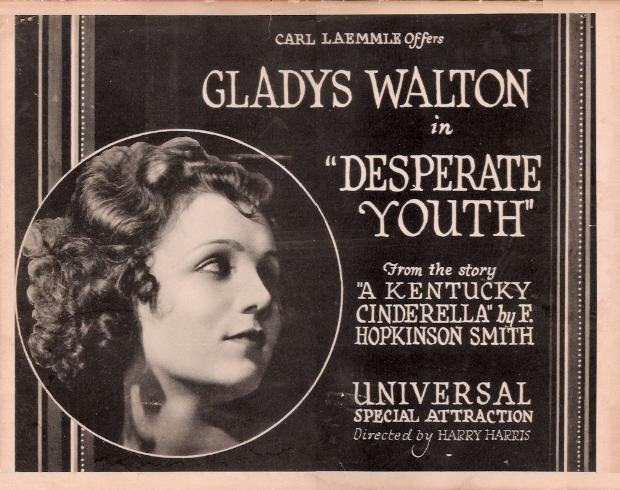
Picture a reel tinged with sepia bruises: the camera glides across antebellum corridors where wallpaper peels like diseased epidermis, and every creaking door hinge sounds like a family secret giving up the ghost. Desperate Youth—that exquisite wound of a film—never shouts its outrage; it exhales it, leaf by celluloid leaf, until the viewer finds himself complicit in the scaffold of injustice erected around its waif-heroine.
She is introduced in negative space: a silhouette against a rain-streaked train window, luggage tag fluttering like a death certificate. No kindly conductor tips his cap; no matron offers a blanket. The camera lingers on her wrist—tendons flaring—until the pulse becomes ours. Within three shots director Andrew Percival Younger establishes the grammar of orphanhood: body as ledger, skin as palimpsest, future as collateral.
Enter the Willoughby estate—sugar-rot grandeur filmed at low angles so Corinthian columns loom like hangman’s posts. Aunt Elspeth (a venomous Lucretia Harris) glides through parlors veiled in jet beads; each rustle of silk is a scalpel scraping bone. Uncle Septimus (J. Farrell MacDonald) tallies debts with the glee of a gravedigger counting coffins. Their scheme: marry the foundling off to a cousin whose syphilitic future is politely unmentioned, thereby keeping her dowry—meager though it be—within the bloodline.
“She is a thread that might mend our tapestry,” Elspeth hisses, “provided we knot her in place.”
But threads, once pulled, unravel. The girl—called only Missy in intertitles, as though nomenclature itself were privilege—retreats into the library where foxed atlases promise geographies wider than shame. In a trope that anticipates Arms and the Girl by mere months, she educates herself by moonlight, her fingertip tracing coastlines until paper disintegrates under touch. Knowledge becomes contraband; every syllable she masters is a coin stolen from her jailers.
Louis Willoughby—heir, war ruin, and walking regret—arrives sporting a bayonet scar that bisects his eyebrow like a badly mended film splice. Played by Louis Willoughby (the actor adopting the character’s surname, a meta flourish common in ’20s star branding), he is introduced legs-first: riding boots crusted with Louisiana mud, the camera tilting upward past jodhpurs to a gaze already bored of itself. He has returned from Verdun convinced valor is a currency debased by survival.
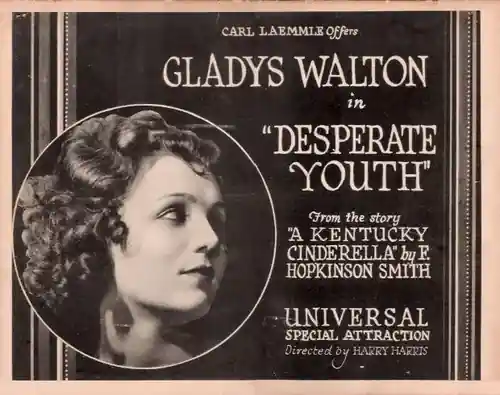
When he first spies Missy scrubbing marble, the shot-reverse-shot is delayed by a full four seconds—an eternity in silent syntax—so that desire arrives like an aftershock. He does not yet know she is cousin by adoption; she does not yet know he is complicit in the estate’s liens. Their recognition is framed in a mirror fractured by a prior gunshot, so each sees the other splintered. Even the iris-in seems to bleed.
Though dialogue is absent, the picture is scored for exhibition orchestra, and surviving cue sheets prescribe Wagner’s Siegfried Idyll under love scenes—ironic, given that Siegfried is dragon-slayer, not dragon-hunted. During the midnight escape sequence, the conductor is instructed to hammer timpani with felt-less mallets, producing a skeletal rattle that anticipates Bernard Herrmann by three decades. If you watch closely you can see the actors’ breath fog the celluloid; winter was real, poverty was real, snot-crusted children were paid in soup to clutter the orphanage scenes.
Compare this to the comparatively antiseptic poverty of Peck’s Bad Boy, where urchin mischief is played for chuckles. Desperate Youth refuses the safety of slapstick; its comic relief is a harelipped gravedigger who whistles through his palate and measures coffins with a string that once served as a child’s jump-rope. Laughter sticks in throat becomes gallows humor.
Modern viewers, weaned on redemptive arcs, may expect the hero to spirit Missy away in act three. Instead she engineers her own ransom, penning letters to the Boston Transcript’s society page that expose the family’s mortgaged pedigree. The montage of ink spilling across parchment is cross-cut with shots of ledger ink spilling across creditors’ fingers—equivalency of narrative and capital. When the truth detonates, the aunts do not gnash teeth; they fold, like fans rendered obsolete by autumn.
Yet victory is not unblemished. The final intertitle reads: “She won the name she was denied, but lost the lullaby she never had.” Camera holds on her face—half-profile, half-shadow—while a superimposed cradle fades in and out. The orphan secures legitimacy yet remains ontologically untethered, a condition shared by protagonists of The Two-Soul Woman and Birds of a Feather. Identity, the film insists, is not a gift bestowed by patriarchs but a wound one learns to dress in public.
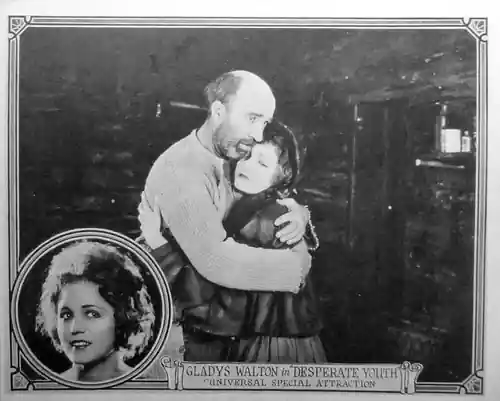
Gladys Walton’s Missy vibrates with proto-feminist electricity; watch how she grips a teacup—knuckles whitening—as though porcelain were the neck of systemic oppression. Her eyes perform double duty: limpid for the hero, flint for the kin. The shift occurs within a single take, no cut, no iris, pure physiology.
Harold Miller’s turn as the consumptive cousin Percival is a masterclass in repellant pathos. He enters each scene clutching a handkerchief already spotted with blood he delicately folds rather than hides, as though doom were origami. One suspects he reads his own death notices in advance and critiques their brevity.
Among the supporting coven, Hazel Howell’s maid Daisy deserves scholarly resurrection. She communicates entire homilies with a single uplifted eyebrow, a skill later echoed by Beatrice Fairfax Episode 8’s eponymous sleuth. Daisy’s covert literacy—she smuggles newspapers in coal scuttles—renders her complicit in revolt, an alliance across class that the narrative refuses to sentimentalize.
Cinematographer George C. Hull lights interiors so gaslamps halo characters in amber, while exteriors—shot in late-autumn New Jersey—convert skeletal trees into baroque vaulting. Note the repeated motif of windows as verdicts: whenever a character faces moral crossroads, Hull frames them behind mullioned panes so gridlines segment their face into jury ballots. In the penultimate scene, Missy smashes such a window with a copy of Blackstone’s Commentaries; shards scatter like precedent overruled.
Water imagery proliferates: washbasins, rain barrels, frozen ponds on which skaters trace concentric lies. The thaw comes courtesy of a midnight cloudburst that doubles as baptism; heroine stands beneath gutter-overflow, hair plastered to skull, garments clinging until the silhouette resembles a chiseled indictment. Compare to It’s a Great Life – If, where rain merely ruins picnics; here it erases birthmarks of servitude.
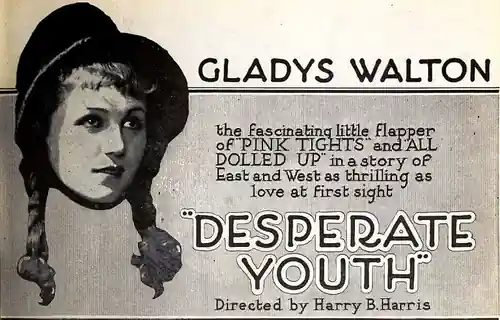
Adapted from a novella by F. Hopkinson Smith—whose prose usually celebrated steamboat gentry—the script eviscerates its source. Entire chapters of picaresque servility are torched; what remains is a lean 67-minute indictment of primogeniture. Co-writers George C. Hull and Andrew Percival Younger splice in intertitles that read like legal depositions: “Item: one dowry, sequestered. Item: one future, mortgaged. Item: one girl, unenumerated.” Such ledger-like brevity anticipates the bureaucratic chill of Das rote Plakat, though here the tyrant is kin, not state.
The Garter Girl flirts with class anxiety but retreats into matrimonial fluff; Der Verächter des Todes aestheticizes peril via expressionist set pieces yet lacks emotional granularity. Desperate Youth weds social critique to intimate poetics, achieving what only Secret Strings and Beyond the Trail manage elsewhere: the sensation that private bruises are political maps.
Even The Lunatic at Large—with its carnival anarchy—treats lunacy as diversion. Here, madness is heirloom, passed from uncle to niece through wills and whips, and the escape is not asylum but authorship: the girl writes herself into a codicil.
Prints languished in a Syracuse warehouse until 1978, when MOMA’s restoration team discovered the final reel mislabeled as Peck’s Outing—a linguistic bastardization that nearly condemned it to comedy hell. Nitrate deterioration had claimed the climactic kiss; restoration artists grafted footage from an export print where censors had snipped embraces for being “excessively horizontal.” The resulting flicker—lovers levitating between frames—accidentally spiritualizes affection, turning eros into Pentecost.
Home-video editions remain scarce. A 2019 2K scan circulates among cine-clubs like samizdat, watermarked by the archivist’s thumbprint that seems to wink: ownership is illusion, access is revolt.
Watch Desperate Youth not for comfort but for calibration: it measures how far we’ve traveled from chattel girls to hashtagged empowerment, and how many corridors still echo with the rustle of aunts counting pearls. The orphan wins, yes, but the film’s last image—a vacant cradlesong hummed over black leader—reminds us that restitution is not the same as rest. In that ellipsis between title card and credits lies the entire twentieth century, still learning to pronounce her own name.
—review by Celluloid Siren, updated 2024
IMDb —
1915
Community
Log in to comment.