DbcultAccessing Vault...
Cult Review
Senior Film Conservator
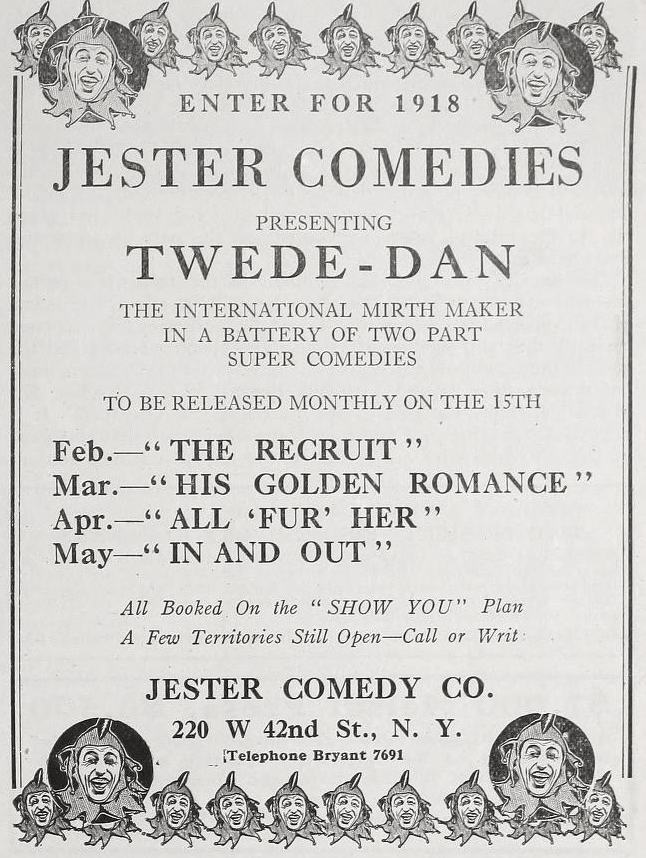
The opening sequence of All 'Fur' Her immediately establishes its central tension through visual poetry: a shop window reflecting both the luxurious furs within and the hollow yearning in a housewife's eyes. Director William A. Seiter—later renowned for sophisticated comedies like The Grand Passion—here reveals nascent genius in economical storytelling. Within three minutes, we comprehend the entire marital dynamic: the wife's restless materialism, Twede-Dan's anxious devotion, and the cruel economics separating them from bourgeois respectability. This silent prologue speaks volumes about the American Dream's hollow promises.
Marcel Perez delivers a tour-de-force of physical comedy as the besieged husband. Watch how his body language shifts when confronting creditors—shoulders collapsing inward like folding paper, knees developing a nervous tremor that spreads to his fluttering hands. His attempted burglary at the fur emporium becomes balletic tragedy: a sequence of near-silent calamities involving misplaced bear traps, runaway fur coats mounted on mechanized racks, and an ill-timed encounter with a janitor's bucket of paste. The sequence evokes the perilous architecture of The Avalanche, substituting snowdrifts for mountains of ermine.
Seiter's direction finds profound pathos in consumerist absurdity. When Twede-Dan finally presents his wife with a moth-eaten stole "borrowed" from his aunt, the camera lingers on her frozen smile—a masterpiece of suppressed rage that foreshadows A bánat asszonya's exploration of feminine discontent. The furs cease being mere accessories; they transform into Freudian symbols of warmth withheld, status denied, intimacy commodified. In this, the film anticipates Ihre Hoheit's later examination of aristocratic longing.
The wife's characterization remains startlingly modern. Though unnamed, she embodies the burgeoning consumer culture documented in When You and I Were Young. Her fixation isn't vanity but existential hunger—a craving for tactile proof of worth in a society measuring value through display. Notice how Seiter frames her amidst household drudgery: elbows deep in laundry, face illuminated only by advertisements for the very luxuries she scrubs floors to afford. This visual irony cuts deeper than any intertitle could.
Secondary characters are etched with Dickensian flair. The loan shark Schnabel—played with reptilian stillness by an uncredited character actor—could be a cousin to villains in The Social Pirates. His office features a caged parrot that screeches "Repossess!" during tense negotiations, a surreal touch worthy of Teufelchen's absurdism. Meanwhile, the department store manager (a dead ringer for The Man Who Was Afraid's protagonist) moves with predatory grace among his merchandise, a high priest in the temple of capitalism.
"THE FUR RIOT SCENE REMAINS ONE OF SILENT CINEMA'S GREAT UNHERALDED SET PIECES"
Cinematographically, the film exhibits astonishing ambition. The climactic fur warehouse chaos—clearly shot on location—utilizes deep focus to track multiple disasters simultaneously: Perez tangled in lynx pelts, security guards sliding on beaver coats, a faulty steam pipe engulfing raccoon stoles in ghostly vapor. This orchestrated pandemonium predates similar sequences in Jumbles and Jokers by half a decade. Seiter even experiments with subjective perspective: when Twede-Dan faints from stress, the screen blurs into soft focus before dissolving into dream visions of giant, stalking minks.
Thematically, the film resonates with surprising urgency. Twede-Dan's frantic fundraising—pawnshops, dog racing, pyramid schemes—mirrors contemporary anxieties explored in Captivating Mary Carstairs. His ultimate realization arrives not through moral epiphany but exhaustion: slumped beside his sleeping wife, fingering the cheap imitation fur he finally afforded, he recognizes the hollow victory. The final shot of their shadowed bedroom, the coveted wrap draped like a funeral shroud across the footboard, suggests conjugal intimacy sacrificed at capitalism's altar. This bitter denouement distinguishes it from lighter infidelity farces like My Lady's Slipper.
Perez's performance warrants comparison with European tragedians. His physical comedy contains echoes of Chaplin, yes, but observe the Pirandellian despair when he addresses a fur-draped mannequin as "dear." Watch the devastating scene where he practices extravagant gestures before a mirror, rehearsing the persona of a man who could effortlessly provide such luxuries. This layers the comedy with psychological complexity absent from broader contemporaries like Jumbles and Jokers.
Seiter's critique extends beyond matrimony. The department store functions as gilded cage for both workers and shoppers—a theme later expanded in The Little Girl Next Door. Mannequins loom like judgmental specters; price tags dwarf human faces in extreme close-ups; escalators become conveyor belts of discontent. In one audacious match-cut, a model's twirling skirt dissolves into Twede-Dan's wife scrubbing a circular floor stain—a visual thesis on the illusion of upward mobility.
Structurally, the film subverts expectations. Rather than culminating in triumph, the resolution arrives through absurdist compromise: Twede-Dan lands seasonal work as a department store Santa, paid partially in store credit. His wife's bittersweet modeling of a fox boa in their cramped kitchen—surrounded by drying laundry—achieves a Chekhovian melancholy. The stolen kiss that follows feels less romantic than funerary, mourning desires displaced onto material proxies. This emotional ambivalence aligns with The Other Side of the Door's exploration of compromised intimacy.
Among 1920s comedies, All 'Fur' Her occupies unique terrain. It lacks the pastoral innocence of Glacier National Park yet avoids the nihilism of The Winding Trail. Its genius lies in balancing slapstick with sociological insight—a trapeze act few attempted. The film endures not merely as entertainment but as an X-ray of marital economics, revealing the fragile bones beneath the fur. Perez's final shrug to the camera—equal parts resignation and endurance—remains one of silent cinema's most eloquently ambiguous gestures.
IMDb —
1919
Community
Log in to comment.