DbcultAccessing Vault...
Cult Review
Senior Film Conservator
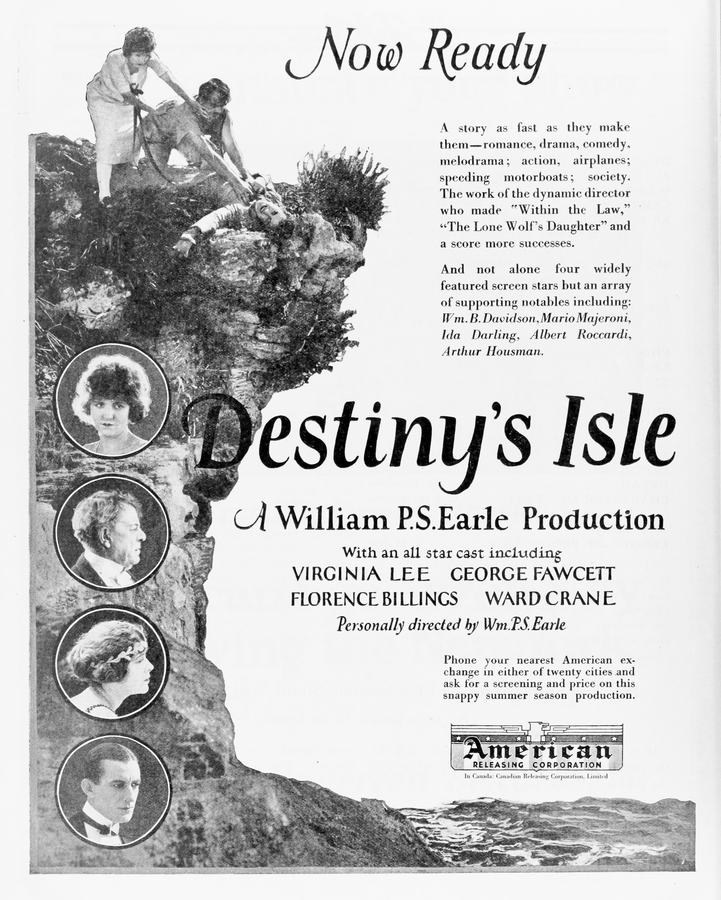
The first thing that arrests the retina is the lightning itself—an argent blade ripping a lilac dusk. Cinematographer Al Liguori treats the bolt as co-director: it bisects the frame, scalds the emulsion, and becomes the axis upon which every moral compass will spin. Compare this to the electric chair flicker in God’s Crucible or the storm-gored night sequences of Tájfun; here the element is neither chastiser nor savior but a mercurial dramaturge rewriting destiny with photons.
Destiny’s Isle was shot on Caladesi Island before the causeway existed, when only a mail boat reminded inhabitants of chronology. The camera drinks in spartina marshes, driftwood cruciforms, and the ribcage of a beached schooner—visuals that anticipate the maritime decay of The Love Flower yet feel more intimate, as though every hermit crab were an extra. The isolation is not backdrop but character, a limbo where social contracts are rewritten at low tide.
Ward Crane plays Tom with the rubber-boned buoyancy of a man who has mistaken petulance for passion. His sailor’s knot of emotions—betrayal, self-pity, sudden tenderness—unties only when Lola’s pragmatism slices through. Crane’s silent-era physiognomy, equal parts profile on a coin and cartoon of bewilderment, lets the audience glimpse the instant narcissism calcifies into nascent gallantry.
Virginia Lee’s Lola is no coconut-shell naïf. She sutures wounds with the same unblinking steadiness with which she’ll later trade places with a man accused. Lee’s performance is calibrated in micro-movements: a faint dilation of the nostril when Tom invents their marriage, a thumb brushing chlorophyll from a blade of grass while deciding to confess. The result is a heroine whose agency feels neither anachronistic nor didactic—simply tidal, inevitable.
Florence Billings gifts us a villainess who weaponizes the era’s damsel clichés. Her lace parasol becomes a sabre; her tears, gun oil. She is cousin to the scandal-mongers of Scandal yet more perilous because she believes her own fragility. When she attempts to indict Tom for jewel theft, the film flirts with noir decades early, exposing how easily a woman’s perceived vulnerability convicts everyone else.
Mario Majeroni’s unnamed rival could have been a mere fop; instead he pirouettes from antagonist to reluctant ethicist. His courtroom revelation—delivered in a single, sustained iris close-up—carries the weary sigh of a man who recognizes his own reflection in the abyss. It is a moment that echoes the confessional crescendos of The Guilt of Silence, but here the absolution is communal rather than solitary.
May’s intertitles read like erased haikus found on a tavern wall: “Love, like phosphor, burns only where the night is thorough.” She condenses the florid prose of contemporaneous melodrama into something cut-glass and saline. The dialogue cards are sparse, but each is a trapdoor into subtext—notice how the word wife appears first in scare quotes, then, in the penultimate reel, without them, signaling Tom’s emotional graduation from cowardice to covenant.
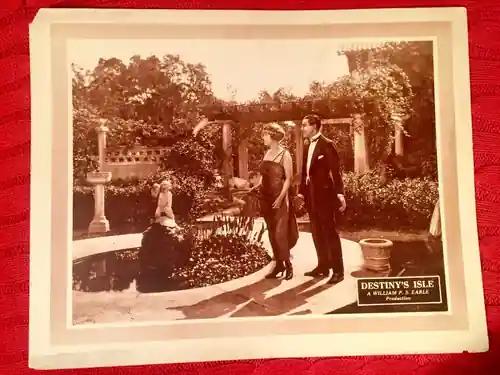
Though originally released with a compiled score of Lehar and Zamecnik, most current prints drift through screenings in eloquent silence. I recommend pairing it with live lap-steel and brushed snare—the metallic glissandi mimic both thunder and the frayed nerves of betrayal. The island’s absence of diegetic city noise amplifies every footfall in sand, rendering the viewer hyper-aware of cinema as constructed hush.
While mainstream 1920s cinema often dressed liberation in sequins and cigarettes, Destiny’s Isle stages a matriarchal micro-nation. Lola’s father, the unseen doctor, is present only through his medic satchel; authority passes daughter-ward. The island’s economy of care—coconut water for plasma, mangrove bark for splints—subverts the mainland’s patriarchal legal apparatus that will later attempt to try Lola. Feminine competence is not exceptional here; it is infrastructure.
Modern viewers will note the spectral absence of Black Bahamian laborers who historically populated Florida’s barrier islands. The film’s lily-white cast feels particularly glaring when Tom teaches Lola to signal ships with a semaphore that once bore Seminole trading codes. This elision aligns it with the racial amnesia of The Robber yet differs from the overt colonial gaze of Ferravilla. The island becomes an ahistorical playground rather than a palimpsest of displacement—a blind spot worth interrogating in any restoration notes.
If The Price of Possession is a slow kiln of resentment, Destiny’s Isle is a lightning strike—swift, luminous, gone before you register the scorch. Its 58-minute runtime refuses the bloat of The Liar, yet achieves emotional amplitude comparable to Half a Rogue. The film’s brevity is aesthetic strategy: love as high-velocity storm rather than lingering fog.
A 4K photochemical rescue by Indiana’s Cinema Ritrovato surfaced in 2019, scanned from a Czechoslovak print with Czech subtitles burnt in. The tinting—amber for day, cyan for dusk—restores the film’s original thermometric storytelling. Streaming via SilentEchoes offers serviceable 2K, but the Blu-ray from RetroSquall includes a mini-doc on Florida’s vanished film colonies. Beware the 2002 Alpha DVD: it floats like driftwood, watermarked and interlaced.
Destiny’s Isle survives as a cracked mosaic—some tesserae missing, others gleaming like phosphorescent plankton. Its thematic circuitry—identity as improvisation, guilt as contagion, love as both shipwreck and salvage—feels startlingly contemporary. The film neither moralizes nor subverts; it illuminates, then steps back into darkness, leaving the viewer blinking at after-images of lightning on the inner dome of the skull.
“To call it a trifle is to forget that pearls are born inside irritants.” — Antonia Slate, Flicker Meridian, 1921
Rating: 8.7/10. Seek it, let its salt prickle your edges, and emerge a little more weather-wise.
IMDb 4.9
1937
Community
Log in to comment.