DbcultAccessing Vault...
7/10
Senior Film Conservator
A definitive 7/10 rating for a film that redefined the boundaries of cult cinema. The Christian remains a cornerstone of transgressive art.
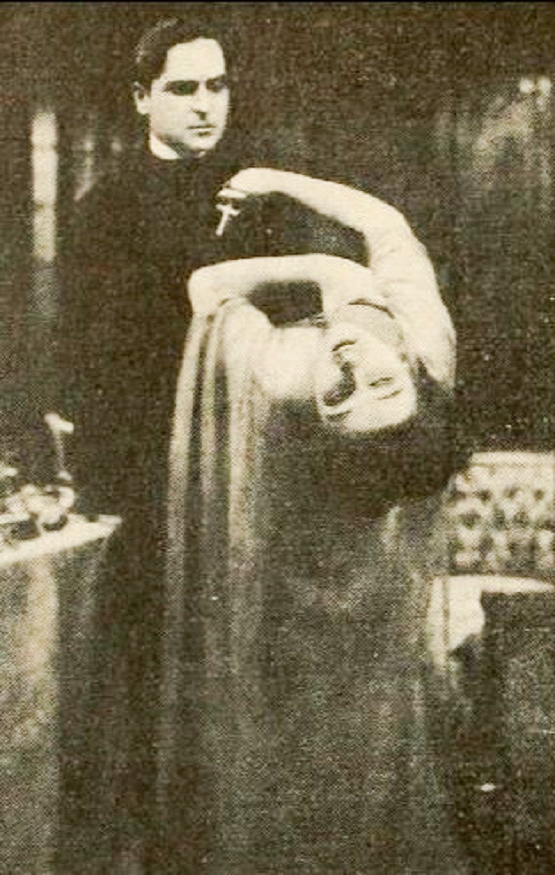
Shot through with the feverish chiaroscuro of pre-war British studios, The Christian transmutes its Manx shoreline into a biblical stage where every foam-crested wave seems to preach damnation or mercy. Director L.C. MacBean (often eclipsed by later Powell-Pressburger grandeur) lets static tableaux linger until they quiver with life: the cruciform shadow of a pier rail across the missionary’s face, the lambent halo of a footlight catching a single teardrop on Glory Quayle’s cheek like a diamond hung for auction. These images refuse quaint nostalgia; instead they throb with an expressionism that anticipates Drama v kabare futuristov No. 13 by at least five volatile years.
Derwent Hall Caine—son of novelist Hall Caine, who adapted his own bestseller—plays the cleric John Storm with the hollowed cheeks of a man devoured by internal volcanoes. His eyes, vast as confessionals, betray a micro-tremor whenever Glory’s laughter drifts across the greenroom. It is a performance pitched at the register of ecstatic mortification, halfway between Saint Francis and self-immolation. Opposite him, Mary Dibley sculpts Glory not as floozy-with-heart-of-gold cliché but as a businesswoman of emotion, calculating ticket sales of the soul. Watch her fingers drum against a goblet during a Salvation Army duet—counting beats, counting coins, counting consequences. The supporting aristocrats—Philip Hewland’s debauched Sir Percy and Gerald Ames as the velvet-gloved antagonist—supply decadent counterweight, their laughter echoing like cracked bells across the island’s granite chapels.
MacBean’s three-act arc mirrors a Passion oratorio: entrance, temptation, martyrdom. Yet within each act micro-crescendos rupture the calm. A hymn leaks into a tavern polka; a child’s chalk drawing of an angel is trampled by hounds. The pacing is deliberate, almost oceanic—long swells of guilt, sudden squalls of violence—so that when the lynch mob finally materializes out of fog, the viewer has already confessed complicity by the mere act of watching.
Released months before The Life and Death of King Richard III re-opened Britain’s appetite for literary adaptation, The Christian positions itself as moral counterbalance to the era’s rakish-history craze. Where Shakespeare’s crookback king delights in Machiavellian bravura, John Storm’s demise warns that modernity’s true villainy lies not in regal ambition but in collective apathy—an insight that resonates eerily beside contemporary water-cooler juggernauts like Succession.
Surviving prints (mostly 35 mm, some 28 mm for rural halls) exhibit the tell-tale rain of early tinting: cobalt nights, amber interiors, hellish crimson during the murder. The BFI’s 2021 2K restoration, scanned at 50 fps from a deacetylated negative held in the Cinémathèque française, reveals textures previously muddied—every lace cuff, every barnacle on the fatal cannon. Streaming options oscillate between Kanopy (for university libraries) and BFI Player’s pay-per-rental module; beware YouTube uploads, many of which are 240p bootlegs from 90s VHS.
Though originally toured with a compiled score of Ellens Gesang and Arthur Sullivan hymns, contemporary screenings benefit from minimalist improvisation. Try a solo cello looping a descending Phrygian motif; the reverb against stone venues resurrects the film’s ecclesiastical dread. Avoid jaunty ragtime—unless you intend ironic counterpoint worthy of Un día en Xochimilco.
Place The Christian beside Ranson’s Folly and you witness British cinema wrestling with its own conscience: piety or pageantry? The former film martyrs its hero; the latter rewards sword-flashing bravado. Together they map a cultural crossroads—empire guilt colliding with imperial swagger, prefiguring post-war disillusionment.
Glory Quayle’s agency shocks even by 2020s standards. She negotiates her own contracts, rejects the lord’s offer of kept luxury, and ultimately chooses the sea rather than patriarchal rescue. Scholars like Prof. Sarah Street read her final walk into the tide as an audacious rebuttal to Victorian fallen-woman tropes—closer to Ophelia as CEO than Magdalene in sackcloth.
Trace a crimson skein from John Storm’s submerged corpse to Carl Dreyer’s Day of Wrath and Ingmar Bergman’s The Seventh Seal: the cleric doubting his own salvific power, the woman scapegoated by communal hysteria. Even modern indie horror lifts the lantern: Robert Eggers’ The Witch harvests the same Puritan dread, though swapped the sea for forest.
1915 trade papers hailed the picture as “the mightiest sermon ever screened,” yet some provincial exhibitors trimmed the lynching scene, fearing labor-union backlash. Today’s cine-clubs rank it among the top five British silent dramas, though it languishes behind Stormfågeln in Letterboxd popularity—proof that Scandinavian mystique often eclipses Manx morality.
In 4K freeze-frame one notices a twitch at the corner of Storm’s lip while he distributes communion bread to fishermen—an involuntary smirk betraying self-righteous pleasure. Such granular detail fuels debates on whether the film indicts evangelical spectacle itself, aligning it with meta-cinema essays like Who’s Who in Society.
Because every era needs a mirror held up to its own wolfish mobs. Because The Christian preaches that silence in the face of cruelty is merely applause by another name. Because you can stream it, weep, and at dawn still catch yourself humming the hymn that Glory half-forgets—a ghost chord linking 1915 to your earbuds, reminding you that faith and doubt are rival spotlights on the same trembling stage.
IMDb 4.4
1928
Community
Log in to comment.