DbcultAccessing Vault...
Cult Review
Senior Film Conservator
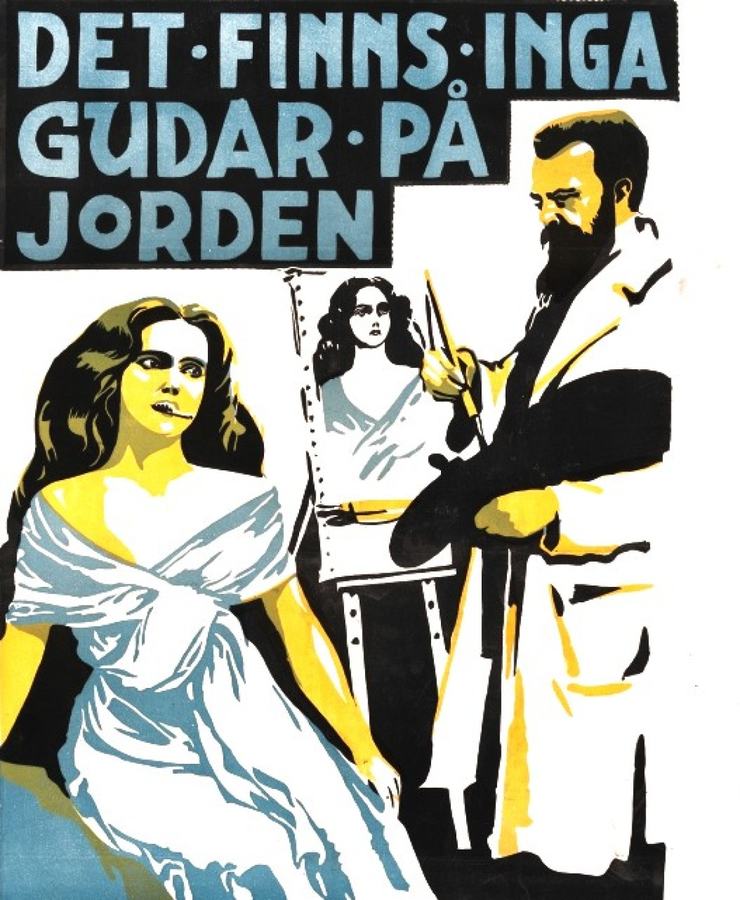
The silent era, frequently and unfairly relegated to the dusty archives of cinematic history, often gifted audiences with narratives of profound emotional depth and philosophical inquiry, proving that the absence of spoken dialogue could paradoxically amplify the power of visual storytelling. "Det finns inga gudar på jorden" (There Are No Gods on Earth), a Swedish cinematic endeavor from a bygone epoch, stands as a resonant testament to this truth. It is a film that delves into the intricate interplay between fervent artistic aspiration, profound spiritual desolation, and the often-unseen sacrifices inexorably demanded by the pursuit of creative genius. From its very title, which immediately posits a universe seemingly devoid of divine oversight, the film establishes a somber, introspective, and almost existential tone, inviting discerning viewers into a world where human struggle, artistic endeavor, and the search for meaning must stand on their own merits, unassisted by any celestial intervention. This particular work, while perhaps less globally renowned than some of its more celebrated contemporaries, offers a compelling and illuminating window into the complex existential currents that permeated early 20th-century European thought, all intricately wrapped within a deeply personal drama of artistic muse, moral quandary, and the very essence of human connection.
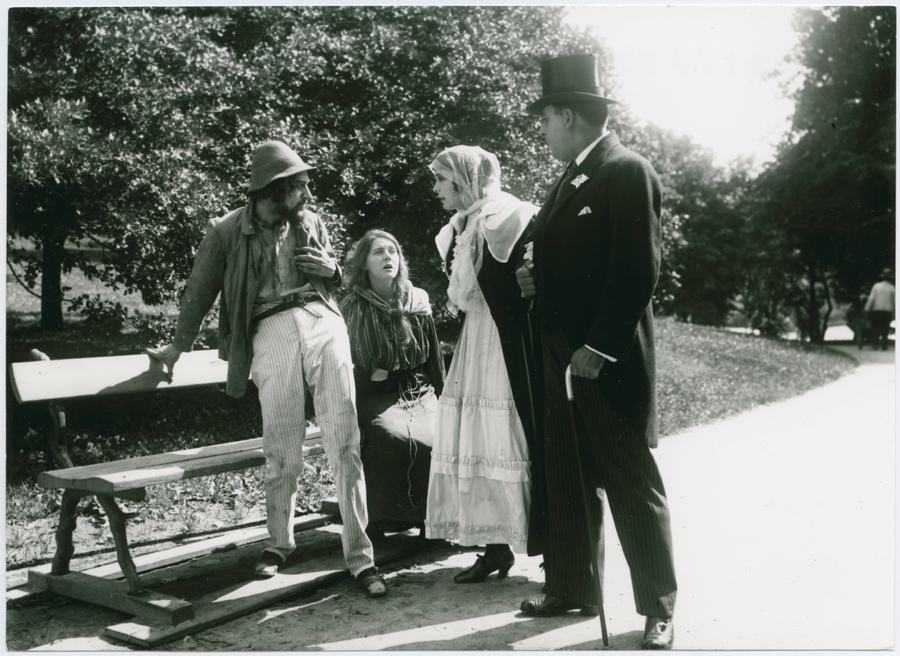
At the very core of this poignant drama is Gaston Brenner, portrayed with a haunting and understated intensity by Manne Göthson. Gaston is a musician, his very soul seemingly woven from the delicate, yet resilient, fabric of profound melancholy. His countenance, a veritable canvas of quiet suffering and introspective sorrow, belies a nascent musical talent that is both prodigious in its raw potential and profoundly fragile in its emotional underpinnings. It is this very fragility, coupled with an undeniable, almost preternatural musical gift, that inexorably draws him into the formidable orbit of Jean Krause, a revered pianist whose formidable reputation precedes him like a grand, meticulously orchestrated overture. Krause, embodied with an imposing gravitas by Bertil Brusewitz, is far more than a mere mentor; he is a formidable gatekeeper to an elevated world of artistic refinement and demanding excellence, a figure whose inherent authority and meticulously cultivated demeanor suggest a life singularly dedicated to the relentless pursuit of aesthetic perfection. His decision to accept Gaston as a student is not merely an acknowledgment of raw skill, but an initiation into a demanding universe where fervent passion and rigorous discipline are inextricably linked, often at great personal cost. The dynamic between master and apprentice is beautifully understated yet perceptibly laden with the unspoken expectations, subtle power imbalances, and profound psychological weight inherent in such transformative relationships. Krause clearly discerns immense potential, yes, but perhaps also a poignant reflection of a youthful intensity, a raw, unpolished gem he believes, with an almost alchemical conviction, he can facet into dazzling brilliance.
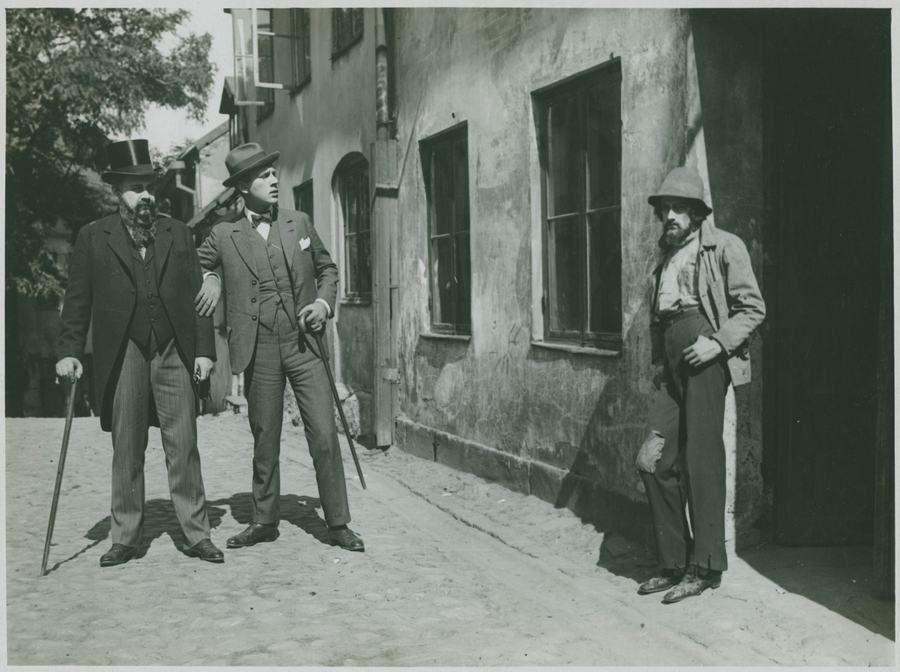
The narrative, however, takes a pivotal and ultimately transformative turn with Gaston's introduction to Mac Steep, a painter of formidable ambition and singular vision, brought to vivid, almost unsettling life by Sture Baude. Steep is utterly consumed by a singular, monumental artistic vision: a radical reinterpretation of Christ's Last Supper. This is no mere academic exercise in historical reconstruction; it is an artistic quest imbued with profound spiritual, personal, and perhaps even heretical significance. Steep ardently seeks to capture not just the historical event itself, but its enduring emotional resonance, its timeless theological weight, and its deeply human pathos. He is an artist driven by an almost Faustian zeal, his canvases vast and unyielding, his artistic hunger seemingly insatiable, his vision bordering on an all-consuming obsession. It is in Gaston's melancholic, sorrow-etched visage that Steep discovers his quintessential muse, the perfect, living embodiment for the central figure of Christ. The film subtly, yet powerfully, suggests that Steep doesn't merely see a model; he perceives a profound, suffering soul, a living canvas upon which the immense weight of the world, or at least the formidable weight of his own monumental artistic vision, can be projected and made manifest. This moment of profound recognition – Steep's almost revelatory epiphany regarding the expressive power of Gaston's face – is a chillingly beautiful one, transforming Gaston from a nascent musician with his own dreams into a living symbol, a vulnerable vessel for another artist's profound spiritual contemplation and creative ambition. This intricate intersection of two distinct creative minds, one finding profound expression through the ethereal realm of sound, the other through the tangible vibrancy of pigment, forms the central, pulsating axis around which the film's deeper, more unsettling questions inexorably revolve.
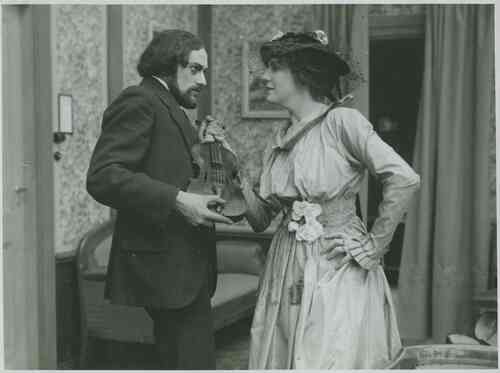
The thematic richness of "Det finns inga gudar på jorden" is manifold and profoundly evocative, inviting contemplation on several intricate layers of human experience. Foremost among these is the pervasive and often disquieting theme of art and sacrifice. The film meticulously illustrates the often-unseen and frequently devastating toll that intense artistic creation exacts, not just from the solitary creator, but perhaps even more acutely from those who become inextricably entangled in its relentless, often unforgiving orbit. Gaston, initially drawn by the alluring promise of musical mastery and personal fulfillment, finds himself unwittingly conscripted into a different, more profound form of artistic service. His very essence, his inherent sadness, his quiet despair, becomes a tool, a raw emotional resource, a wellspring for Steep's grand design. This raises a cascade of potent and uncomfortable questions: At what precise point does genuine inspiration transmute into calculated exploitation? What is the profound moral obligation of the artist to their muse, beyond mere aesthetic appreciation? The film steadfastly refrains from offering simplistic or facile answers, instead allowing the discerning audience to grapple with the complex ethical ambiguities and moral quandaries inherently woven into the fabric of the creative process. This unflinching exploration of the artist's burden and the muse's vulnerability resonates deeply with the complex, often fraught, interpersonal dynamics seen in narratives like A Man and the Woman, where intimate relationships become the crucible for profound personal transformation, frequently at a significant, sometimes heartbreaking, cost. The film compellingly suggests that true, transcendent art is rarely, if ever, born without some form of immolation, a burning away of the mundane and the personal to reveal something truly extraordinary and profound.
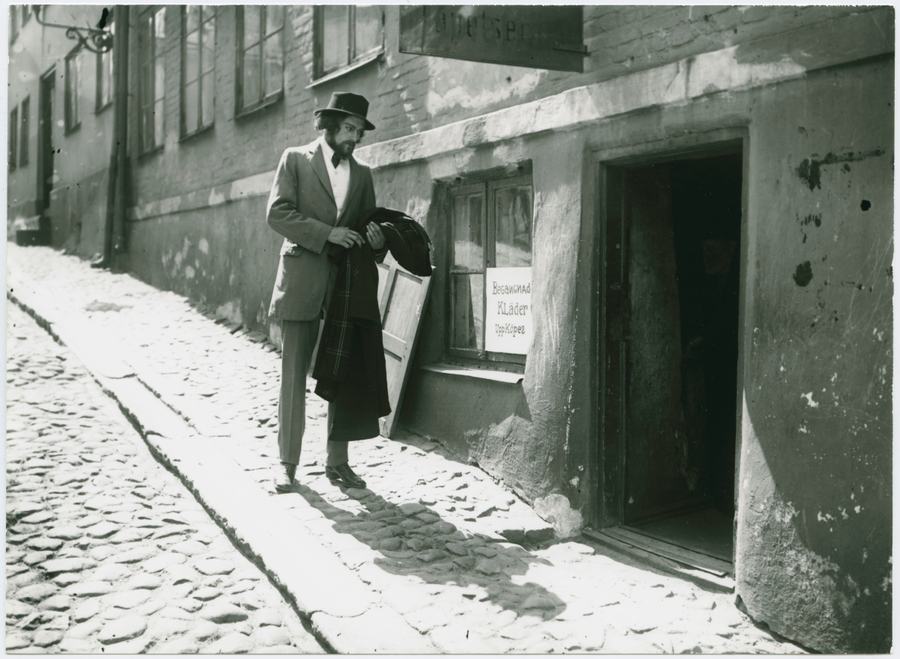
Beyond the intricate mechanics of the artistic process, the film courageously grapples with profound questions of spirituality and doubt, themes deeply embedded and provocatively underscored by its very title. "There Are No Gods on Earth" is not a defiant statement of militant atheism, but rather a lament, a profound philosophical reflection on a world where divine intervention feels conspicuously absent, leaving humanity to navigate its myriad trials and existential quandaries largely alone and unaided. Steep's audacious ambition to paint Christ's Last Supper, utilizing Gaston's sorrowful and deeply human face, becomes a potent symbolic act. Is it an act of profound faith, an earnest attempt to re-contextualize the divine within the inescapable confines of human suffering, or is it a more cynical commentary on the very human need to project divinity onto inherently mortal and imperfect forms? The film's Christ figure, embodied by the vulnerable Gaston, is not an ethereal, beatific presence bathed in celestial light, but one visibly weighed down by earthly sorrow, a poignant reflection of universal human experience rather than an unattainable divine transcendence. This radical humanization of the sacred, or perhaps the compelling secularization of the sacred, offers a powerful and thought-provoking counterpoint to more overtly devotional films like The Life and Passion of Jesus Christ, which often seek to inspire unwavering, unquestioning faith. Here, faith itself is rigorously interrogated, refracted through the complex, often contradictory lens of human experience and deeply personal artistic interpretation. The film provocatively posits that if gods are indeed absent, then perhaps human empathy, shared human suffering, and the boundless capacity for human creativity become the only true divine expressions accessible to us, the only means by which we can touch the transcendent.
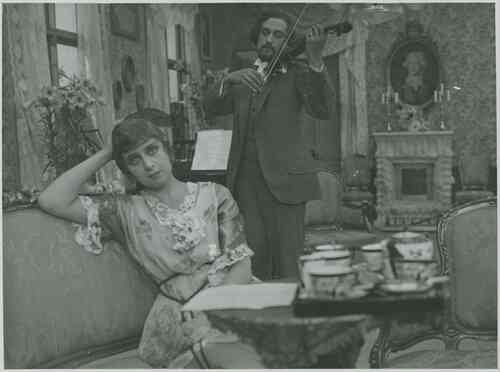
The pervasive and all-encompassing melancholy that so profoundly defines Gaston is not merely a superficial character trait; it is an undeniable, potent driving force, a deep wellspring of artistic inspiration. The film possesses a sophisticated understanding that sorrow can be as fertile and productive a ground for profound creativity as unbridled joy. Gaston's quiet despair, his withdrawn and introspective nature, makes him an exceptionally compelling figure, not merely because he is tragic, but because his sadness possesses a profound, almost spiritual beauty, an alluring depth that transcends mere suffering. Steep doesn't choose Gaston for conventional physical beauty, but for the immense depth of raw emotion and existential weariness etched onto his countenance. This exquisite exploration of the aesthetic power of suffering and profound introspection is a hallmark of certain artistic movements, finding powerful parallels in the evocative works of German Expressionist painters or the soul-stirring verses of Romantic poets. The film masterfully employs nuanced close-ups of Gaston's expressive face to convey volumes of unspoken emotion, allowing the audience to project their own understanding and empathy onto his silent, profound anguish. It serves as a powerful, enduring reminder that sometimes, the most profound and universal insights arise from the deepest, most unfathomable wells of human sorrow.
The often complex role of mentorship and influence constitutes another critical and intricately woven thread in the film's rich tapestry. Jean Krause's initial mentorship of Gaston is undeniably benevolent, a guiding hand nurturing a raw, prodigious talent. However, the subsequent influence of Mac Steep is far more complex, bordering on an almost vampiric extraction of Gaston's very emotional essence. Steep, in his single-minded and often ruthless pursuit of his monumental artistic vision, perceives Gaston not as an autonomous individual with his own aspirations and vulnerabilities, but primarily as a perfect, indispensable model. This fraught dynamic profoundly highlights the inherent potential for artistic relationships to become dangerously unbalanced, where one party's insatiable creative drive inadvertently, yet inexorably, consumes the other's spirit and individuality. It functions as a poignant, cautionary tale about the ethical boundaries of inspiration, and how easily a muse can tragically become a sacrifice. The film subtly, yet powerfully, critiques the often-romanticized idea that "art for art's sake" can morally justify all means, instead urging a profound consideration of the inherent human cost involved in the relentless pursuit of artistic grandeur.
Visually, "Det finns inga gudar på jorden" is undeniably a product of its specific time, yet it possesses a remarkably timeless quality in its evocative and meticulously composed imagery. The cinematography, though adhering to the established conventions of early silent cinema, utilizes the interplay of light and shadow with considerable skill and artistic sensitivity to underscore the complex emotional states of its characters. The interiors, particularly Steep's expansive and often cluttered studio, are rendered with a stark, almost unsettling realism that vividly highlights the artist's intense focus and all-consuming dedication, often contrasting sharply with the quieter, more intimate and vulnerable spaces where Gaston practices his solitary music. The framing frequently emphasizes profound isolation, particularly for Gaston, powerfully reinforcing his internal struggles and growing sense of detachment. The inherent lack of spoken dialogue forces the visual narrative to carry the entire emotional and thematic weight of the story, a formidable challenge that the film meets with remarkable efficacy and artistic prowess. The director, Yngve Schönberg, demonstrates a keen and intuitive understanding of visual storytelling, allowing the nuanced expressions, subtle gestures, and deliberate movements of the actors to convey the narrative's intricate nuances and emotional depths. This profound reliance on visual cues for emotional resonance and narrative progression is a defining characteristic of the silent era, and here it is employed to exceptionally powerful effect, drawing the discerning viewer deeply into the characters' complex inner worlds without the need for a single spoken word.
The performances across the board are uniformly strong and compelling, a testament to the dramatic capabilities and expressive power of silent film actors. Manne Göthson, as Gaston Brenner, delivers a performance that is both exquisitely understated and profoundly moving. His eyes, in particular, convey an almost bottomless well of sadness, introspection, and quiet resignation, making his portrayal of the melancholic musician utterly believable and deeply empathetic. He doesn't merely act; he profoundly embodies the character's internal landscape with a rare authenticity. Bertil Brusewitz, as Jean Krause, projects an aura of dignified authority, intellectual discernment, and artistic gravitas, a figure whose commanding presence anchors the early, formative part of Gaston's artistic journey. Sture Baude's Mac Steep is a formidable and often unsettling presence, radiating an intense, almost obsessive creative energy that borders on the fanatical. His portrayal masterfully captures the single-minded devotion of an artist utterly consumed by his vision, even when it veers into a troubling callousness towards his vulnerable muse. The supporting cast, including Gabriel Alw, Olga Hällgren, Greta Pfeil, and Harry Roeck Hansen, contribute significantly to the film's rich and textured tapestry, each adding depth and authenticity to the meticulously crafted world inhabited by these artistic souls. Their collective efforts ensure that the emotional stakes remain consistently high and palpable, even in the profound absence of spoken dialogue.
In considering its distinctive place within the broader cinematic landscape, "Det finns inga gudar på jorden" offers a unique and compelling perspective on universal themes that have preoccupied artists and philosophers for centuries. While it does not possess the sweeping, epic scope of some biblical films, its intimate and intensely human focus on the emotional and spiritual struggles of individuals makes it profoundly resonant and enduring. One might draw a compelling thematic parallel to films like Revelation, which also explore profound spiritual awakenings and intense personal crises, albeit often with a more overt sense of divine intervention or cosmic significance. Here, the revelation is deeply internal, intensely artistic, and profoundly human. Similarly, the film's psychological intensity and its meticulous focus on an individual's internal world can be seen as a precursor to later, more modern dramas that delve deeply into the artist's psyche, echoing the introspective qualities of films that explore personal torment, creative drive, and the often-fraught relationship between the two. The film's quiet, yet immense power lies in its remarkable ability to transform a seemingly simple premise – a musician becoming a painter's model – into a profound meditation on the very nature of inspiration, the universality of suffering, and the elusive, often agonizing search for meaning in a world that, as its title suggests, often feels profoundly godless.
The enduring legacy of "Det finns inga gudar på jorden" resides firmly in its timeless and unflinching exploration of the creative process and its inherent moral dilemmas. It challenges discerning viewers to rigorously consider the ethical boundaries of artistic expression, the immense cost of true genius, and the profound, often indelible, impact one individual can have on another's artistic and spiritual journey. It is a film that, despite its silent origins and its age, speaks volumes about the enduring complexities of the human condition, reminding us that the most profound and emotionally resonant dramas often unfold not in grand, theatrical gestures, but in the quiet, internal struggles and profound epiphanies of the human soul. Its subtle beauty, intellectual depth, and unwavering emotional honesty cement its rightful place as a significant, if perhaps unjustly overlooked, piece of early Swedish cinema, richly deserving of continued rediscovery, rigorous academic study, and widespread appreciation. The film's provocative title, far from being a simple declaration of despair or nihilism, ultimately transmutes into an profound invitation to find meaning, purpose, and perhaps even a form of immanent divinity within the human experience itself: in the transformative act of creation, in the shared, empathetic experience of sorrow, and in the enduring, almost sacred power of art to illuminate the darkest, most hidden corners of the human soul. It is a powerful, resonant reminder that even in a world where overt gods may be conspicuously absent, humanity's boundless capacity for profound expression, deep empathy, and creative transcendence remains an undeniable, almost sacred, and ultimately redemptive force.
IMDb —
1917
Community
Log in to comment.