DbcultAccessing Vault...
5.7/10
Senior Film Conservator
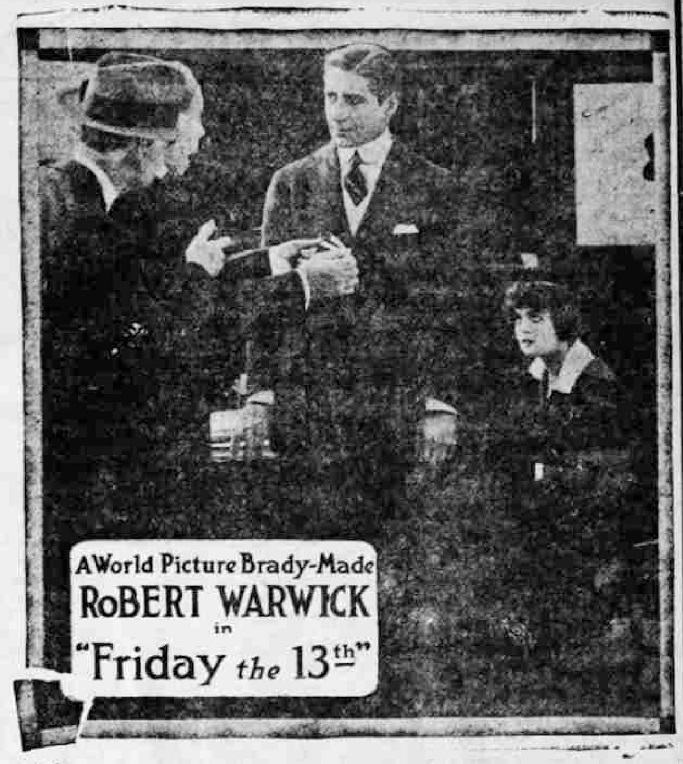
A definitive 5.7/10 rating for a film that redefined the boundaries of cult cinema. Friday the 13th remains a cornerstone of transgressive art.
Before the iconic hockey mask and the relentless slasher, there was another 'Friday the 13th' – a silent film from 1916, a dramatic tapestry woven with threads of financial ruin, simmering revenge, and an unexpected, almost cruel, twist of fate. This cinematic artifact, far removed from its notorious namesake, offers a compelling glimpse into the moral anxieties and social structures of early 20th-century America. It’s a narrative that, despite its century-plus vintage, still manages to probe the timeless complexities of human motivation and the often-blurry lines between justice and retribution.
The film, a product of the nascent Hollywood machine, dares to explore the devastating ripple effects of unchecked ambition and the deeply personal cost of Wall Street machinations. We are introduced to a judge, a figure traditionally associated with order and fairness, who finds his life utterly upended, his reputation tarnished, and his financial standing obliterated by the ruthless machinations of Peter Brownley, a titan of industry whose ethics are as fluid as his capital. This act of brazen financial predation sets the stage for a classic tale of vengeance, but one imbued with a distinctively human touch, thanks to the screenwriting prowess of Frances Marion and Thomas William Lawson.
The heart of this drama pulses with the unwavering resolve of the judge’s daughter, portrayed with a compelling intensity by Leonore Harris. Her character isn't merely a passive victim of circumstance; she is an active agent, a woman driven by a potent cocktail of filial loyalty and righteous indignation. Witnessing her father’s downfall, she doesn't retreat into despair. Instead, she embarks on a meticulous, almost espionage-like, mission to infiltrate the very fortress of her family's undoing: Peter Brownley's office. This audacious move immediately positions her as a protagonist of considerable strength and cunning, challenging the traditional passive roles often ascribed to women in early cinema, though narratives of female agency in the face of adversity were not entirely uncommon, as seen in films like Rags, which also explored a woman's struggle against societal odds.
Her objective is clear: to unearth the financial chicanery, the hidden ledgers, the damning evidence that will not only restore her father's fortunes but also deliver a taste of his own bitter medicine to Brownley. The tension in these early sequences, even in a silent film, is palpable. One can almost feel the weight of her secret, the precariousness of her position, as she navigates the opulent yet treacherous environment of the tycoon's domain. Harris’s expressive acting, a hallmark of the silent era, conveys her internal struggle and unwavering determination without uttering a single word, relying instead on nuanced gestures and piercing gazes.
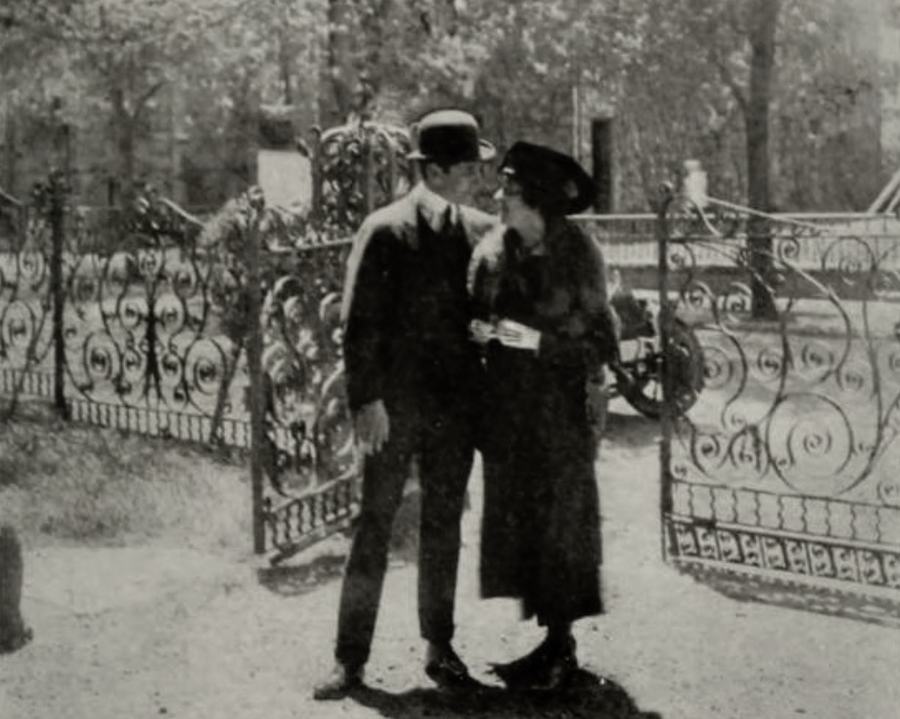
Just as her intricate web of revenge seems poised for success, an unforeseen element is introduced, one that threatens to unravel her entire enterprise: love. She encounters Robert, played by Robert Warwick, who, with his earnest demeanor and undeniable charm, is the antithesis of his ruthless father. The film masterfully crafts their burgeoning romance, presenting it not as a simplistic plot device, but as a genuine, emotionally resonant connection that throws the protagonist's moral compass into disarray. This is where 'Friday the 13th' transcends a mere revenge flick and delves into the more profound territory of human dilemma. How does one reconcile a burning desire for justice with the tender stirrings of the heart, especially when that heart belongs to the son of the very man one seeks to destroy?
Warwick’s portrayal of Robert is crucial here. He projects an innocence, a kindness that contrasts sharply with the established villainy of Peter Brownley. This contrast isn't just for dramatic effect; it serves to complicate the daughter’s mission, forcing her to confront the human cost of her actions, not just on Brownley, but potentially on an innocent man she has come to cherish. The silent film medium excels at conveying these internal conflicts through close-ups and dramatic staging, allowing the audience to project their own understanding onto the characters’ unspoken thoughts. The emotional stakes are raised considerably, reminiscent of the intricate romantic entanglements seen in contemporary dramas like The Glory of Youth or Her Great Price, where love often battled against societal pressures or personal obligations.
Leonore Harris delivers a performance that anchors the film’s emotional core. Her ability to convey a spectrum of emotions – from steely determination to tender affection, from simmering anger to profound confusion – is remarkable. She doesn't merely act; she embodies the character's internal world, making her moral quandary resonate deeply with the viewer. Robert Warwick, as her romantic counterpart, provides a gentle foil, his character’s genuine affection serving as a powerful counterweight to the harsh realities of the narrative. Their on-screen chemistry, achieved through subtle glances and shared moments of vulnerability, is surprisingly effective, creating a believable foundation for their star-crossed romance.
The supporting cast, including Gerda Holmes, Clarence Harvey, Charles Brandt, and Montagu Love, each contribute to the film’s rich tapestry. Montagu Love, in particular, often played powerful or villainous roles, and his presence here would undoubtedly add a layer of gravitas or menace, depending on his character’s alignment. In silent cinema, every gesture, every facial expression is magnified, and the ensemble cast rises to this challenge, creating a world that feels both grand in its dramatic scope and intimate in its personal struggles. It’s a testament to the skill of these early performers that they could convey such complex narratives without the benefit of spoken dialogue, relying purely on the visual language of cinema. This era frequently saw actors like Warwick and Harris grappling with intense emotional material, much like the challenging roles found in films such as The Despoiler, which often demanded a similar level of dramatic intensity from its leads.
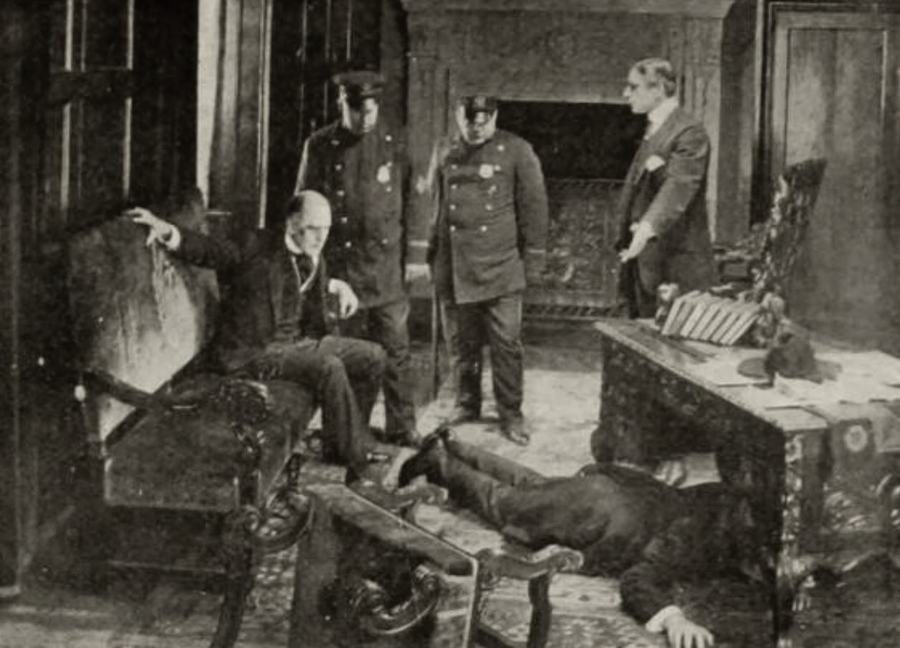
The screenplay by Frances Marion, one of the most prolific and respected writers of the silent era, alongside Thomas William Lawson, is a masterclass in dramatic construction. Marion was renowned for crafting complex female characters and narratives that explored social issues with nuance. Here, she takes a familiar revenge trope and elevates it with layers of emotional depth and moral ambiguity. The plot unfolds with a steady rhythm, building suspense and empathy in equal measure. The pacing, crucial for silent films, ensures that the audience remains engaged, following the protagonist’s journey through its various twists and turns.
While specific directorial flourishes by Frank Reicher might be lost to the mists of time for a modern audience, the overall coherence and emotional impact of 'Friday the 13th' speak to a thoughtful and effective directorial hand. Silent film directors relied heavily on visual storytelling – elaborate sets, dramatic lighting, and careful composition – to convey mood and narrative progression. The use of intertitles, far from being a mere necessity, becomes an integral part of the storytelling, providing crucial dialogue and exposition that guides the viewer through the narrative. The film's ability to maintain tension and emotional resonance without spoken dialogue is a powerful reminder of the artistry inherent in this early form of cinema. The intricate plotting and character development here are comparable to the sophisticated narratives penned by other prominent writers of the period, whose work often graced the screens in films like The Money Master, another film delving into financial intrigues and their personal toll.
At its core, 'Friday the 13th' is a profound exploration of several enduring themes. The most obvious is the conflict between revenge and justice. Is the daughter seeking true justice for her father’s wrongs, or is she merely driven by a desire for retribution, a cyclical act of harm? The film subtly poses this question, allowing the audience to ponder the ethical implications of her actions. This moral ambiguity is one of its greatest strengths, preventing it from devolving into a simplistic tale of good versus evil.
Another significant theme is the clash between love and loyalty. The protagonist finds herself torn between her devotion to her ruined father and her burgeoning affection for the son of his destroyer. This internal struggle forms the emotional fulcrum of the narrative, highlighting the painful choices individuals often face when their personal desires conflict with their familial obligations. This dilemma is a universal one, explored across countless narratives, from ancient epics to modern dramas. The film also touches upon the corrupting influence of wealth and power, a theme that resonated strongly in the Progressive Era when 'Friday the 13th' was made. Wall Street, even then, was viewed with a mixture of awe and suspicion, its titans capable of both immense creation and devastating destruction. This critique of unchecked capitalism finds echoes in other social dramas of the era, such as The Tide of Death, which similarly grappled with societal ills and their impact on individual lives.
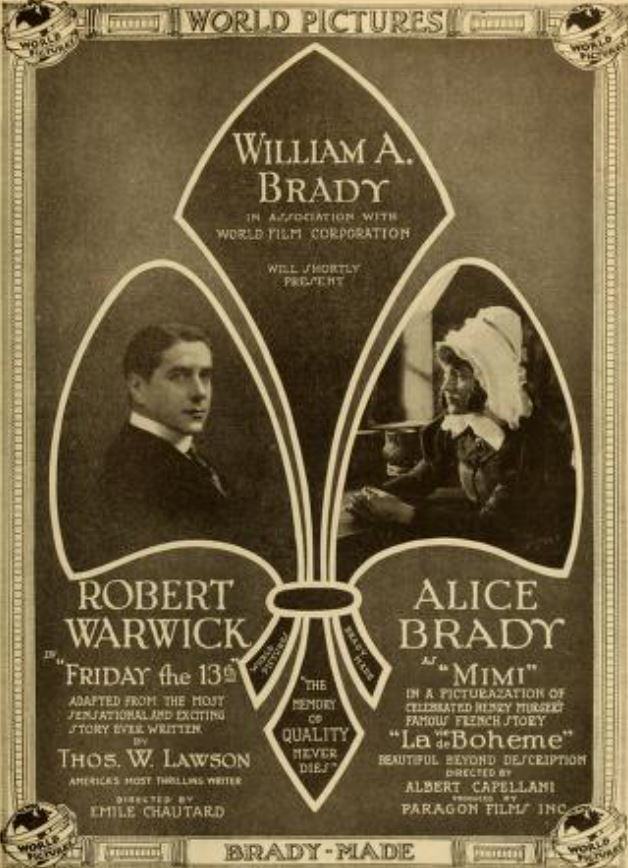
Released in 1916, 'Friday the 13th' stands as a fascinating example of early feature filmmaking. This was a period of rapid innovation in cinema, where storytellers were still discovering the full potential of the moving image. Films were transitioning from short, novelty attractions to complex, multi-reel narratives. The sophisticated plotting and character development seen here demonstrate the growing maturity of the medium. It's a testament to the vision of its creators that they tackled such intricate themes with the tools available to them.
While perhaps overshadowed by more famous films of its time or by its horror namesake, the original 'Friday the 13th' deserves recognition for its dramatic ambition and its compelling performances. It reminds us that even in the silent era, filmmakers were crafting stories with profound emotional depth and social commentary. It’s a forgotten gem that, when rediscovered, offers a rich viewing experience, prompting reflection on human nature, the pursuit of justice, and the enduring power of love to complicate even the most resolute plans. The way it navigates moral complexities is a hallmark of the period's more thoughtful productions, often aiming for narratives that challenged audiences, much like the philosophical inquiries found in a film such as Ivanhoe, which, though an adventure, also delves into themes of justice and loyalty.
The cinematic language of 1916 was one of grand gestures and heightened emotions. Actors were trained to convey internal states through external expressions, a style that can seem melodramatic to modern eyes but was essential for engaging an audience without dialogue. The film's aesthetic, with its reliance on dramatic lighting and carefully constructed sets, would have been state-of-the-art for its time, immersing viewers in the opulent world of Wall Street and the more humble, yet equally dramatic, settings of the judge's ruined life. The contrast between these worlds is visually striking, adding another layer to the narrative's exploration of class and power.
Ultimately, 'Friday the 13th' is more than just a historical curiosity; it’s a compelling drama that resonates with universal human experiences. It showcases the early brilliance of talents like Frances Marion and Leonore Harris, and offers a window into the narrative concerns of a bygone era. For those willing to look beyond the silence, it’s a richly rewarding experience, a powerful reminder that compelling storytelling transcends technological limitations. Its layered narrative and exploration of moral gray areas make it a fascinating study for anyone interested in the evolution of cinematic drama and the enduring power of human stories, quite unlike the more straightforward moralities often presented in films of pure spectacle like The Battles of a Nation.
This early 'Friday the 13th' isn't about jump scares; it's about the slow burn of revenge, the unexpected spark of love, and the intricate dance between personal desire and moral imperative. It's a testament to the enduring power of human drama, proving that some stories, and some conflicts, are truly timeless. Its nuanced portrayal of ethical dilemmas places it in a category with thoughtful social commentaries like Maria Magdalena, which also delves into complex human predicaments.
IMDb 6.4
1920
Community
Log in to comment.