DbcultAccessing Vault...
6.1/10
Senior Film Conservator
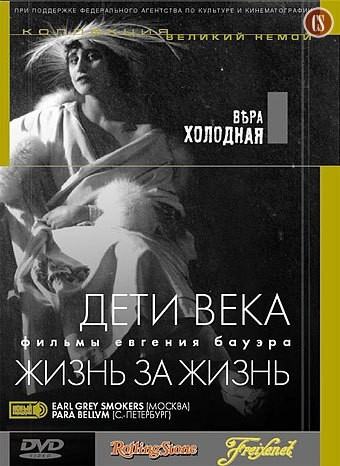
A definitive 6.1/10 rating for a film that redefined the boundaries of cult cinema. Deti veka remains a cornerstone of transgressive art.
Stepping into the world of 'Deti veka' (Children of the Age) is akin to unearthing a beautifully preserved artifact from a bygone era, one that speaks volumes not just of its time, but of timeless human quandaries. This Russian silent film, a veritable showcase for the incandescent talent of Vera Kholodnaya, transcends its historical context to offer a remarkably nuanced exploration of a woman's internal landscape. It’s a film that eschews grand, melodramatic gestures for the subtle tremors of the soul, painting a portrait of quiet desperation and the unexpected sparks of rediscovery.
At its core, the narrative introduces us to Maria, portrayed with breathtaking fragility and depth by Kholodnaya. Maria is, by all outward appearances, the epitome of a woman who has achieved societal success. Married to a prominent bank director, her life unfurls within the confines of luxury and stability. Her days are a tapestry woven with the threads of leisure, unburdened by material concerns. Yet, beneath this polished exterior, Kholodnaya masterfully hints at a profound, almost melancholic, stillness. Her 'contentment' feels less like genuine joy and more like a carefully maintained equilibrium, a state of being achieved through a conscious suppression of deeper desires or unexamined pasts. It’s a captivating study in the paradox of apparent fulfillment, where the absence of want does not necessarily equate to the presence of true happiness. The film, through Maria's silent expressions, poses the profound question: what lies beneath the surface of a perfectly ordered life?
The catalyst for Maria’s introspection arrives in the form of Lidia, an old friend whose unexpected reappearance during an idle afternoon shatters the delicate stasis of Maria’s existence. Lidia is not merely a figure from the past; she represents an alternative trajectory, a road not taken, or perhaps, a reflection of Maria’s own forgotten self. Their reunion is not marked by boisterous celebration but by a quiet, almost hesitant, re-engagement, imbued with the weight of shared history and unspoken possibilities. The film’s genius lies in depicting this reconnection not as a dramatic external event, but as an internal tremor, a subtle shift in Maria’s emotional tectonic plates. Lidia’s presence acts as a gentle provocation, stirring dormant memories and perhaps, dormant desires, within Maria's placid world. This is where M. Mikhailov’s screenplay truly shines, crafting a narrative that understands the power of suggestion and the profound impact of internal conflict over overt action. Unlike the more boisterous comedic escapades seen in films like Dick Whittington and his Cat, 'Deti veka' finds its drama in the quiet corners of the human heart.
Vera Kholodnaya’s performance as Maria is, quite simply, mesmerizing. She was an icon of early Russian cinema, and 'Deti veka' vividly demonstrates why. Her unique ability to convey a spectrum of complex emotions through subtle shifts in facial expression, the languid grace of her movements, and the profound depth in her eyes is unparalleled. In an era where silent film acting could often veer into exaggerated pantomime, Kholodnaya's approach was remarkably restrained and interiorized. She doesn't just act; she inhabits Maria's unspoken anxieties and nascent hopes, making her an incredibly relatable and sympathetic figure. One can almost feel the weight of Maria's comfortable but constrained life pressing down on her, and the tentative blossoming of a new self as Lidia re-enters her orbit. Her portrayal elevates the film from a mere domestic drama to a poignant character study, a testament to the power of silent cinema when wielded by a true artist. Compare her understated power to some of the more overtly dramatic performances of the era, such as those in Life Without Soul, and you see a distinct artistic choice that prioritizes psychological realism.
The thematic richness of 'Deti veka' extends far beyond a simple tale of reunion. It delves deeply into the societal constraints placed upon women in the early 20th century, particularly those within the bourgeois class. Maria’s 'contentment' is a product of her adherence to these prescribed roles: a wife, a homemaker, a decorative figure. The film subtly questions the true cost of such a life, suggesting that external comfort can often mask internal emptiness. The friendship between Maria and Lidia, therefore, becomes more than just a nostalgic encounter; it represents a potential avenue for self-actualization, a glimpse into a life where individual desires might take precedence over societal expectations. This theme resonates powerfully even today, highlighting the timeless struggle for personal authenticity amidst external pressures. It’s a more introspective take on female agency than the adventurous spirit found in a film like Wildflower, focusing instead on internal liberation.
M. Mikhailov's screenplay, despite the limitations of the silent film medium, is remarkably sophisticated. The narrative unfolds with a deliberate pace, allowing the audience to absorb the nuances of Maria's psychological journey. There are no rushed plot points, no unnecessary embellishments; every scene, every intertitle, feels carefully considered to advance the emotional arc. The direction further amplifies this subtlety. The camera often lingers on Maria’s face, allowing Kholodnaya’s expressive features to convey volumes. The mise-en-scène, while reflecting the opulent settings of the era, also subtly reinforces Maria's emotional state—the grand, often empty, rooms mirroring her inner void. The lighting choices, too, play a crucial role, often casting shadows that hint at unseen depths and conflicts. The film's aesthetic choices are not merely decorative; they are integral to its storytelling, creating an atmosphere that is at once elegant and melancholic. This careful construction of mood and character, where every visual element contributes to the psychological portrait, stands in stark contrast to the more straightforward documentary style of The Kineto Coronation Series: Royal Progress Through London, emphasizing the artistic intent.
The title itself, 'Deti veka,' or 'Children of the Age,' offers a potent interpretive lens. It suggests that Maria’s predicament is not an isolated incident but rather indicative of a broader societal condition. She is a product of her time, shaped by its expectations and limitations. Yet, the film also implies a burgeoning awareness, a quiet rebellion against these strictures that may define the 'children' of this particular age. They are on the cusp of a new understanding, a shift in consciousness where individual happiness might begin to challenge the rigid adherence to tradition. The film feels like a precursor to later, more overtly feminist narratives, subtly sowing the seeds of discontent with patriarchal norms. It’s a fascinating glimpse into the nascent stages of social commentary within cinema, a quiet but firm voice amidst the spectacle. Its exploration of character and social fabric is arguably more refined than the often broad strokes of moralizing found in films like The Scales of Justice.
In conclusion, 'Deti veka' is far more than a historical curiosity; it is a profoundly moving and intelligently crafted film that continues to resonate with contemporary audiences. It’s a testament to the enduring power of silent cinema to explore complex human emotions with a depth that often surpasses dialogue-heavy productions. Vera Kholodnaya’s performance is a masterclass in subtlety and emotional precision, anchoring a narrative that is both intimate and universally relevant. The film’s careful pacing, evocative cinematography, and insightful script combine to create a work of art that invites contemplation rather than mere consumption. It reminds us that true drama often unfolds not in grand gestures, but in the quiet, transformative moments of self-discovery. For cinephiles and anyone interested in the rich tapestry of early film, 'Deti veka' is an essential viewing experience, a silent masterpiece that speaks volumes about the human heart and the relentless pursuit of an authentic life. Its nuanced portrayal of relationships and personal awakening offers a richer character study than many of its contemporaries, such as the more plot-driven A Regiment of Two or The Man Who Could Not Lose, truly earning its place as a significant contribution to cinematic history. The film's ability to convey such intricate emotional landscapes without a single spoken word is a powerful reminder of cinema's visual poetry, a quality that makes it stand out even when compared to other character-focused narratives like The Three of Us. It’s a journey into the soul, beautifully rendered and eternally relevant.

IMDb 7.4
1934
Community
Log in to comment.