DbcultAccessing Vault...
Cult Review
Senior Film Conservator
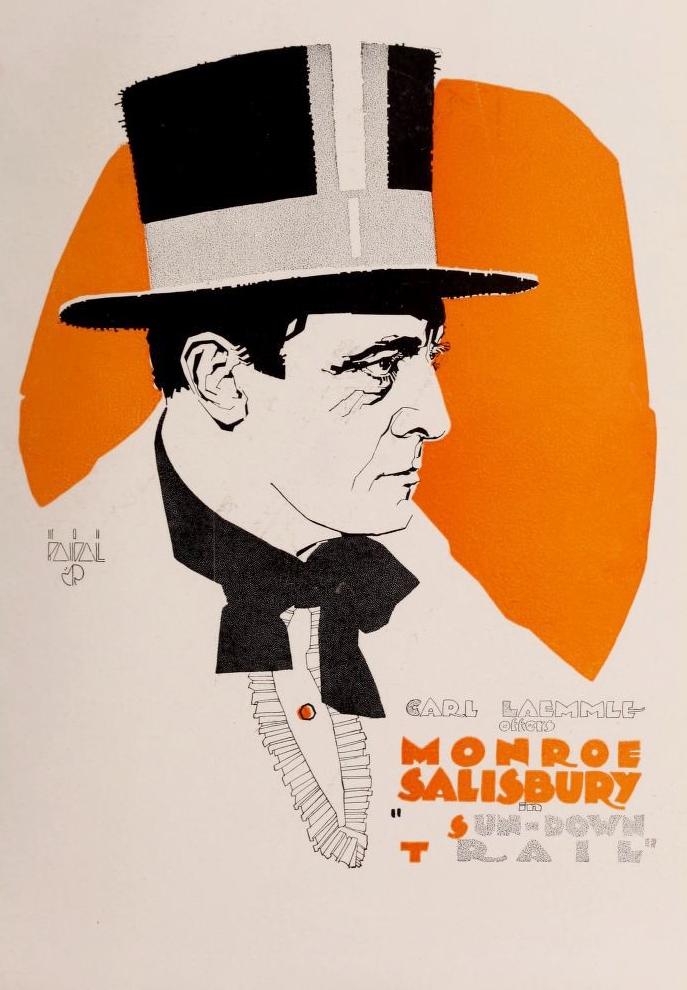
Stepping back into the dusty, nascent days of American cinema, one occasionally stumbles upon a gem that, despite its age, still gleams with narrative ambition and thematic depth. The Sundown Trail, a 1917 production from the prolific minds of J.G. Hawks and Waldemar Young, is precisely such a find. It’s a film that, even in its silent grandeur, speaks volumes about human nature, the raw crucible of the frontier, and the enduring quest for belonging amidst chaos. Far from a mere historical curiosity, this picture presents a rich tapestry of deception, redemption, and the unexpected blossoming of love in the most unlikely of circumstances. To call it a simple Western would be to diminish its intricate psychological undercurrents and its surprisingly modern sensibilities regarding identity and memory. It's less about the gunfights and more about the battles waged within the human heart, set against a backdrop of unforgiving wilderness and the frantic pursuit of fortune.
Our journey begins in Spanish Bar, a quintessential gold rush mining camp on the legendary Sundown Trail. This is a world defined by its stark masculinity, a place where the prospect of striking it rich overshadows all else, save perhaps the gnawing loneliness that inevitably afflicts a community devoid of female companionship. The desperation is palpable, leading the all-male populace to a rather pragmatic, if somewhat audacious, solution: delegate the task of spouse procurement. The dubious honor falls to 'Oily' Jones, a character whose moniker itself hints at his perhaps less-than-scrupulous nature, yet whose mission is undeniably vital to the camp's social fabric. He is dispatched eastward, not to seek gold, but to bring back women—women willing to brave the harsh realities of the frontier for a chance at matrimony and a new life. This initial premise immediately sets a tone of high-stakes societal engineering, a fascinating glimpse into the social dynamics of an era where practical needs often dictated personal destinies. It's a pragmatic necessity that underscores the raw, unpolished nature of frontier existence, where even love and companionship become commodities to be acquired.
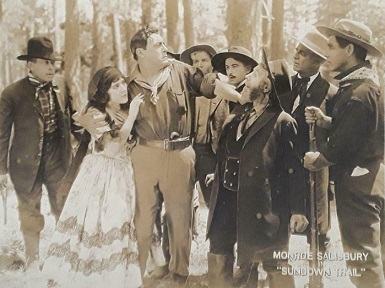
The arrival of these prospective brides, however, is not the only significant event. Amidst the flurry of expectation and hopeful glances, a young widow (portrayed with compelling vulnerability by Alice Claire Elliott) makes her entrance, her presence a quiet counterpoint to the boisterous excitement. Her agenda is singularly focused: to locate a shadowy figure named Velvet Eddy. This immediate introduction of a personal quest, distinct from the collective aspiration of the camp, injects a potent dose of mystery and individual drama into the narrative. It suggests a past entanglement, a secret history that will inevitably unravel and complicate the lives of those around her. The film, even at this early stage, deftly weaves together grand social narratives with intimate personal dilemmas, a characteristic that distinguishes it from more straightforward genre pieces. One might even draw a thematic parallel to the intricate web of personal motivations found in a film like A Game with Fate, where individual destinies are often shaped by unforeseen encounters and hidden agendas.
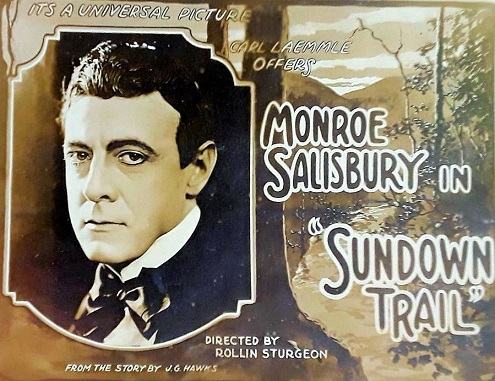
The narrative gains considerable traction with the introduction of 'Quiet' Carter, impeccably played by Monroe Salisbury. Carter stands as a curious anomaly in Spanish Bar—a man seemingly content with his solitary existence, untouched by the matrimonial fever that grips his peers. His quiet stoicism, however, belies a strong moral compass and a capacity for decisive action. It is he who intervenes when Velvet Eddy (a menacing Carl Stockdale) makes a predatory move against the newly arrived widow. This act of heroism, unbidden and seemingly against his own reclusive nature, serves as the catalyst for much of the ensuing drama. Carter’s intervention is not just a physical rescue; it is a moral statement, carving out a space for justice and protection in a world often characterized by its lawlessness. The widow, now aware of her attacker's identity, refuses to be a victim. Instead, she insists on pursuing Eddy, driven by a powerful, though as yet undefined, motive. This refusal to passively accept her fate imbues her character with a resilience that resonates even today, challenging the conventional portrayals of women in early Westerns.
The plot thickens with a brutal storm, a classic cinematic device to disorient and isolate characters, mirroring their internal turmoil. Lost and exhausted, the widow stumbles upon the secluded cabin of a Mexican dancer, a role brought to vivid life by Beatrice Dominguez. This encounter is pivotal, marking a turning point where identity itself becomes fluid. The local vigilance committee, a self-appointed arbiter of frontier justice, has decided the widow is a disruptive element and intends to run her out of town. In a remarkable act of solidarity and self-sacrifice, the dancer exchanges clothes with the widow, creating a diversion. This subterfuge is made all the more effective by the widow’s convenient loss of memory, a narrative contrivance that, while perhaps a touch melodramatic, serves to heighten the suspense and allow for a profound exploration of identity. The dancer’s selfless act is a powerful testament to female solidarity in a harsh, male-dominated world, offering a glimpse of humanity's better angels even in the grimiest corners of the frontier. It’s a moment that could resonate with the themes of disguise and hidden identities found in films like Madame Spy, albeit with a far more altruistic purpose.
The dramatic tension culminates in a visceral knife duel between Velvet Eddy and 'Quiet' Carter. This confrontation is more than just a clash of physical prowess; it's a symbolic battle between malevolence and nascent virtue, between the shadows of the past and the potential for a new future. Carter, embodying the quiet strength he represents, emerges victorious, but not without consequence. In a truly unexpected turn, Eddy, in his dying moments, reveals a flicker of humanity, making a desperate plea to Carter: to care for his child. This deathbed confession transforms Eddy from a one-dimensional villain into a figure of tragic complexity, and burdens Carter with a profound moral obligation. It’s a moment that elevates the film beyond simple genre tropes, introducing a layer of moral ambiguity and challenging the audience to consider the complexities of good and evil. This echoes the dramatic intensity and moral quandaries often explored in films like The Cheat, where characters are forced to confront the consequences of their actions and the unforeseen responsibilities they incur.
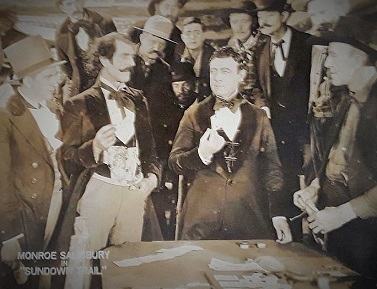
Carter, ever the protector, then rescues the amnesiac widow from the relentless vigilantes, offering her not just sanctuary, but his very name in marriage. This union, born of necessity and protection rather than initial romance, is a testament to Carter's evolving character. He is no longer merely 'Quiet' Carter, the bachelor, but a man embracing responsibility and forging a new destiny. This protective marriage, however, is merely a temporary respite. The arrival of an Easterner, who falsely claims the widow as his wife to acquire her property, shatters their fragile peace. This new antagonist introduces another layer of deceit and greed, highlighting the pervasive opportunism of the era. Carter, ever astute, quickly discerns the lie, his quiet intelligence proving more potent than brute force. He retrieves the widow, and it is in this moment of reunion that the film delivers its most poignant revelation. Upon seeing Eddy's child, the widow's fragmented memories flood back, revealing the child as her own, held for ransom by Eddy. This climactic recognition is a powerful emotional beat, restoring her identity and completing the circle of her tragic journey. It is a moment of profound recognition, both for the character and for the audience, tying together all the disparate threads of the narrative with a masterful stroke of storytelling.
The performances in The Sundown Trail are, for the most part, exemplary of the silent era's dramatic conventions, yet with moments of surprising subtlety. Monroe Salisbury, as 'Quiet' Carter, delivers a performance built on internal strength rather than overt theatrics. His portrayal is a masterclass in understated heroism, conveying deep emotion through nuanced gestures and expressions. He embodies the archetype of the strong, silent Western hero, but with an added layer of moral complexity that makes him truly compelling. Carl Stockdale, as the villainous Velvet Eddy, is suitably menacing, providing a formidable antagonist whose eventual, albeit brief, moment of vulnerability adds unexpected depth to his character. His presence casts a long shadow over the narrative, making his defeat all the more impactful. Alice Claire Elliott, as the young widow, navigates a challenging role that requires her to convey profound loss, determination, amnesia, and ultimately, rediscovered motherhood. Her journey is the emotional core of the film, and she carries it with remarkable grace and conviction. Beatrice Dominguez, as the Mexican dancer, shines in her brief but pivotal role, imbuing her character with warmth, courage, and a powerful sense of sisterhood that transcends cultural boundaries. Clyde Fillmore, as the deceitful Easterner, brings a slick, urban villainy that contrasts sharply with the rugged honesty of the frontier characters, effectively highlighting the clash of worlds.
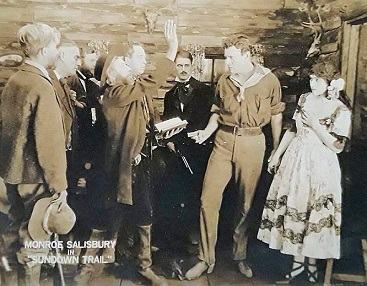
J.G. Hawks and Waldemar Young's screenplay is remarkably well-structured, particularly for a film of its era. The plot is dense with twists and turns, yet it never feels convoluted. Each development builds logically upon the last, propelling the narrative forward with a relentless momentum. The pacing, a crucial element in silent cinema, is expertly managed, allowing moments of quiet introspection to breathe before accelerating into bursts of action and dramatic revelation. The film avoids the sluggishness that sometimes afflicts early features, maintaining an engaging tempo throughout its runtime. The use of intertitles is judicious, providing necessary exposition without overwhelming the visual storytelling. This balance is key to its enduring watchability. One could even compare its narrative ambition and the complexity of its interwoven plots to other silent era dramas that pushed boundaries, perhaps even finding echoes of the emotional intensity seen in En Søns Kærlighed, or the dramatic twists characteristic of Raffles, the Amateur Cracksman, though in a distinctly Western idiom.
Beyond the immediate thrills of its Western setting and dramatic plot, The Sundown Trail delves into profound themes that resonate far beyond the Gold Rush era. The most prominent of these is the theme of identity, particularly through the character of the widow. Her journey from seeking a mysterious figure, to losing her memory, adopting a new persona through the clothes exchange, marrying for protection, and finally reclaiming her past through the recognition of her child, is a powerful exploration of how identity can be lost, fractured, and ultimately, rediscovered. It suggests that true identity is not merely a name or a history, but an intrinsic connection to one's past and one's kin. This theme of fractured memory and the struggle to piece together a forgotten past is a compelling one, perhaps even finding a distant thematic cousin in the psychological complexities of The Road Through the Dark.
Another potent theme is the nature of justice on the frontier. The vigilance committee, while ostensibly seeking order, operates outside the bounds of established law, often making hasty and biased judgments. Carter's actions, by contrast, represent a more personal, principled form of justice, driven by protection and a clear sense of right and wrong. His rescue of the widow from the vigilantes underscores the film's nuanced perspective on frontier justice—it's not always about the law, but about individual morality and courage. The film subtly critiques the mob mentality, highlighting the dangers of unchecked power even when wielded with ostensibly good intentions. This examination of societal structures and individual morality aligns with the thematic depth found in films that explore community dynamics and conflict, like The Pioneers, which often depict the formation and challenges of early settlements.
The film also touches upon the challenging gender dynamics of the era. The initial premise of 'Oily' Jones bringing women eastward highlights their scarcity and their perceived role in civilizing the frontier. However, the widow's active pursuit of Eddy, her resilience in the face of adversity, and the Mexican dancer's courageous act of solidarity, all subvert the passive female stereotypes sometimes found in early cinema. These women are not merely objects of desire or rescue; they are agents of their own destiny, making choices that drive the narrative forward. Their strength and resourcefulness are quietly celebrated, offering a more progressive portrayal than might be expected from a film of this vintage. One might even compare the subtle defiance of conventional gender roles to the more overt social commentary found in films like U kamina, which often explored domestic and social struggles with a keen eye.
While not as widely remembered as some of its contemporaries, The Sundown Trail deserves a place in the pantheon of significant early Westerns. Its sophisticated narrative, strong characterizations, and thematic depth elevate it beyond mere genre fare. It’s a testament to the storytelling prowess of J.G. Hawks and Waldemar Young, who crafted a compelling drama that uses the familiar tropes of the West to explore universal human experiences. The film's ability to maintain suspense and emotional engagement without dialogue is a testament to the power of visual storytelling and the expressive capabilities of its cast. For enthusiasts of silent cinema, or those interested in the evolution of the Western genre, this film offers a fascinating glimpse into a period of rapid cinematic innovation. Its blend of action, mystery, and heartfelt drama makes it a surprisingly resonant viewing experience even today.
In conclusion, The Sundown Trail is far more than a simple period piece. It is a robust and engaging narrative that uses the rugged backdrop of the California Gold Rush to tell a deeply human story of struggle, deception, and ultimate redemption. It’s a compelling argument for revisiting the often-overlooked treasures of the silent era, proving that even without spoken words, a film can speak volumes about the human condition. The journey of its characters, particularly the resilient widow and the quietly heroic Carter, remains etched in the memory long after the final fade to black. It's a journey worth taking, a trail worth exploring for any serious cinephile. This film stands as a testament to the enduring power of storytelling, a reminder that even in the earliest days of cinema, artists were crafting intricate narratives that continue to captivate and provoke thought, much like the detailed observation of human experience found in an artistic work such as Impressioni del Reno, albeit in a vastly different medium and context. The Sundown Trail is a compelling, often surprising, and thoroughly rewarding experience that proves the silent era was anything but quiet in its thematic ambitions.
IMDb 6.1
1923
Community
Log in to comment.