DbcultAccessing Vault...
Cult Review
Senior Film Conservator
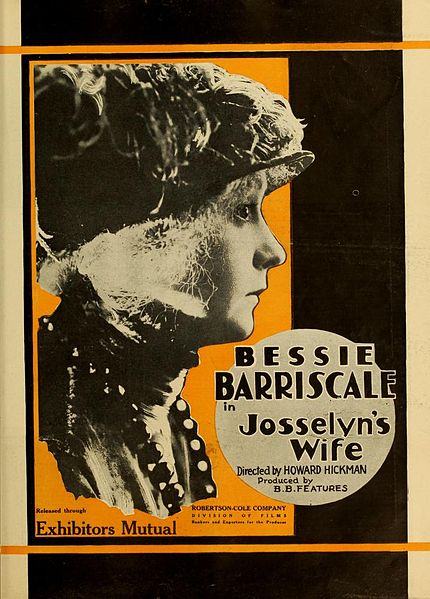
Stepping back into the cinematic past, particularly to the silent era, often feels like unearthing a forgotten treasure map. Each frame, devoid of spoken dialogue, demands a heightened engagement, a deeper immersion into the visual poetry and the raw, unadulterated emotion conveyed through gesture, expression, and the sheer power of storytelling. Such is the journey with Josselyn's Wife, a film that, despite its vintage, pulsates with a timeless narrative of love, artistic ambition, familial discord, and the devastating consequences of misunderstanding. Directed by Fred Myton and written by Myton and Kathleen Norris, this picture serves as a poignant reminder of the sophisticated narratives that captivated audiences long before the advent of synchronized sound.
At its core, Josselyn's Wife is a domestic drama, yet it transcends the mundane through its exploration of psychological depth and the intricate web of human relationships. We are introduced to Ellen Latimer, portrayed with a delicate strength by Bessie Barriscale, at a social gathering where she experiences the sting of social ostracism. It’s a moment that immediately establishes her as an outsider, a figure whose authenticity perhaps clashes with the superficiality of her surroundings. Into this scene steps Gibbs Josselyn, the artist, embodied by Nigel Barrie, a man whose artistic temperament is clearly at odds with the conventional world. Their connection, born from a shared sense of otherness and a mutual disdain for the frivolous, is swift and profound. This initial spark ignites a romance that leads to marriage, and a pivotal decision: a move to Europe. This transatlantic journey isn't merely a change of scenery; it's a symbolic escape for Gibbs, a deliberate severance from the perceived moral decay embodied by his father Thomas’s (Joseph J. Dowling) young, vivacious, and utterly superficial wife, Lillian (Marguerite De La Motte). Here, in the artistic havens of Europe, Gibbs can pursue his studies, hone his craft, and, perhaps, find a semblance of peace away from the domestic turmoil that gnaws at him.
Five years pass, marked by Gibbs’s burgeoning success as an artist. The European sojourn has not only refined his talent but also solidified the bond with Ellen, who remains his steadfast anchor. The call to return comes from Thomas, an architect whose plea to see his grandson, Tommy (Ben Alexander), acts as a powerful lure. The return to their Long Island estate, however, proves to be a return to the very tensions Gibbs sought to escape. While Thomas and Tommy forge an instant, heartwarming bond, a stark contrast emerges in Gibbs’s interactions with his stepmother, Lillian. Her flirtatious demeanor, a thinly veiled manipulation, ensnares Gibbs, much to Ellen’s growing dismay. This domestic tension forms the crucible for the film's dramatic climax. The morning Ellen and Thomas discover Lillian in Gibbs's studio, clad in a negligee, is a masterclass in cinematic tension. Lillian's flimsy alibi of ‘visiting a friend’ and Gibbs's supposed ‘working’ collapses under the weight of suspicion. Though Gibbs is unequivocally innocent of any wrongdoing, the appearance of impropriety is damning. A furious quarrel erupts between Gibbs and Thomas, culminating in a desperate, ill-considered threat from Gibbs. The following day, Thomas is found dead, and Gibbs, caught in a web of circumstantial evidence, is swiftly imprisoned. The resolution, however, arrives from the most unexpected source: young Tommy, who, with an almost chilling innocence, confesses to shooting his grandfather during a game of soldiers. This revelation shatters the illusion of guilt, freeing Gibbs and reuniting him with the ever-faithful Ellen, whose unwavering belief in him forms the emotional bedrock of the film.
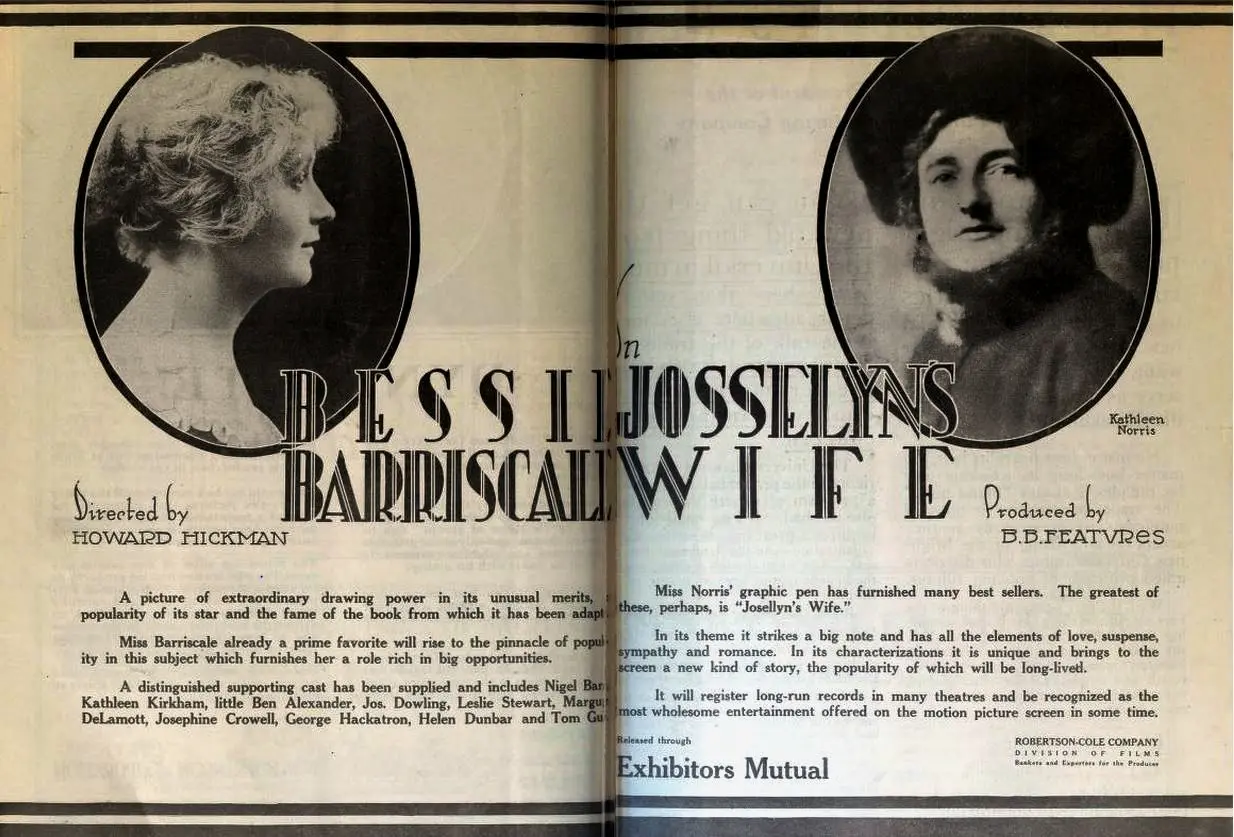
In the realm of silent cinema, the actor’s craft is paramount. Without dialogue, every gesture, every facial contortion, every movement of the body must articulate the character's inner world. The cast of Josselyn's Wife rises to this challenge with remarkable skill. Bessie Barriscale, as Ellen, delivers a performance imbued with quiet strength and unwavering loyalty. Her eyes, often downcast in moments of sorrow or worry, speak volumes about her character’s emotional resilience. There’s a dignified suffering to her portrayal that resonates deeply, making her Ellen a truly sympathetic figure. Nigel Barrie, as Gibbs, captures the artist’s volatile temperament – his passion, his resentment, and his ultimate vulnerability. His struggles with temptation and his despair in prison are conveyed with a raw intensity that transcends the lack of spoken words. Joseph J. Dowling as Thomas, the patriarch, provides a grounded presence, his affection for his grandson offering a tender counterpoint to the domestic strife. But perhaps the most captivating performance, in its insidious way, comes from Marguerite De La Motte as Lillian. She embodies the 'frivolous wife' with a seductive charm that is both alluring and deeply unsettling. Her character is a master manipulator, and De La Motte conveys this with subtle glances, a knowing smirk, and an almost predatory elegance that makes her the perfect antagonist.
The supporting cast, including Tom Guise, Helen Dunbar, Leslie Stuart, Kathleen Kirkham, Josephine Crowell, and George Hackathorne, each contribute to the rich tapestry of the film’s emotional landscape. Even young Ben Alexander, as Tommy, delivers a memorable performance, his innocent confession serving as the film's most shocking and pivotal moment. The skill with which these actors convey complex emotions without a single spoken word is a testament to their artistry and the unique demands of the silent screen. This kind of nuanced emotional communication is also evident in films like The Greatest Thing in Life, where the power of human connection, often wordless, drives the narrative forward with immense force. The ability of these performers to project inner turmoil and profound affection through purely physical means is a hallmark of the era, and Josselyn's Wife stands as a fine example of this.
Beyond the immediate plot, Josselyn's Wife delves into themes that remain profoundly relevant today. The conflict between artistic integrity and societal expectations is a central thread. Gibbs's initial flight to Europe is not just about escaping Lillian but also about finding an environment where his art can flourish, untainted by the commercialism or triviality he perceives in his father's world. This struggle for authenticity is a timeless one, echoing the dilemmas faced by creatives across generations. Then there's the theme of marital fidelity and the corrosive power of suspicion. Ellen's unwavering belief in Gibbs, even when all evidence points to his guilt, is a powerful testament to her love and intuition. This steadfastness contrasts sharply with the ease with which others are willing to condemn. The film explores how easily appearances can be deceiving, and how a carefully orchestrated lie can unravel lives. The tension between truth and perception is masterfully handled, creating a narrative that keeps the audience on edge.
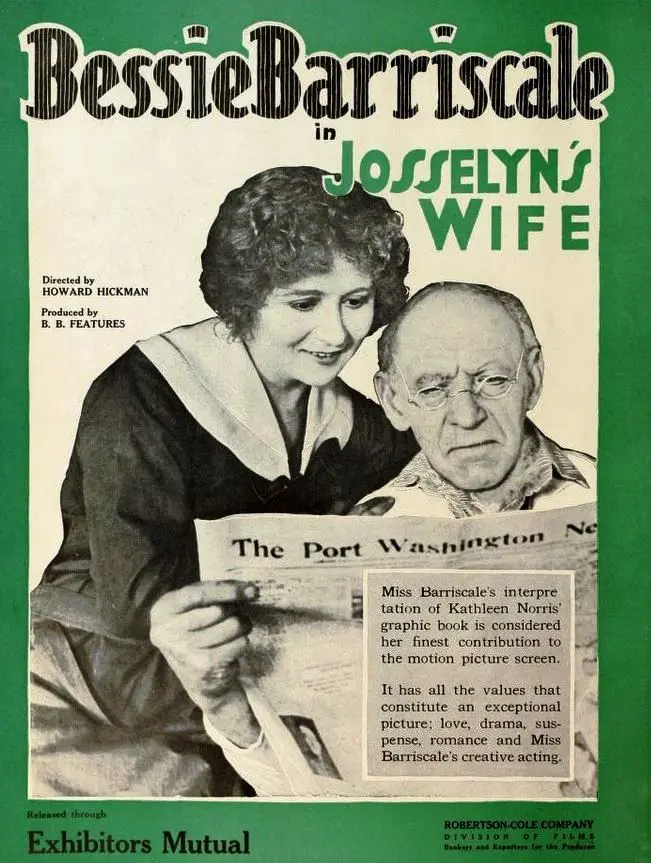
Moreover, the film touches upon the destructive nature of jealousy and manipulation. Lillian's character is a prime example of how personal insecurities and a desire for control can wreak havoc within a family unit. Her actions, though seemingly trivial at first, set in motion a chain of events with tragic consequences. The film also subtly examines paternal relationships – Thomas's deep affection for his grandson versus his strained relationship with his son, Gibbs, complicated by Lillian's presence. This nuanced portrayal of family dynamics adds layers of complexity to the narrative. One might draw parallels to the intricate family betrayals seen in The Iron Heart, where emotional fortitude is tested against severe familial and societal pressures. The resilience of the human spirit in the face of adversity, particularly within the confines of domestic drama, is a recurring motif that binds these narratives.
Fred Myton's direction, while perhaps not as overtly experimental as some of his contemporaries, is nonetheless effective in building suspense and conveying emotion. The use of close-ups to emphasize facial expressions, a staple of silent film, is particularly well-executed, allowing the audience to intimately connect with the characters' inner turmoil. The pacing, crucial for maintaining audience engagement in a silent feature, is expertly managed, moving from the initial setup of romance and artistic aspiration to the escalating domestic conflict, and finally to the dramatic climax and resolution, without ever feeling rushed or dragging. The cinematography, though lacking the elaborate camera movements of later eras, is functional and evocative, particularly in establishing the contrasting atmospheres of the European artistic scene and the tension-filled Long Island estate. The visual storytelling is clear, precise, and never relies on convoluted intertitles to carry the narrative burden. Every frame contributes to the overarching emotional arc.
The narrative structure, moving from initial conflict to escape, a period of calm, a return, and then an inevitable resurgence of conflict leading to tragedy and eventual exoneration, is a classic dramatic arc that Myton handles with a steady hand. The choice to reveal the true killer through the innocent words of a child is a particularly potent device, highlighting the often-unseen consequences of adult actions and the brutal simplicity of truth. This narrative twist, while perhaps a trope in later cinema, feels impactful and genuinely shocking within the context of the film. It underscores the fragility of perceived guilt and the unexpected ways in which justice can manifest. In this regard, the film shares a certain narrative ingenuity with other silent era dramas that sought to subvert expectations, much like the intricate plotting found in A Stranger from Somewhere, where an unexpected element throws an established world into disarray, forcing characters to confront uncomfortable truths.
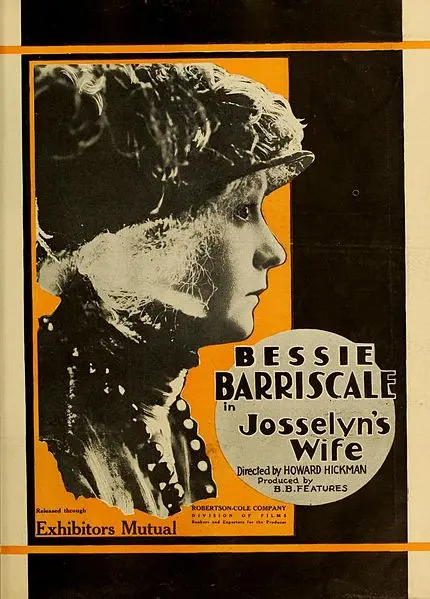
While Josselyn's Wife may not be as widely discussed as some of the monumental works of the silent era, it nonetheless offers a compelling glimpse into the dramatic sensibilities and storytelling prowess of its time. It’s a film that resonates not just as a historical artifact, but as a genuinely engaging piece of cinema. The exploration of themes such as the sanctity of marriage, the corrupting influence of jealousy, the search for artistic freedom, and the devastating impact of misjudgment are universal. The power of Ellen's unwavering faith in Gibbs, a beacon of loyalty amidst a storm of suspicion and betrayal, is particularly moving and serves as the emotional anchor that ultimately guides the narrative to its bittersweet conclusion. Her character embodies a strength that is both quiet and formidable, a characteristic often celebrated in the female protagonists of early cinema who navigated complex moral landscapes.
The film’s enduring appeal lies in its ability to strip away the superficiality of dialogue and rely on the fundamental elements of human drama. The visual storytelling, the expressive performances, and the tightly constructed plot combine to create an experience that is both intellectually stimulating and emotionally resonant. For enthusiasts of silent film, or indeed anyone interested in the evolution of cinematic storytelling, Josselyn's Wife is a worthwhile endeavor. It reminds us that compelling narratives and profound emotional depths were being explored with remarkable sophistication long before the 'talkies' arrived. It's a testament to the enduring power of visual narrative and the timeless nature of human conflict and redemption. Much like the intricate character studies in He Fell in Love with His Wife, which delves into the complexities of marital bonds and evolving perceptions, Josselyn's Wife masterfully navigates the internal and external pressures that shape human relationships. It’s a compelling argument for the continued exploration and preservation of these early cinematic gems, proving that their narratives are far from silent in their impact.
The tragic misunderstanding that drives the central conflict, the wrongful accusation, and the ultimate, almost accidental, revelation of truth, speak to universal anxieties about justice and fate. The film doesn't shy away from the darker aspects of human nature, yet it ultimately champions the virtues of loyalty and innocence. It's a journey through despair and hope, a poignant reminder that even in the most convoluted circumstances, truth has a way of surfacing, often from the most unexpected corners. The emotional landscape is painted with broad strokes, yet the details within the performances and the visual cues provide rich textures. It's a film that demands active viewing, inviting the audience to interpret the unspoken, to feel the weight of every lingering glance and every hesitant gesture. In doing so, it creates a deeply personal and immersive experience that modern cinema, with all its technological advancements, sometimes struggles to replicate. This makes Josselyn's Wife not just a historical curiosity, but a vibrant piece of storytelling that continues to engage and provoke thought, affirming the enduring power of classic dramatic cinema.
IMDb 6.2
1936
Community
Log in to comment.