DbcultAccessing Vault...
Cult Review
Senior Film Conservator
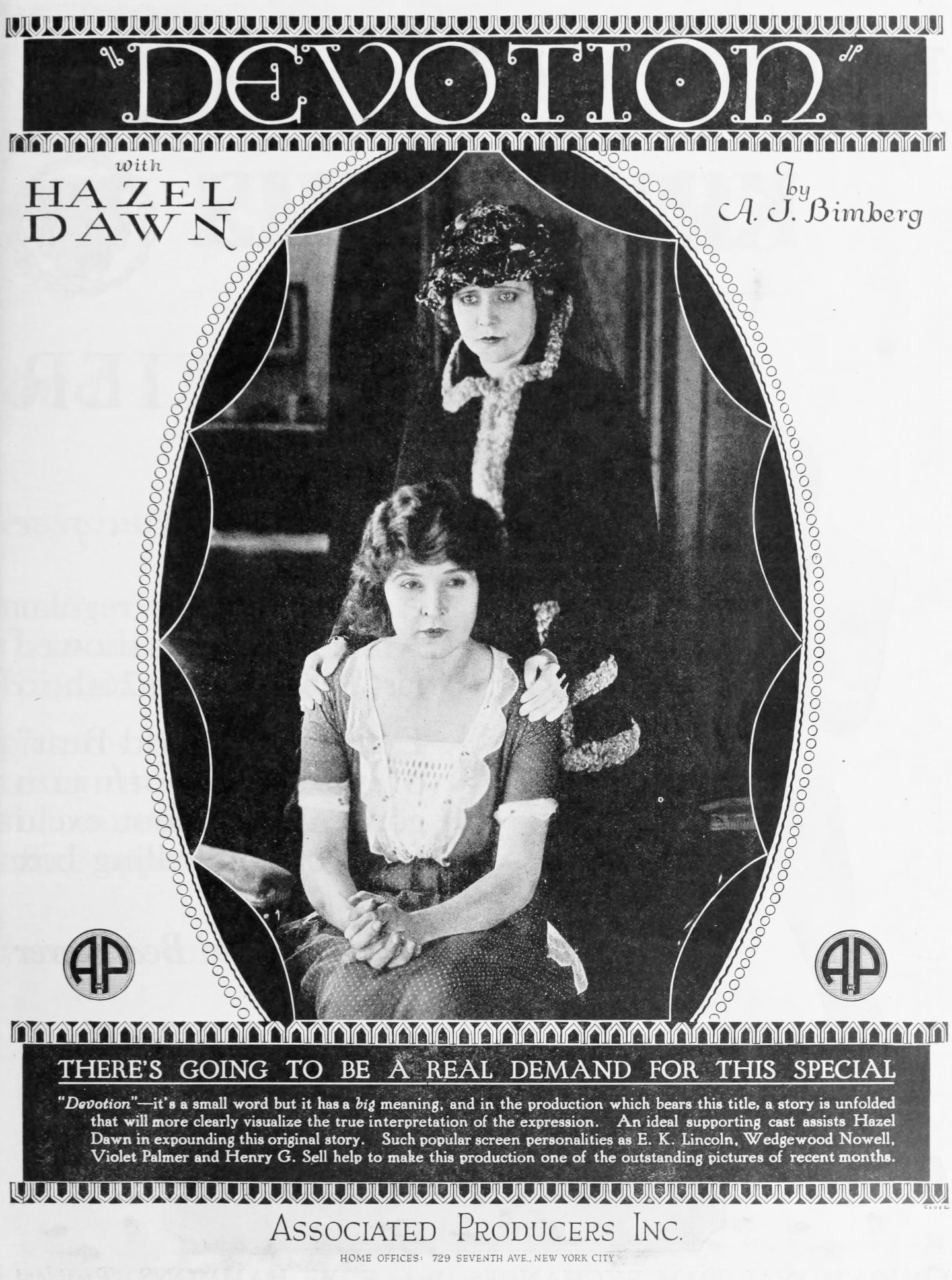
The 1921 cinematic artifact Devotion stands as a formidable testament to the burgeoning sophistication of the silent era's narrative structure. Unlike the more whimsical escapades found in contemporary pieces like Dolly's Vacation, this film plunges headlong into the murky waters of socio-economic friction and the performative nature of class. Directed with a keen eye for domestic geometry, the film serves as a canvas for the anxieties of a post-war society grappling with the erosion of Victorian certitude and the rise of the industrial commoner.
At the heart of the drama is Mrs. Wayne, a character whose maternal instincts have been entirely subsumed by her ambitions for social mobility. She is the architect of her daughters' destinies, viewing marriage not as a sanctuary of affection but as a strategic maneuver on a grand chessboard of prestige. When Marian complies, marrying the well-positioned Teddy Grandin, the film sets its baseline for 'success.' However, the narrative true north is found in Ruth, played with a luminous vulnerability by Hazel Dawn. Ruth’s decision to marry Robert Trent, a man of modest means and labor-class origins, creates a tectonic shift in the family dynamic that the film explores with surprising nuance.
This central conflict mirrors the thematic weight of Joseph Conrad adaptations such as Victory, though Devotion trades the tropical isolation for the suffocating confines of drawing rooms and cramped apartments. The contrast between the sisters' lives is not merely a moralistic fable but a visual exploration of how space and luxury dictate the terms of human interaction.
One of the film's most potent sequences involves the 'expensive attire' gifted to Ruth by her sister. In the visual language of the 1920s, fabric was character. The sudden appearance of high-fashion garments in a working-class setting serves as a catalyst for Robert’s descent into jealousy. Here, the screenplay by A.J. Bimberg and the legendary Eve Unsell shines. They understand that in a world without spoken dialogue, objects must carry the weight of the unspoken. The dress becomes a surrogate for Stephen Bond’s wealth, a tangible manifestation of Robert’s insecurities. It is a far cry from the slapstick misunderstandings of Dull Care; here, the stakes are the very foundations of trust and identity.
The introduction of Jim Marsh, the escaped convict, adds a layer of pulp tension that enriches the melodrama. Elmo Lincoln, perhaps best known for his rugged physicality, brings a brooding presence to the role of the fugitive. His interaction with Lucy—his ex-wife who has successfully 'passed' into the upper echelons of society—introduces a noir-like fatalism. This subplot serves as a dark mirror to the main story, suggesting that the past is never truly buried, and that the facades we build are as fragile as the celluloid they are captured on.
Eve Unsell’s contribution to the script cannot be overstated. As a pioneer in the industry, her ability to weave disparate plot threads—the domestic struggle, the criminal underworld, and the eventual redemptive revelation—is masterful. The way Lucy’s secret regarding Stephen Bond eventually intersects with Ruth’s predicament is a marvel of narrative economy. While some might find the coincidence of Lucy identifying Stephen as the father of her child to be a bit too convenient by modern standards, within the context of 1921 melodrama, it functions as a cosmic balancing of the scales. It is this level of craft that distinguishes Devotion from more linear narratives like Robinson Crusoe or the more straightforward social critiques of The Brass Check.
Hazel Dawn’s performance is a masterclass in the 'restrained' style of silent acting. In an era often criticized for histrionics, Dawn utilizes her eyes and subtle shifts in posture to convey a wealth of interiority. Her Ruth is not a victim of her circumstances but a woman of agency who chooses love over comfort, and then must navigate the psychological fallout of that choice. Opposite her, Henry G. Sell captures the simmering resentment of the overlooked man with a precision that makes his eventual realization and reconciliation deeply moving.
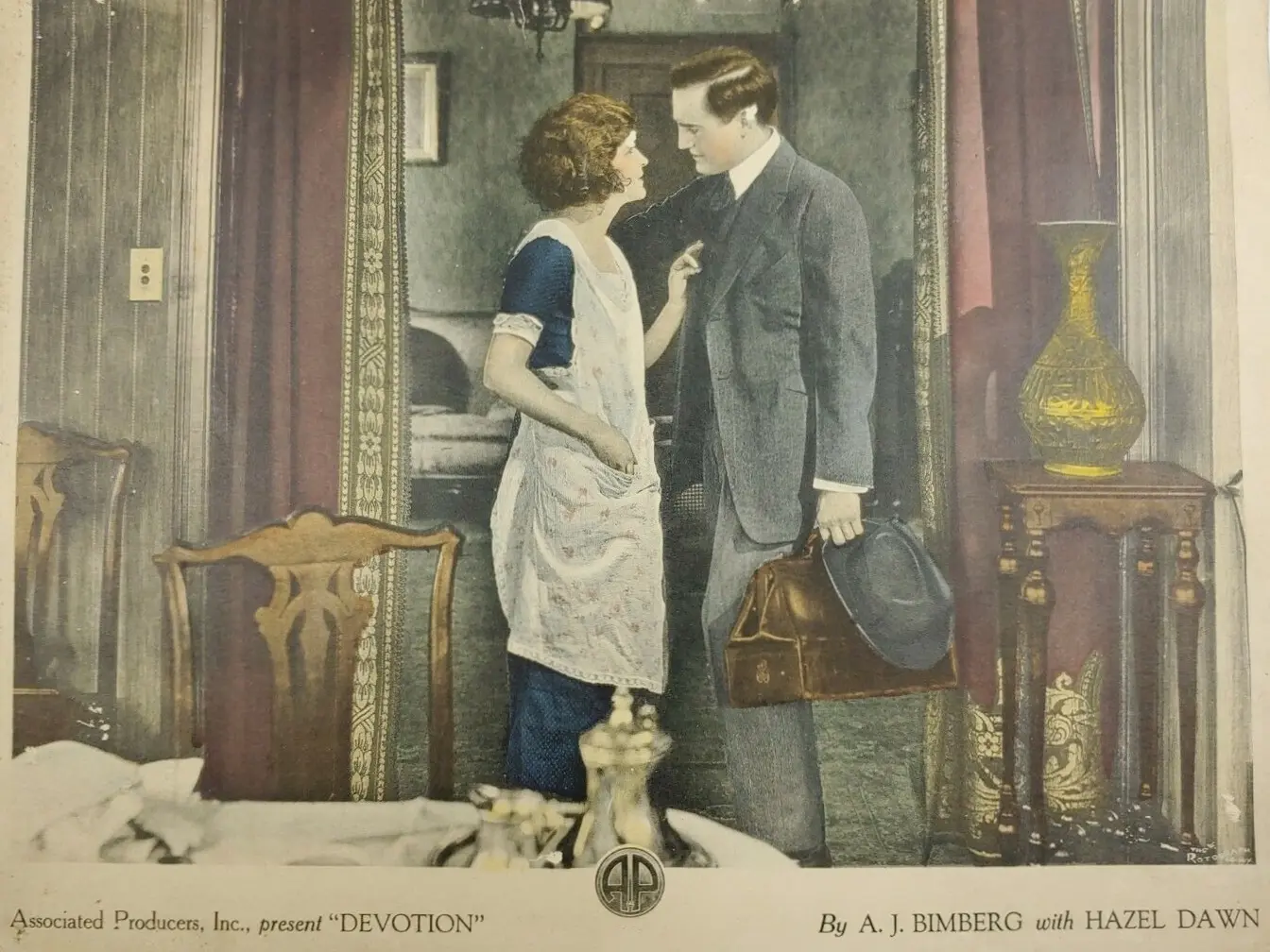
The film also benefits from the presence of Violet Palmer and Bradley Barker, who flesh out the supporting cast with a realism that grounds the more heightened aspects of the plot. The chemistry between the players suggests a repertory-like familiarity, which helps sell the high-stakes emotional beats of the final act. This ensemble strength is reminiscent of the collaborative spirit seen in Masks and Faces, where the interplay between characters is as vital as the plot itself.
Visually, Devotion employs a sophisticated use of lighting to differentiate between the spheres of existence. The Wayne household is often bathed in a flat, high-key light that emphasizes its sterile perfection, while the scenes involving Jim Marsh and the Trents' apartment utilize more shadow and depth, hinting at the moral complexities and the 'grit' of their reality. This visual storytelling is a precursor to the expressionistic flourishes found in European cinema of the time, such as Ikarus, der fliegende Mensch or the atmospheric Impéria.
The pacing, too, is deliberate. It allows the viewer to sit with the characters' dilemmas, building a sense of dread that pays off during the police shootout and the subsequent confrontation at Robert's apartment. The tension is handled with a deftness that rivals the better-known suspense films of the period, avoiding the frantic energy of S.O.S. in favor of a slow-burn emotional payoff.
Looking back at Devotion from a century’s distance, one is struck by its enduring relevance. The themes of class-based insecurity and the performative nature of wealth are as pertinent today as they were in 1921. It serves as a fascinating counterpoint to films like The Fair Pretender, which often treated social climbing with a more lighthearted or cynical touch. Devotion, by contrast, treats the emotional lives of its characters with a profound dignity.
The film’s conclusion—a double reconciliation—is not merely a 'happy ending' but a hard-won peace. It acknowledges the scars left by suspicion and the collateral damage of social ambition. In the final frames, as the truth is laid bare and the couples are reunited, there is a sense that they have been fundamentally changed by the ordeal. This is not the easy resolution of Putting It Over; it is a somber, mature acceptance of human fallibility.
When placed alongside the broader output of 1921, Devotion emerges as a significant work of domestic realism. While it lacks the sheer spectacle of some historical epics or the avant-garde experimentation of films like Sand Witches, its strength lies in its psychological density. It shares a certain DNA with the French 'society' dramas like Gosse de riche, yet it maintains a distinctly American preoccupation with the 'self-made' identity and the fear of losing it.
The film also invites comparison to The Sins of St. Anthony in its exploration of moral hypocrisy, and perhaps even the rugged survivalism of Aventuras de Chucho el Roto in its depiction of the fugitive Jim Marsh. Ultimately, Devotion is a film about the masks we wear to survive in a world that demands we choose between our hearts and our status. It is a poignant, beautifully acted, and thoughtfully written piece of cinema that deserves its place in the pantheon of silent era masterpieces. For the modern viewer, it offers a window into a world of rigid social codes and the timeless, messy reality of the human heart that seeks to break them.
Reviewer's Note: The restoration of such films is vital for our understanding of cinematic evolution. Devotion is more than a story; it is a sociological document wrapped in the velvet of melodrama.
IMDb —
1918
Community
Log in to comment.