DbcultAccessing Vault...
Cult Review
Senior Film Conservator
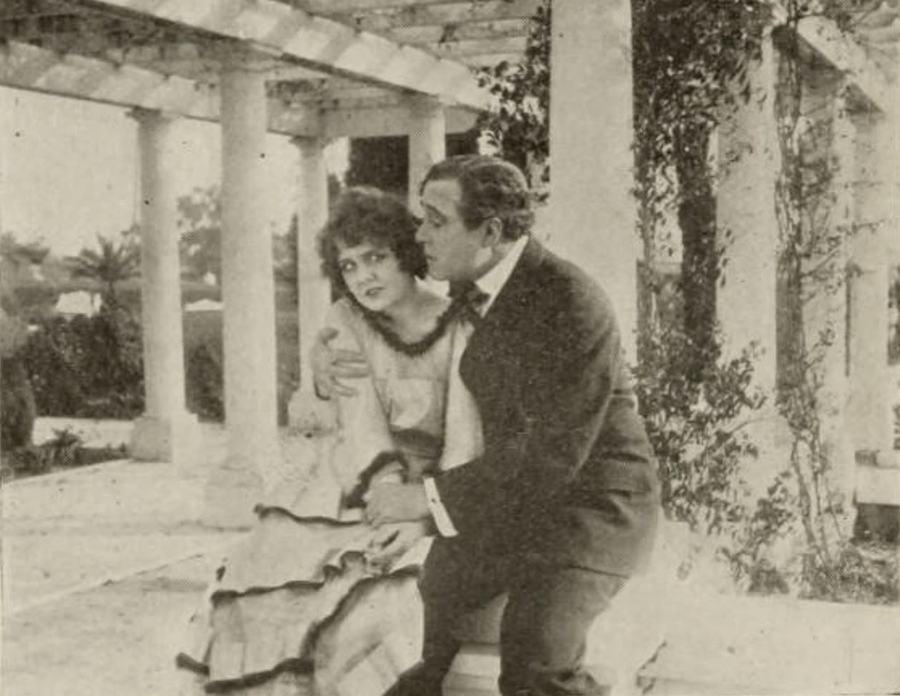
In the annals of early cinema, where narratives often grappled with nascent storytelling techniques, there occasionally emerges a work that transcends its technical limitations to weave a tapestry of profound psychological complexity and supernatural intrigue. Spellbound, a 1916 silent film penned by the remarkable Bess Meredyth, is precisely such a creation. It is not merely a melodramatic potboiler, but a meticulously constructed exploration of fate, moral erosion, and the insidious power of suggestion, all orchestrated around a single, malevolent inanimate object. From its very inception, the film plunges the viewer into a world where the exotic and the mundane collide, setting the stage for a saga of love, betrayal, and ultimate redemption, all under the shadow of a cursed artifact.
The narrative unfurls with the return of Major Cavendish from the mysterious subcontinent of India. He doesn't merely bring back souvenirs; he carries an idol, an object of unsettling visage, steeped in an ancient, perhaps unholy, power. This artifact is no mere curio; it is a character in its own right, a silent antagonist whose presence subtly yet profoundly alters the destinies of all who come into its orbit. Elsie Yorke, the Major's ward, a young woman poised on the cusp of romance with the earnest Harrington Graeme, finds her world irrevocably shifted. The Major, fueled by a sudden, possessive desire, proposes marriage to Elsie, a notion she dismisses with a laugh, unaware of the dark currents stirring beneath the surface. This initial rejection, however, sets in motion a chain of events that will unravel their lives. Graeme, already in disfavor with the Major, makes a desperate plea for Elsie to elope, a clandestine rendezvous planned for the stroke of midnight. As Elsie traverses the library, her gaze is drawn, almost magnetically, to the idol. Its grotesque form seems to exert an inexplicable fascination, a subtle premonition of the spell it will cast upon her.
It is at this pivotal moment that the Major enters, startling Elsie, and in a fleeting, misinterpreted embrace, Graeme, witnessing the scene through a window, believes his love lost. His subsequent departure from abroad, heartbroken and disillusioned, marks the first triumph of the idol's sinister influence, severing a bond that seemed destined. Yet, fate, or perhaps the idol's lingering shadow, draws him back. Upon learning Elsie remains unmarried, Graeme returns, venturing to call upon her. Elsie, meanwhile, is hosting an assembly of friends, eager to hear a lecture on Indian morals delivered by the noted yogi, Katti Hab. It is here that the film expertly legitimizes the supernatural undercurrents. Katti Hab's pronouncements on the strange power even inanimate objects can possess resonate with chilling veracity. When he spies the Major's idol, a jolt of recognition, a flicker of fear, crosses his face, confirming the object's profound, dangerous energy. This scene is a masterstroke, transforming what might otherwise be dismissed as mere superstition into a palpable, narrative truth. The film, in this regard, shares a thematic resonance with other early works that flirted with the occult, albeit Spellbound grounds its supernatural elements in a more psychological and morally corrupting context rather than outright horror like later films such as Friday the 13th, which would explore more overt forms of terror.
Graeme, with renewed hope, wins Elsie's forgiveness, but their reconciliation is short-lived. The Major, entering the scene, orders Graeme from his house, oblivious to the deeper forces at play. Undeterred, Graeme returns that night, a loyal sentinel beneath Elsie's window. This act of devotion, however, places him at the nexus of a burgeoning tragedy. Katti Hab, driven by a desire to reclaim the idol he so clearly recognizes as dangerous or valuable, infiltrates the house with a servant. In a desperate struggle, the Major is killed. Graeme, arriving on the scene, is found with the murder weapon in his hand, a tableau of circumstantial evidence that points unequivocally to his guilt. The ensuing trial is a dramatic highlight, a testament to the era's flair for courtroom theatrics. Graeme's exoneration comes from an unexpected quarter: Katti Hab's disgruntled servant, bearing a personal grudge against his master, testifies against the yogi, exposing the true culprit. This twist, while convenient, serves to propel the narrative forward, ensuring the lovers' union, but not necessarily their happiness.
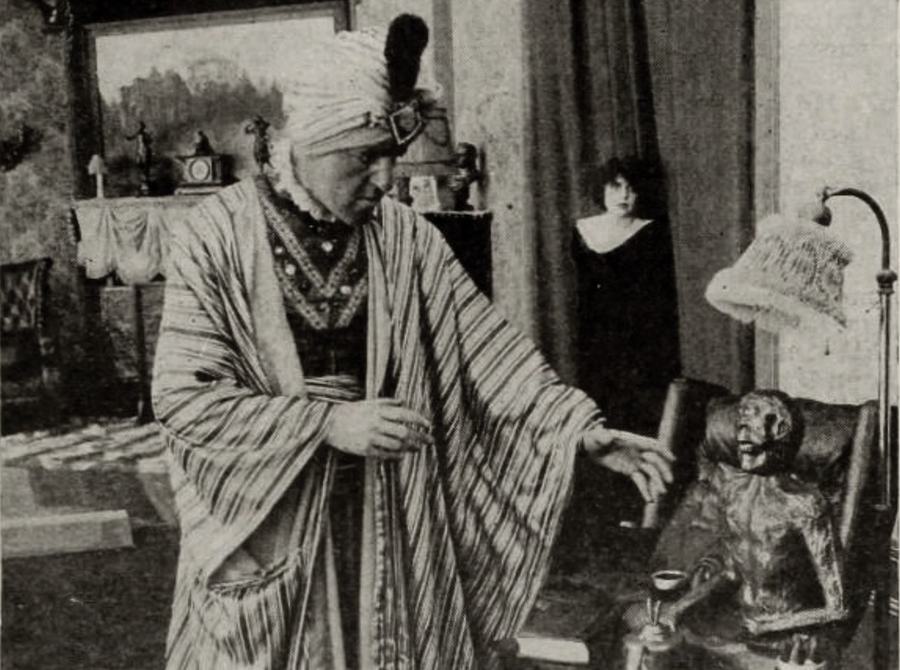
The marriage of Graeme and Elsie, rather than culminating in blissful domesticity, marks the beginning of their true descent. Elsie undergoes a chilling transformation. The once innocent ward becomes a reckless gambler, her spirit increasingly hardened, her affections for Graeme seemingly eclipsed by the allure of the card table. Graeme discovers her burgeoning addiction and pleads with her to desist, but his appeals fall on deaf ears. She flouts him, her moral compass seemingly shattered. An admirer, a sinister figure lurking in the periphery, abets her destructive habit, lending her money, further entrenching her in the vice. This rapid moral decay in Elsie is a powerful narrative choice, suggesting the idol's influence is not merely external but has seeped into her very character, corrupting her from within. It is a cautionary tale that echoes themes of societal pressures and moral compromise seen in films like La dame aux camélias, though Spellbound attributes the cause to a more esoteric source.
Graeme, too, is not immune to the idol's pervasive influence, or perhaps, the corrosive effect of his wife's transformation. He succumbs to his own moral lapse, engaging in an affair with an actress, mirroring Elsie's infidelity to their marital vows, albeit through a different vice. This parallel decline underscores the idea that the 'spell' has enveloped both their lives, eroding the foundations of their love and integrity. Meanwhile, Katti Hab, in hiding, remains fixated on the idol, resolving to risk all on another attempt to steal it, a testament to its perceived power and value. His unwavering obsession, despite the peril, highlights the almost hypnotic grip the artifact holds over those aware of its true nature. The narrative then introduces a profound turning point: Elsie's physician informs her that she is with child. Her reaction is not joy, but rebellion, a visceral hatred for the very idea, and later, for the child itself when it is born. This chilling portrayal of maternal rejection is perhaps the most potent illustration of the idol's power, warping even the most fundamental human instincts.
The climax is a masterclass in silent film spectacle and emotional catharsis. Katti Hab, making his final, desperate move, is surprised in the house and conceals himself in a closet, only to be trapped by a spring lock. In his desperation, he calls upon his god for deliverance, and in a moment of startling supernatural intervention, the idol itself moves, upsetting a lamp. This seemingly innocuous act sparks a raging inferno, setting the house ablaze. The valet, a silent witness to the unfolding horror, telephones Graeme, who rushes homeward, his heart pounding with dread. Elsie, returning from a ball where her admirer has finally revealed his true, exploitative character, sees the flames engulfing her home. It is in this crucible of destruction that the idol's spell finally breaks. Her maternal instinct, long suppressed and twisted, erupts with primordial force. Forgetting her earlier revulsion, she rushes into the burning building to save her child. She succeeds, a triumphant act of primal love, but is herself overcome by the smoke and flames.
Graeme, arriving amidst the chaos, heroically rescues her from the inferno. Katti Hab, the yogi whose greed and mystical knowledge set much of the tragedy in motion, is consumed by the fire, a fitting end for one caught in the idol's destructive aura. The idol itself is broken in the blaze, its malevolent power seemingly extinguished. In its shattered head, Graeme discovers a cache of jewels, transforming the object of their torment into a source of unexpected wealth and, more importantly, a symbol of their deliverance. Both Elsie and Graeme feel an immense burden lifted, a sinister influence removed from their lives. The fire, a force of destruction, paradoxically becomes a cleansing agent, purifying their souls and their relationship. They emerge from the ashes, not only with renewed love for each other but, crucially, with a profound, untainted affection for their child. The narrative thus concludes with a powerful message of redemption, the triumph of human love and instinct over supernatural malevolence and personal failings.
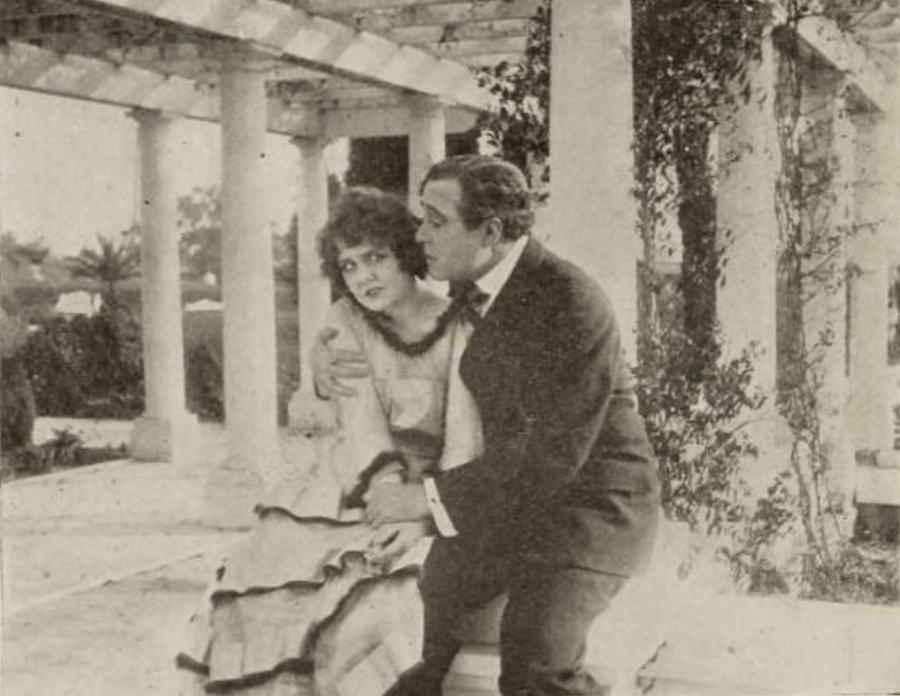
Lois Meredith, as Elsie Yorke, delivers a performance that navigates a truly complex emotional landscape. Her initial innocence, her subtle shift into fascination with the idol, her descent into the cold, calculating world of gambling, and finally, her raw, primal maternal awakening are all conveyed with a remarkable depth of expression that was characteristic of the finest silent era actresses. One can only imagine the nuanced facial expressions and body language Meredith employed to communicate Elsie's profound internal conflicts without the aid of dialogue. Her transformation from a woman who hates her child to one willing to risk her life for it is the emotional core of the film, a testament to her acting prowess. Similarly, Ed Brady, as Harrington Graeme, embodies the ardent lover, the wrongly accused, the morally compromised husband, and ultimately, the heroic rescuer with conviction. His arc is equally challenging, demanding a range of emotions from romantic longing to despair, and finally, resolute action. The supporting cast, including R. Henry Grey and William Conklin, provide solid foundations for the central drama, with the enigmatic Katti Hab (actor uncredited in the provided cast list, but a pivotal figure) serving as a compelling, if ambiguous, catalyst for much of the plot.
Bess Meredyth's screenplay for Spellbound is a triumph of intricate plotting and thematic ambition. To craft such a convoluted yet cohesive narrative, replete with moral ambiguities, supernatural elements, and profound character transformations, within the constraints of silent cinema, speaks volumes of her talent. Her ability to weave together disparate elements – an exotic artifact, a love triangle, a murder mystery, a psychological drama of addiction, and a tale of maternal awakening – into a single, compelling story is truly remarkable. The pacing, though perhaps deliberate by modern standards, allows for the gradual unfolding of character arcs and the insidious spread of the idol's influence. The use of intertitles would have been crucial in conveying the yogi's philosophy and Elsie's internal struggles, complementing the visual storytelling.
Thematically, Spellbound delves into several powerful concepts. The most prominent is undoubtedly the corrupting influence of external forces, symbolized by the idol. It acts as a catalyst for human weakness, exacerbating flaws and pushing characters towards their darkest impulses. This is not merely a story of good versus evil, but of susceptibility and the struggle for moral fortitude. The film also explores the destructive nature of obsession, whether it's Katti Hab's relentless pursuit of the idol or Elsie's descent into gambling. The idea of redemption, particularly through the powerful, transformative force of maternal love, stands out as a beacon of hope amidst the chaos. Elsie's journey from rejecting her child to risking her life for it is a profound commentary on the inherent, often dormant, strength of human connection and instinct. The film's conclusion, with the idol broken and its hidden wealth revealed, suggests that even sources of negativity can contain hidden value once their destructive power is neutralized. It's a nuanced take on the consequences of greed and the eventual triumph of virtue, much like the underlying moral lessons often found in films of the era such as The Victory of Virtue, but with a unique supernatural twist.
From a directorial standpoint, the film would have relied heavily on dramatic lighting, expressive close-ups, and carefully staged action sequences to convey the tension and emotional depth. The fire sequence, in particular, would have been a technical marvel for its time, designed to evoke maximum suspense and emotional impact. The visual contrast between the stately, seemingly civilized English home and the exotic, dangerous artifact from India would have been a constant underlying theme, highlighting the clash of cultures and the intrusion of the unknown. The film's ability to maintain a sense of unease and foreboding, even during moments of apparent calm, speaks to effective direction and cinematography.
In an era where cinema was still finding its voice, Spellbound stands as a testament to the ambition and storytelling prowess of early filmmakers and writers. It’s a film that doesn't shy away from depicting the darker aspects of human nature, yet ultimately champions the power of love, sacrifice, and redemption. Its intricate plot, compelling character arcs, and underlying supernatural premise make it a fascinating study for anyone interested in the evolution of cinematic narrative. It reminds us that even without spoken dialogue, a film can convey profound psychological truths and deliver a gripping, emotionally resonant experience. The 'spell' it casts on its characters, and indeed on its audience, is a powerful one, lingering long after the final frame.
IMDb —
1918
Community
Log in to comment.