DbcultAccessing Vault...
6.1/10
Senior Film Conservator
A definitive 6.1/10 rating for a film that redefined the boundaries of cult cinema. Die Ahnfrau remains a cornerstone of transgressive art.
Stepping back into the hallowed halls of early 20th-century cinema, one occasionally unearths a gem that transcends its temporal boundaries, speaking to primal fears and universal anxieties with an eloquence that defies the silence of its medium. Such is the case with 1919's Die Ahnfrau, an Austrian cinematic adaptation of Franz Grillparzer's eponymous 1817 gothic tragedy. Directed by the Fleck duo, Luise and Jacob, this film is not merely a historical curiosity but a potent exploration of fate, lineage, and the supernatural — themes that resonate with profound intensity even today. It beckons viewers into a world shrouded in an almost palpable gloom, where the past is not merely prologue but an active, malevolent participant in the unfolding drama of the present.
At its core, Die Ahnfrau is a tale of an ancestral curse, a narrative trope that has fueled countless gothic horrors and melodramas. The plot, deceptively simple in its premise, unfolds with a relentless, suffocating inevitability. We are introduced to the last vestiges of a noble family, their once-grand estate now a testament to fading glory and encroaching decay. The family's fate is intrinsically linked to a long-dead ancestress, a spectral figure whose unquiet spirit cannot find rest until the entire bloodline has been extinguished. This isn't a mere haunting; it's a meticulously orchestrated, supernatural campaign of eradication. The ancestress, a silent, omnipresent specter, acts as a grim reaper, her unseen hand guiding events towards the tragic fulfillment of her morbid purpose. Each character, from the youthful Liane Haid, who imbues her role with a fragile innocence, to the more stoic figures, becomes a pawn in this macabre game, struggling against a destiny that seems preordained and utterly unyielding. The film expertly builds a sense of dread, not through jump scares, but through the creeping realization that escape is not an option; only surrender to the inevitable remains. The narrative structure, much like the slow, deliberate march of time, reinforces this sense of an inescapable doom, making every attempt at happiness or resistance feel heartbreakingly futile.
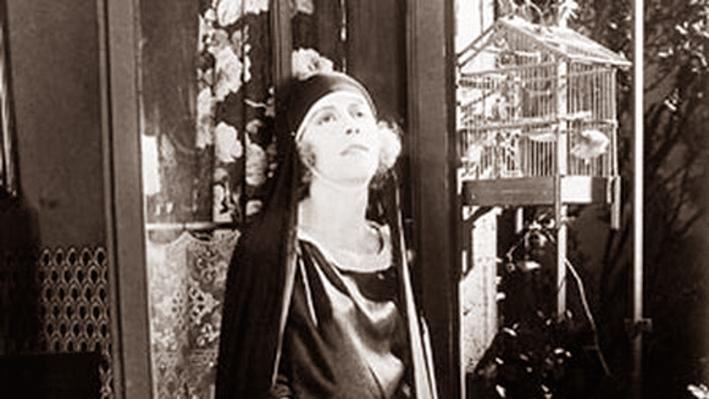
Liane Haid, a luminous figure in early Austrian cinema, delivers a performance that anchors the film's emotional weight. Her portrayal is a masterclass in silent-era acting, conveying a spectrum of emotions—fear, hope, despair, and a profound sense of vulnerability—through subtle gestures and expressive eyes. In a genre often prone to exaggerated histrionics, Haid's measured performance provides a crucial human counterpoint to the supernatural terror. She embodies the tragic heroine with an almost ethereal grace, making her character's plight all the more poignant. Her interactions with Eugen Neufeld and Max Neufeld, who portray other key family members, are charged with an unspoken tension, a silent dialogue of shared anxiety and impending doom. The silent film era demanded a heightened sense of physical expression, yet Haid manages to convey deep psychological states without resorting to caricature. Her presence is a beacon, albeit a flickering one, in the film's otherwise shadowy world. The nuanced despair she projects becomes a window into the psychological torment inflicted by the ancestral curse, making the audience feel the weight of centuries of unresolved spiritual unrest resting upon her young shoulders. It’s a performance that elevates the material beyond simple horror into the realm of profound tragedy, much like how other early cinematic efforts, such as The Tongues of Men, relied on compelling lead performances to articulate complex emotional landscapes in a nascent medium.
Luise and Jacob Fleck, as directors, demonstrate a remarkable command of visual storytelling, transforming Grillparzer's dramatic poem into a cinematic experience that is both visually striking and atmospherically rich. Their direction meticulously crafts a gothic aesthetic that permeates every frame. The decaying castle, with its labyrinthine corridors and shadowed chambers, becomes a character in itself, mirroring the internal decay of the family it houses. The use of light and shadow is particularly effective, creating an oppressive sense of claustrophobia and foreboding. Shadows stretch long and menacingly, hinting at unseen presences and the encroaching darkness of fate. This visual language is reminiscent of later German Expressionist works, though perhaps less overtly stylized, focusing instead on a more naturalistic, yet deeply unsettling, portrayal of a haunted world. The Flecks understand that terror isn't always about what you see, but what you *don't* see, or what is merely suggested by the play of light and an ominous angle. Their staging of scenes, particularly those involving the spectral ancestress, is handled with a delicate touch, relying on suggestion and implication rather than overt spectacle, which often proves far more chilling. The pacing, though deliberate, never feels sluggish; instead, it allows the dread to slowly steep, permeating the viewer's consciousness until the weight of the curse becomes almost unbearable. This deliberate build-up of tension through atmosphere and visual cues sets Die Ahnfrau apart from more action-oriented dramas of its time, such as The Bravest Way, which might have prioritized physical daring over psychological terror.
The thematic richness of Die Ahnfrau is perhaps its most enduring quality. It delves deep into the concept of fate, questioning the extent of free will when confronted by an ancient, seemingly unbreakable curse. Is the family's destruction a punishment for past transgressions, or merely an arbitrary decree of a cruel universe? The film grapples with the weight of lineage, suggesting that one's identity and destiny are inextricably linked to those who came before. The ancestress herself is a symbol of this inescapable past, a physical manifestation of historical guilt and unresolved conflict. The psychological toll this takes on the living descendants is profound, transforming their home into a prison and their lives into a countdown to oblivion. This exploration of inherited doom and the psychological fragmentation it causes is remarkably sophisticated for its era, predating many of the more overt psychological horrors that would emerge later in the century. It invites contemplation on the burdens passed down through generations, whether through direct curse or through the more subtle, yet equally potent, legacies of trauma and expectation. The film resonates with the tragic inevitability found in stories of ancient Greek drama, where characters are often powerless against the pronouncements of the gods or the Fates. It’s a narrative that suggests some destinies are simply not to be defied, a stark contrast to the more optimistic, individualistic narratives often seen in American films of the period, like The Yankee Girl, which championed personal agency.
Beyond the thematic depth, the film's visual language is a crucial component of its success. The cinematography, though perhaps rudimentary by modern standards, effectively conveys the film's pervasive sense of dread. The camera often lingers on architectural details, emphasizing the grandeur and subsequent decay of the estate, or on the faces of the actors, capturing their silent anguish. The set design is minimalist yet evocative, relying on heavy drapes, flickering candelabras, and vast, empty spaces to create an atmosphere of isolation and foreboding. The use of intertitles, a necessity of the silent era, is handled artfully, providing necessary exposition without disrupting the visual flow. They serve not just as dialogue, but as poetic pronouncements of fate, reinforcing the film's literary origins. The overall atmosphere is one of profound melancholy, tinged with moments of genuine terror. The spectral presence of the ancestress is never fully revealed in a grotesque fashion; instead, her manifestations are subtle—a shadow, a creaking door, a sudden chill—making her all the more terrifying because her power lies in suggestion rather than explicit horror. This approach to the supernatural is far more insidious, embedding itself in the viewer's imagination. In this way, Die Ahnfrau crafts a type of psychological horror that relies on existential dread, a method that finds echoes in later, more celebrated works of silent era horror, even if the explicit supernatural element is more pronounced here than in some of the purely psychological dramas like The Devil-Stone, which deals with obsession and psychological manipulation rather than overt haunting.
Released in 1919, Die Ahnfrau emerged from a post-World War I Europe, a continent grappling with immense loss, societal upheaval, and a profound sense of uncertainty. This historical backdrop undoubtedly imbued the film with an additional layer of resonance. The idea of an inescapable, destructive force, a curse that decimates a family lineage, would have struck a chord with audiences who had just witnessed the decimation of an entire generation. Austrian cinema, at this juncture, was finding its voice, often drawing upon its rich literary and theatrical traditions. Grillparzer's play, a cornerstone of Austrian dramatic literature, provided a sturdy foundation for this cinematic exploration. The film stands as a significant, if often overlooked, contribution to early European horror cinema, demonstrating that the genre's capacity for psychological depth and atmospheric dread was already being keenly explored. While it may not possess the same avant-garde reputation as some German Expressionist films that would follow shortly after, its commitment to a coherent, emotionally resonant narrative of supernatural doom is commendable. It offers a fascinating glimpse into the nascent stages of cinematic language, showcasing how filmmakers were experimenting with visual metaphor and dramatic pacing to evoke powerful emotions without the aid of sound. Its historical importance is undeniable, offering a bridge between theatrical gothic tradition and the emerging art form of cinema. Comparing it to other films of its immediate era, such as Nattens datter II, one can appreciate the diverse approaches to genre and narrative developing across European film industries, each contributing to the rich tapestry of early cinematic history.
In conclusion, Die Ahnfrau is more than just a silent horror film; it is a meticulously crafted gothic tragedy that uses the nascent language of cinema to explore profound themes of fate, legacy, and the inescapable past. Its atmospheric visuals, compelling performances—especially that of Liane Haid—and its relentless adherence to a narrative of preordained doom make it a powerful and haunting experience. It reminds us that some stories, like some spirits, refuse to be silenced, echoing through time with a chilling clarity. For those willing to delve into the depths of early European cinema, this film offers a richly rewarding, if deeply unsettling, journey into a world where the dead refuse to rest and the living are merely pawns in a cosmic game of annihilation. It’s a testament to the enduring power of gothic storytelling and a stark reminder that some curses, once invoked, will simply not be broken. The film's ability to evoke such potent emotions and maintain a pervasive sense of dread without a single spoken word is a remarkable achievement, solidifying its place as a significant, albeit often understated, masterpiece of the silent era. It teaches us that true terror often lies not in what jumps out at us, but in the slow, inevitable creep of an inherited doom, a narrative thread that connects us inextricably to the shadows of our own lineage.
IMDb —
1923
Community
Log in to comment.