DbcultAccessing Vault...
5.8/10
Senior Film Conservator
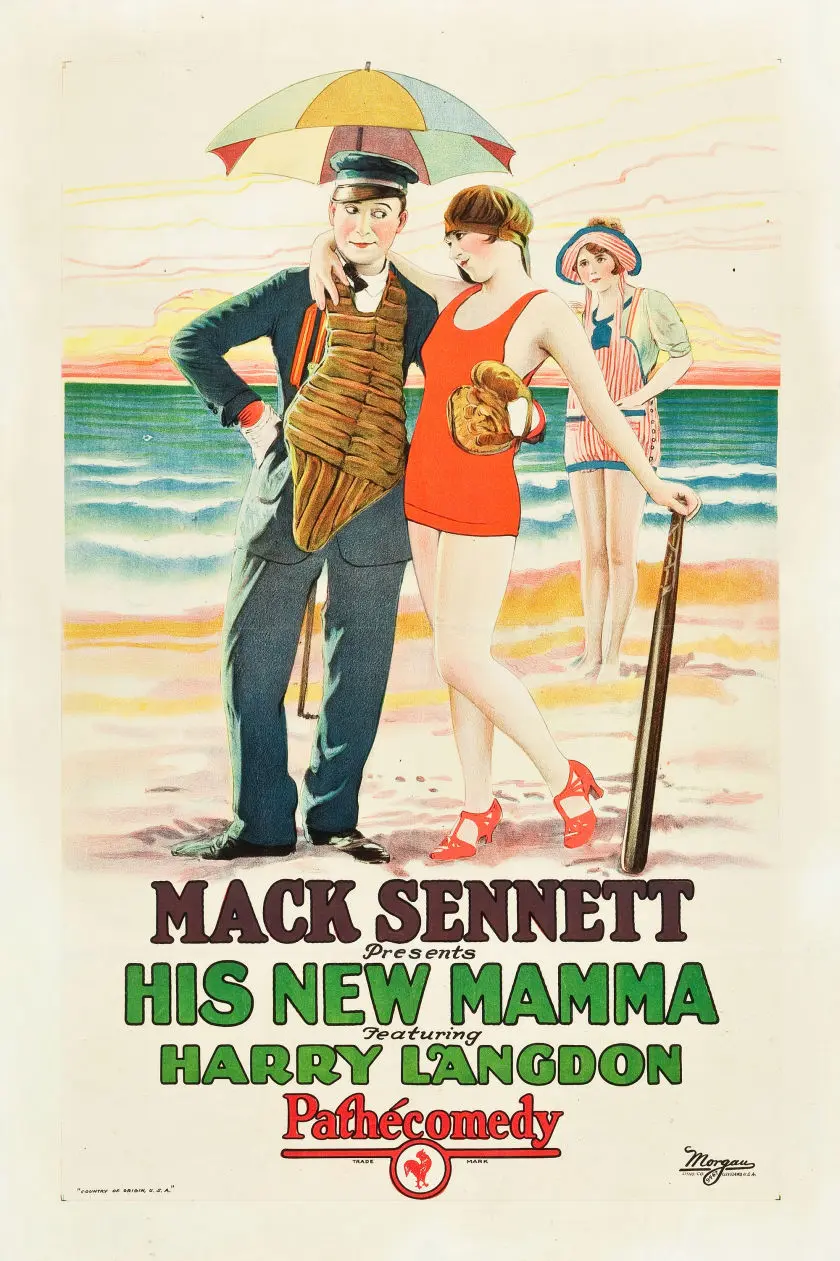
A definitive 5.8/10 rating for a film that redefined the boundaries of cult cinema. His New Mamma remains a cornerstone of transgressive art.
To approach a Mack Sennett production like His New Mamma is to enter a world where the laws of physics are secondary to the laws of the gag. Yet, within this 1924 short, there exists a layer of emotional complexity that often eludes the more frantic comedies of the era. The presence of Harry Langdon, a performer whose comedic DNA was spliced with a strange, baby-faced melancholy, elevates the material beyond mere pratfalls. Langdon does not merely perform comedy; he inhabits a state of perpetual bewilderment that feels hauntingly modern. While contemporaries like Chaplin relied on acrobatic grace, Langdon’s brilliance lay in his stillness—the hesitant blink, the tiny, uncertain gesture that suggests a soul perpetually out of sync with a cruel world.
The premise of the film—a father’s jealousy leading to the expulsion of his son—is a narrative archetype as old as the medium itself. It mirrors the thematic gravity found in The Honor of His House, where familial duty and betrayal collide with devastating results. However, Sennett and his writers, including the legendary Jack Wagner, pivot this tragedy into a farcical exploration of urban versus rural values. The son’s journey to California is not just a geographical shift; it is a spiritual migration from the rigid moralities of the farm to the fluid, often deceptive landscapes of the coast.
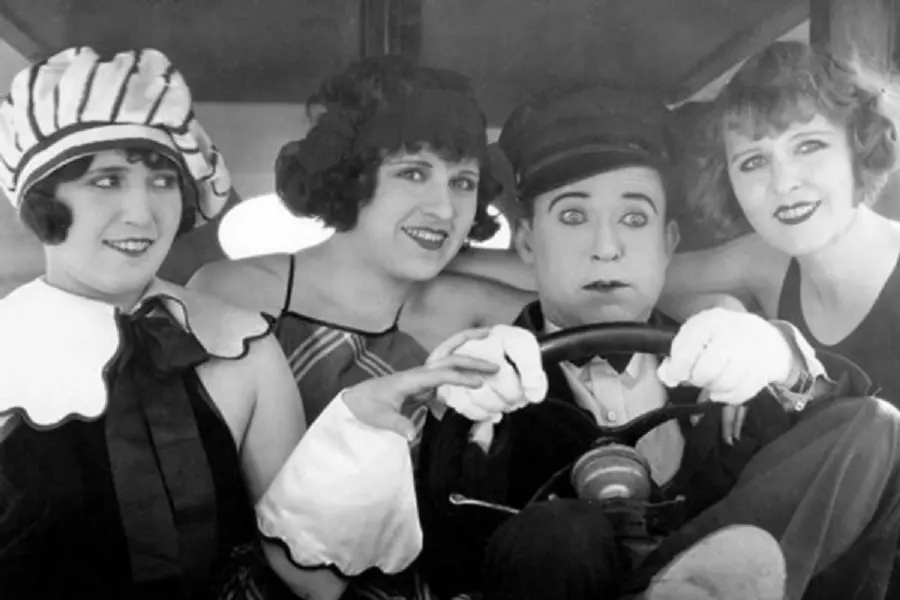
The cinematography in His New Mamma utilizes the high-contrast lighting typical of mid-20s silent cinema to accentuate the father’s looming presence. The farm scenes are shot with a rustic clarity that feels almost claustrophobic, reflecting the son’s entrapment within his father’s delusions. When the action shifts to California, the visual palette opens up, utilizing the natural light of the Pacific to signify a false sense of freedom. This use of space to define character psychology is a technique we see refined in avant-garde works like La luz, tríptico de la vida moderna, though here it serves the rhythm of the joke rather than the weight of the philosophy.
The supporting cast is a veritable who’s who of the Sennett factory. Andy Clyde, with his impeccable timing, provides the necessary friction for Langdon’s softness. The women of the film—Elsie Tarron, Eugenia Gilbert, and Mary Akin—are more than just objects of desire or jealousy; they are the catalysts for the narrative’s moral reckoning. In a world where Somebody Lied is the operational standard, these characters navigate a social minefield of reputation and reality.
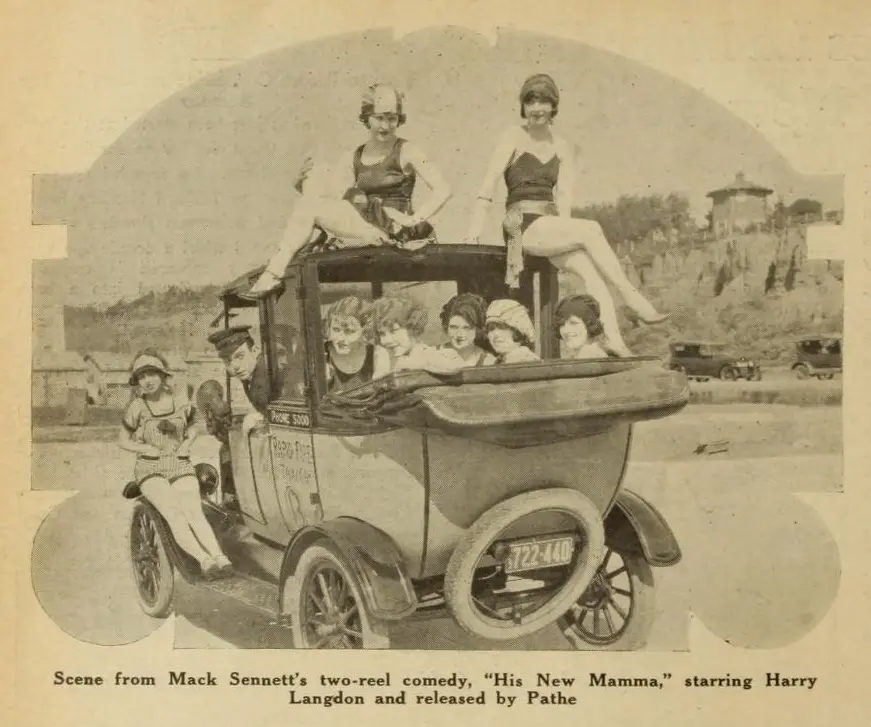
The turning point of the film occurs when our protagonist, now ostensibly settled in his new life, happens upon his father’s fiancée in the arms of another man. This moment is handled with a deft mix of humor and genuine tension. The irony is palpable: the son was exiled for a sin he did not commit, only to witness the 'New Mamma' committing that very sin against the man who cast him out. This thematic preoccupation with masks and hidden identities draws a direct line to The City of Masks, where the disparity between public persona and private vice forms the core of the drama.
Langdon’s reaction to this discovery is the highlight of the film. Instead of a standard comedic double-take, he offers a slow, agonizing realization. It is as if the character is processing the entire concept of human hypocrisy in real-time. The ensuing effort to stop the impending marriage and save his father from a life of deceit is paced with the frantic energy Sennett was famous for, yet it never loses sight of the emotional stakes. The farm boy’s 'sweetie' acts as his moral compass, ensuring that his quest for justice doesn't descend into a mere vengeful spree.
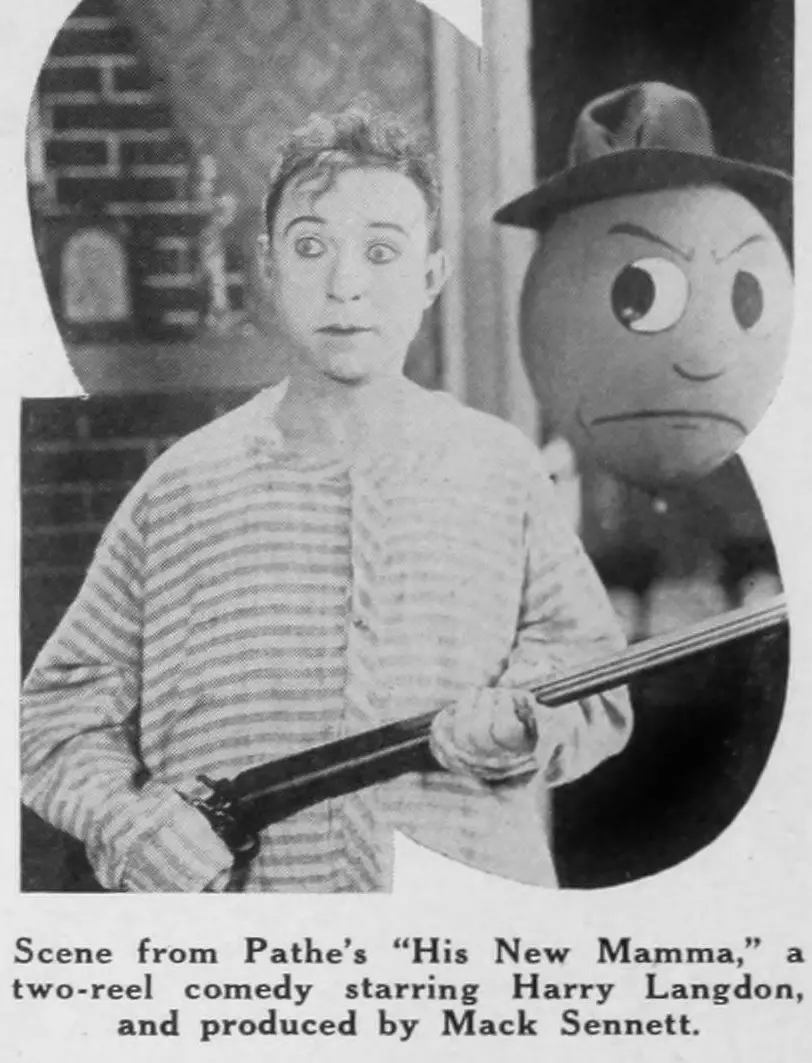
Released in a year that saw the cinematic landscape shifting toward more sophisticated feature-length narratives, His New Mamma stands as a testament to the enduring power of the short-form comedy. It lacks the cynicism of later sound-era comedies, possessing instead a sort of Victorian earnestness that is filtered through the lens of Vaudevillian chaos. The film captures a moment in time when the American audience was transitioning from the rural ideals of the 19th century to the urban complexities of the 20th, a theme echoed in the melancholic beauty of The Faded Flower.
The technical prowess of the Sennett studio is on full display here. The editing is crisp, ensuring that the visual gags land with maximum impact without lingering too long on any single beat. This rhythmic precision is what allowed films like His New Mamma to compete with the burgeoning feature film market. It is a dense, high-calorie cinematic meal served in a fraction of the time. The inclusion of such a vast cast, including Madeline Hurlock and Natalie Kingston, ensures that every frame is populated with expressive faces and kinetic energy.
In the grand pantheon of silent comedy, Harry Langdon is often overshadowed by the 'Big Three' (Chaplin, Keaton, Lloyd). However, His New Mamma serves as a persuasive argument for his inclusion in that elite tier. His ability to find the 'funny' in the 'pathetic' is a rare gift. He doesn't ask for your laughter; he earns your sympathy, and then the laughter follows as a release of that tension. This film is a quintessential example of how the Sennett machine could take a simple, almost melodramatic plot and transform it into a vehicle for idiosyncratic genius.
As we look back at the 1924 season, which gave us everything from the grit of During the Plague to the escapism of Der Mann ohne Namen - 1. Der Millionendieb, His New Mamma remains a vital piece of the puzzle. It is a film that rewards multiple viewings, not just for the jokes, but for the subtle nuances of Langdon’s performance and the surprising depth of its social commentary. Whether you are a scholar of the silent era or a casual viewer seeking a window into a bygone world, this film offers a rich, rewarding experience that transcends its twenty-minute runtime. It is a story of fathers and sons, of truth and lies, and ultimately, of the redemptive power of a well-timed custard pie—if not literally, then certainly in spirit.
IMDb —
1923
Community
Log in to comment.