DbcultAccessing Vault...
Cult Review
Senior Film Conservator
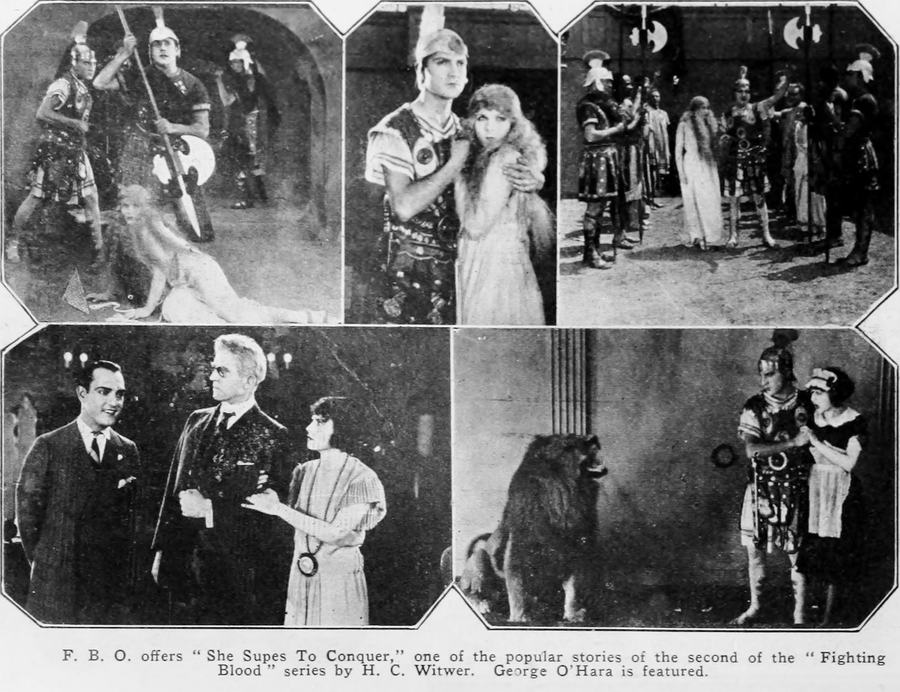
The flickering luminescence of early cinema often served as a fascinating, if sometimes unintentional, mirror to the societal currents of its era. 'She Supes to Conquer,' a title that itself crackles with an almost defiant energy, stands as a testament to this phenomenon. This particular cinematic artifact, featuring the effervescent Louise Lorraine, isn't merely a quaint relic from the silent film age; it's a vibrant, surprisingly prescient exploration of ambition, gender dynamics, and the relentless pursuit of individual agency. To dismiss it as simple melodrama would be to overlook the intricate tapestry of its narrative, woven with threads of social commentary and a burgeoning sense of female empowerment that resonates even today.
Louise Lorraine, in the role of Mary O'Connell, delivers a performance that transcends the often-exaggerated gestural language typical of the period. Her Mary is not a caricature, but a fully realized young woman whose intelligence and tenacity are palpable through every expressive glance and determined stride. The plot, as it unfolds, places Mary in an enviable yet precarious position: inheriting the reins of the 'Daily Dispatch' newspaper. This premise, in itself, was revolutionary for its time, challenging the prevailing notion of women's roles being confined to the domestic sphere or subservient professional capacities. Lorraine imbues Mary with a spirited blend of vulnerability and unyielding resolve, making her struggles and triumphs profoundly engaging. One can easily draw parallels to other films showcasing strong female protagonists, such as Spotlight Sadie, where women navigate complex professional landscapes, albeit often through different means. Yet, Mary's journey feels uniquely grounded in the day-to-day grind of business, lending her character a relatable, working-class heroism.
The screenplay, penned by H.C. Witwer and Beatrice Van, demonstrates a keen understanding of character development and narrative pacing. They construct a world where Mary's ascent is not a convenient plot device but a hard-won battle against systemic skepticism and overt sabotage. Kit Guard, as the curmudgeonly foreman Gus, provides an excellent foil to Mary's idealism. His initial resistance to her leadership is not merely a personal affront but a symbolic representation of the era's ingrained patriarchal attitudes. The dynamic between Mary and Gus is a microcosm of the larger societal shifts occurring, where traditional hierarchies were being challenged by burgeoning progressive ideals. Gus's eventual, grudging respect for Mary's capabilities is a pivotal moment, signaling not just his personal growth but also the film's optimistic outlook on the power of meritocracy.
"She Supes to Conquer" refuses to allow its protagonist an easy path, instead choosing to illustrate the genuine fortitude required to break through entrenched barriers. It's a testament to the film's enduring message that true leadership isn't about gender, but about vision, integrity, and an unshakeable belief in one's purpose.
The romantic subplot involving George O'Hara's Jack Sterling is handled with a delightful subtlety that avoids overshadowing Mary's professional narrative. Jack begins as a typical, somewhat jaded reporter, initially dismissive of Mary's unconventional appointment. However, as he witnesses her unwavering dedication and shrewd journalistic instincts, his skepticism slowly transforms into admiration, then affection. Their romance blossoms organically, rooted in mutual respect and shared professional passion rather than superficial attraction. This approach elevates the film beyond a simple love story, integrating the personal and professional journeys of its characters seamlessly. In contrast to more overtly romantic dramas like The Marionettes, which might prioritize emotional entanglement above all else, 'She Supes to Conquer' grounds its romantic elements in the more tangible realities of shared ambition and intellectual camaraderie.
While specific directorial credits might vary across historical records, the visual storytelling in 'She Supes to Conquer' is undeniably effective. The use of intertitles is judicious, never overbearing, allowing the actors' expressions and physical comedy to carry much of the narrative weight. The cinematography, though characteristic of its time, captures the bustling energy of a newspaper office with a surprising dynamism. Shots of the printing presses whirring, reporters scrambling, and the general controlled chaos of deadline day are rendered with an authenticity that immerses the viewer in Mary's world. The visual contrast between Mary's initial unassuming presence and her growing command of the newsroom is particularly well-executed, highlighting her transformation without needing extensive exposition.
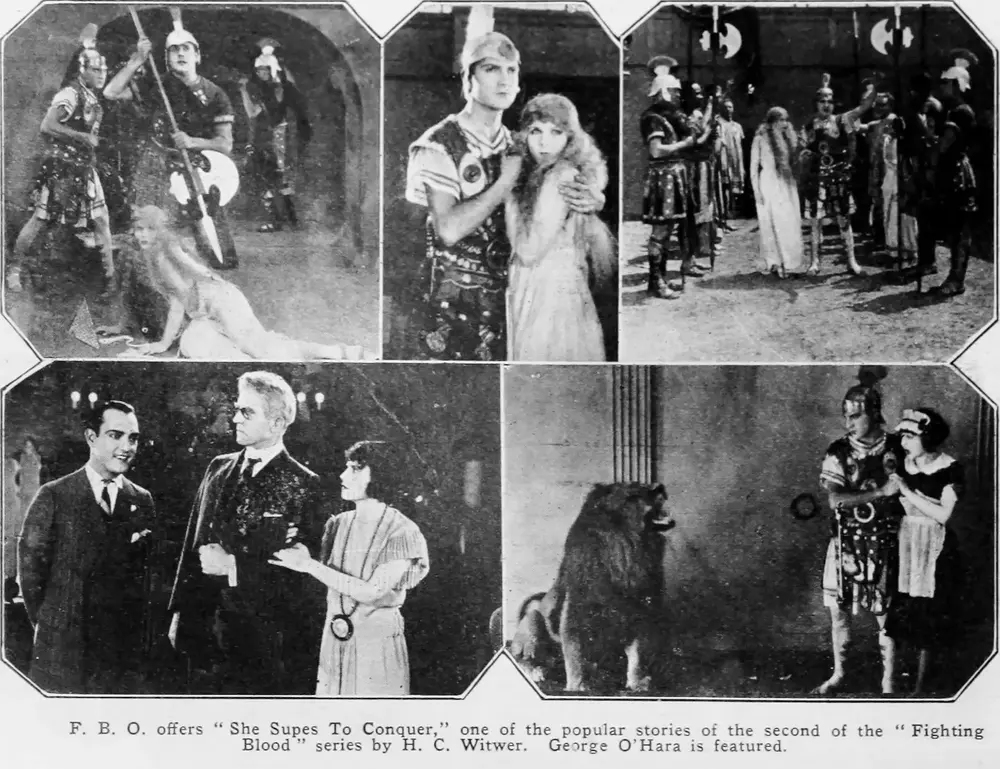
One cannot discuss silent film without acknowledging the crucial role of performance. Louise Lorraine, a veteran of serials and Westerns, brings a physical grace and expressive face that are perfectly suited to the medium. Her portrayal of Mary's determination, her moments of doubt, and her ultimate triumph are conveyed with a clarity that transcends the absence of spoken dialogue. Al Cooke and Mary Beth Milford, in their supporting roles, add texture to the newsroom ensemble, each contributing to the vibrant atmosphere Mary aims to cultivate. Their reactions to Mary's leadership, ranging from skepticism to eventual admiration, provide a nuanced backdrop against which her personal journey unfolds.
Beyond its engaging plot, 'She Supes to Conquer' harbors a significant undercurrent of social commentary. It subtly critiques the rigid gender roles prevalent in the 1920s, showcasing how talent and intellect are not bound by sex. Mary's struggles are not just against a rival newspaper magnate but against the invisible barriers of prejudice and expectation. Her success becomes a powerful statement, suggesting that given the opportunity, women are not only capable of leading but can bring a fresh perspective and innovative spirit to traditionally male-dominated fields. This theme resonates with other films of the era that subtly pushed boundaries, such as How Molly Malone Made Good, which also explored a woman's journey to professional success, often against formidable odds. However, 'She Supes to Conquer' feels particularly pointed in its focus on leadership and direct supervision, rather than just individual achievement within an existing structure.
The film also touches upon the ethics of journalism, albeit in a relatively nascent form. Mary's insistence on 'fearless investigative journalism' and 'untold local stories' speaks to an emerging consciousness about the press's role in society. In an age where sensationalism could easily dominate, Mary champions a more community-focused and integrity-driven approach. This contrasts sharply with the 'shadowy rival newspaper magnate' who embodies the more ruthless, profit-driven side of the media industry. The film, therefore, becomes not just a story of personal triumph but a quiet advocacy for responsible journalism, a theme that remains profoundly relevant.
While perhaps not as widely known as some of its contemporaries, 'She Supes to Conquer' deserves reconsideration for its narrative bravery and strong central performance. It offers a valuable glimpse into the evolving social landscape of the early 20th century, where the seeds of modern feminism were beginning to sprout in unexpected places. The film's message that competence and character should supersede gender remains a powerful and timeless one. It avoids didacticism, instead presenting its themes through an engaging story that balances humor, romance, and genuine dramatic tension. The final showdown, where Mary's ingenuity saves the 'Daily Dispatch,' is not just a thrilling climax but a satisfying culmination of her journey, solidifying her place as a formidable leader.
The film's quiet revolutionary spirit, embodied by Louise Lorraine's compelling portrayal, makes it a significant, if often overlooked, piece of cinematic history. It's a reminder that even in the nascent days of film, storytellers were grappling with complex social questions, offering audiences reflections of their changing world.
In an era that also produced epics and grand narratives like Cleopatra, 'She Supes to Conquer' finds its strength in its more intimate, yet equally impactful, portrayal of an individual's struggle against convention. It doesn't rely on spectacle but on the compelling force of character and a well-crafted plot. The film's ability to entertain while subtly challenging societal norms is its greatest achievement. It is a work that, through its unpretentious charm and underlying gravitas, manages to convey a profound message about empowerment and the triumph of spirit against adversity. For enthusiasts of silent cinema, and indeed anyone interested in the evolution of storytelling, 'She Supes to Conquer' offers a rich, rewarding viewing experience that continues to resonate with contemporary audiences seeking tales of resilience and pioneering spirit.
The performances, particularly Lorraine's, elevate the material beyond simple entertainment. Her ability to convey complex emotions without dialogue is a masterclass in silent film acting. The supporting cast, while perhaps less prominent, contributes effectively to the overall texture of the film, creating a believable world for Mary's struggles and triumphs. Even the antagonists, from the initially skeptical Gus to the shadowy rival magnate, are rendered with enough nuance to feel like genuine obstacles rather than mere plot devices. The film's enduring appeal lies in this authentic portrayal of human nature, set against the backdrop of a changing world. It's a delightful discovery for those who appreciate the artistry and social commentary embedded within the annals of early cinematic history.

IMDb 6.8
1915
Community
Log in to comment.