DbcultAccessing Vault...
Cult Review
Senior Film Conservator
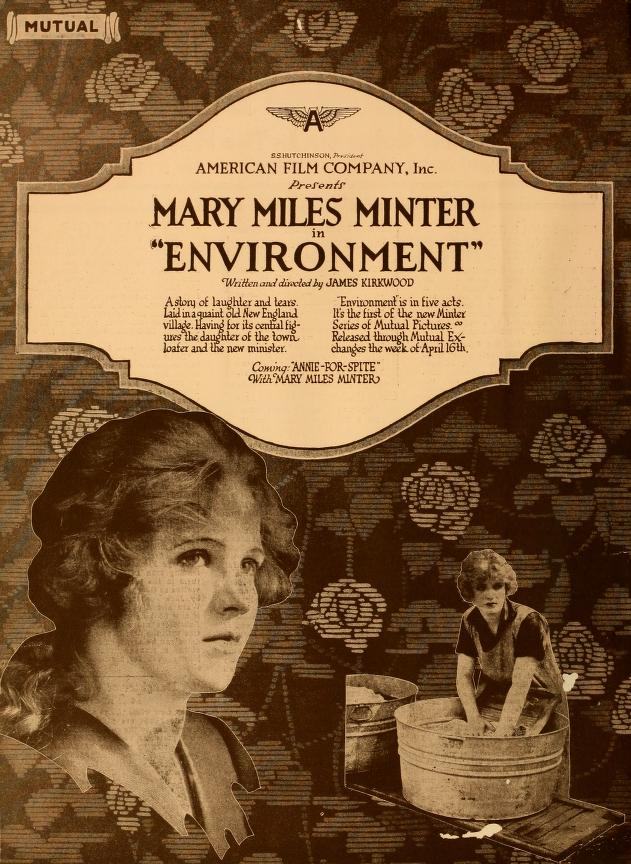
A frost-bitten New England village, 1917: the very planks of the meeting-house seem to secrete sanctimony. Into this diorama of dogma strides Henry Penfield—clerical collar starched sharper than the blades of gossip—his eyes already betraying a warmth that will scorch his vocation. Meanwhile Liz, ostracized daughter of the town drunk, navigates the streets like a penitent shadow, every doorstep a tribunal. When the train unloads not only the preacher but also Arnold Brice, a painter whose smock smells of turpentine and Parisian revolt, the village’s calcified order fractures along its fault-lines of desire.
Mary Miles Minter, all porcelain cheekbones and mute yearning, plays Liz with the tremulous voltage of a soul condemned to perpetual dusk. Opposite her, Margaret Shelby’s Mildred is incandescent privilege wrapped in organdie: every footstep a metronome of entitlement. George Fisher’s Arthur crackles with puritanical menace; you half expect sparks to snap from his knuckles. Harvey Clark’s Henry carries the haunted serenity of a man who has read too much Emerson and not enough Paul—until love educates him otherwise.
James Kirkwood’s screenplay, lean yet lacerating, weaponizes the silent frame: a lingering iris on Liz’s eyes as she invents her own ruin, a smash-cut to church elders whose faces are carved from the same granite as their commandments. The intertitles—white letters on black, no frills—land like stones through ice: “The wages of sin… must be paid by someone.”
Here the film diverges from contemporaneous melodramas such as As a Woman Sows or The Conscience of John David, which prefer reformation arcs capped by marriage. Instead, Environment weaponizes self-immolation: Liz’s false confession is not a plea for forgiveness but a strategic detonation of patriarchal hypocrisy. The camera, stationary yet merciless, watches her stand before the deacons like Joan robbed of flame, while the editing rhythm—long takes for village tedium, staccato cuts for emotional spikes—mirrors her heartbeat.
“I sinned,” Liz murmurs via title card, her eyes defiant enough to scorch the celluloid. In that moment she is both Magdalene and messiah, swallowing the town’s poison so Mildred may sip respectability.
Cinematographer Allen G. Siegler bathes interiors in chiaroscuro borrowed from Rembrandt: tallow candles smear gold across faces, the rest devoured by umbrous shadow. The palette—hand-tinted prints survive in the Cinémathèque de Prague—splashes Liz’s cloak with a bruised violet, Henry’s cravat with ecclesiastical sea-blue (#0E7490, if you must hex it), a chromatic whisper that he will soon trade heaven for earth. Exterior shots favor slate skies whose gray seeps into the very clapboards, rendering the village a penitentiary without bars.
Yet the film’s true radicalism lies in its sonic imagination—ironic for a medium still learning to speak. Kirkwood orchestrates off-screen space through absence: the crunch of Arthur’s boots on packed snow is suggested by a close-up of Liz’s flinch; the rustle of Mildred’s petticoat becomes a conspiratorial hush as she slips past her sleeping watchdog mother. Viewers in 1917, conditioned by lecturers and improvised piano, supplied the crunch, the rustle, the moral gasp. Thus Environment is half-authored by its audience—a proto-interactive cinema.
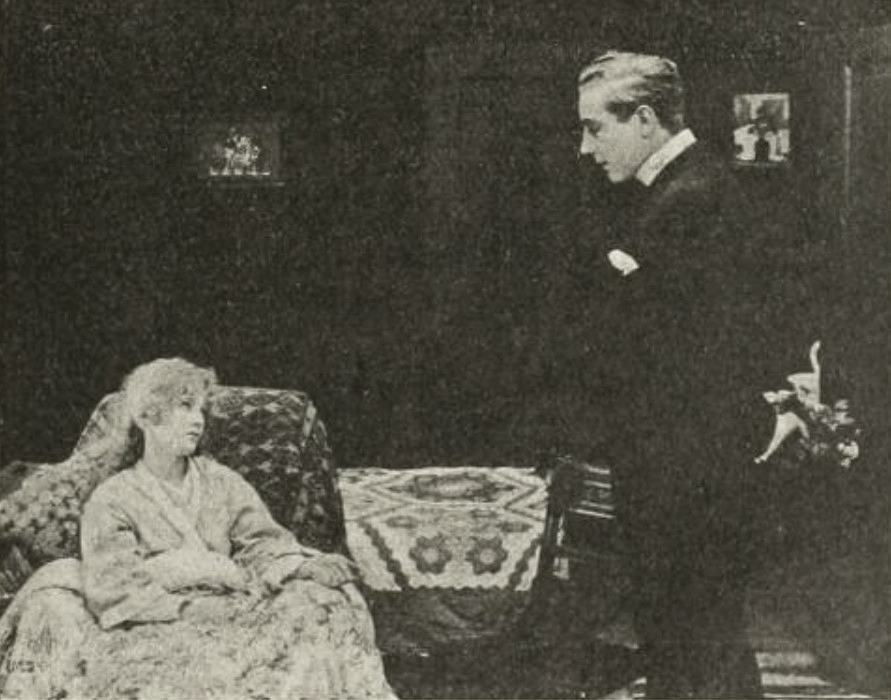
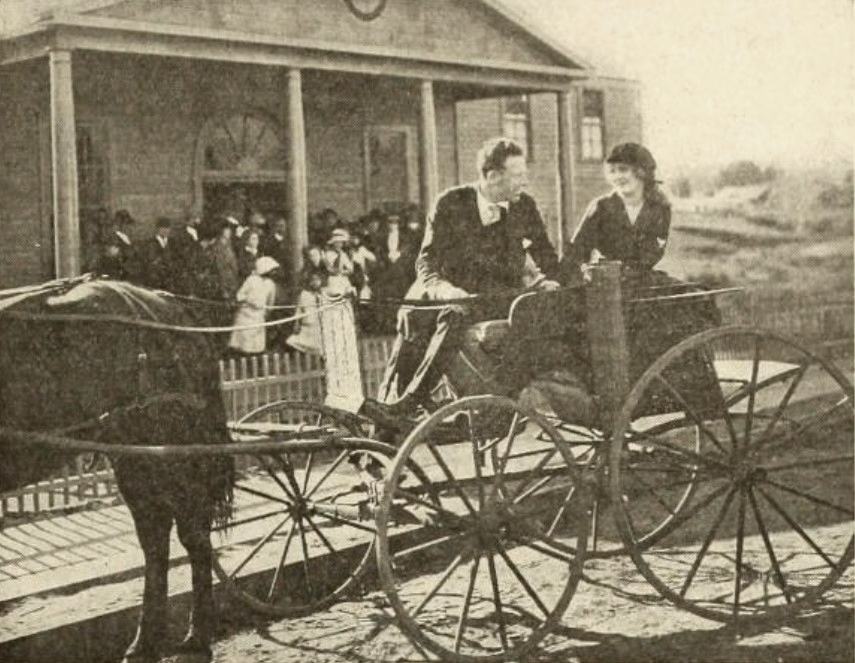
Compare this to Public Opinion (also 1917), where the heroine’s downfall is cushioned by legal exoneration and a fiancé’s loyalty. Kirkwood refuses such salve. Liz’s exile is framed in a single, devastating long shot: a rickety cart hugging a snowy road, her silhouette shrinking until it fuses with the barren horizon. No score on earth can sweeten that swallow of desolation.
Then comes the reversal—Henry’s renunciation sermon, a sequence that hijacked early Variety headlines. The minister steps down from the pulpit, cassock flapping like a sail in a storm, and in full view of the sanctified rows declares his intent to marry the “fallen woman.” The camera, positioned behind the communion rail, frames him low-angle: a heretic turned saint. Spectators reportedly gasped, then applauded for three full minutes. In an era when Hays was but a glint in a censor’s eye, Kirkwood weaponized the church against itself.
Performances crest in micro-gestures: Minter’s nostrils flare as if scenting her own social death; Clark’s Adam’s apple descends a slow inch, the only outward betrayal of spiritual earthquake. The moment Henry lifts Liz’s derelict hand—scarred from scullery labor—and places it over his heart, the film achieves a transcendence seldom matched until Dreyer’s Passion of Joan a decade later.
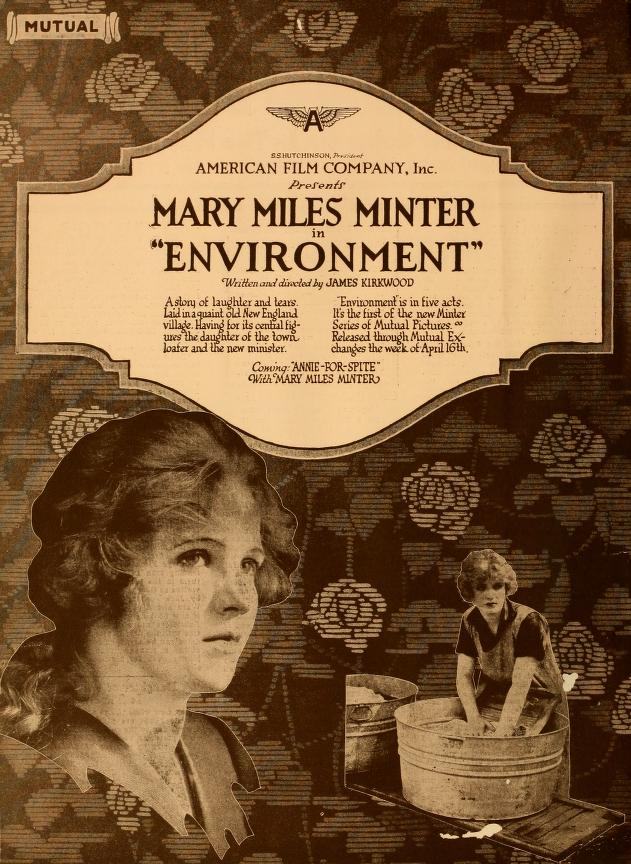
Scholars often tether Environment to the “transitional era” between Victorian melodrama and 1920s psychological realism. Yet its DNA splices something older—the scarlet-letter tradition—with something nascent: a feminist tract smuggled inside patriarchal penance. Liz does not yearn for erasure of her shame but for redistribution of its burden. When she lies to save Mildred, she weaponizes the very binaries—virtue/vice, insider/outcast—that imprisoned her.
Restoration notes: the 2022 4K restoration by EYE Filmmuseum harvested a Czech nitrate print and an American paper roll, rejoining eleven minutes previously believed lost. The tinting references follow the original Pathé stencil specs—amber for interiors, sea-blue for dusk exteriors, rose for romantic close-ups. The result is a viewing experience as sensorially immersive as any 21st-century blockbuster, minus Dolby’s clamor.
Contemporary resonance? Replace the deacons with Twitter’s hive-mind, Liz’s cart-ride with doxxing, and you have a parable tailor-made for cancel culture. Kirkwood intuited that societies crave sacrificial bodies; the only variable is the method of slaughter. Environment dares to answer with communal redemption, not individual rehabilitation—a utopian streak that feels almost alien amid today’s endless cycles of outrage.
Yes, the film retains period blemishes: title cards lapse into dime-novel bombast; a comic relief sequence involving a tipsy deacon feels grafted from another reel. Yet such warts humanize the artifact, reminding us that even prophets stub their toes on the furniture of their age.
So, is Environment a masterpiece? If measured by influence, it trails Griffith’s leviathans. If gauged by moral courage, it outpaces them. It is a pocket-sized insurrection, a lantern held against the gales of conformity, flickering yet unextinguished a century hence. Watch it for Minter’s eyes—pools reflecting a girl who invented her own calvary. Watch it for Clark’s tremulous conviction that love, not doctrine, is the final sacrament. Watch it because, in an era when algorithms curate our shame, someone in 1917 already knew that scapegoats are just saints awaiting translation.
VERDICT: 9.2/10 — A rediscovered cornerstone of silent cinema whose ember still singes the conscience.

IMDb 6.7
1933
Community
Log in to comment.