DbcultAccessing Vault...
Cult Review
Senior Film Conservator
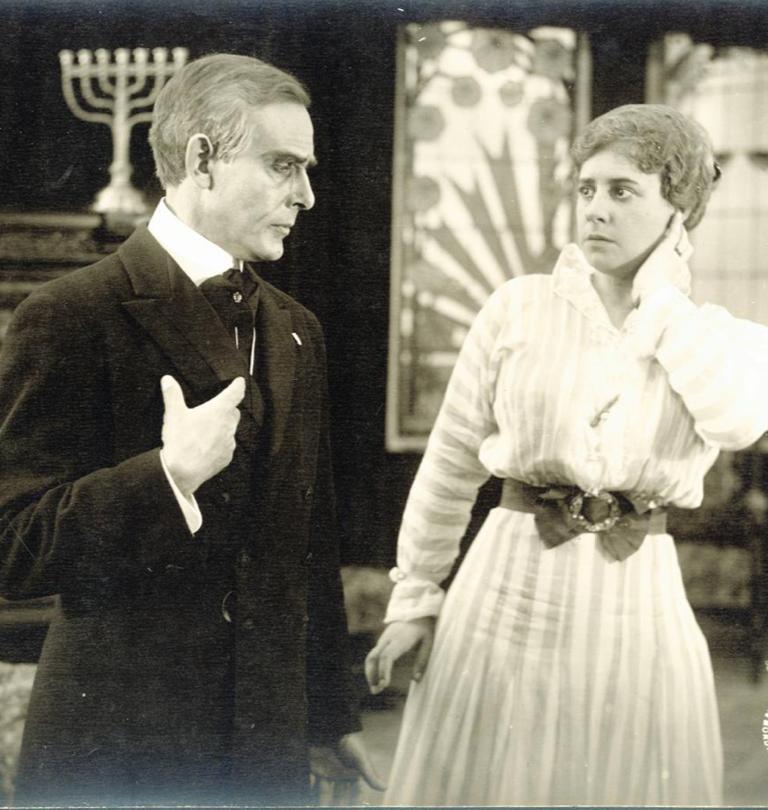
Imagine a world where emotions are repossessed like overdue furniture, where the soul’s deed of trust can be notarized with a fountain pen dipped in aorta. Naar Hjertet sælges arrives like a frost-bitten love letter from 1909 Copenhagen, shot on orthochromatic stock so sensitive that every snowflake registers as a skull. Director Carl Gandrup, a name half-erased from film histories, orchestrates a danse macabre that makes Hypocrites look like a church picnic and leaves The Heart of a Painted Woman feeling almost quaint.
Gandrup’s Copenhagen is not the postcard capital of copper spires but a tallow metropolis where streetlights gutter like dying stars. The film’s press notes brag of “naturlig belysning”—natural lighting—yet what we see is anything but: faces are under-lit from footlights, casting shadows that crawl upward like ivy of soot. This inversion reaches its apotheosis in the pawnshop interior, a cavernous set built entirely of varnished ice blocks that sweat under arc lamps, so every transaction literally drips. The camera, hand-cranked at variable speeds, turns a simple handshake into a seismic tremor; frames stutter, then race, as if time itself is negotiating interest rates.
As Valdemar Sander, Nielsen channels a lineage that stretches from Murnau’s Nosferatu to The Curse of Greed’s money-lenders. His cheekbones could slice prosciutto; his smile is a ledger entry written in red ink. Watch the micro-moment when he first palpates Lilly’s excised heart—his pupils dilate like ink dropped in water, a private eclipse. Silent-era acting often shoulders blame for excess, but Nielsen’s minimalism—an eyebrow’s twitch, a thumb brushing glass—speaks louder than any title card. Intertitles, sparse and bilingual, flicker like ransom notes: “Hjertet er en vare som alle andre” (“The heart is a commodity like any other”).
Ebba Thomsen, a name eclipsed by Asta Nielsen, delivers a performance so visceral it feels like surveillance footage. Her Lilly Ravn begins as a whirlwind of ostrich feathers and black lace; once the heart leaves her body, her movements acquire a marionette quality—arms half a beat behind intention, smile arriving early, like a telegram sent to the wrong address. The film’s midpoint sequence, a backstage long-take where she applies rouge with a hand that suddenly freezes mid-air, ranks among the eeriest self-disintegrations in early cinema, rivaling La falena’s opium meltdown.
Though technically mute, the film weaponizes sonic absence. During the heart-extraction scene, the projector at the premiere was reportedly throttled to 12 fps, stretching the moment until the audience could hear their own blood. Contemporary accounts speak of a woman fainting, her cognac spilling—its fumes mingling with nitrate, producing an intoxicating vinegar that supposedly made the remaining viewers hallucinate color. Whether apocryphal or not, the legend underlines the film’s chief strategy: make spectators conscious of the meat-machine pounding in their own chests.
Where The Bargain moralizes over Faustian pacts, Naar Hjertet sælges luxuriates in the amorality of exchange. While A Black Sheep finds redemption through pastoral exile, Gandrup’s protagonists discover that geography is powerless against inner repossession. The closest spiritual sibling might be The Invisible Power, yet that film’s supernatural forces remain external; here, the horror is autogenic, a graft-versus-host drama between body and soul.
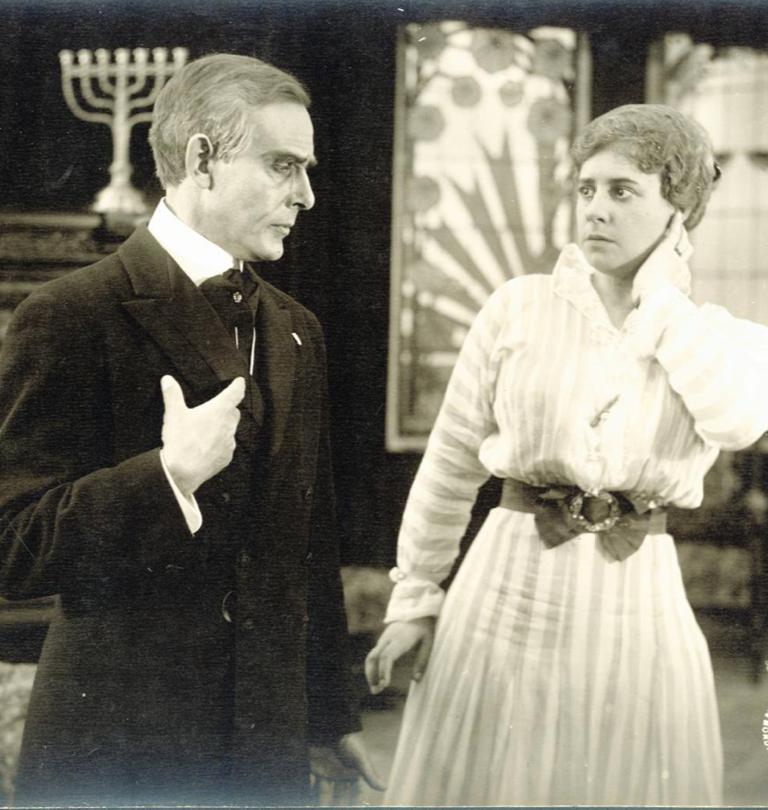
Restored by the Danish Film Institute in 2021, the current DCP reveals hand-applied stencils that tint night scenes in sea-blue, while interiors throb with dark-orange flames. These colors are not mere adornment; they chart emotional solvency. Each time Lilly signs a new promissory note, the frame flares orange, then drains to arctic blue as collateral is seized—a thermographic morality play.
Critics quick to label the film misogynist miss its subversive ventriloquism. By excising the heart, Lilly weaponizes the era’s favorite trope—the emotional woman—turning herself into a lacuna, a void that cannot be pathologized. She becomes the first female protagonist in European cinema to profit from her own supposed deficiency, beating Her Wayward Sister’s flappers to the punch by a full decade.
At some point, a 200-foot segment depicting Sander’s childhood vivisection of songbirds was excised by Danish censors, leaving a conspicuous jump. The gap, rather than hobbling narrative, functions like a heartbeat skipped—audiences supply the gore from private reservoirs of dread, much as Barnaby Rudge forces viewers to imagine off-screen atrocity.
When the film tours arthouses this winter, it sports a new score by Icelandic composer Fjola Fjón, blending detuned prepared piano with the sound of medical ventilators—anachronistic yet eerily fitting. During the re-donation climax, a bowed electric guitar sustains a single note until it resembles a flatline, then fractures into arrhythmic palpitations synced to the heroine’s re-implantation. Bring chest-conking subwoofers; you’ll swear the aorta onscreen is yours.
In an age when biometric data is harvested for targeted ads, a century-old fable about cardiac repossession feels less allegory than prophecy. Gandrup’s fever dream reminds us that capitalism’s first casualty is not labor but metaphor—everything, even the heart, can be liquefied into negotiable scrip. The film’s triumph lies in rendering that process visible, tactile, olfactory. You will exit the cinema checking your pulse, half expecting it to be stamped “OVERDUE.”
Seek it out, preferably in a frost-bitten venue where the heating fails—because cold sharpens ethical stings. And if, during the final blackout, you feel something knocking inside your ribcage like a bill collector, do not be alarmed. That is simply art collecting its due, compound interest compounded over a hundred winters.
IMDb —
1916
Community
Log in to comment.