DbcultAccessing Vault...
Cult Review
Senior Film Conservator
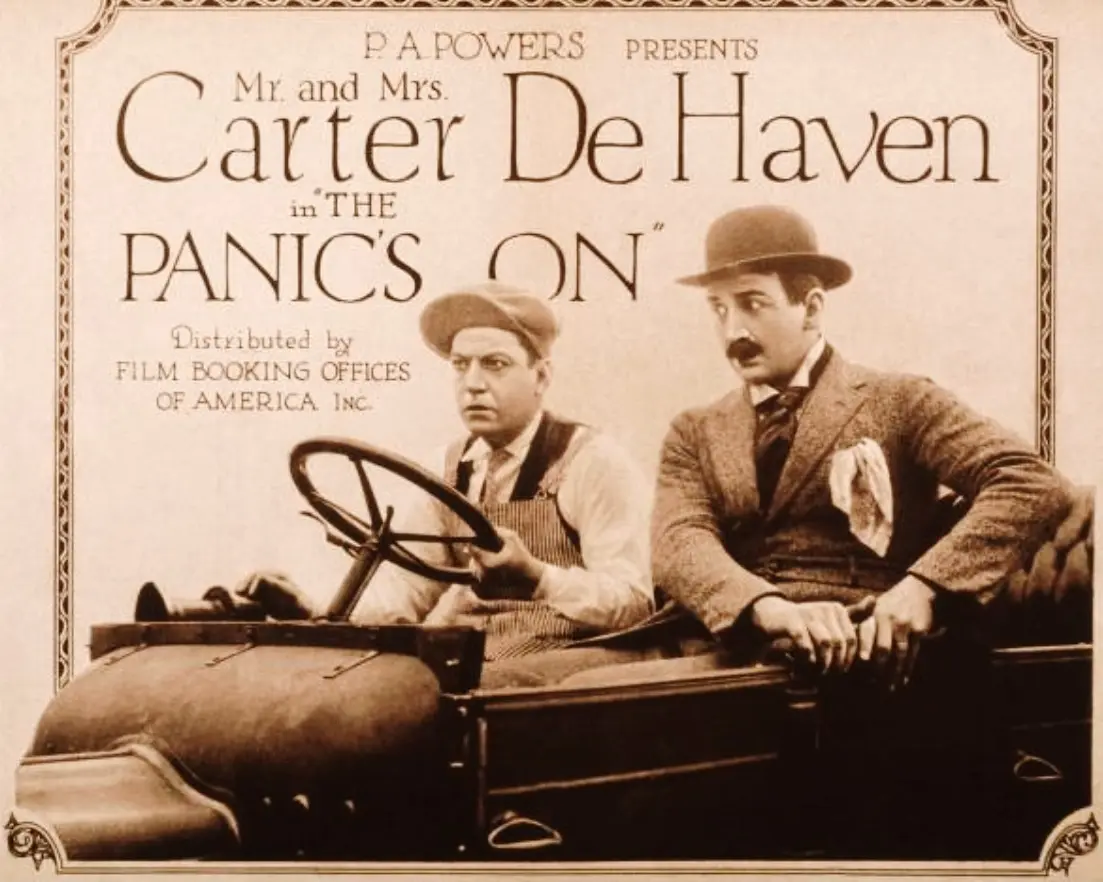
In the pantheon of silent cinema, few duos captured the frantic pulse of the Roaring Twenties with as much grace and absurdity as Flora Parker DeHaven and Carter DeHaven. Their 1923 effort, The Panic's On, is not merely a short film; it is a meticulously calibrated engine of social catastrophe. While contemporaries were often preoccupied with the grandiosity of epics like Giuliano l'apostata or the heavy dramatic weight of Othello, the DeHavens found their muse in the microscopic fissures of domestic life. The film operates on a principle of exponential acceleration, where a single spark of confusion ignites a conflagration of slapstick brilliance.
The brilliance of this particular short lies in its refusal to remain stagnant. From the opening frames, the pacing suggests a world on the brink of a nervous breakdown—a sentiment that echoed the post-war jitters of an era caught between Victorian tradition and the impending modernity of the Jazz Age. Unlike the more localized humor found in Barbershop Gossip, which relied on the intimacy of community chatter, The Panic's On weaponizes the environment itself. Every door, every piece of furniture, and every social expectation becomes a hurdle for our protagonists to navigate with increasingly desperate athleticism.
Carter DeHaven’s performance is a masterclass in the art of the 'slow burn' that rapidly transitions into a 'fast melt.' His facial expressions are not merely reactions; they are a visual language of impending doom. He possesses a specific type of elasticity that makes his physical presence feel both grounded and ethereal. In contrast, Flora Parker DeHaven acts as the anchor, though an anchor caught in a storm. Her ability to maintain a facade of poise while the world crumbles around her provides the film with its necessary tension. This dynamic was previously explored in their other collaborations, such as The Belle and the Bill, but here it reaches a fever pitch.
Consider the way the camera lingers on their interactions. In an era where editing was often rudimentary, the DeHavens utilized the entire frame. Their movements are choreographed with the precision of a ballet, yet they retain the raw, unpredictable energy of vaudeville. This is not the gritty realism one might find in West of Chicago or the sentimental pull of The Call of the Child. This is pure, unadulterated cinematic play. The 'Panic' of the title is both literal and metaphorical, representing a collective loss of control that the audience finds both hilarious and terrifyingly relatable.
One cannot discuss The Panic's On without acknowledging the sheer density of its visual information. In the absence of dialogue, the film relies on a sophisticated semiotics of gesture. Every tilt of the hat, every widening of the eyes, and every frantic dash across a room communicates a chapter’s worth of narrative. The film avoids the melodramatic pitfalls seen in The Little Gray Lady, opting instead for a brisk, almost percussive visual style. The cinematography, while constrained by the technology of 1923, manages to capture the depth of the set, making the house feel like a labyrinth from which there is no escape.
This sense of entrapment is a common trope in silent comedy, yet the DeHavens elevate it. They don't just trip over rugs; they find themselves entangled in the very fabric of their social standing. The 'panic' is often sparked by the fear of being seen as inadequate or out of place—a theme that resonates with the suburban anxieties found in Town Terrors. However, while Town Terrors leans into the grotesque, The Panic's On remains firmly rooted in a recognizable, albeit heightened, reality.
When placed alongside other works of the period, the film's unique flavor becomes even more apparent. While The Widower's Mite pulls at the heartstrings with a heavy hand, The Panic's On tickles the ribs with a sharp elbow. It lacks the moralizing tone of A Marked Man or the investigative intrigue of The Paliser Case. Instead, it offers a nihilistic joy—the pleasure of watching a well-ordered life descend into absolute shambles. Even the canine-led charm of My Dog, Pal seems quaint when compared to the sophisticated urbanity of the DeHavens' brand of humor.
There is also a fascinating parallel to be drawn with Day by Day in Every Way. Both films deal with the repetitive nature of daily existence and the sudden breaks in that routine. However, where Day by Day in Every Way finds a sort of rhythmic comfort in its title's philosophy, The Panic's On suggests that every day is merely a thin sheet of ice over a freezing lake of chaos. The film shares the workplace frustrations seen in You're Fired, but it transposes that professional anxiety into a more intimate, domestic sphere, making the stakes feel oddly higher.
In the modern era of sprawling cinematic universes, there is a tendency to overlook the craftsmanship of the two-reeler. Yet, The Panic's On proves that brevity is indeed the soul of wit. The film doesn't waste a single second of its runtime. Like Sunlight's Last Raid, it understands that the impact of a visual story is often found in its intensity rather than its duration. Every gag is set up with surgical precision and paid off with a flourish that leaves the audience breathless.
The DeHavens were pioneers of a specific kind of 'couple comedy' that would later influence everything from 'I Love Lucy' to modern sitcoms. Their ability to bicker without speaking, to love without cloying sentimentality, and to panic with such synchronized perfection is a lost art. As we look back at The Panic's On, we aren't just seeing a relic of 1923; we are seeing the blueprint for the next century of comedic timing. It is a film that demands to be watched not as a historical curiosity, but as a living, breathing piece of entertainment that still carries the power to provoke genuine, belly-aching laughter.
From a technical standpoint, the film’s use of space is revolutionary for its time. The set design acts as a secondary character, providing the obstacles necessary for the 'panic' to manifest physically. The lighting, though relatively flat as per the standards of the early 20s, is used effectively to highlight the sweat on Carter’s brow or the sharp, inquisitive glances of Flora. The editing, while lacking the montage theory that would soon emerge from the Soviet school, is remarkably tight, ensuring that the 'panic' never loses its momentum. It is this relentless forward motion that defines the film.
In conclusion, The Panic's On remains a sparkling jewel in the crown of silent comedy. It eschews the sentimentality of its peers for a sharper, more cynical, and ultimately more honest look at the human condition under pressure. Whether you are a scholar of the silent era or a casual viewer looking for a laugh, the DeHavens offer a masterclass in how to turn a simple premise into a timeless explosion of joy. It is a reminder that while technology changes and sounds are added to our screens, the fundamental comedy of a human being losing their cool is eternal. The panic isn't just on—it's infectious, and we are all the better for catching it.
IMDb 5.9
1916
Community
Log in to comment.