DbcultAccessing Vault...
Cult Review
Senior Film Conservator
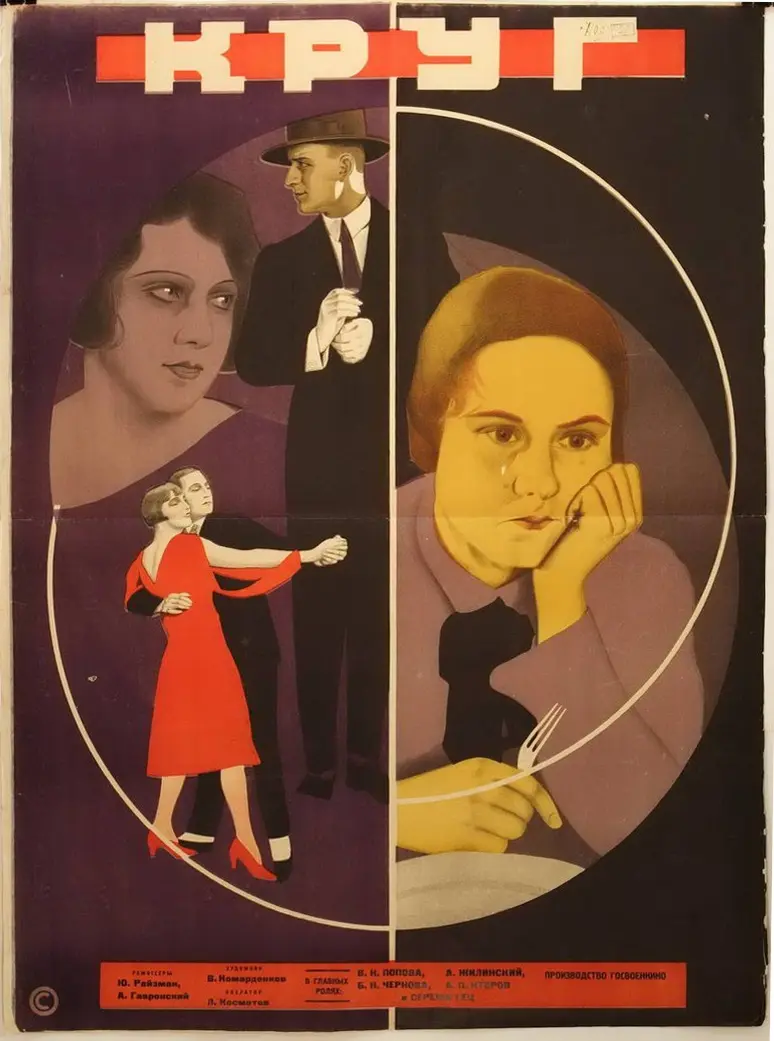
Is Krug a forgotten Soviet relic worth seeking out today? Short answer: Yes, but only if you have the stomach for a bleak, intellectual autopsy of human loyalty versus state duty.
This film is for the cinephile who enjoys the moral weight of a Dostoevsky novel stripped of its religious redemption and replaced with the cold machinery of 1920s Soviet justice. It is certainly not for anyone looking for a lighthearted silent comedy or the swashbuckling adventure found in films like The Sea Tiger.
1) This film works because it refuses to provide easy emotional exits, forcing the protagonist—and the audience—to weigh the value of a human life against the rigid requirements of a fledgling legal system.
2) This film fails because the character of Vera is relegated to a plot device, serving more as a symbol of bourgeois corruption than a fully realized human being with her own motivations.
3) You should watch it if you are fascinated by the 'NEP' period of Soviet history, where the tension between revolutionary ideals and the return of private enterprise created a unique, high-stakes social friction.
The New Economic Policy era (1921–1928) is one of the most cinematically fertile periods in Russian history. It was a time of contradictions—a socialist state allowing a temporary return to capitalism to jumpstart a dying economy. Krug captures this friction perfectly through the character of Polyansky. He isn't just a criminal; he is a 'nepman,' a figure of decadent excess that the state both utilized and despised.
Directorially, the film uses the urban landscape of the 1920s to highlight this divide. We see the stark, functional offices of the prosecutor contrasted with the cluttered, ornate apartments of the embezzlers. This isn't just set dressing. It’s a visual argument. Every time Bersenev enters Polyansky’s world, the frame feels tighter, more suffocating. It works. But it’s flawed in its heavy-handedness.
The central irony—that the man Bersenev must prosecute is the same man who saved him from the Tsar's police—is handled with a surprising lack of melodrama. In a lesser film, this would be a moment of soaring violins and weeping. Here, it is a quiet, crushing realization. Anatoli Ktorov plays Bersenev with a stiff-backed intensity that suggests a man trying to keep his soul from leaking out through his eyes.
Anatoli Ktorov is the undisputed anchor of the production. While many silent actors of the era were still clinging to the exaggerated gestures of the stage, Ktorov moves toward a more psychological realism. Watch the scene where he first recognizes Polyansky’s apartment. The subtle shift in his posture—the way his shoulders drop just a fraction—tells the audience more than a dozen title cards ever could.
Vera Popova, as his wife, provides a necessary, if somewhat underdeveloped, counterpoint. Her betrayal isn't just sexual; it’s ideological. By aligning herself with Polyansky, she isn't just leaving a husband; she’s abandoning the revolutionary cause Bersenev represents. However, the script by Shershenevich and Yermolinsky doesn't give her enough room to breathe. She is a catalyst for Bersenev’s pain, rather than a protagonist in her own right.
Comparing this to other domestic dramas of the time, such as Ashamed of Parents, Krug feels significantly more mature. It’s less about the scandal of the affair and more about the structural collapse of a man's worldview. The 'circle' of the title refers to the inescapable nature of one's past, and the film treats that circle like a noose.
The cinematography in Krug avoids the frantic montages of Eisenstein, opting instead for a steady, rhythmic accumulation of dread. The use of lighting in the interrogation scenes is particularly effective. Polyansky is often bathed in a soft, deceptive light, while Bersenev remains in the harsh, flat lighting of the state. This visual distinction underscores the film’s theme: the allure of the old world versus the cold reality of the new.
The pacing, however, might be a hurdle for modern viewers. The middle act leans heavily on the procedural elements of the embezzlement case. While these details are historically interesting, they occasionally drag the emotional momentum to a halt. It’s a film that demands patience, much like God's Law and Man's, where the legalities are as much a character as the people involved.
One specific scene stands out: Bersenev sitting alone in his office after discovering his wife’s infidelity. The camera stays wide, making him look small against the towering shelves of legal files. It’s a brutal visual metaphor. The law he serves is massive and indifferent to his personal agony. It’s a brave choice for a film of this era to show its hero so utterly diminished by the system he upholds.

Yes, if you value historical depth over escapism. Krug provides a rare, unvarnished look at the social anxieties of the Soviet 1920s. It is a film that challenges the viewer to consider whether personal gratitude can ever outweigh a commitment to the collective good. If you are looking for a story that ends with a neat bow, look elsewhere. If you want a film that lingers in the mind like a cold draft, this is it.
Pros:
Cons:
Most critics focus on the infidelity in Krug, but the truly radical element is the film's stance on debt. In Western cinema, the man who saves your life is a hero forever. In Krug, that debt is presented as a bourgeois sentiment that must be purged. The film argues that the 'Circle' of personal obligation is a trap that prevents the progress of the state. It’s a chilling, almost alien concept to a modern audience, and that’s exactly why the film remains relevant. It forces us to confront a completely different moral universe.
Unlike the more sentimental The Hope, which deals with similar themes of sacrifice, Krug offers no warmth. It is as sharp as a razor and just as cold. The final image of Bersenev walking away with his child, leaving his wife and his past behind, is not a victory. It is a survival. He has cut the circle, but he has bled significantly to do it.
Krug is a stark, intellectually demanding piece of cinema that stands as a testament to the sophistication of late-1920s Soviet filmmaking. It lacks the visual pyrotechnics of the more famous avant-garde films of the era, but it makes up for it with a dense, psychological narrative that feels surprisingly modern. It is a film about the high cost of principle and the messy reality of human connections. It isn't 'enjoyable' in the traditional sense, but it is deeply rewarding. It is a cold, hard look at the price of the future. It works. But it’s haunting.
"A grim, calculated dissection of loyalty that proves the most dangerous circles are the ones we draw around ourselves."
IMDb —
1927
Community
Log in to comment.