DbcultAccessing Vault...
Cult Review
Senior Film Conservator
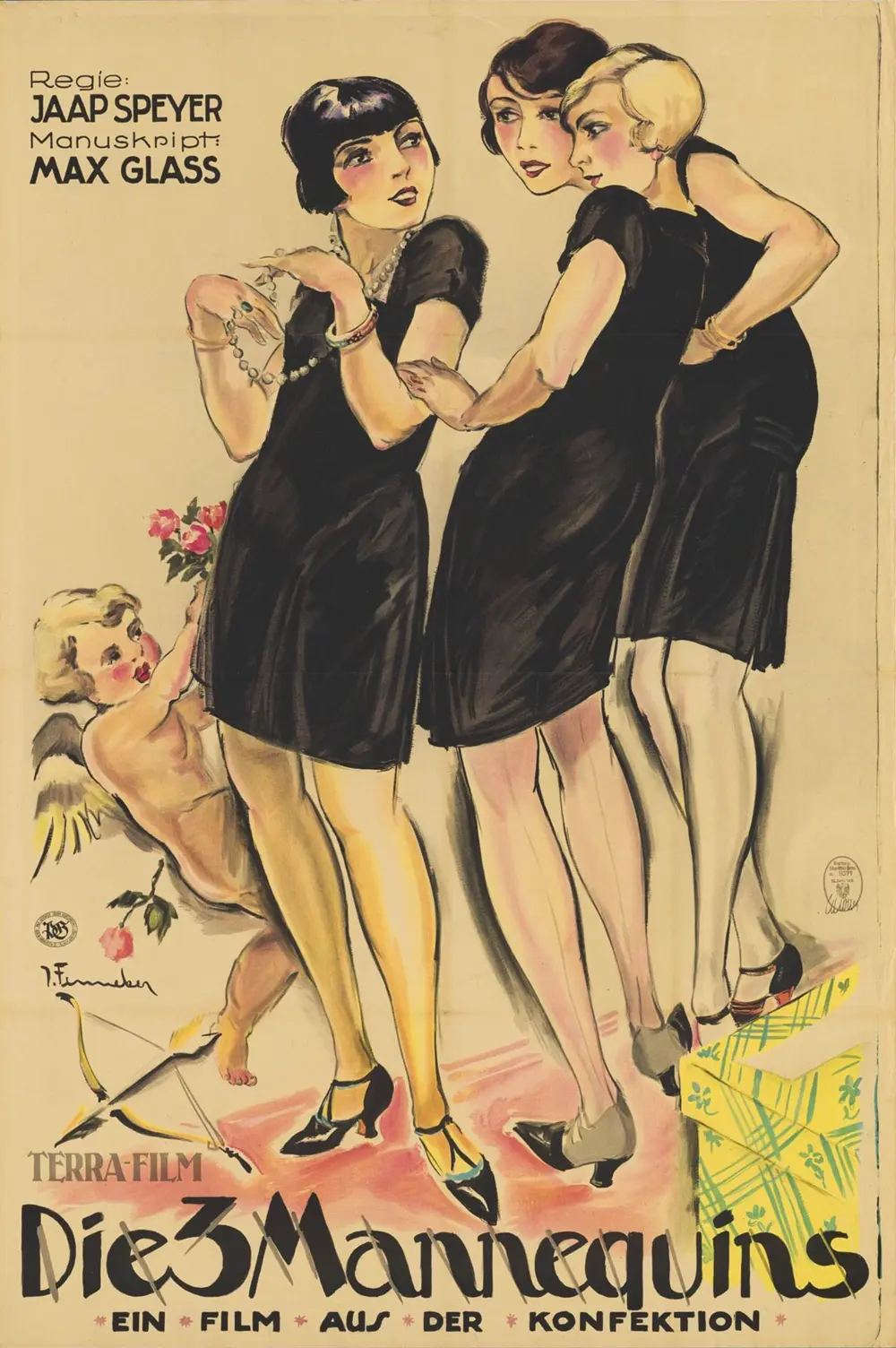
Is 'Die drei Mannequins' worth watching today? Short answer: yes, absolutely, but with a significant caveat. This film is a fascinating, if sometimes uneven, dive into the glitz and grime of 1920s Berlin, a period piece that offers surprising depth for those willing to engage with its particular cinematic language. It is unequivocally for silent film aficionados, those with an appreciation for historical context, and anyone intrigued by early cinematic explorations of urban life and ambition.
Conversely, it is decidedly NOT for viewers seeking rapid-fire modern pacing, dialogue-heavy narratives, or perfectly polished contemporary storytelling. Its charm lies in its era-specific aesthetics and the earnest performances that define early German cinema.
Max Glass's 'Die drei Mannequins' is a vibrant, if sometimes sprawling, portrait of ambition and illusion set against the backdrop of Weimar-era Berlin's burgeoning fashion scene. It’s a film that attempts to weave together threads of romance, social commentary, and a touch of mystery, all through the lens of three distinct female protagonists.
The film works because it captures a tangible sense of a specific time and place. The visual language, the character archetypes, and the underlying social tensions feel authentic to 1920s Germany, offering a valuable historical document alongside its narrative. It truly immerses you.
This film fails because its narrative ambition occasionally outstrips its execution, leading to moments of uneven pacing and underdeveloped subplots that detract from the overall cohesion. Some character arcs feel rushed, particularly in the latter half.
You should watch it if you are a student of early cinema, a fan of period dramas that lean into social realism, or simply curious about the stylistic conventions and storytelling approaches of the silent era. It’s a unique window.
At its core, 'Die drei Mannequins' is an ensemble piece, anchored by its titular characters. Lydia Potechina, as the worldly Lotte, delivers a performance that is both calculating and sympathetic. Her expressions, often subtle, convey a woman who understands the transactional nature of her world but yearns for something more genuine. In the scene where she first encounters Herr von Schön (Anton Pointner), her initially guarded demeanor slowly melts into a calculated charm, a perfect illustration of her character's duality. It’s a masterclass in silent film acting.
Jenny Marba, playing the innocent Else, embodies the film's moral compass. Her wide-eyed wonder and subsequent disillusionment with the city's excesses are palpable. Her scenes with Franz, the humble tailor (Hans Brausewetter), provide a touching counterpoint to the more cynical elements of the fashion world. The quiet sincerity in her interactions with him, particularly when she confides her struggles, is genuinely moving, reminiscent of the emotional honesty found in The Little Samaritan.
Perhaps the most intriguing is Grit Haid's Anna. Her portrayal of the mysterious mannequin, burdened by a hidden past, is infused with a melancholic elegance. Haid communicates Anna's internal turmoil largely through her physicality and haunted gaze. The moments where she subtly recoils from the shadows, or her fleeting glances of fear when confronted by the dangerous individual from her past, are remarkably effective without a single word. It’s an understated performance that leaves a lasting impression, proving that less can truly be more.
The supporting cast, too, contributes significantly to the film's texture. Kurt Gerron, as the fashion house owner, brings a necessary blend of sternness and underlying vulnerability. His reactions to the missing design are particularly memorable, showcasing a man whose entire world is teetering on the brink. Hans Albers, even in a smaller role, exudes a magnetic charm that hints at his future stardom, adding a layer of sophisticated danger to the Parisian contingent of designers.
The film’s greatest strength lies in its ability to present a microcosm of society through its diverse cast, each character a distinct facet of Berlin's complex identity. It doesn't shy away from showing the darker side of ambition.
Max Glass, as director and writer, demonstrates a clear ambition to craft a multi-layered narrative. His direction, while occasionally lacking the stylistic flourishes of a F.W. Murnau or Fritz Lang, is competent and focused on storytelling. Glass utilizes the visual medium effectively to convey emotion and plot, relying heavily on close-ups to emphasize character reactions, a common but effective technique of the era.
The cinematography, though not groundbreaking, serves the story well. The contrast between the opulent fashion shows and the grittier back alleys of Berlin is visually distinct. There are some particularly striking shots of the bustling city streets, using deep focus to capture the energy and anonymity of urban life. The framing in the fashion show sequence, with its sweeping camera movements across the runway, feels remarkably modern for its time, creating a sense of dynamic movement and excitement.
Pacing is where the film occasionally falters. The initial setup of the three women feels somewhat drawn out, taking its time to establish their individual narratives. However, once the central mystery of the missing design kicks in, the pace picks up considerably, creating a more engaging, almost thrilling, second act. The tonal shifts from lighthearted romance to genuine suspense are handled with varying degrees of success; sometimes it feels seamless, other times a little jarring, as if two different films are competing for attention.
Beyond the surface glamour, 'Die drei Mannequins' offers a surprisingly keen social commentary on the roles of women in a rapidly modernizing society. It explores themes of independence, moral compromise, and the pursuit of success in a world that often demands difficult choices. Lotte's journey, in particular, highlights the precarious balance between maintaining one's integrity and achieving professional advancement. Her interactions with the male characters often underscore the power dynamics at play in the workplace.
The film also touches upon the allure and dangers of urban life. Berlin is presented as both a city of opportunity and a place where innocence can be easily lost. Else's struggles are a testament to this, as she navigates temptations that simply wouldn't exist in her rural upbringing. This moral conflict gives the film a weight that elevates it beyond a simple fashion drama, aligning it with other films of the period that explored the anxieties of modernization, such as No Money, No Fun.
There's also a subtle critique of superficiality. The fashion world, with its emphasis on appearance and fleeting trends, serves as a metaphor for the broader societal preoccupation with external validation. The film suggests that true worth lies not in the garments one wears or the social circles one inhabits, but in the choices made under pressure. This is a powerful, if not always explicit, message.
Yes. Absolutely. For anyone with an interest in silent cinema, German history, or the evolution of storytelling, 'Die drei Mannequins' offers a rich viewing experience. It's a film that rewards patience and attention.
It may not be as polished or universally accessible as some of its more famous contemporaries, but its strengths lie in its earnest performances, period detail, and thematic ambition. It provides a unique lens into a bygone era.
The film's exploration of female agency, even within the confines of a patriarchal society, feels remarkably prescient. It's a testament to the enduring power of early cinema to reflect and comment on societal shifts, making it relevant even a century later. It works. But it’s flawed.
'Die drei Mannequins' is more than just a historical curiosity; it's a compelling piece of early German cinema that, despite its imperfections, offers genuine insight and entertainment. It’s a film that deserves to be seen, discussed, and appreciated for its ambition and its snapshot of a vibrant, complex era. While it may not reach the iconic status of a The Dragon Painter or a The Foolish Virgin, it stands as a testament to the diverse storytelling prevalent in the silent age. Its portrayal of female ambition in the face of urban cynicism is particularly resonant. I found myself genuinely invested in the fates of Lotte, Else, and Anna, a testament to the enduring power of well-crafted characters, even in a film nearly a century old. It's a solid recommendation for anyone with a taste for cinematic history, proving that even lesser-known works can offer profound value. This film isn't just watching history; it’s experiencing it. Give it a chance, and you might find yourself surprisingly captivated by its forgotten allure.
IMDb —
1920
Community
Log in to comment.