DbcultAccessing Vault...
6.4/10
Senior Film Conservator
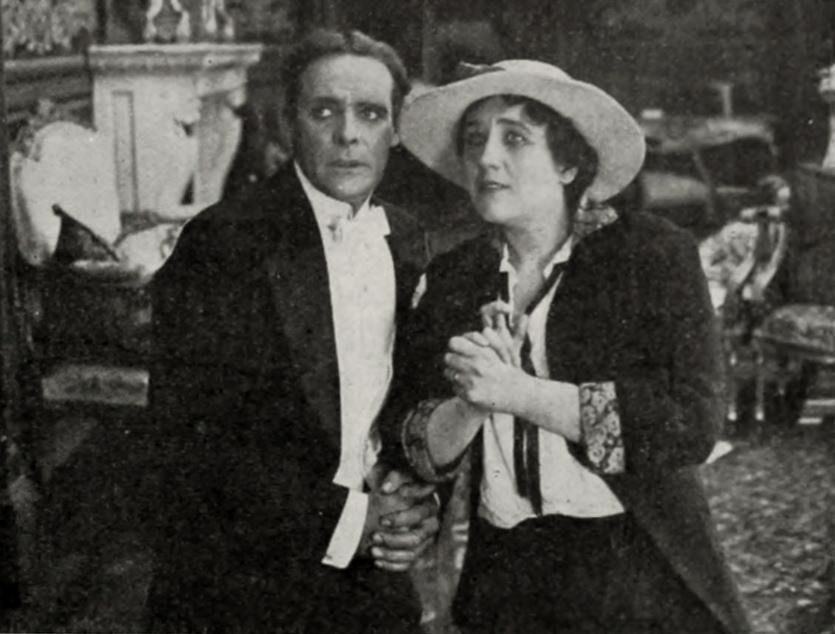
A definitive 6.4/10 rating for a film that redefined the boundaries of cult cinema. The Primrose Path remains a cornerstone of transgressive art.
In the pantheon of early silent cinema, few narratives capture the intersection of socioeconomic desperation and the fragility of the masculine ego with as much visceral intensity as The Primrose Path. Directed with a keen eye for the atmospheric shifts between Parisian squalor and New York opulence, this film transcends its melodramatic roots to offer a scathing critique of the 'successful' man’s propensity for historical amnesia. It is a story not merely of a fallen woman, but of a woman who descends into the abyss specifically so her partner might ascend to the heights of the cultural elite.
The initial acts of the film are steeped in a romanticism that is swiftly deconstructed. Joan’s elopement with Ned Templeton is framed through the lens of pastoral innocence, a stark contrast to the unforgiving reality of their Parisian flat. This segment of the film functions much like the gritty realism seen in When Paris Loves, where the city of light is reimagined as a city of shadows for those without means. The cinematography here emphasizes the claustrophobia of their poverty; the walls seem to press in on the dying Ned, creating a sense of urgency that justifies Joan’s eventual moral compromise.
When Joan encounters the art dealer, the film pivots from a tragedy of circumstance to a tragedy of the soul. Her decision to visit his rooms is portrayed not as a lapse in character, but as a Herculean feat of devotion. Unlike the titular character in The Spartan Girl, whose sacrifices are often framed in the context of war and honor, Joan’s sacrifice is intimate, shameful in the eyes of the era, and entirely solitary. The silence of the medium amplifies her isolation; we see the weight of the secret in Gladys Hanson’s expressive, haunted performance.
The transition to America introduces a shift in visual language. The shadows of Paris are replaced by the sharp, cold lines of the Cartwright estate. Here, the film explores themes of class mobility that echo the social tensions in The Unwelcome Mrs. Hatch. Ned’s success, facilitated by the millionaire Cartwright, is a double-edged sword. As he gains professional stature, his perception of Joan shifts from partner to liability. The painting 'The Primrose Path' serves as a haunting meta-commentary; Ned captures Joan’s image to achieve fame, yet he rejects the living woman in favor of the sanitized, curated version on the canvas.
"The tragedy of Ned Templeton is not his infidelity of the flesh, but his infidelity of memory. He forgets the hunger that made him, and in doing so, he loses the capacity to love the woman who fed him with her own dignity."
The introduction of Helen, the millionaire’s daughter, provides a fascinating foil to Joan. Helen represents the 'new' woman of the 1910s—privileged, predatory, and possessed of a superficial charm that masks a profound lack of empathy. Her attraction to Ned is transactional; she wants the artist as an accessory to her lifestyle. This dynamic is a sharp departure from the more grounded perils found in The Hazards of Helen, where danger is physical and external. In 'The Primrose Path', the hazard is psychological and domestic.
When Ned abandons Joan for a 'fine studio,' the film enters its most poignant phase. Joan’s descent back into the world of professional modeling to survive is a brilliant narrative loop. She returns to the very profession that saved him, but this time, she does it to sustain her own independence. Her confrontation with Ned at the art school is a masterclass in subverting the 'fallen woman' trope. When he upbraids her for her chosen livelihood, her retort is a searing indictment of his hypocrisy. She is the canvas upon which his success was painted, and his disgust is merely a projection of his own unacknowledged guilt.
This thematic exploration of the female body as a site of both sacrifice and commodity is something we see explored in various forms in films like Cleopatra, though 'The Primrose Path' strips away the historical grandeur to focus on the raw, contemporary reality of the working woman. Joan is not a queen; she is a survivor, and her strength is derived from her refusal to accept the charity of the man who owes her everything.
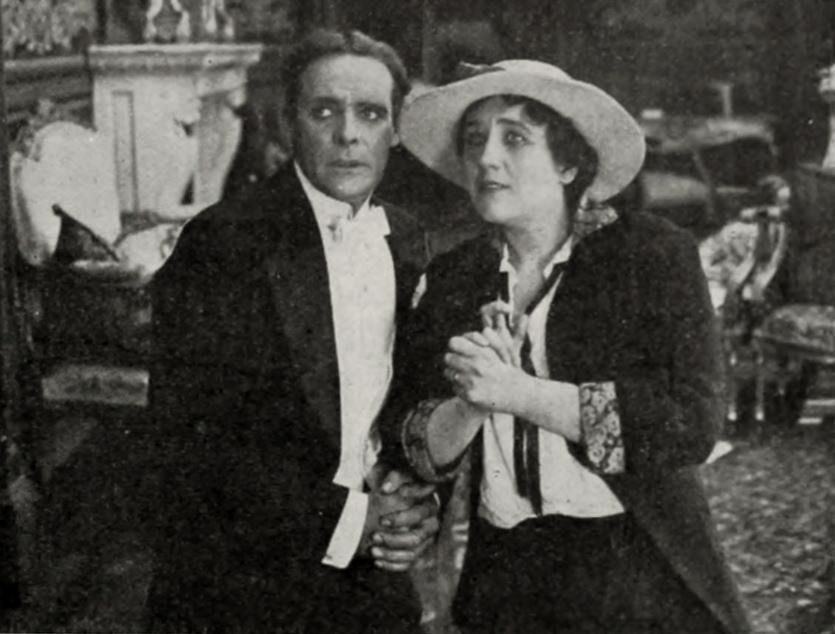
The final act of the film centers on a scene of breathtaking cynicism: the attempt by Cartwright to buy Joan’s legal freedom. The sum offered—$100,000—is astronomical for the time, a figure that represents the ultimate capitalist solution to a moral problem. This scene functions as a high-stakes version of the moral dilemmas posed in Should a Woman Tell?. Joan’s reaction is not one of greed, but of profound realization. She finally sees the Cartwrights and Ned for what they are: people who believe that everything, including the sanctity of a marriage and the history of a sacrifice, can be appraised and settled.
The technical execution of the ending deserves special mention. The use of the portiere (the heavy curtain) as a narrative device—hiding Ned so he can witness the 'transaction'—is a classic stage technique successfully translated to film by writers Bayard Veiller and Maie B. Havey. It forces Ned into the role of the spectator in his own life, a passive witness to the nobility of the woman he discarded and the venality of the woman he thought he wanted.
Gladys Hanson’s portrayal of Joan is the gravitational center of the film. She manages to convey a complex evolution from the wide-eyed country girl to the hardened Parisian survivor, and finally to the dignified, heartbroken woman of the finale. Her ability to hold the screen without the aid of dialogue—relying instead on a subtle vocabulary of gestures and glances—places her alongside the greats of the era. Comparison can be made to the emotional depth required in In the Bishop's Carriage, where the protagonist must navigate a similarly treacherous social landscape.
The supporting cast, particularly William Welsh as Cartwright and Hal Forde as Ned, provide the necessary friction to make Joan’s journey compelling. Welsh plays the millionaire with a paternalistic arrogance that is chillingly effective, while Forde captures the weak-willed charm of an artist who is more in love with the idea of himself than with the reality of his life. Their performances ensure that the film never feels like a one-dimensional morality play, but rather a nuanced study of character flaws and social pressures.
Ultimately, The Primrose Path is a film that refuses to offer easy catharsis. While the ending suggests a reconciliation, it is one tempered by the knowledge of what has been lost. The 'primrose path' of the title is an ironic reference to the path of ease and pleasure; for Joan, the path was one of thorns and stones, while Ned was the one who walked the easy road paved by her suffering. It stands as a significant work of the 1910s, a period where cinema was beginning to grapple with the complexities of the modern world and the shifting roles of women within it.
For those interested in the evolution of the social drama, this film is an essential watch. It lacks the brute physical conflict of the Nelson-Wolgast Fight or the historical rigidity of Bismarck, but it possesses a psychological weight that remains remarkably contemporary. It is a haunting reminder that the cost of success is often paid by those standing just outside the frame of the portrait.
Related Reviews: Detective Craig's Coup | Das schwarze Los | Kadra Sâfa | After Sundown
IMDb 3.6
1926
Community
Log in to comment.