DbcultAccessing Vault...
6.1/10
Senior Film Conservator
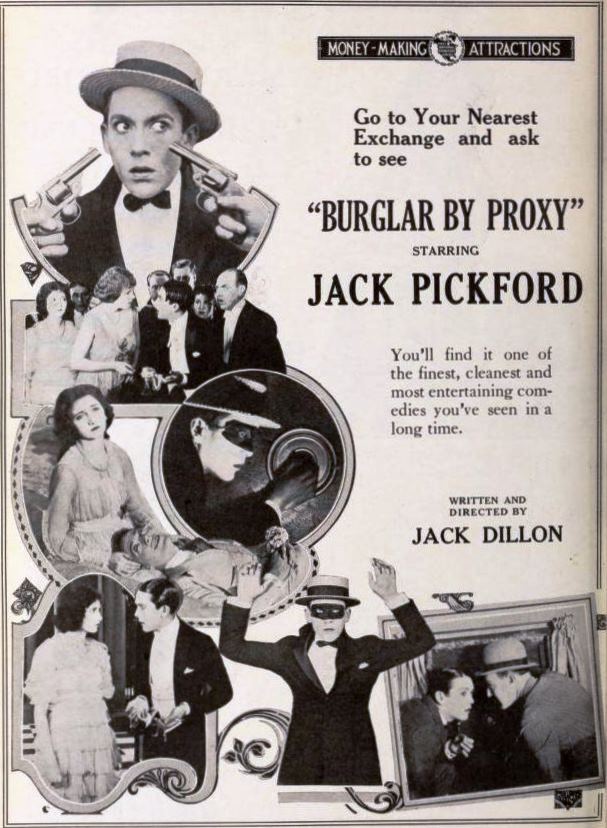
A definitive 6.1/10 rating for a film that redefined the boundaries of cult cinema. Burglar by Proxy remains a cornerstone of transgressive art.
When the dust of the 1920s settles on the silver screen, Burglar by Proxy emerges as a curious blend of melodrama, farce, and proto‑thriller. Directed by John Francis Dillon, with a screenplay co‑penned by Madeline Matzen, the film offers a narrative that feels simultaneously theatrical and surprisingly modern. The central conceit—a man feigning injury to be tended by a stranger—sets off a domino effect of mistaken identities, clandestine heists, and a love story that teeters between sincerity and opportunism.
The film opens with a close‑up of Jack Robin’s clenched jaw, a visual shorthand for his throbbing toothache. The camera lingers, allowing the audience to feel the discomfort before the car sputters to a halt before the Mason household. The mise‑en‑scene is meticulously composed: a modest porch, a single lantern casting amber glints, and Dorothy Mason (Gloria Hope) perched at a window, her voice spilling into the night like a lullaby. The juxtaposition of Jack’s physical suffering against Dorothy’s ethereal song creates a tension that propels the plot forward.
When Jack notices the flat tire, the scene shifts to a kinetic montage of him attaching an automatic pump—an invention that, in its own right, mirrors the film’s preoccupation with technology and invention. Yet, he abandons the task, entranced by Dorothy’s singing. This moment is not merely a plot device; it underscores a thematic motif: the allure of art distracting humanity from its pragmatic concerns.
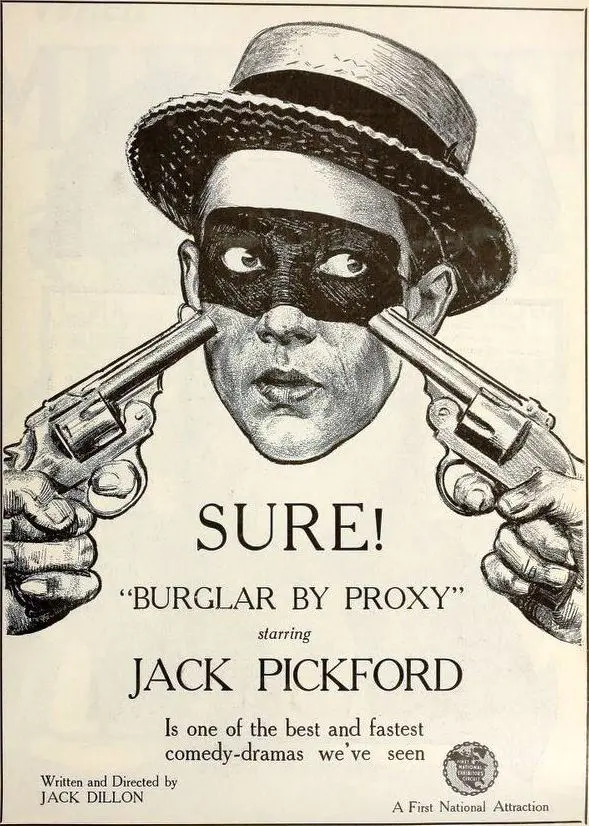
The tire’s sudden burst catapults Dorothy onto the street, where Jack, now limping deliberately, invokes the archetype of the wounded hero. Dorothy’s compassionate response is immediate; she cradles his arm, her concern genuine despite the theatricality of his performance. Their interaction, though brief, is charged with a chemistry that hints at future entanglements. The film’s silent nature forces the actors to rely on exaggerated gestures, yet both Hope and John Francis Dillon (as Jack) manage a subtle economy of motion that conveys longing without a single intertitle.
As Jack departs, the narrative pivots to the Mason study, where a set of blue‑printed invention plans—representative of the era’s fascination with mechanisation—has vanished. Harlan Graves (Leo Willis), the suitor with a veneer of respectability, is quick to cast suspicion on Jack. This accusation is not merely personal; it reflects a broader social anxiety about the infiltration of outsiders into the sanctum of domestic innovation.
Graves’ suggestion that Jack is a thief ignites the film’s central conflict. Jack, now a man on the run in his own mind, decides to infiltrate Graves’ residence, a decision that propels him into the underworld of professional burglary.
Inside Graves’ opulent manor, Jack encounters “Spider” Kelly (Jack Pickford), a character who epitomises the charismatic rogue archetype. Spider’s introduction is accompanied by a chiaroscuro lighting scheme—deep shadows framing his lithe silhouette—emphasising his dual nature as both guide and menace. He adopts Jack as a protégé, a relationship that oscillates between mentorship and exploitation.
The partnership between Jack and Spider culminates in a daring raid on a house party, where a safe—its metallic bulk glinting under crystal chandeliers—holds the missing plans. The decision to blow up the safe, rather than crack it conventionally, is a bold directorial choice that underscores the film’s willingness to embrace spectacle. The explosion is choreographed with a symphonic rhythm: a crescendo of fireworks, a cloud of ash, and the sudden revelation of the documents.
With the plans recovered, Graves is apprehended, his ambitions thwarted. Spider, however, is left disillusioned by Jack’s reckless handling of the safe—an act that, while effective, undermines the burglar’s code of precision. In a final, bittersweet tableau, Spider slips away into the night, his silhouette dissolving into the darkness, while Jack and Dorothy stand together, their future unburdened by the shadows of theft.
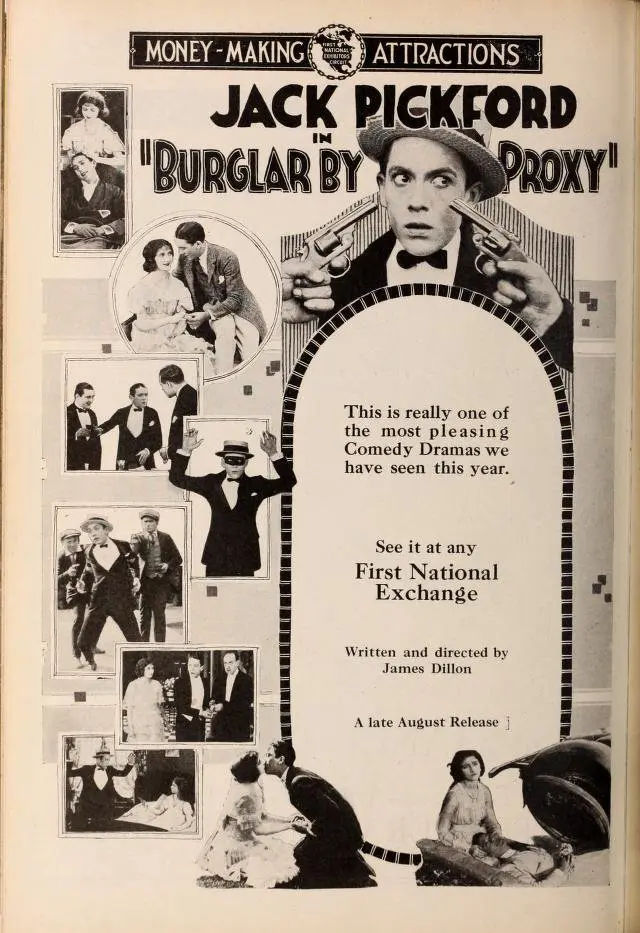
Gloria Hope’s portrayal of Dorothy is a masterclass in silent‑era emoting. Her eyes, often the sole conduit of feeling, flicker between vulnerability and resolve. John Francis Dillon delivers a nuanced performance as Jack, balancing the character’s desperation with a lingering charm. The supporting cast—Leo Willis as the calculating Graves, Robert Walker as the steadfast father—provide sturdy scaffolding for the narrative’s twists.
Dillon’s direction showcases an early experimentation with visual storytelling. The use of cross‑cutting between the burst tire and Dorothy’s frantic sprint creates a kinetic rhythm that predates modern action editing. The safe‑blowing sequence employs practical effects that, while dated, retain a visceral impact. The film’s monochrome palette is occasionally punctuated by tinted frames—subtle hints of amber and blue—evoking the emotional temperature of each scene.
The cinematography, credited to an unnamed cameraman, demonstrates a keen eye for composition. The recurring motif of doors—closed, ajar, or violently forced—mirrors the characters’ psychological states, oscillating between secrecy and revelation.
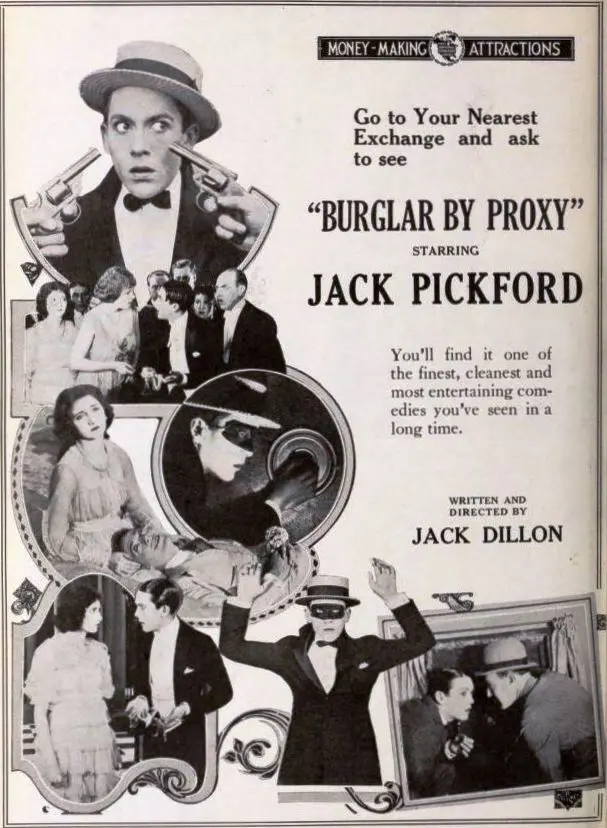
At its core, Burglar by Proxy interrogates the fluidity of identity. Jack’s transformation from a hapless motorist to a faux‑injured victim, then to an inadvertent accomplice to a professional thief, underscores the malleability of self when confronted with external pressures. The film also comments on the era’s fascination with technological progress; the invention plans serve as a MacGuffin that drives the plot while symbolising the tension between innovation and moral integrity.
Comparisons can be drawn to contemporaneous works such as Carmen (1918), which also explores the interplay of love and danger, and Bound in Morocco, where exotic locales mask deeper psychological games. However, Burglar by Proxy remains distinct in its domestic setting and its focus on the everyday hero’s fallibility.
Though it never achieved the iconic status of D.W. Griffith’s epics, the film occupies a niche of silent‑era storytelling that blends genre conventions. Its influence can be traced to later caper films where the protagonist is an accidental participant in criminal escapades—think Charade (1963) or Ocean’s Eleven (2001). The film’s willingness to portray a female character—Dorothy—who is both a caregiver and an active participant in the resolution, prefigures more progressive gender dynamics in later cinema.
For scholars of early American film, the movie offers a valuable case study in narrative economy: within a concise runtime, it establishes characters, stakes, and resolution without superfluous subplots. Its reliance on visual metaphor—such as the bursting tire symbolising sudden disruption—demonstrates the potency of silent storytelling.
Burglar by Proxy is a testament to the creative daring of the 1920s studio system. It balances melodramatic flair with a crisp, almost procedural plot structure. While some may critique its occasional melodramatic excess—particularly the over‑the‑top safe explosion—the film’s charm lies in its unabashed embrace of spectacle and sentiment.
In the broader tapestry of silent cinema, it stands as an intriguing footnote, a film that invites repeat viewings to appreciate its layered performances, its inventive camerawork, and its subtle commentary on the fluid nature of truth and deception. For modern audiences, it offers a window into an era when filmmakers relied on pure visual poetry to convey complex narratives, a skill that remains as relevant today as it was a century ago.
IMDb 5.8
1932
Community
Log in to comment.