DbcultAccessing Vault...
Cult Review
Senior Film Conservator
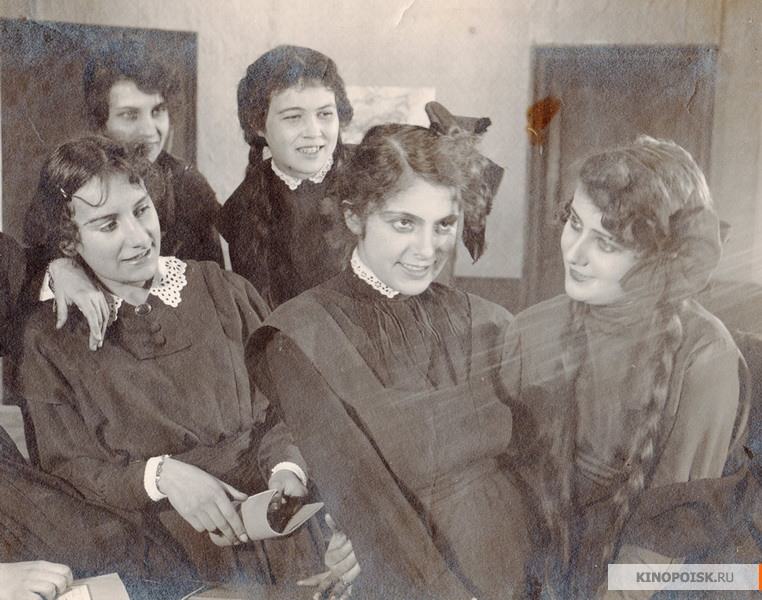
In the annals of early cinema, certain works emerge not just as artistic achievements, but as profound cultural artifacts, reflecting the anxieties and aspirations of their epoch with startling clarity. Anya Kraeva stands as an indelible testament to this phenomenon, a film that, despite its sepia-toned silence, speaks volumes about human frailty, societal upheaval, and the corrosive power of misplaced devotion. Directed with an almost surgical precision by Nikandr Turkin, this cinematic endeavor transcends mere melodrama, ascending to the realm of high art through its nuanced characterizations and visually arresting storytelling. It is a narrative tapestry woven with threads of idealism, treachery, and an unyielding, tragic romanticism that echoes long after the final frame flickers into darkness.
At the heart of Anya Kraeva lies the extraordinary performance of Aleksandra Rebikova, whose portrayal of the titular character is nothing short of breathtaking. Rebikova, with a mastery of expressive gesture and an astonishingly articulate gaze, crafts a character whose journey from naive ingenue to disillusioned martyr is utterly convincing and profoundly moving. Her initial scenes radiate a luminous innocence, a youthful exuberance that is both captivating and, in retrospect, heartbreakingly fragile. As Anya is drawn into the dangerous orbit of Viktor Volkov, Rebikova's face becomes a canvas for subtle shifts in emotion – the dawning of suspicion, the flicker of fear, and ultimately, the crushing weight of betrayal. Her physical performance, typical of the era but elevated by her unique talent, conveys the internal turmoil with an intensity that belies the absence of spoken dialogue. One cannot help but draw parallels to the powerful emotional depth seen in Souls in Bondage, where actresses of the time grappled with similar themes of moral compromise, but Rebikova imbues Anya with a particular, almost spiritual, vulnerability that is uniquely her own. Her final moments on screen are a masterclass in silent pathos, leaving an indelible imprint on the viewer's psyche.
Counterbalancing Rebikova's radiant vulnerability is Leonid Polevoy's formidable depiction of Viktor Volkov. Polevoy eschews simplistic villainy, instead presenting Volkov as a complex, charismatic, and ultimately ruthless figure whose revolutionary zeal is tinged with a chilling pragmatism. His initial charm is palpable, a magnetic force that effortlessly ensnares Anya, but Polevoy subtly layers his performance with hints of the calculating opportunist lurking beneath the surface. The film’s brilliance lies in not making Volkov a mustache-twirling antagonist, but rather a man driven by conviction, however twisted, whose methods justify any means. This moral ambiguity elevates the conflict beyond a simple good-versus-evil dichotomy, resonating with the intricate ethical dilemmas explored in works like The Black Envelope, which similarly delved into the shadowy corners of human motivation. Polevoy’s portrayal is a stark reminder of how easily idealism can be corrupted and how charisma can mask insidious intent, making Volkov a truly memorable, if unsettling, presence.
Nikandr Turkin’s directorial hand is evident in every meticulously framed shot and every precisely timed sequence. Turkin understands the power of visual metaphor, utilizing stark contrasts in lighting and evocative set designs to underscore the narrative's emotional beats. His pacing, a critical element in silent cinema, is masterful; he allows moments of quiet introspection to breathe, punctuated by bursts of dramatic intensity that propel the plot forward with an inexorable momentum. The supporting cast, including Ivan Kruchinin, Yanina Mirato, Oleg Frelikh, and Olga Tschechowa, each contribute significantly to the film's rich tapestry. Kruchinin, as the conflicted associate, adds another layer of moral quandary, while Mirato's brief but impactful appearance as a disillusioned confidante provides a crucial counterpoint to Anya's initial idealism. Frelikh and Tschechowa, though perhaps given less screen time, etch memorable impressions, reinforcing the pervasive atmosphere of suspicion and intrigue. Turkin’s ability to extract such nuanced performances from his entire ensemble, guiding them through a complex emotional landscape without the aid of spoken dialogue, is a testament to his profound understanding of the cinematic medium. One could even argue that Turkin's approach to character development through visual storytelling rivals the epic scale and emotional sweep seen in a film like Cleopatra, albeit on a more intimately tragic canvas.
Beyond its compelling plot, Anya Kraeva delves deeply into universal themes that transcend its specific historical setting. It is, at its core, a poignant exploration of love's vulnerability in the face of manipulation, and the devastating consequences when personal affections become entangled with political ideologies. The film subtly critiques the often-blind fervor of revolutionary movements, questioning the human cost exacted in the name of lofty ideals. Anya's personal tragedy mirrors the broader societal turmoil, reflecting a world grappling with immense change, where traditional values are challenged, and new, often brutal, realities emerge. This thematic depth positions it alongside other socially conscious films of the era, such as The Birth of a Race, which wrestled with complex social issues, albeit from a different perspective. Turkin’s narrative does not offer easy answers; instead, it invites contemplation on the nature of sacrifice, the fragility of innocence, and the enduring human struggle for agency in a world that often seems determined to strip it away. The film's examination of moral compromise and its impact on the individual soul is particularly resonant, echoing the intricate ethical quandaries presented in The Fatal Ring, which similarly explored the destructive power of ambition and deceit.
The visual lexicon employed in Anya Kraeva is nothing short of poetic. Turkin, along with his uncredited cinematographer, masterfully uses light and shadow to create mood and convey subtext. Close-ups of Rebikova's anguished face or Polevoy's calculating eyes speak volumes, rendering intertitles almost superfluous. The grandeur of the settings, from opulent drawing-rooms to shadowy back alleys, serves not merely as backdrop but as an active participant in the narrative, reflecting the characters' internal states and the societal divisions at play. The composition of each frame is meticulously crafted, reminiscent of classical painting, with figures arranged to emphasize power dynamics or emotional isolation. This sophisticated visual storytelling ensures that the film's emotional impact is not diminished by the absence of synchronized sound, but rather amplified by the viewer's active engagement in interpreting its rich imagery. The visual narrative prowess here can be compared to the intricate storytelling through imagery in Les Misérables (1917), where the vastness of human suffering and resilience was conveyed through powerful visual metaphors and iconic character tableaux. The film's aesthetic qualities are a testament to the fact that early cinema, far from being a nascent art form, was already exploring its unique capabilities with remarkable sophistication.
Released during a period of immense global flux, Anya Kraeva captures the zeitgeist with an uncanny prescience. The film’s exploration of revolutionary fervor, betrayal, and the plight of the individual caught in the gears of history resonates profoundly with the geopolitical landscape of the early 20th century. It offers a window into the anxieties surrounding political extremism and the moral compromises often demanded in times of ideological conflict. While specific to its setting, the core themes of manipulation and the quest for personal freedom remain eternally pertinent. This makes Anya Kraeva not just a historical curiosity, but a work that continues to provoke thought and emotion in contemporary audiences, much like how Why America Will Win or Doch isterzannoy Pol'shi reflected their own specific political and nationalistic narratives. The film’s ability to transcend its immediate context and speak to enduring human conditions is a mark of its true artistry and the genius of Nikandr Turkin. His screenplay, devoid of superfluous exposition, cuts directly to the emotional core, allowing the actors and visuals to carry the weight of the narrative with compelling force.
To experience Anya Kraeva today is to embark on a journey into the heart of cinematic expressiveness, to witness a period when storytelling was distilled to its most fundamental visual and emotional elements. It is a film that demands engagement, rewarding the attentive viewer with a rich tapestry of human experience. The tragic arc of Anya, brought to life with such intensity by Rebikova, serves as a powerful reminder of the profound impact of individual choices and the devastating toll of political machinations on the personal sphere. It’s a narrative that, while perhaps not as widely known as some of its contemporaries like The Red, Red Heart or even My Partner, certainly deserves a place in the pantheon of significant silent films. The film’s enduring power lies in its unflinching portrayal of human vulnerability and resilience, a narrative thread that connects it to timeless stories of sacrifice and redemption. It is a testament to the enduring power of cinema to capture the ephemeral nature of emotions and to immortalize the struggles of the human spirit. The film’s conclusion, rather than offering neat resolutions, lingers with a haunting melancholia, a testament to the enduring scars left by profound betrayal and loss. This narrative choice, stark and uncompromising, elevates the film beyond mere entertainment, cementing its status as a profound artistic statement. In an era where cinematic spectacle often overshadows genuine emotional depth, Anya Kraeva serves as a stark, beautiful reminder of what film can achieve when it dares to explore the most intricate corners of the human heart. It is a work that challenges, moves, and ultimately, resonates deeply within the soul, much like the profound social commentary found in The Law's Outlaw or the intricate character studies in The Beloved Vagabond.
The legacy of Anya Kraeva is not merely in its technical execution or its historical context, but in its capacity to stir the soul. Nikandr Turkin, through his insightful direction and the stellar performances of Aleksandra Rebikova and Leonid Polevoy, has crafted a work that remains strikingly relevant. It is a film that speaks to the timeless struggles of innocence against experience, idealism against cynicism, and love against the crushing weight of external forces. The echoes of Anya’s sacrifice continue to reverberate, a silent cry against injustice and a poignant reminder of the enduring human capacity for both profound love and devastating betrayal. It encourages us to reflect on our own complicity in the narratives we embrace and the ideologies we champion. The film's narrative complexity, though conveyed without spoken word, rivals the intricate plots of contemporary dramas, demanding and rewarding the viewer's full attention. Its emotional landscape, rich and varied, ensures that it is not merely observed but deeply felt. This is not just a film; it is an experience, a journey into a past that continues to illuminate the present. Its impact is akin to the quiet, yet powerful, introspection offered by films like Lucciola or the nuanced character development evident in Under Cover, proving that true artistry transcends the limitations of its medium. Anya Kraeva remains a vital piece of cinematic heritage, a powerful and enduring testament to the silent era's artistic zenith.
IMDb —
1921
Community
Log in to comment.