DbcultAccessing Vault...
Cult Review
Senior Film Conservator
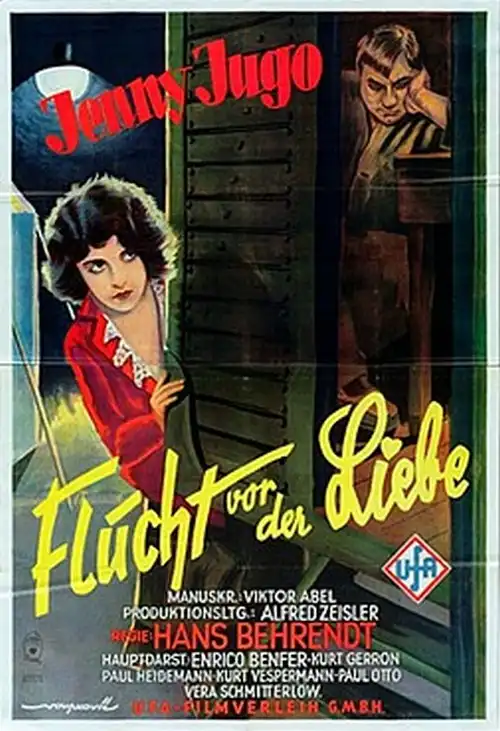
Alright, so, 'Die Flucht vor der Liebe' – which means 'The Flight from Love' – is exactly what it sounds like. If you're into those old, charming European films where everyone looks impossibly chic even when they're confused, and the stakes feel both huge and incredibly small, this one might be for you. It’s a definite watch for silent film fans or anyone curious about what passed for light romance back in the day. However, if you need snappy dialogue or modern pacing, this is probably going to feel like a long nap. And that’s okay!
Jenny Jugo is just *magnetic* in this. She plays a character who, for some reason, just cannot let herself fall. Every time a suitor gets close, every time a grand gesture is made, you can almost see her inner monologue screaming, **'Nope! Not today!'** 🏃♀️ It's truly something to watch her expressions shift, even without words, from hopeful to utterly panicked in the blink of an eye. There's a scene, I'm thinking, where she's at a garden party, and a particularly earnest young man is reciting poetry. You see her eyes darting, looking for *any* escape route, like a squirrel trapped in a fancy hat shop.
Hermann Stetza, who plays one of her many, *many* pursuers, brings a kind of bumbling sweetness. He's not quite a dashing hero, more like the guy who keeps tripping over his own feet but means well. Their chemistry isn't exactly sizzling, but it’s got a comfortable, almost brother-sister vibe that surprisingly works. You find yourself rooting for him, not because he’s so perfect, but because he’s so imperfect, just like her.
The pacing is… well, it’s of its time. Things take their sweet time to unfold. Sometimes a scene will just *linger* on a character's face, or a landscape, for a beat or two longer than you'd expect. There’s a particular shot of a train pulling away from a station, and it just stays there, *watching* the empty tracks for a bit. It gives you a moment to think, which I guess is the point. Or maybe the camera operator just loved trains. 🚂
Paul Otto is delightful as a sort of gruff, overbearing uncle figure. He’s always huffing and puffing, trying to arrange Jugo's life. His big, booming gestures are a treat, a real throwback to that theatrical acting style. He's not really a villain, more of an obstacle, a force of nature that Jenny's character has to navigate around. When he tries to introduce her to some wealthy industrialist, you just *know* it’s going to end in some sort of comedic mishap. And it does. Every time.
What I really enjoyed was the way the movie shows her 'flight.' It’s not always a grand escape. Sometimes it’s just her slipping out a side door, or pretending to be engrossed in a book, or even just suddenly deciding she *needs* to go buy flowers. 💐 The small, everyday ways she avoids confrontation or commitment are often more telling than the big, dramatic ones. It feels very human, very relatable, even a century later.
The film doesn't really delve deep into *why* she's so afraid of love. It just accepts it as her main characteristic, her core challenge. And that's fine. Not every film needs to psychoanalyze its protagonist, sometimes it's enough to just watch them grapple with something. The ending is… well, it’s an ending. It ties things up in a way that feels right for a film of this genre, even if you see it coming from a mile away. You get the feeling she finally stops running, but maybe not quite. A little wiggle room, you know?
The sets are simple but effective. You get a good sense of the era, the slightly stiff formalwear, the bustling streets. There’s a scene where she's walking through a market, and the sheer number of extras, all moving about, feels very alive. It’s one of those moments where you can almost smell the fresh bread and the street grime. 🥨
'Die Flucht vor der Liebe' might not be a lost masterpiece, but it’s a genuinely pleasant watch. It reminds you that some things, like the confusing dance of romance, are truly timeless. And sometimes, it’s okay to just enjoy the dance, even if it feels a little old-fashioned.
IMDb —
1916
Community
Log in to comment.