DbcultAccessing Vault...
Cult Review
Senior Film Conservator
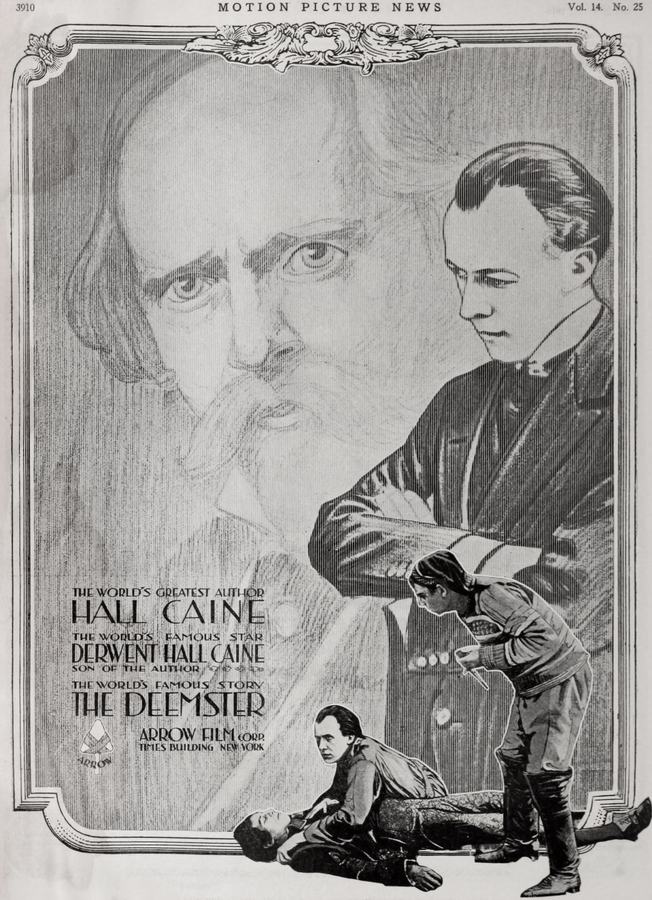
To witness the 1917 adaptation of The Deemster is to step into a world where the boundaries between civil law and divine retribution are as blurred as the horizon line of the Irish Sea. This film, a seminal piece of silent cinema directed by the often-underappreciated Charles A. Taylor, serves as a visceral conduit to the late-Victorian obsession with sin, heredity, and the possibility of a secular atonement. Unlike many contemporary melodramas that relied on simplistic moral binaries, this narrative—penned by the legendary Hall Caine—plunges into the murky waters of human fallibility and the crushing weight of institutionalized isolation.
The Isle of Man is not merely a setting here; it is an active antagonist, a lithic observer of the Mylrea family's disintegration. The cinematography captures the rugged, unforgiving nature of the Manx coastline, mirroring the internal tempests of Daniel Mylrea. Played with a surprising degree of naturalism by Derwent Hall Caine (the author's own son), Dan is a character defined by his rejection of the ethereal for the material. His preference for the fishing boat over the pulpit is presented not as a simple rebellion, but as an existential necessity—a man trying to outrun the suffocating expectations of his ecclesiastical pedigree.
Perhaps the most haunting sequence in the film is the trial at Tynwald Hill. In an era where many films such as The Havoc dealt with domestic legalities, *The Deemster* elevates the courtroom drama to a ritualistic, almost mythic level. The collision between the Deemster (the temporal judge) and the Bishop (the spiritual authority) represents a fascinating tension in early 20th-century storytelling. The Deemster’s thirst for the blood of his son’s killer is countered by the Bishop’s far more terrifying sentence: the 'Living Death.'
This sentence—to be cut off from the community, to be unheard and untouched—is a psychological horror that predates the modern tropes of social alienation. The film handles this with a somber, meditative pace. We see Dan relegated to a hut by the sea, a ghost among the living. The visual composition during these scenes is stark, utilizing the negative space of the desolate beaches to emphasize Dan’s ontological erasure. It lacks the didacticism found in Ignorance, opting instead for a poetic, almost monastic silence that resonates with the audience’s own fears of abandonment.
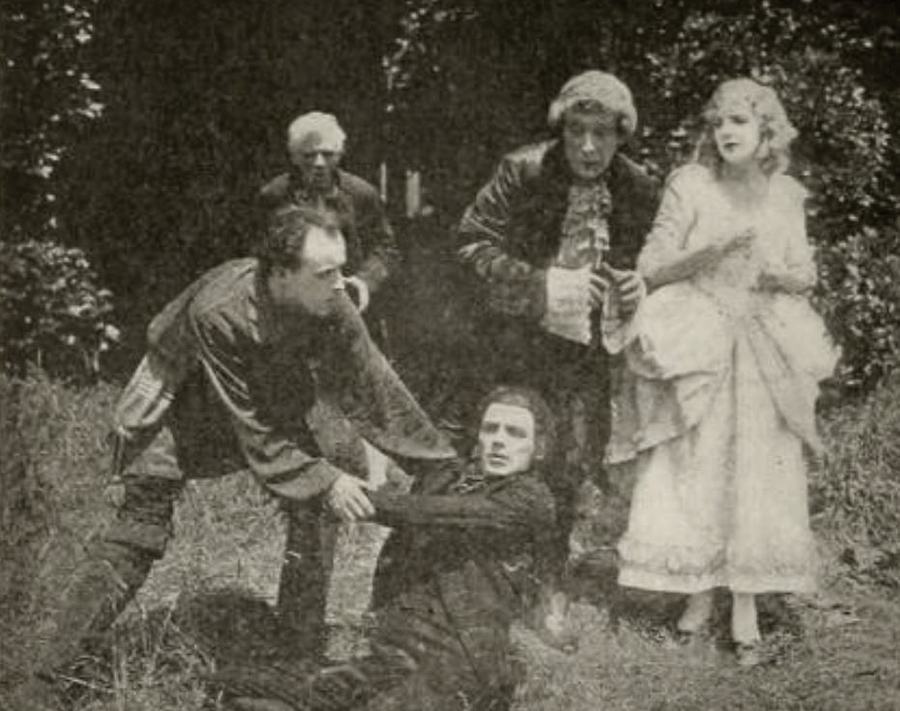
Sidney Bracey’s portrayal of the Bishop provides the film’s moral anchor. There is a quiet agony in his performance, a man torn between the rigid requirements of his office and the visceral love for his child. This performance stands in sharp contrast to the more theatrical flourishes seen in The Nightingale. Bracey understands that the Bishop’s power comes from his restraint, his ability to wield the law as a scalpel rather than a bludgeon.
Marian Swayne, as Mona, offers a performance that transcends the typical 'damsel' archetype of the 1910s. Her loyalty to Dan is not born of a naive romanticism but of a shared history and a recognition of his inherent worth despite his social fall. Her presence in the film provides a necessary warmth against the cold, blue hues of the Manx landscape. In many ways, her struggle to maintain a connection with the 'unspoken' Dan is the emotional heart of the second act, echoing the themes of loyalty found in Only a Factory Girl, yet elevated by the high stakes of a capital crime.
The arrival of the plague serves as a narrative catalyst that shifts the film from a character study into a grand, redemptive epic. The sequence where Dan assumes the identity of the Irish monk is handled with a deft touch. It is a moment of profound irony: the man who was forbidden to speak now becomes the voice of hope for a dying populace. This thematic turn reminds one of During the Plague, but *The Deemster* infuses the scenario with a deeper personal stakes. Dan isn’t just fighting a biological disease; he is fighting the spiritual rot of his own past.
The climax, where Dan must choose between his own survival and that of his greatest enemy, the Deemster, is a masterclass in silent tension. The use of lighting here is particularly effective—shadows stretch across the sickbed, symbolizing the encroaching darkness of death. When Dan reveals his identity, it is not an act of triumph but one of surrender. He has finally accepted the full weight of his father’s sentence, understanding that his atonement can only be completed through the ultimate sacrifice. The final scene, with Dan dying in Mona's arms, is a heartbreakingly beautiful tableau that rivals the emotional depth of The Curse of Eve.
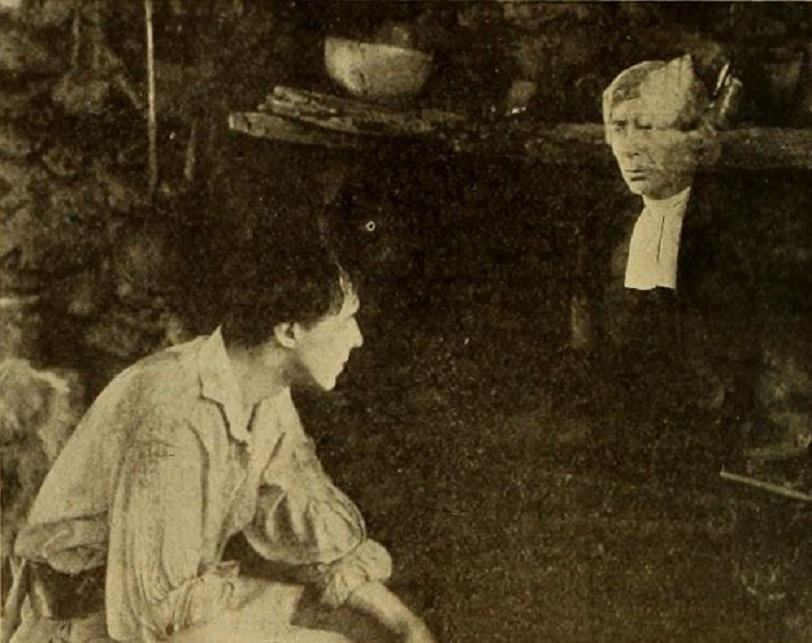
Technically, *The Deemster* was ahead of its time in its use of location shooting. While many films of the era, such as Snow White, relied heavily on stylized sets, Taylor’s insistence on capturing the authentic atmosphere of the Isle of Man gives the film a documentary-like grit. The texture of the fishing nets, the spray of the waves against the cliffs, and the ancient stones of Tynwald all contribute to a sense of lived-in reality. This grounding in the physical world makes the more mystical elements of the story—the 'curse' and the spiritual transfiguration—feel earned rather than contrived.
The editing, too, deserves praise. The pacing is deliberate, allowing the audience to feel the passage of the seven years of Dan’s exile. We are not rushed through his suffering; we are made to inhabit it. This patient storytelling is something that modern audiences might find challenging, yet it is essential for the film’s emotional payoff. It lacks the frenetic energy of In the Days of the Thundering Herd, but in its place, it offers a profound, echoing resonance.
When comparing *The Deemster* to other films of the period, its unique cultural footprint becomes clear. While Ireland, a Nation sought to capture a political zeitgeist, *The Deemster* is more concerned with the internal politics of the soul. It shares a certain thematic DNA with Destruction in its depiction of a man’s ruin, but it offers a far more hopeful conclusion. Even in its darkest moments, there is a sense that Dan is moving toward a light, however dim it may be.
The film’s exploration of identity and deception also brings to mind Elusive Isabel or The Duplicity of Hargraves, but where those films use disguise as a plot device for intrigue, *The Deemster* uses it as a vehicle for penance. Dan’s donning of the monk’s robes is not a trick; it is a shedding of his cursed self. It is a transformation that feels as permanent and heavy as the stones of the island itself.
In the final analysis, The Deemster is a towering achievement of the silent era. It manages to be both a sweeping epic and an intimate character study, a feat that many modern filmmakers still struggle to achieve. It speaks to the universal human condition—the desire for belonging, the agony of guilt, and the transformative power of mercy. For those interested in the evolution of cinematic narrative, it is an essential watch. It reminds us that even when we are 'cut off from the people,' the threads of our humanity can never be fully severed.
Whether you are drawn to it for its historical significance as a Hall Caine adaptation or for its stark, haunting beauty, *The Deemster* remains a potent reminder of cinema's ability to explore the deepest recesses of the human spirit. It is a film that lingers in the mind like the salt-mist of the Manx coast, long after the final frame has faded to black. It is a story of a man who found his voice only when he was forbidden to speak, and who found his life only when he was ready to give it away.

IMDb 5.9
1932
Community
Log in to comment.