DbcultAccessing Vault...
Cult Review
Senior Film Conservator
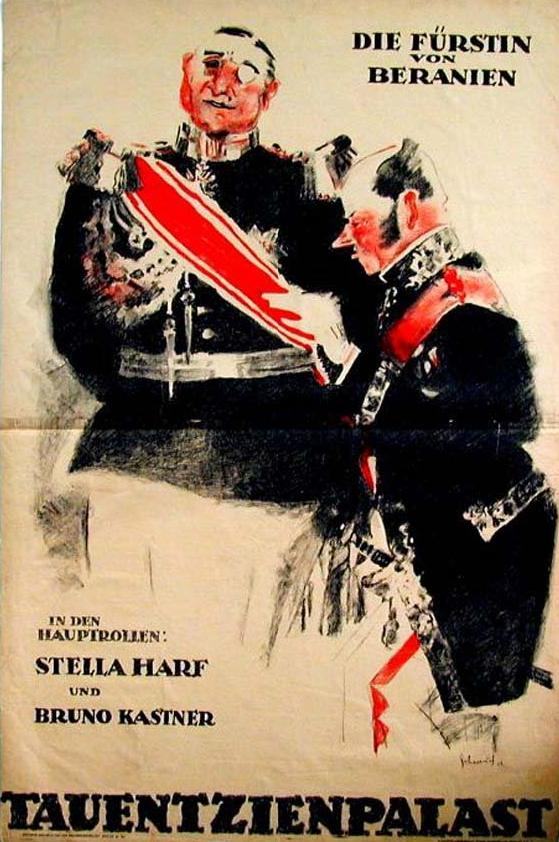
Stepping into the spectral embrace of early 20th-century cinema often feels like unearthing a forgotten language, a lexicon of gestures, gazes, and dramatic chiaroscuro that speaks directly to the soul without uttering a single audible word. 'Die Fürstin von Beranien' (The Princess of Berania) is precisely one such relic, a silent film that, despite the passage of a century, retains an astonishing emotional resonance and narrative potency. Directed with a keen eye for human frailty and societal pressure, and penned by the insightful Richard Hutter, this cinematic endeavor delves deep into the heart of a young royal torn between personal desire and the crushing weight of national obligation. It’s a melodrama, certainly, but one elevated by its earnest performances and the sophisticated visual storytelling characteristic of its era.
The film transports us to the fictional, yet palpably real, principality of Berania, a land of ancient traditions and picturesque landscapes now facing the harsh realities of modernization and economic strain. At its heart is Princess Ilse, portrayed with exquisite vulnerability and aristocratic poise by Frida Richard. Richard’s performance is a masterclass in silent acting; her eyes, often brimming with unshed tears or sparkling with defiant hope, convey volumes, painting a portrait of a woman of immense inner strength burdened by an untenable predicament. Berania is fiscally desolate, its future hanging by a thread, and its very sovereignty threatened by rapacious neighboring powers. The only perceived solution, championed by the formidable and unyielding Chancellor, Count Krosigk (Leopold von Ledebur, whose stern demeanor perfectly embodies the rigid adherence to duty), is a marriage of convenience. This proposed union, with the formidable and considerably older Duke Otto of Grenzland (Willy Kaiser-Heyl, whose portrayal exudes a chilling, calculating gravitas), promises to secure the much-needed financial lifeline but at the cost of Ilse's personal happiness.
The stark contrast between public duty and private yearning forms the emotional bedrock of the film. Ilse, far from a naive maiden, is deeply in love with Stefan, an idealistic young architect of humble origins, brought to life with fervent passion by Muhsin Ertugrul. Ertugrul, a name often associated with pioneering Turkish cinema as a director, here demonstrates his formidable acting prowess, imbuing Stefan with a compelling blend of intellectual vigor and romantic ardor. Stefan's dreams for Berania extend beyond mere survival; he envisions a modernized, prosperous nation built on innovation and progress, a vision that resonates deeply with Ilse's own aspirations for her people. Their clandestine meetings, often bathed in the soft glow of moonlight or the hushed intimacy of a hidden garden, are rendered with a tender melancholy, each stolen moment a fragile defiance against the inevitable.
The narrative, meticulously crafted by Richard Hutter, is not content with a simple love triangle. It weaves a more intricate tapestry of human motivations, adding layers of intrigue and betrayal. Stella Harf, as Baroness Helga, Ilse’s seemingly devoted lady-in-waiting, delivers a subtly chilling performance. Helga, consumed by a secret, unrequited love for Stefan, becomes a silent antagonist, her quiet manipulations and veiled glances slowly unraveling the princess’s fragile world. Her actions are not born of outright malice but rather a tragic cocktail of envy and desperate longing, making her character all the more compellingly human. The film masterfully uses close-ups to capture these fleeting expressions, allowing the audience to glimpse the turmoil beneath Helga's composed exterior.
Adding another layer to the political machinations is Bruno Kastner’s portrayal of Prince Viktor, a rival suitor whose ambition far outstrips his moral compass. Viktor, a slick and opportunistic figure, senses the vulnerability in Ilse's position and actively seeks to expose her secret love for Stefan. His schemes are not merely to win Ilse's hand but to destabilize the political alliance with Grenzland, thereby furthering his own ends. Kastner imbues Viktor with a sniveling charm that makes him a thoroughly detestable, yet undeniably effective, antagonist. The tension escalates as Viktor's watchful eyes and whispered inquiries threaten to shatter the delicate façade Ilse maintains.
Even the supporting cast, including Aruth Wartan and Kurt Skalden in their respective roles, contribute to the rich texture of Beranian society. Wartan, often cast in more enigmatic roles, here might be seen as a shadowy informant or a revolutionary figure, adding to the atmosphere of simmering unrest beneath the polished surface of court life. Skalden, perhaps a loyal but conflicted guard or a minor noble caught in the crosscurrents, further grounds the drama in a world populated by individuals grappling with their own allegiances and moral compromises. The collective performances create a believable, intricate ecosystem where every gesture, every sidelong glance, holds significance.
The visual language of 'Die Fürstin von Beranien' is particularly striking. The cinematography, though simple by modern standards, is incredibly effective in conveying mood and narrative. The grand, slightly decaying sets of the Beranian palace beautifully symbolize the principality's waning power, while the stark, modern designs proposed by Stefan represent a future that Ilse yearns for but may never attain. Costume design plays a crucial role too; Ilse's regal gowns, while beautiful, often appear almost like a cage, emphasizing her imprisonment by duty, contrasting sharply with the simpler, more functional attire of Stefan, symbolizing his freedom from such societal constraints.
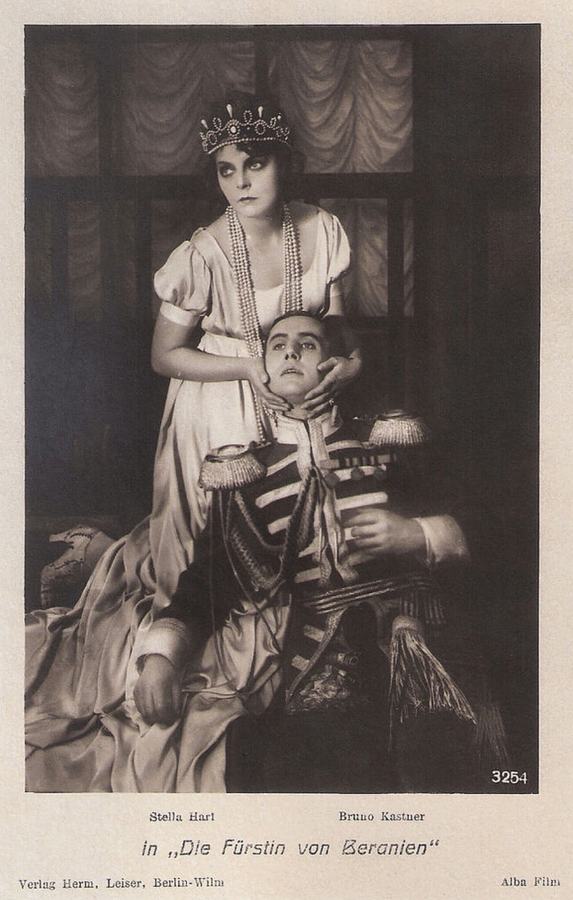
Lighting, a cornerstone of silent film artistry, is used with remarkable dexterity. The gloomy, shadowed corridors of the palace underscore the political intrigue and the despair Ilse often feels, while the occasional bursts of natural light in scenes with Stefan hint at the brief moments of hope and genuine connection they share. The film's pacing is deliberate, allowing the audience to absorb the emotional weight of each scene, each lingering glance, each agonizing decision. This measured tempo, common in the era, allows for a deeper immersion into the characters' internal struggles, a luxury often lost in the rapid-fire editing of contemporary cinema.
Comparing 'Die Fürstin von Beranien' to its contemporaries reveals its unique strengths. While films like When Fate Leads Trump might explore similar themes of destiny and societal pressure, 'Die Fürstin von Beranien' distinguishes itself with its potent blend of political drama and deeply personal romance. The central dilemma of a royal figure sacrificing personal happiness for national salvation is a timeless trope, seen in various forms throughout cinematic history, yet here it feels fresh and immediate due to the nuanced performances and evocative direction.
The film's exploration of class divides and the tension between tradition and modernity also finds parallels in works like Slægternes Kamp, which often grappled with the changing social landscape. However, 'Die Fürstin von Beranien' anchors these broader societal concerns firmly within Ilse's personal journey, making the political stakes feel intimately connected to her emotional turmoil. The portrayal of a strong female protagonist, albeit one constrained by circumstance, also brings to mind films such as A Daughter of the West, which often featured resilient women navigating challenging environments.
The film’s dramatic climax, a grand ducal ball, is a masterstroke of silent film choreography. Amidst the swirling dancers and glittering chandeliers, the various plot threads converge. Ilse’s desperation, Stefan’s fervent hope, Helga’s simmering resentment, and Viktor’s conniving ambition all reach their zenith. The tension is palpable, communicated through rapid cuts between faces, the subtle shifts in posture, and the almost unbearable silence punctuated only by the audience's own internal soundtrack. It's a scene that could easily descend into caricature, but here it is handled with a delicate balance of heightened drama and raw human emotion, culminating in Ilse's agonizing decision.
Ultimately, 'Die Fürstin von Beranien' is a profound meditation on sacrifice. Ilse's choice, born of duty and a deep love for her people, is portrayed not as a defeat, but as a tragic triumph of statesmanship over personal desire. The film doesn't offer a facile happy ending, but rather a bittersweet resolution that acknowledges the harsh realities of power and responsibility. Yet, there's a glimmer of hope, a subtle suggestion that Stefan's progressive ideals, though momentarily sidelined, might one day guide Berania towards a brighter future, perhaps through Ilse’s quiet influence from her position of power. This nuanced conclusion elevates the film beyond a mere romantic drama, imbuing it with a sense of enduring political and social commentary.
The enduring power of 'Die Fürstin von Beranien' lies in its ability to transcend its historical context and speak to universal themes of love, duty, betrayal, and the often-painful choices that define human existence. It’s a testament to the artistry of silent cinema, reminding us that storytelling, when executed with such passion and precision, requires no spoken word to stir the deepest recesses of the human heart. For those willing to engage with its unique language, this film offers a deeply rewarding and emotionally resonant experience, a true jewel from an era often overlooked. It's a poignant reminder that while the world around us changes, the fundamental conflicts of the human spirit remain eternally compelling, etched into the celluloid with an artistry that still shines brightly today.
Richard Hutter’s screenplay is a marvel of structured storytelling, building tension meticulously and allowing character arcs to unfold organically. The film never feels rushed, yet it consistently propels the narrative forward with an almost inexorable momentum. The direction, while not explicitly attributed beyond the general context of the era (though Muhsin Ertugrul's own directorial background suggests a keen understanding of visual narrative), exhibits a sophisticated control over mise-en-scène and character blocking. Every frame feels purposeful, every gesture meaningful. The absence of dialogue forces a reliance on visual cues, and the film excels in this regard, making the experience intensely immersive. It demands active viewing, an engagement with the subtle nuances of performance and symbolism, rewarding the attentive spectator with a rich and layered narrative.
In an age dominated by sound and spectacle, 'Die Fürstin von Beranien' stands as a powerful testament to the evocative power of the moving image in its purest form. It is a film that deserves rediscovery, a cinematic journey into a bygone era that still manages to illuminate the timeless complexities of the human condition. Seek it out; you will be richly rewarded by its quiet elegance and profound emotional depth. This is not merely a historical curiosity; it is a vibrant piece of cinematic art that continues to resonate with undeniable force. Its themes of love, loss, and the burden of leadership are as relevant today as they were a century ago, proving that true artistry transcends temporal boundaries. The silent era, often unfairly relegated to the dusty archives, frequently reveals such treasures, and 'Die Fürstin von Beranien' is undoubtedly one of its brightest stars, a beacon of dramatic storytelling that continues to captivate and move its audience.

IMDb —
1936
Community
Log in to comment.