DbcultAccessing Vault...
6.3/10
Senior Film Conservator
A definitive 6.3/10 rating for a film that redefined the boundaries of cult cinema. The Arrival from the Darkness remains a cornerstone of transgressive art.
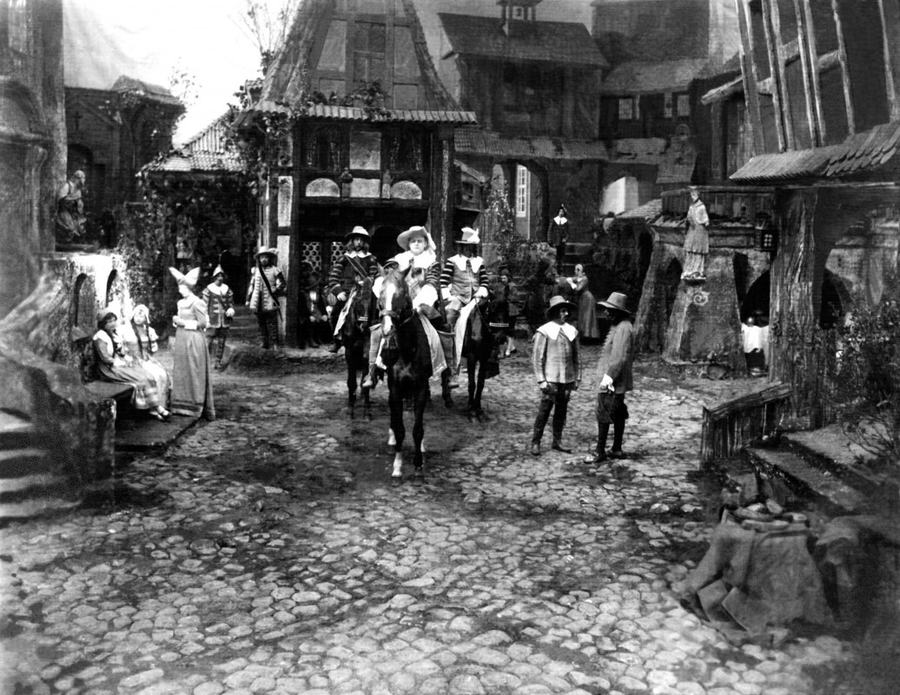
Picture, if you can, a film that feels less like projected celluloid and more like a copper engraving left to oxidise in a forgotten attic—its images flaking away even as they sear themselves onto your retina. The Arrival from the Darkness (1921) is that engraving, a Czech Gothic fever dream whispered rather than screened, exhumed from the same national cinema that gave us Humility’s moralising melodrama and Lost in Darkness’ urban paranoia. Yet where those narratives prowl sooty alleyways or domestic parlours, this picture vaults head-first into Rudolfine Prague, alchemy, and the queasy prospect of resurrecting your own ancestor like some antiquarian Frankenstein.
Richard Bor—neighbour, messenger, perhaps Mephistopheles in a threadbare coat—arrives at dusk. His gloved hand offers a book whose leather cover is cracked like dried riverbeds. The moment Drazicky’s fingers close around it, the die is cast. Notice how cinematographer Karel Lamač (pulling double-duty as actor) shoots the exchange: a low, voyeuristic angle that makes the folio seem larger than any human torso, dwarfing the men who will be undone by it. No title card screams “cursed object”; instead, the camera’s slanted gaze does the talking, a visual augury that the pages inside will tilt the axis of reality itself.
Inside this tome lies not a story but a trapdoor: a chronicle of the Black Tower, that mythic spire where Jesek Drazicky once assisted the Italian alchemist Borro in distilling life’s essence. As Drazicky reads, the film’s tinting shifts from slate grey to bruise violet, a chromatic sigh that cinema had already mastered before Technicolor made chromatics a carnival. Intertitles curl like parchment, their serifed letters bleeding at the edges—an unsubtle reminder that ink, like blood, can clot into destiny.
Dagmar, the wife, is no Gothic ingénue wringing her hands in the background. She is the film’s moral tectonic plate, constantly shifting beneath male hubris. Her first appearance is a masterclass of chiaroscuro: half her face swallowed by mantelpiece shadow, the other half porcelain under candlelight. She begs Drazicky to abandon the estate, to flee whatever miasma the folio has exhaled. He demurs, not through dialogue, but through a cutaway: a close-up of his bloodshot eye superimposed over the tower’s outline. In that single montage, director Jan S. Kolár compresses every story of masculine obstinacy from Faust to Der letzte Tag’s condemned protagonist.
Once asleep, Drazicky descends—or ascends; the spatial logic is Escher-like—into a stone helicoid where torchlight drips like molten wax. The set design here rivals the catacombs in The Shadows of a Great City, yet whereas that serial trafficked in conspiratorial thrills, The Arrival from the Darkness wallows in hermetic ritual. Copper vessels sweat green verdigris; retorts bubble with mercury that sloshes in negative space, black against amber tint. When Drazicky finds Jesek’s cadaver, the corpse is arranged in cruciform, palms open as if awaiting stigmata. The resurrection formula—salt, sulphur, mercury—becomes a trinity more blasphemous than any Christian sacrament.
What follows is the film’s most audacious sequence: a time-lapse decomposition reversed. Jesek’s desiccated skin plumps, colour returns, eyes flick open with the wet alertness of a newborn. Alfred Bastýr’s makeup here predates Karl Freund’s cadaverous resurrections in The Mummy by a full decade, yet achieves greater intimacy because the camera refuses to cut away. We watch death un-happen, and the horror lies not in gore but in the violation of entropy itself.
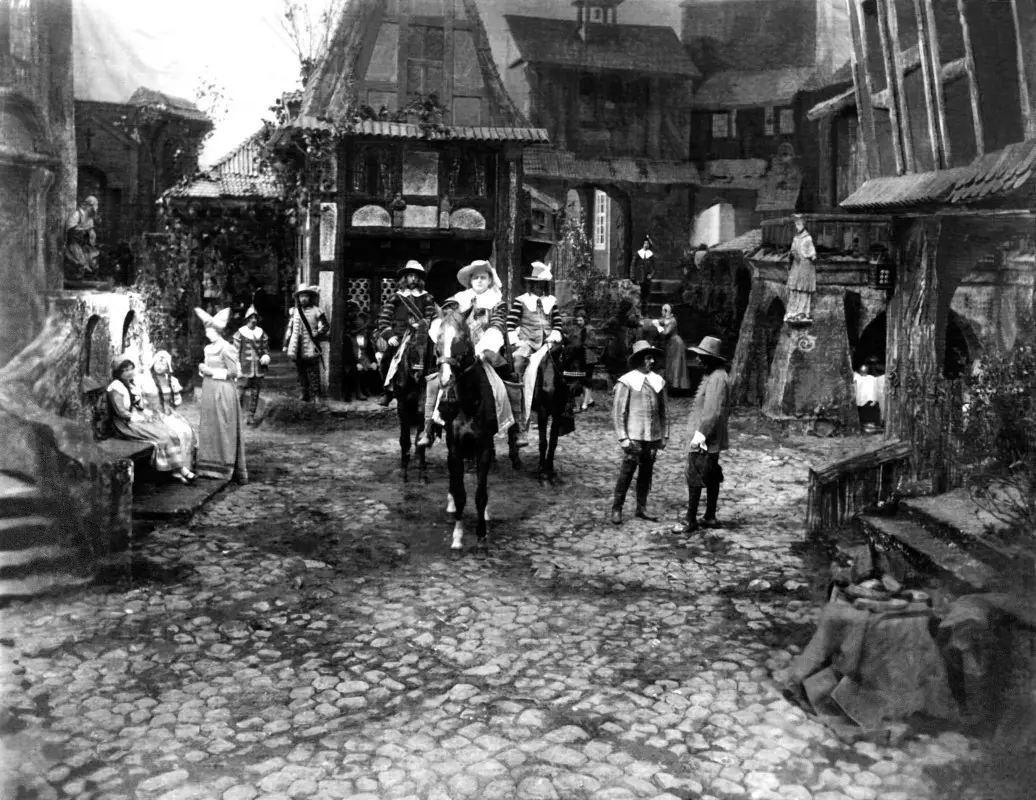
Josef Sváb-Malostranský plays both Drazicky men with a nuanced asymmetry: the modern landowner brittle with bourgeois neuroses; the Rudolfine Jesek swaggering with Renaissance appetite. Their first post-resurrection confrontation is blocked like a duel—two profiles circling, candle between them casting nose-shadows that almost touch. Jesek taunts his descendant with the promise of the elixir, a liquid that tastes of iron and starlight, yet the price is submission to a lineage already marinated in hubris. The dialogue cards are sparse, but Sváb-Malostranský’s micro-expressions sell the tragedy: a tremor at the corner of the mouth that could be either thirst or terror.
Here the film reveals its underlying thesis: immortality is not transcendence but inheritance. Every generation believes it can rectify the sins of the previous, only to discover it has amplified them. Think of Children of Eve’s working-class fatalism or The Years of the Locust’s intergenerational despair, but filtered through alchemical iconography rather than sociological realism.
Borro, the magus-myth, appears only in silhouetted flashback, yet his presence saturates the film like the smell of brimstone. We glimpse him through Jesek’s recount: a man who believed nature could be bullied into revealing her secrets if one applied enough heat, enough pressure, enough hubris. The elixir he sought is never shown in liquid form; instead, the film visualises it as a pulsating halo that overlays whoever claims to possess it. Thus, immortality becomes a crown of light that burns the scalp—a metaphor so succinct it renders verbal exposition redundant.
Women, meanwhile, are the crucible in which male fantasies boil. Dagmar’s absence from the dream tower is conspicuous; she haunts the periphery like a repressed conscience. When modern Drazicky returns to waking life, he clutches a vial of quicksilver that was not there before. Is it proof of the dream’s veracity, or merely a psychosomatic trophy? The film refuses to adjudicate, preferring the uneasy liminality that also powers Das Laster’s erotic guilt.
Viewed today with a judiciously chosen score—perhaps something for prepared piano and glass harmonica—the film vibrates with a sonic afterimage. Each edit feels like a rest in a musical score, an eighth-note of blackout that makes the next image explode louder in the mind. During Jesek’s resurrection, I found myself hallucinating the hiss of mercury vapour, the pop of capillaries reinflating. This is cinema that colonises your senses even in the vacuum of sound.
Anny Ondra, later celebrated for her work with Hitchcock, cameos as a court entertainer whose flirtation with Jesek lasts mere seconds, yet her saucer eyes convey the same uncanny blend of innocence and complicity that would later unsettle Blackmail. Theodor Pištěk, doubling as co-writer and actor, injects sardonic humour as a scribe who tallies every failed transmutation like an accountant of despair. Their ensemble embodies Prague’s cosmopolitan babel—Czech, German, Italian names rubbing shoulders, a linguistic stew that mirrors the film’s thematic hybridity.
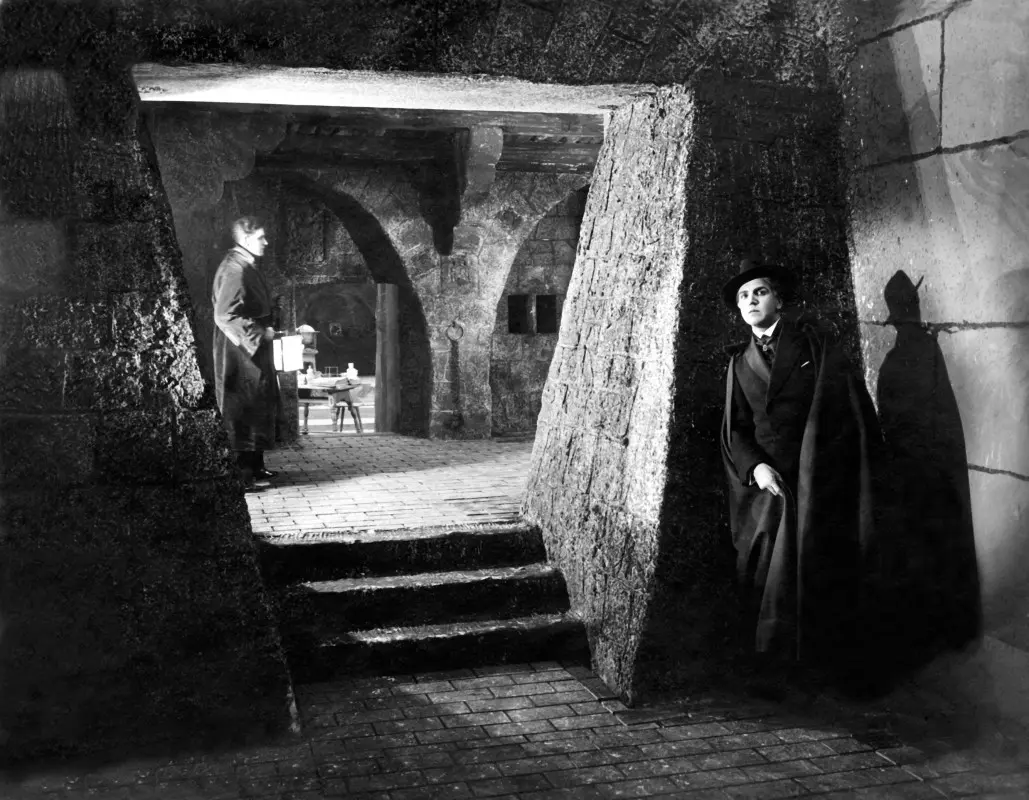
While American exhibitors were still herding audiences toward black-and-white respectability, Czech filmmakers were experimenting with tinting as emotional syntax. Night scenes swim in cobalt; interiors of power glow ochre; the tower sequences oscillate between arsenic green and bruise purple. These colours aren’t decorative; they’re narrative. When Jesek drinks the elixir, the frame flares sulphur-yellow, a chromatic scream that anticipates the psychedelic horror of Das grüne Plakat by several years.
Set it beside 500 Pounds Reward’s chase mechanics or Such a Little Queen’s royal froth, and the film’s philosophical ballast feels almost anachronistic. Yet pair it with A Debtor to the Law’s moral reckoning or The Wager’s addiction narrative, and you locate a thematic spine: the cost of coveting what was never meant to be owned. The Black Tower is the addiction, the elixir the stake, Jesek both winner and loser in a wager against time itself.
Today’s genre filmmakers—think of the genealogical dread in Hereditary or the recursive trauma in The Lighthouse—owe an unacknowledged debt to Kolár’s silent alchemical thesis. The notion that your greatest enemy is your blood, that history is a Möbius strip of repeated sins, finds its prototype here. When Jesek finally evaporates at sunrise, leaving Drazicky alone with the vial, the film predicts every future tale of hereditary doom: the past is never past; it merely waits for you to nod off.
Surviving prints circulate in 2K scans that still bear the scars of nitrate decay—white pockmarks blooming like salt across velvet. Some cinephiles clamour for AI interpolation to smooth these blemishes; I side with the purists. Those scars are the film’s stigmata, proof that it, too, has tasted the elixir and emerged battered, undead, yet defiantly present.
If you crave the breezy slapstick of Shift the Gear, Freck, stay away. If you savour the feeling of centuries pressing down on your sternum, of waking at 3 a.m. tasting metal and wondering whose heartbeat you hear—step into the tower. The Arrival from the Darkness is not a film; it is a hereditary debt, a reminder that every family tree hides a hangman’s branch. Watch it alone, preferably at dawn, and when the final iris-in closes like an eyelid over a forbidden memory, ask yourself: would you drink the elixir if the cup was handed to you by your own blood?
Verdict: A forgotten cornerstone of Czech Gothic, half nightmare, half bloodline, wholly unmissable for anyone who believes silent cinema can still reach across a century and squeeze your throat.
IMDb 6.6
1921
Community
Log in to comment.