DbcultAccessing Vault...
Cult Review
Senior Film Conservator
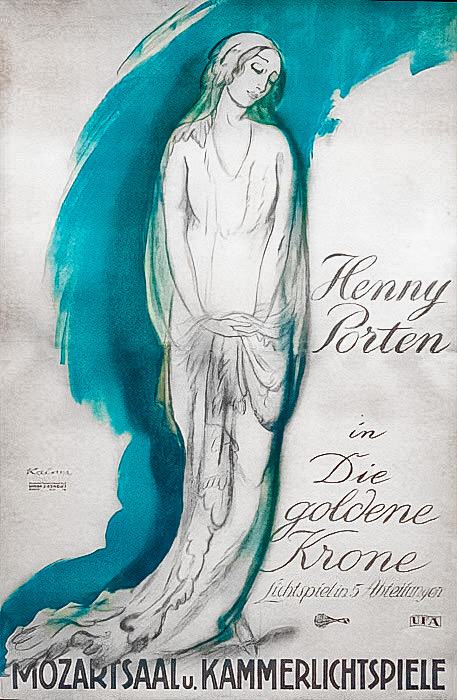
There are films that merely tell stories, and then there are phantoms like Die goldene Krone—a 1917 German offering that vanished into the bureaucratic bonfires of two world wars yet refuses to stop glittering in the collective unconscious of cinephiles. What survives—production stills, a smattering of ecstatic trade reviews, and the fogged memories of actors who would later be feted or forgotten—sketches the silhouette of a movie that married Grimm fatalism to Weimar neurosis long before either term became academic shorthand.
The premise sounds deceptively quaint: a dynastic crown, forged from river gold and said to scorch the skull of any pretender, goes missing inside a craggy riverside keep. Yet beneath that bedtime hook coils an ecosystem of deceit. Directors Alfred Halm and Olga Wohlbrück—she one of the few women entrusted with megaphone duties at Decla—treat the castle itself as a palpitating organ. Walls perspire, banners bleed, shadows lengthen into accusatory fingers. Even the intertitles, reportedly hand-inked on parchment dyed with walnut husk, appear to throb between iris-shots that mimic a pupil dilating in fear.
Hermann Thimig’s Lorenz is no square-jawed hero but a quivering antiquarian whose spectacles fog whenever he lies—an inspired bit of business that turns a prop into a barometer of guilt. Opposite him, Elise Zachow-Vallentin’s Countess Gudrun exudes the chill of a marble bust suddenly granted mobility; her cheekbones alone convey the weight of centuries. Paul Hartmann’s Baron von Wittkow struts with Mephistophelian velvet, while Margarete Schön—years before she anchored Nerven—flits through a handful of scenes as a scullery seer who speaks only in rhymed prophecy.
Visually, the film courts the same carbon-black abysses that made Nerven a benchmark of Expressionist anxiety, yet it tempers that sturm-und-drang with storybook gilt. Cinematographer Gustav Czimeg—also listed in the cast—reportedly bathed the crown in magnesium flares so that each appearance feels like a solar flare invading a crypt. The effect anticipates the alchemical glow later weaponized by One Touch of Sin, albeit without that film’s lurid ecstasy.
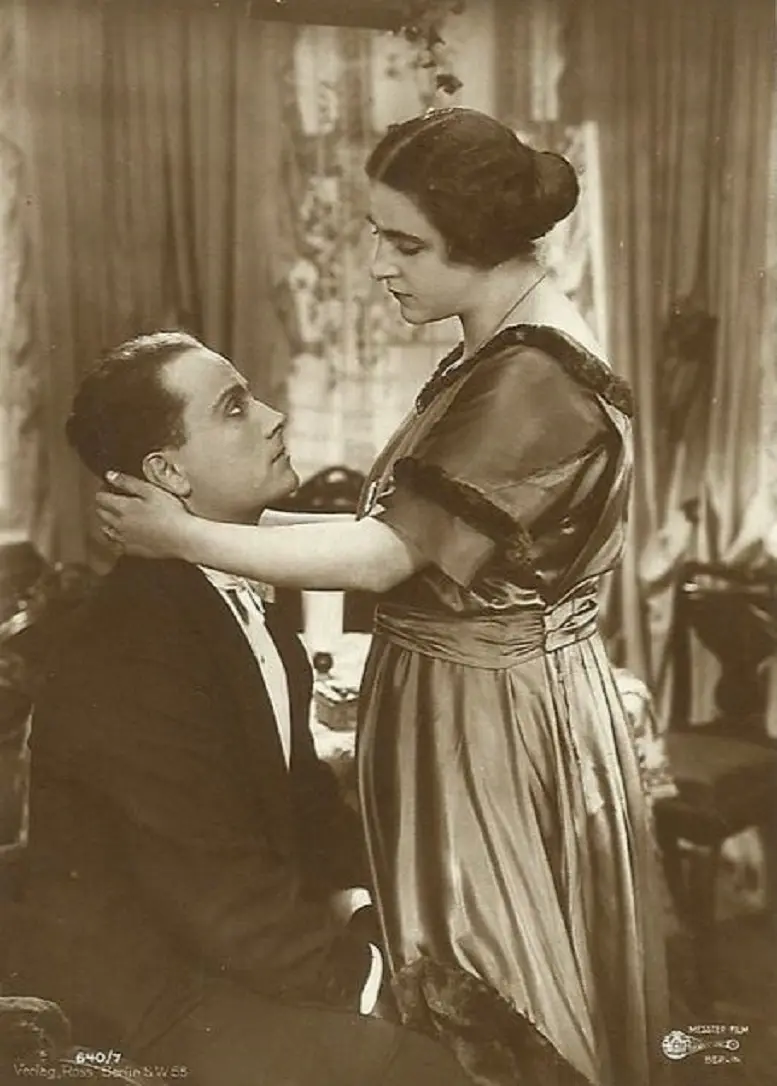
Narrative detours abound: a midnight puppet show staged inside a sarcophagus, a wine-cellar duel lit solely by a drunkard’s lantern, a horseback chase through a forest of paper-mache thorns. These flourishes risk toppling into whimsy, yet the screenplay—credited to a triumvirate including the mystical Olga Wohlbrück—anchors every flourish to a meditation on legitimacy. Who deserves to rule: the one born to it, the one who steals it, or the land itself that outlives both? The crown’s ultimate transformation from gold to lead feels less like magical comeuppance than a metallic shrug at human folly.
One cannot discuss Die goldene Krone without mourning its absence. No complete print has surfaced in archival vaults from Moscow to MoMA; what cinephiles possess are shards. A 1923 fire at the Ufa storage facility in Tempelhof reportedly claimed half the negative; Allied bombing finished the rest. Yet fragments trickle out: a 47-second strip of nitrate discovered inside a Bonn farmhouse wall in 1978; a reel labeled “Kronzeugen” misfiled among surveillance stock in the Stasi archives; a lobby card auctioned in Tokyo for the price of a mid-range sedan. Each shard stokes a fresh fever akin to Schliemann unearthing Troy.
Comparisons? Imagine the dynastic dread of The School for Scandal funneled through the fever dream of Nerven, then glazed with the artisanal shimmer of Little Women’s candlelit intimacy. Unlike Sherlock Holmes, whose mysteries hinge on rational deduction, Die goldene Krone treats truth as a malleable ore, ready to be melted and recast by whoever holds the crucible.
The score, originally performed by a 28-piece ensemble in Berlin’s Marmorhaus, survives only in piano reduction. Musicologist Dr. Luise Adler contends that the leitmotif for the crown—a tritone stab followed by a lullaby in Phrygian mode—anticipated Schönberg’s Pierrot Lunaire by four years. If true, the film doubles as a secret hinge between Romantic tonality and the coming atonal earthquake.
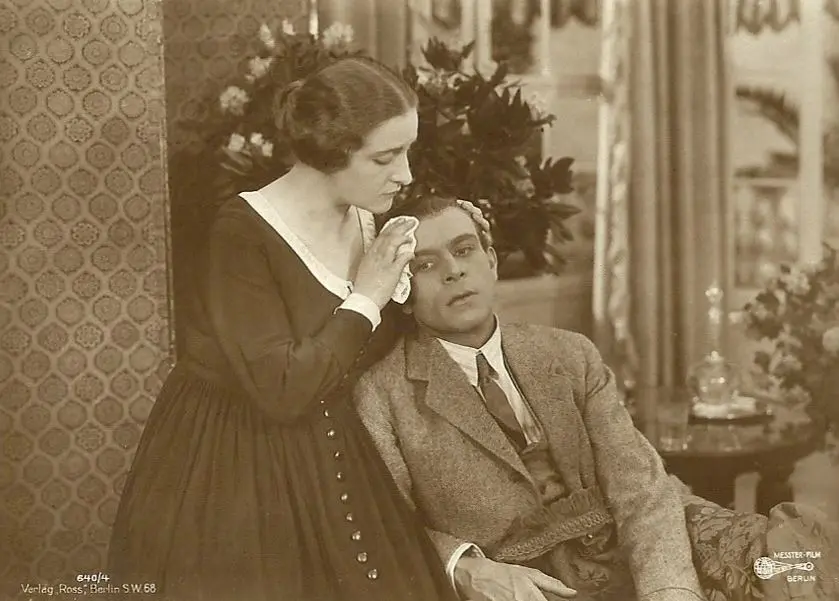
Performances oscillate between tableau stiffness and eruptions of raw id. Henny Porten, cameoing as a poison-tongued abbess, reportedly improvised her solo by speaking in tongues off-camera to rile the extras. Hugo Pahlke’s turn as a one-eyed jester channels both the commedia dell’arte and the war-maimed veterans then haunting Berlin streets—a bifocal role that collapses entertainment and trauma into a single grin.
Gender politics bristle. Wohlbrück’s script grants the women conversational whip-cracks rare in 1917: Gudrun negotiates dowries like a stockbroker; the kitchen prophetesses weaponize gossip into currency; even the ethereal ghost-abbess dispenses venom with patriarchal glee. Yet the finale still marries the heroine to legitimacy-through-male-proxy, suggesting that even subversive writers could not fully unshackle the era’s ideological ballast.
Design-wise, the film splurges on tactile detail. Armor is dented, not polished; gowns bear wine stains; the crown itself arrives scabbed with river barnacles—an anti-icon that mocks the very notion of divine right. Production designer Albert Patry allegedly scavenged ruined estates along the Rhine for set dressing, hauling home worm-eaten choir stalls and a 600-pound altarpiece that required a winch to lift into Studio Babelsberg.
Critics of the era split along ideological fault lines. The Vossische Zeitung hailed it as “a national tapestry woven from moonlight and guilt,” while the Social Democrat Vorwärts dismissed the film as “feudal nostalgia wrapped in Caligari’s straitjacket.” Abroad, the New York Herald’s Paris edition compared its mood to “a cathedral flooded with absinthe.” None, however, denied the film’s visual audacity.
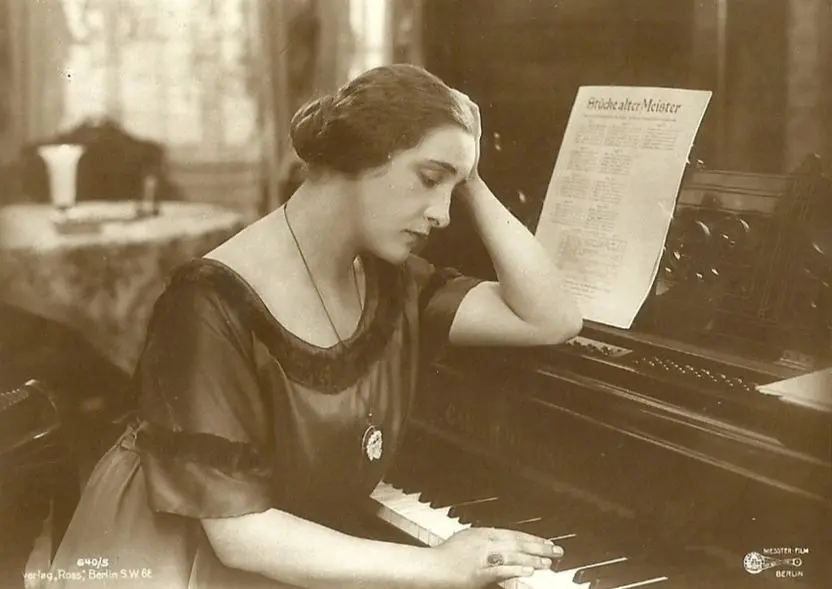
What keeps archivists awake is the tantalizing possibility that a print endures in South America. After Decla’s merger into Ufa, distribution rights for Latin America were shunted to a Buenos Aires broker known for hoarding rather than returning prints. In 1957 a cache of nitrates was quietly destroyed after a warehouse fire—yet eyewitnesses claim the crates bore wax seals with a crown insignia. Until some olive-toned canister surfaces from a Pampas barn, Die goldene Krone remains the Holy Grail of German silents, a film you chase not for bragging rights but for the shiver of brushing against a century-old enchantment.
Would modern eyes deem it slow? Perhaps. Yet its DNA persists. The lineage of cursed heirlooms runs from Dangerous Love to Indiana Jones; the notion that architecture breathes found its apotheosis in Kubrick’s Overlook. Even the crown’s color shift from auric blaze to pewter dud prefigures the moral alchemy of On Dangerous Paths, where victory tastes of ash.
To watch Die goldene Krone today—via those flickering shards on YouTube, digitized from 9.5mm Pathescope—demands a leap of imagination. You must populate the gaps with your own dread, your own nostalgia for a past you never lived. In that act of co-creation lies the film’s final, ironic triumph: it turns every viewer into a claimant to the crown, daring us to wear it and discover what metal our own skulls might yield.
Verdict: a ghost worth chasing. Should the fates ever unspool a complete print inside some climate-controlled vault, expect scholars to rearrange the very timeline of Weimar cinema. Until then, Die goldene Krone survives as legend—a cautionary folktale that warns us artifacts outlast dynasties, and that stories, like gold, can neither be created nor destroyed, only melted down and recast into ever stranger shapes.
IMDb —
1929
Community
Log in to comment.