DbcultAccessing Vault...
Cult Review
Senior Film Conservator
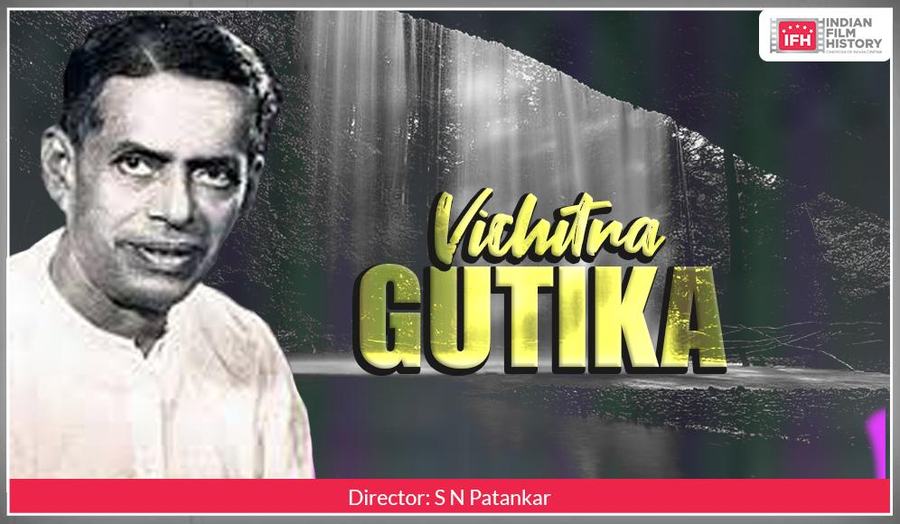
There are films that merely tell a story, and then there are those that etch themselves onto the very fabric of your being, resonating with a timeless quality that transcends their era. G. Mohanial Dave’s Vichitra Gutika is unequivocally the latter. This cinematic artifact, a profound exploration of love, loss, and the inexorable march of fate, stands as a poignant testament to early Indian storytelling prowess. While the narrative premise might appear deceptively simple – a kind man, a sweet girl, love, chaos, and fate – its execution is anything but. It delves into the delicate architecture of human relationships, the fragility of happiness, and the brutal indifference of circumstance, all while posing existential questions about agency and destiny.
At its core, Vichitra Gutika introduces us to a protagonist of unassuming virtue, a man defined by his inherent goodness and his deep-seated connection to his family. Trymbakrao Pradhan, in a performance that anchors the entire film, imbues this character with a quiet dignity and an almost palpable sincerity. His world, circumscribed by domestic harmony and simple pleasures, is irrevocably altered by the arrival of a young woman portrayed by Tara Koregaonkar. Her presence, like a sudden burst of spring, infuses his life with a new dimension of joy and affection. Their courtship, depicted with a tender earnestness, is a beautiful study in burgeoning romance, a mutual recognition of kindred spirits. The early scenes radiate with an innocent charm, establishing a foundation of hope and happiness that makes the subsequent unraveling all the more heartbreaking. It’s a classic setup, reminiscent of the pure, untainted love stories found in films like Un romance argentino, where the initial bliss serves to heighten the tragic elements to follow.
The narrative pivot in Vichitra Gutika is a masterstroke of dramatic tension. Just as the protagonists settle into the comfortable rhythm of their love, an 'event' – shrouded in the film's evocative mystery – strikes with devastating force. This is not a mere plot device; it’s a narrative earthquake that fractures their world into irreparable pieces. The specifics of this incident are less important than its profound repercussions, which ripple outwards, touching every character and twisting every established relationship. The once-serene family life of the protagonist is plunged into turmoil, and the sweet promise of his love is threatened by an encroaching darkness. This sudden shift from idyllic romance to profound struggle creates a powerful emotional resonance, much like the abrupt turns of fate explored in films such as The Transgressor, where a single misstep or unforeseen circumstance can cascade into a lifetime of tribulation.
The strength of Vichitra Gutika lies not only in its central romance but also in the rich tapestry of its supporting cast. Dighe, K.G. Joshi, Gokhle K.G., Sitarampant Joshi, Marathe, Damuanna Joshi, and Baba Vyas all contribute nuanced performances that lend authenticity and depth to the unfolding drama. Each character, whether a family member or an external force, reacts to the 'event' and its aftermath in ways that feel profoundly human and often tragically flawed. Their struggles, their moral dilemmas, and their attempts to navigate the turbulent waters of their lives add layers of complexity to G. Mohanial Dave's intricate script. The ensemble effectively portrays a community grappling with unforeseen adversity, their individual fates inextricably linked. The interactions, the unspoken tensions, and the desperate attempts to restore order or seek justice are rendered with a raw honesty that speaks volumes about the human condition under duress. The film masterfully uses these peripheral characters to amplify the central couple's plight, creating a sense of a world truly impacted by the unfolding tragedy, similar to how supporting roles in The Soul Market often reflected the broader societal struggles of their time.
The central philosophical question posed by Vichitra Gutika revolves around the concept of fate. G. Mohanial Dave’s writing brilliantly illustrates how an initial 'event' spirals into a series of 'consequences,' each seemingly predestined. The protagonists find themselves caught in a web where their choices, though made with agency, seem to merely align with a larger, preordained design. Is free will an illusion? Or are these characters simply reacting to circumstances that are beyond their control, yet their responses shape the specific path fate takes? The film doesn't offer easy answers, instead inviting the audience to ponder the intricate dance between human endeavor and cosmic influence. This exploration of destiny versus free will is handled with a subtlety that avoids didacticism, allowing the narrative to unfold organically, driven by the characters' reactions to their increasingly dire circumstances. This thematic depth elevates Vichitra Gutika beyond a mere melodrama, positioning it as a thoughtful meditation on the human condition, echoing the fatalistic undertones sometimes found in works like The Price of Silence, where characters often grapple with consequences stemming from past decisions or societal constraints.
While G. Mohanial Dave is credited with the writing, the implied directorial vision (which often went uncredited or was a collaborative effort in early cinema) is evident in the film's pacing and emotional impact. The way scenes transition from moments of quiet intimacy to explosive conflict, or from hopeful optimism to crushing despair, speaks volumes about a deliberate artistic hand. Trymbakrao Pradhan, in particular, delivers a performance of remarkable restraint and emotional depth. His portrayal of a man besieged by forces beyond his control, yet clinging to his inherent goodness, is profoundly moving. Tara Koregaonkar, too, is captivating as the love interest, her initial sweetness giving way to a portrayal of resilience and vulnerability as she navigates the film's tumultuous events. The chemistry between them, even in the face of adversity, remains a powerful undercurrent. The subtle gestures, the expressive silences, and the raw emotional outbursts from the entire cast contribute to a cinematic experience that feels both grand in its scope and intimate in its portrayal of human suffering and endurance. It’s a masterclass in conveying complex emotions without the benefit of modern cinematic techniques, relying instead on the sheer power of performance and evocative storytelling.
Considering the era in which Vichitra Gutika was produced, its visual language would have been a significant aspect of its impact. Early Indian cinema, while perhaps not as technically sophisticated as its Western counterparts at the time, often compensated with powerful narratives and emotionally charged performances. The film likely employed dramatic framing, evocative lighting (where available), and carefully choreographed blocking to convey its intricate plot and emotional beats. One can imagine the use of close-ups to emphasize the characters' internal turmoil or wide shots to underscore their isolation or the grandeur of their suffering. These visual choices, combined with G. Mohanial Dave's compelling script, would have created a rich, immersive experience for contemporary audiences. The film's historical context also enriches its viewing. It offers a window into the societal norms, family structures, and moral landscapes of its time, presenting a narrative that, while universal in its themes, is distinctly rooted in its cultural origins. This cultural specificity, combined with universal human emotions, allows it to resonate across generations, much like how The Puppet Crown offers a glimpse into historical political intrigue through a dramatic lens.
The narrative structure of Vichitra Gutika, with its initial happiness giving way to an unforeseen tragedy and subsequent struggle, finds echoes in countless cinematic works across different eras and cultures. The idea of a cruel twist of fate, upending an otherwise content existence, is a recurring motif in human storytelling. One might draw parallels to films where characters are forced to confront the harsh realities of life after a pivotal incident, such as the desperate measures taken in By Hook or Crook, or the search for answers and identity in Where Is My Father?. The exploration of love under duress, and the resilience of the human spirit in the face of overwhelming odds, is a theme that continues to captivate audiences. Vichitra Gutika, through its nuanced portrayal of these universal struggles, solidifies its place as a foundational work that explored these complex themes with remarkable foresight and sensitivity. The film's ability to maintain a sense of profound emotional depth throughout its chaotic turns is a testament to its masterful construction, ensuring that even as external forces conspire against the protagonists, their internal struggles and enduring love remain at the forefront.
G. Mohanial Dave’s screenplay for Vichitra Gutika is a marvel of dramatic construction. It manages to be both expansive in its emotional scope and tightly focused on the personal travails of its characters. The dialogue, while adapted for performance, would have conveyed a deep understanding of human psychology, capturing the nuances of grief, hope, despair, and resilience. The film's enduring appeal lies in its unflinching honesty about the unpredictability of life and the often-painful lessons it imparts. It doesn't shy away from depicting the darker aspects of human experience, yet it never entirely extinguishes the flicker of hope or the power of love. This balance is crucial to its lasting impact. It serves as a reminder that even when fate seems to conspire against us, the human capacity for endurance, compassion, and the pursuit of happiness remains a potent force. In an age where cinematic narratives can often feel fleeting, Vichitra Gutika stands as a monumental achievement, a film that continues to provoke thought and stir the soul, cementing its status as a vital piece of cinematic heritage, influencing subsequent generations of filmmakers and storytellers who sought to explore similar themes of destiny and human fortitude, much like how Oh! Louise! captured the imagination of its era with its compelling narrative. Its intricate layering of personal tragedy against the backdrop of an indifferent universe ensures its relevance, urging viewers to reflect on their own lives and the forces, both seen and unseen, that shape their journeys.
IMDb 6.6
1930
Community
Log in to comment.