DbcultAccessing Vault...
Cult Review
Senior Film Conservator
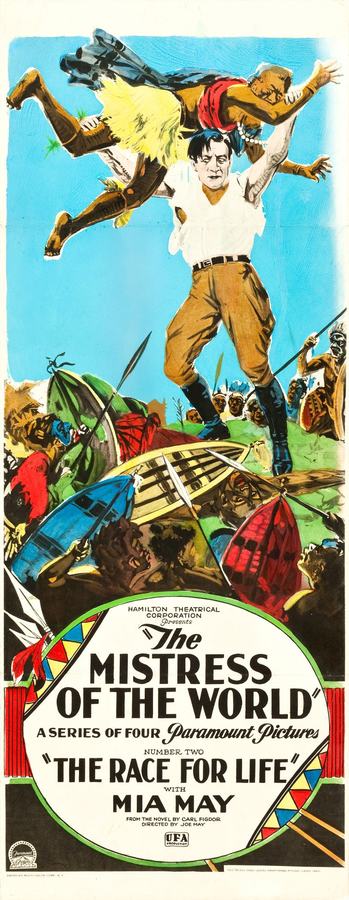
The cinematic landscape of the late 1910s and early 1920s was a fertile ground for grand serials, sprawling narratives that captivated audiences week after week with their episodic thrills and exotic locales. Among these, Joe May’s ambitious eight-part saga, 'Die Herrin der Welt' (The Mistress of the World), stands as a monumental achievement, a testament to the era’s boundless imagination and burgeoning technical prowess. The second installment, ‘Die Herrin der Welt 2. Teil - Die Geschichte der Maud Gregaards’, serves not merely as a bridge between larger plot points but as a compelling, self-contained adventure that deepens the mythology and elevates its titular heroine to an iconic status. This particular chapter, penned by the collaborative genius of Joe May, Richard Hutter, Karl Figdor, and W. Böllinghoff, is a masterclass in silent film storytelling, weaving a tapestry of archaeological discovery, clandestine espionage, and relentless pursuit across breathtaking global settings.
From the moment the film unspools, we are plunged into the vibrant, sun-drenched world of Maud Gregaards, portrayed with captivating intensity by the remarkable Mia May. Her performance is a tour de force, embodying a character who is at once intellectually formidable and emotionally vulnerable. Gregaards is no damsel in distress; she is an archaeologist of profound expertise, driven by an insatiable curiosity and an unwavering moral compass. The narrative opens with Maud’s groundbreaking discovery in an ancient Egyptian tomb, unearthing not just artifacts, but fragments of a cryptic map. This map, we soon learn, points to the legendary 'Eye of Ra,' a relic rumored to possess immense, world-altering power. The stakes are immediately established, not just for Maud, but for the very balance of global power, creating an exhilarating sense of urgency that permeates every frame.
The directorial vision of Joe May is nothing short of audacious. He orchestrates a symphony of visual storytelling, utilizing the nascent techniques of cinema to maximum effect. The exoticism of the settings – from the bustling bazaars of Cairo to the serene yet treacherous landscapes of the Himalayas – is rendered with meticulous detail. May's camera revels in the grandeur of these locations, employing sweeping long shots that emphasize the epic scale of Maud's journey, juxtaposed with intimate close-ups that betray the subtle shifts in her emotional state. The use of elaborate practical sets, particularly in the recreation of ancient tombs and hidden temples, speaks volumes of the production's ambition and commitment to immersive authenticity. One cannot help but draw parallels to later adventure serials, yet May’s work here possesses a unique gravitas, a sense of genuine peril that transcends mere escapism. The visual language is rich, with stark contrasts between light and shadow effectively conveying mood and danger, a hallmark of German Expressionist influences beginning to percolate through the industry.
The ensemble cast surrounding Mia May delivers performances that are equally compelling. Michael Bohnen, as the enigmatic and menacing Dr. Zorn, leader of the nefarious 'Brotherhood of the Crimson Serpent,' is a study in controlled villainy. His presence is a chilling counterpoint to Maud's heroism, a dark intellectual force driven by a hunger for dominion. Bohnen masterfully conveys Zorn's sinister intellect through subtle gestures and piercing gazes, a testament to his prowess in an era devoid of spoken dialogue. Henry Sze, in a role that often embodies the cultural 'other' common in period cinema, provides a nuanced performance, oscillating between ally and potential threat, adding layers of complexity to the unfolding drama. Hans Mierendorff, whose character often serves as a moral anchor or a steadfast companion, lends a grounding presence, his expressions conveying loyalty and concern without ever needing to utter a word. The chemistry among the principal actors, particularly the cat-and-mouse dynamic between May and Bohnen, is palpable, elevating the narrative beyond a simple chase sequence into a psychological battle of wills.
The screenplay, a collaborative effort, is remarkably intricate for a serial film. It manages to balance thrilling action sequences with moments of quiet reflection, allowing the audience to not only witness Maud’s external struggles but also to glimpse her internal turmoil. The plot's reliance on deciphering ancient riddles and navigating a web of international intrigue ensures that the intellectual challenge for the protagonist is as significant as the physical one. This intellectual engagement is a refreshing departure from some of its contemporaries, which often prioritized spectacle over substance. The pacing is relentless, each cliffhanger meticulously crafted to leave audiences clamoring for the next installment. The narrative arc of 'Die Geschichte der Maud Gregaards' is particularly satisfying, culminating in a dramatic confrontation that, while resolving this particular chapter, deftly sets the stage for future revelations in the overarching 'Die Herrin der Welt' saga.
The thematic depth of this installment is noteworthy. Beyond the surface-level adventure, the film delves into profound questions about power, ethics, and cultural appropriation. Maud’s journey forces her to confront not only the external threats posed by the Brotherhood but also the inherent dangers of wielding ancient, almost divine, power. Her struggle is not merely to retrieve an artifact but to ensure its responsible stewardship, to prevent it from falling into hands that would exploit it for nefarious ends. This ethical dimension elevates the film beyond pure escapism, imbuing it with a relevance that resonates even today. The portrayal of various cultures, while occasionally subject to the exoticizing gaze common in early 20th-century cinema, is handled with a degree of respect that suggests a genuine attempt at representing a global tapestry, rather than mere caricature.
Comparing 'Die Herrin der Welt 2' to other films of its era highlights its unique strengths. While films like The Strength of Donald McKenzie offered robust adventure, they often lacked the global scope and intricate mystery present here. Similarly, the dramatic intrigue of V ognyakh shantazha (In the Fires of Blackmail) focused more on personal vendettas than on world-altering stakes. The exoticism found in Die Liebe der Bajadere (The Love of the Bayadere) certainly shares aesthetic sensibilities, but 'Maud Gregaards' transcends mere visual splendor by embedding its adventure in a narrative with far-reaching consequences. It’s the blend of relentless action, intellectual puzzles, and a strong, independent female protagonist that sets this film apart. Maud Gregaards stands as a proto-feminist icon, navigating a world dominated by male ambition and power with her own intelligence and courage.
The technical aspects of the film are equally commendable. The cinematography, though monochrome, is dynamic and expressive, utilizing innovative camera angles and movement to enhance the narrative's tension. The use of intertitles is artful, providing necessary exposition without disrupting the visual flow, often incorporating stylistic elements that reflect the scene's mood. The costume design is exquisite, particularly for Mia May, whose attire evolves with her journey, reflecting both her scholarly background and her adaptability as an adventurer. The sets, whether depicting ancient ruins or bustling urban environments, are rendered with a theatrical flair that is both grand and convincing, transporting the audience completely into Maud's world. The sheer logistical undertaking of filming in various 'international' settings, even if simulated, speaks to the immense resources and creative ambition poured into this production.
One might argue that, like many serials, 'Die Herrin der Welt 2' occasionally verges on the melodramatic, with certain plot conveniences or exaggerated performances. However, these are minor quibbles against the backdrop of its overwhelming success in crafting a compelling and immersive experience. The film embraces the conventions of its genre and era, transforming potential weaknesses into stylistic strengths. The grand gestures, the heightened emotions, and the dramatic reveals are all part of the charm and effectiveness of silent cinema, and May leverages them expertly.
In conclusion, ‘Die Herrin der Welt 2. Teil - Die Geschichte der Maud Gregaards’ is far more than just a chapter in a larger story; it is a meticulously crafted adventure film that stands on its own merits. Mia May’s portrayal of Maud Gregaards is iconic, a beacon of strength and intelligence that continues to inspire. Joe May’s direction is visionary, transforming a globe-trotting quest into a cinematic epic. The film's blend of archaeological mystery, international espionage, and philosophical undertones ensures its enduring legacy as a significant work of early German cinema. It is a testament to the power of silent storytelling, demonstrating how compelling narratives, strong characters, and imaginative visuals could captivate audiences without the aid of dialogue. For enthusiasts of silent film, adventure serials, or simply great storytelling, this installment remains an essential viewing experience, a vibrant window into a bygone era of cinematic grandeur.
Community
Log in to comment.