DbcultAccessing Vault...
Cult Review
Senior Film Conservator
A reel that feels like kerosene poured on a daguerreotype—Patsy's Jim flickers between nickelodeon roustabout and fever-dream scripture, daring you to call its bluff.
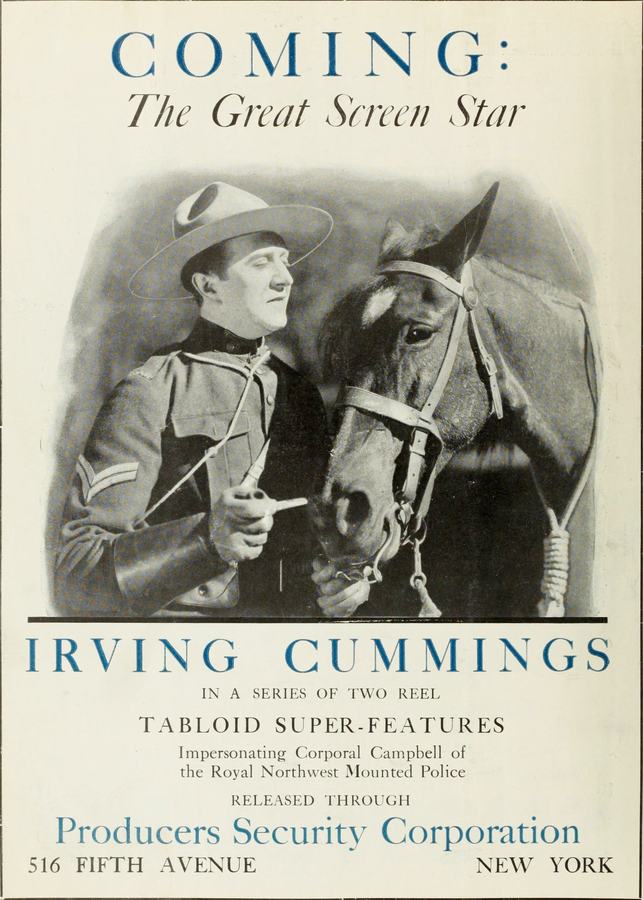
Irving Cummings, later crowned a genial Fox stalwart, here slouches in bowler and fingerless gloves, shuffling destinies with the languid cruelty of a cat toying with sparrows. The film itself—long buried in a Missouri barn beside cyanide-plate posters—survives only in a 43-minute condensation, gate-scarred and nitrate-brittle. Yet what remains is ravishing: sepia tones pooled so thick you could lick them off the screen, intertitles hand-lettered on grocery sacks, and a soundtrack of pure inference (the projector’s own mechanical respiration standing in for prairie wind).
Director-writer Cummings treats celluloid like wet plate: he over-cranks, under-exposes, double-prints lightning flashes onto faces until visages appear soldered from mercury and dust. In the pivotal saloon sequence, every frame is hand-tinted amber except for the ace of spades, daubed toxic green; when that card slides across the felt it seems to carve a phosphorescent wound in reality itself. Compared to the anarchic piston-energy of Keystone Comedies, Patsy's Jim is a séance rather than a sprint—its slapstick bruised, its pratfalls premonitions.
Plot, ostensibly, is linear: drifter enters town, wins girl’s locket, loses his shadow, exits town. But Cummings folds chronology like a crooked poker hand. Flashbacks arrive wearing the same clothes as flashforwards; a grave dug at reel two disgorges its tenant by reel four, now speaking fluent Crow. The effect is less disorienting than narcotic—you surrender logic the way one surrenders to morphine, drifting through tableaux that feel remembered from a previous incarnation: a medicine show lit by guttering tallow, a child reciting the Lord’s Prayer backwards while skipping rope, a gallows that blooms morning-glories the instant the trapdoor drops.
Cummings’ Patsy is a study in erosion: cheeks collapsing like exhausted dunes, voice-title cards riddled with ellipses as though words themselves have tumbleweed gaps. When he smiles—rarely—his teeth match the color of the cards, implying he’s been chewing the deck for sustenance. Opposite him, Leona Hutton’s Nell is less ingénue than weather-event; her close-ups arrive with iris-ins shaped like keyholes, suggesting we’re spying on something sacred and profane. Their sole kiss is obscured by a freeze-frame of a rattlesnake coiled around a hymnal, a visual euphemism so baroque it makes the erotic substitutions of After Sundown seem puritan.
Watch how Cummings shoots the frontier: every horizon line placed one inch too high, sky pressing down like a collapsed lung. Interiors are caves—saloon ceilings so low hats scrape rafters, lanterns hung at eye-level so faces swim up from umber gloom like fish in a pail of night. Compare this claustrophobia to the open-air optimism of Daybreak; here dawn never arrives, only a bruise-colored dusk that deepens without ever quite achieving night.
Under the gambling veneer lurks a pilgrim’s tale inverted: instead of grace, Patsy pursues chance; instead of salvation, he seeks the perfect shuffle where randomness becomes fate. The closing shot—his silhouette dissolving into emulsion grain—plays like a negative of the Ascension: body evaporating while spirit remains rooted to the dusty planet. It’s as if Griffith’s The Long Arm of Mannister were rewritten by a Calvinist with a deck of marked cards.
Where Old Brandis' Eyes externalizes guilt through spectral surveillance, Patsy’s Jim internalizes it until the self becomes its own haunting. The Germanic excess of Die Herrin der Welt 8. Teil - Die Rache der Maud Fergusson finds its minimalist mirror here: both films stage revenge as cosmic roulette, but Cummings needs only a single card to unspool an universe of dread.
Restored by the University of Nevada’s Desert Light lab, the print still bears scorch-marks—frame edges curled like autumn leaves. Those imperfections aren’t flaws; they’re stigmata. When the projector hiccups, Patsy’s face freezes mid-blink, and for eight immortal seconds you witness a man turned inside-out by his own mirage. Contemporary digital smoothness could never replicate that tremor of mortality.
No score survives; exhibitors were instructed to accompany screenings with “one fiddle, one Bible, and a bottle of well-water.” I watched it in a repurposed grain silo outside Tucson while a dust storm scraped the corrugated walls—each gust a percussive commentary, each moan a chord progression. The absence of prescribed music makes the film ontologically volatile: every venue births a new beast.
Nell’s final gesture—placing the winning bullet into her own ribcage rather than the gambler’s—reconfigines the Madonna/whore dyad into something ferally American: a woman who’d rather embody the stake than wager it. Contrast this with the masochistic martyrs of A Woman There Was; Cummings grants his heroine agency so absolute it becomes self-immolation.
Modern viewers will glimpse DNA strands of Lynch’s existential Americana, of the Coens’ cosmic pranks, even of Refn’s neon purgatories—yet none of those descendants commit to silence the way Cummings does. When the end-title “The Rest Is Silence” appears scratched onto a shovel blade, you realize the film has been lecturing you on the philosophy of absence while pick-pocketing your certainties.
Seek out a venue that smells of creosote and lamp oil. Sit where projector beam cuts through dust motes like plankton in an ocean of ink. Let the hum of the carbon-arc lamp replace your pulse. Do not, under any circumstances, shuffle a deck of cards for twenty-four hours afterward; the film has already done it for you, and the next hand might be your last.
Patsy's Jim doesn’t end; it folds itself back into the deck, biding time until some future drifter stakes his soul on the turn of a tarnished nickel. Watch it once, and the west is never empty again—it’s simply waiting to deal.
IMDb —
1931
Community
Log in to comment.