DbcultAccessing Vault...
6/10
Senior Film Conservator
A definitive 6/10 rating for a film that redefined the boundaries of cult cinema. Die Herrin der Welt 4. Teil - König Macombe remains a cornerstone of transgressive art.
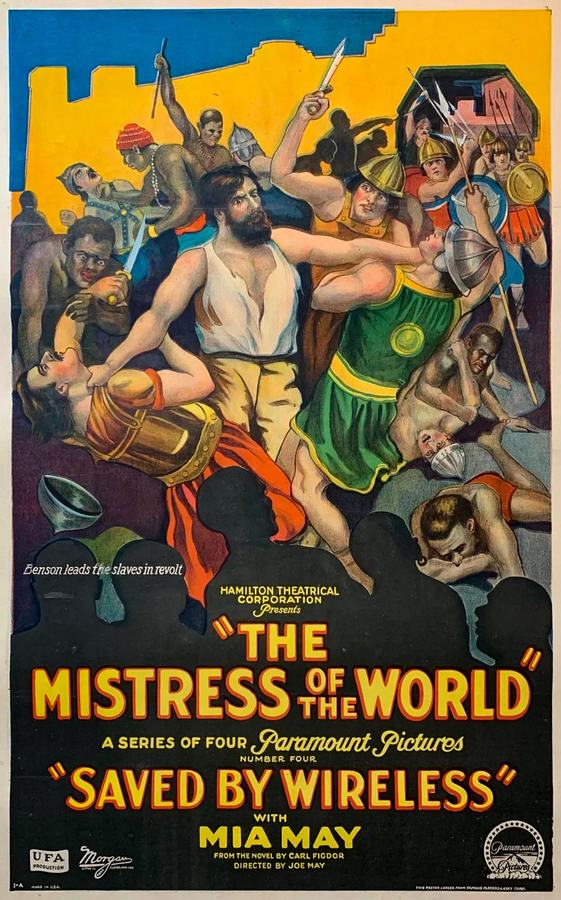
Stepping into the kaleidoscopic world of early 20th-century German cinema, one often encounters narratives of grand ambition, sweeping vistas, and intrepid protagonists. Among these, Joe May's ambitious eight-part serial, Die Herrin der Welt (The Mistress of the World), stands as a monumental achievement, a sprawling tapestry of adventure that captivated audiences across the globe. Today, we turn our gaze to its fourth chapter, Die Herrin der Welt 4. Teil - König Macombe, a segment that exemplifies the serial's unique blend of exoticism, intrigue, and pioneering cinematic technique. This particular installment, penned by a collaborative team including Richard Hutter, W. Böllinghoff, Karl Figdor, and Joe May himself, plunges us deeper into the exploits of Maud Gregaards, a character who, even a century later, remains a fascinating archetype of female agency and intellectual prowess.
The allure of the serial format in the silent era was undeniable. It offered a continuous narrative thread, weaving together suspense, cliffhangers, and character development over weeks, even months. König Macombe, rather than feeling like a mere episodic placeholder, functions as a remarkably self-contained yet intricately linked narrative, building upon the established mythology of Maud Gregaards. It’s here that the film truly shines, presenting not just a thrilling adventure but also a nascent exploration of themes that resonate profoundly even today: the clash of cultures, the rapaciousness of colonial ambition, and the valiant struggle to preserve ancient heritage against overwhelming modern forces. The narrative propels Maud Gregaards (Mia May, in a performance that commands both gravitas and grace) into a remote African kingdom, a realm steeped in ancient traditions and guarded by the wise yet beleaguered King Macombe, portrayed with compelling dignity by Louis Brody. Brody, a pioneering Afro-German actor, brings a remarkable depth to Macombe, imbuing him with both regality and a palpable sense of responsibility towards his people and their sacred trust.
The central conflict revolves around the 'Eye of the Serpent,' a legendary artifact whose immense power and symbolic significance are coveted by a nefarious international syndicate. This shadowy organization, led by the ruthless industrialist Dr. Karst (Michael Bohnen, whose imposing physical presence perfectly conveys a menacing intellect) and his enigmatic, inscrutable associate, the Mandarin (Nien Soen Ling), represents the insidious encroachment of external greed. Their machinations are not merely about acquiring a treasure; they seek to dismantle a culture, to commodify history, and to exploit resources without regard for human cost. May's direction here, while rooted in the theatricality of the era, frequently transcends it, utilizing grand sets and what were, for the time, ambitious location shoots to create a sense of genuine immersion. The jungles feel verdant, the ancient temples imposing, and the palace of King Macombe exudes an authenticity that draws the viewer into its world.
Mia May, as Maud Gregaards, is the undisputed anchor of this sprawling narrative. Her portrayal is a masterclass in silent film acting, conveying a vast spectrum of emotions—from intellectual curiosity and steely determination to moments of vulnerability—without uttering a single word. She is not merely a damsel in distress; she is an active, cerebral protagonist, a woman whose intellect and bravery are her primary weapons. This was a progressive characterization for its time, challenging conventional gender roles in adventure cinema. Her partnership with Dr. Sze, played by Henry Sze, offers a compelling dynamic. Sze is not just a sidekick but an intelligent, resourceful ally, whose quiet competence complements Maud's more audacious spirit. Their collaboration underscores a theme of mutual respect and shared purpose, rather than a simplistic hero-saves-heroine trope. The supporting cast further enriches the tapestry: Bamboula, the formidable local warrior, provides a crucial bridge between Maud’s European sensibilities and the indigenous wisdom of Macombe’s kingdom, while Hedwig Bleibtreu’s presence, though perhaps smaller in this installment, adds a touch of European gravitas, hinting at the broader colonial backdrop against which these adventures unfold.
The visual language of König Macombe is particularly noteworthy. Joe May, a visionary director, employs a distinct aesthetic that balances dramatic close-ups with expansive wide shots, capturing both the intimacy of character emotion and the grandeur of the exotic settings. The use of light and shadow, a hallmark of German Expressionism which was nascent at this time, is employed with subtle effectiveness, particularly in scenes depicting the syndicate's clandestine meetings or the shadowy interiors of ancient ruins. This visual sophistication elevates the film beyond mere pulp adventure, lending it an artistic weight that resonates. While not as overtly stylized as later Expressionist works like The Cabinet of Dr. Caligari, there are moments where the framing and composition speak to a similar desire to convey psychological states and narrative tension through visual means. The set designs, often elaborate and meticulously crafted, transport the audience to a world far removed from their own, a crucial element for the serial's escapist appeal.
The thematic undercurrents of König Macombe are surprisingly complex for a serial. The film grapples with the ethics of discovery and ownership, implicitly critiquing the colonial mindset that viewed foreign lands and their treasures as ripe for exploitation. King Macombe's steadfast determination to protect his people's heritage from external rapacity serves as a powerful counterpoint to Karst's unbridled avarice. Maud Gregaards, as the 'Mistress of the World,' embodies a different kind of global influence—one of understanding, protection, and respect, rather than conquest. This nuanced portrayal of intercultural dynamics, while filtered through a 1919 European lens, offers moments of genuine insight. The film, in its own adventurous way, touches upon the early 20th-century anxieties surrounding globalization and the clash between ancient traditions and modern industrial might. It’s a compelling juxtaposition that gives the action a deeper, more resonant purpose than mere treasure hunting.
The performances across the board are commendable, a testament to the skill of these silent era actors. Louis Brody, in particular, delivers a performance of quiet strength and dignity, making King Macombe a memorable and sympathetic figure. His interactions with Mia May convey a mutual respect that transcends cultural barriers, a testament to the script's attempt at more progressive character dynamics. Michael Bohnen, known for his imposing screen presence, embodies the villainous Dr. Karst with a chilling effectiveness, his silent menace palpable. The intricate dance between these characters, driven by contrasting motivations, provides the narrative with its core dramatic tension. Even minor roles, like those played by Ernst Hofmann, Hans Mierendorff, and Paul Morgan, contribute to the film’s rich texture, creating a believable world populated by distinct personalities.
Comparing Die Herrin der Welt 4. Teil - König Macombe to contemporary adventure serials reveals its pioneering spirit. While other films like The Beloved Traitor might focus on more conventional espionage or romantic intrigue, May’s serial consistently broadened its scope, embracing global settings and complex geopolitical undertones. It ventured into territories, both literal and thematic, that few others dared. The ambition of its production, particularly for a film released in 1919, is striking. The logistical challenges of creating these diverse worlds, from bustling European cities (in other parts of the series) to remote African kingdoms, speaks volumes about May's directorial vision and the resources invested. The detailed set pieces, the elaborate costumes, and the sheer scale of the narrative are testaments to the nascent German film industry's desire to compete on a global stage.
The action sequences, though constrained by the technical limitations of the era, are staged with ingenuity. From daring escapes through ancient traps to tense confrontations in Macombe's palace, the film maintains a brisk pace. The editing, while perhaps not as frenetic as modern blockbusters, is effective in building suspense and conveying movement. The use of intertitles, crucial in silent cinema, is handled with precision, advancing the plot and revealing character thoughts without overwhelming the visual narrative. This careful balance ensures that the audience remains engaged, constantly anticipating the next twist or turn in Maud's perilous journey. In many ways, these early serials laid the groundwork for future adventure franchises, establishing narrative tropes and character archetypes that would echo through decades of cinema, from Indiana Jones to Lara Croft. The very idea of a globe-trotting intellectual adventurer, navigating ancient mysteries and modern dangers, found a vibrant early expression in Maud Gregaards.
The lasting legacy of Die Herrin der Welt 4. Teil - König Macombe, and indeed the entire serial, lies not just in its entertainment value but in its profound influence on the development of German cinema. It showcased the capabilities of UFA, the German film studio, to produce large-scale, internationally appealing films. The collaboration of writers, including Joe May himself, ensured a consistent vision while allowing for varied episodic plots. While films like Hamlet or Macbeth from the same period explored dramatic literary adaptations, Die Herrin der Welt carved a niche for original, high-octane adventure. It demonstrated that German filmmaking was not solely confined to weighty dramas or artistic experiments but could also excel in popular, thrilling entertainment.
In conclusion, Die Herrin der Welt 4. Teil - König Macombe remains a compelling artifact of silent cinema, a testament to the boundless creativity and technical ambition of its creators. It offers a thrilling adventure driven by a formidable female protagonist, set against a backdrop of geopolitical intrigue and cultural clash. While viewed through a contemporary lens, some elements might reflect the sensibilities of its era, the film's core themes of heroism, cultural preservation, and the fight against unchecked greed possess an enduring resonance. Mia May's iconic portrayal of Maud Gregaards, coupled with Joe May's visionary direction and a strong ensemble cast, ensures that this chapter, like the entire serial, stands as a vibrant and significant contribution to cinematic history. It’s a film that not only entertained its original audience but continues to captivate those who delve into the rich, sprawling tapestry of early filmmaking, offering a window into a world of grand adventure and pioneering storytelling.
Community
Log in to comment.