DbcultAccessing Vault...
3.9/10
Senior Film Conservator
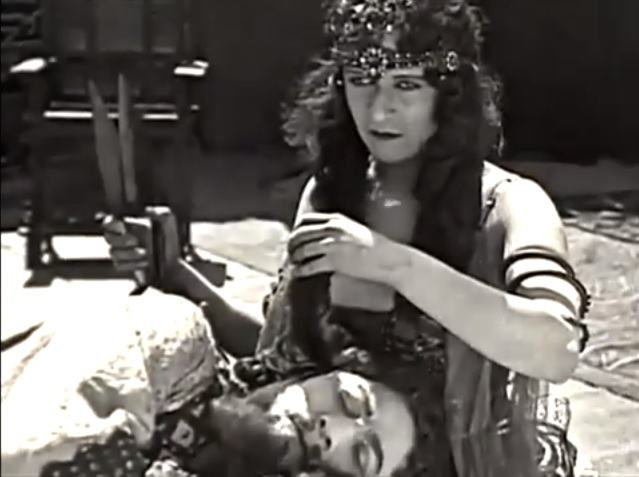
A definitive 3.9/10 rating for a film that redefined the boundaries of cult cinema. Samson and Delilah remains a cornerstone of transgressive art.
The cinematic landscape of the early 1920s was often characterized by a desperate reach for the monumental, a desire to translate the weight of history and myth into the flickering language of light and shadow. Frank Miller’s adaptation of the Samson narrative stands as a staggering testament to this ambition. It is a film that breathes with a primordial vitality, capturing the raw essence of a story that has haunted the human psyche for millennia. While many contemporary features, such as La La Lucille, were content to wallow in the ephemeral joys of light comedy, Miller’s work plunges headlong into the abyss of theological and personal tragedy.
Harry Newman’s portrayal of Samson is a revelation of physical storytelling. In an era where histrionics often substituted for depth, Newman employs a restrained power. His Samson is not a cartoonish strongman but a man burdened by the weight of his own muscles—a physical manifestation of a divine contract he never fully requested. One can see the echoes of this internal conflict in the more grounded dramas of the time, such as Sylvi, where the protagonist is similarly trapped by the expectations of their station. Newman’s eyes convey a haunted vulnerability that makes his eventual submission to Delilah’s charms feel less like a failure of will and more like a desperate search for respite from his own legendary status.
The way Newman moves through the frame is essential to the film's success. He possesses a gravitational pull that dominates every scene, yet Miller is careful to frame him against the vast, unforgiving landscapes of the ancient world. This creates a visual synecdoche for the character's life: a man of immense stature dwarfed by the cosmic forces he serves. This tension is far more compelling than the straightforward heroics found in films like The Mysterious Man of the Jungle, where the physical prowess of the lead is rarely interrogated for its psychological cost.
Opposite Newman is Valia, whose Delilah is a masterclass in the art of the subtle manipulate. She does not play the character as a mustache-twirling villainess, but as a woman whose survival is predicated on her ability to exploit the weaknesses of the powerful. Her performance shares a thematic DNA with the complex female leads in Bondwomen, exploring the limited agency available to women in patriarchal structures. Valia uses her gaze as a weapon, weaving a web of domesticity and desire that slowly constricts around Samson until his strength becomes his greatest liability.
The chemistry between Newman and Valia is palpable, even through the grain of century-old celluloid. Their scenes together are filmed with an intimacy that feels almost voyeuristic, a sharp contrast to the grand, sweeping vistas of the Philistine encampments. In these moments, the film shifts from an epic to a chamber piece, reminding us that the fall of empires often begins in the quietest of rooms. This narrative duality—the macro and the micro—is what elevates the film above mere spectacle. It avoids the pitfalls of The Charming Mrs. Chase, which often prioritizes artifice over emotional resonance.
Technically, the film is a marvel of its time. The cinematography utilizes a sophisticated palette of shadows to delineate moral ambiguity. The Philistine halls are depicted with a decadent, almost claustrophobic opulence, while the scenes of Samson’s solitude are characterized by a harsh, unforgiving light. This visual dichotomy serves to underscore the central theme of the film: the incompatibility of the sacred and the profane. The production design rivals the ambition seen in Soldiers of Fortune, but with a more focused, thematic intent.
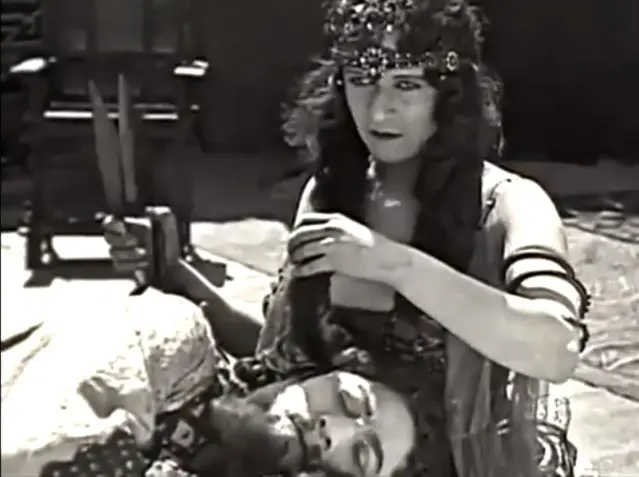
The use of practical effects during the film’s climax—the destruction of the temple—is nothing short of miraculous. Without the crutch of modern digital manipulation, Miller relies on scale models and ingenious camera angles to convey a sense of genuine catastrophe. The crumbling pillars are not just stone and mortar; they represent the collapse of a worldview, the ultimate price of a hubris that dared to challenge the divine. The grit and texture of these scenes bring to mind the visceral realism found in The Burning Soil, where the environment itself becomes a character in the drama.
Frank Miller’s script is surprisingly economical. He understands that in silent cinema, the intertitles must support the image rather than replace it. The dialogue is sparse but impactful, focusing on the philosophical underpinnings of the characters' actions. This is a far cry from the occasionally bloated narratives of Merely Mary Ann, where the pacing can feel disjointed. In *Samson and Delilah*, every scene serves the inevitable march toward the temple of Dagon. There is a sense of predestination that hangs over the film, a 'treibende kraft' or driving force that propels the characters toward their doom.
The inclusion of M.D. Waxman provides a necessary counterpoint to the central duo. As a representative of the established order, Waxman’s character embodies the cold, calculating logic of the state. He is the architect of the trap, the one who recognizes that Samson’s strength cannot be defeated on the battlefield, only through the exploitation of his heart. This political dimension adds a layer of sophistication that is often missing from biblical adaptations, which frequently default to simple morality plays. It shares a certain cynical edge with Ruling Passions, where the machinations of the elite drive the tragedy of the common man.
When comparing this 1922 effort to other genre films of the era, such as The Love Cheat or Her Awful Fix, the difference in gravity is immediate. While those films were designed for the fleeting amusement of a weekend crowd, Miller was clearly aiming for something more permanent. Even compared to the rugged adventurism of Frank Gardiner, the King of the Road, *Samson and Delilah* feels more philosophically dense. It isn't just about the 'what' of the story, but the 'why'—the eternal question of how a man chosen by God can be so easily unmade by a woman chosen by his enemies.
The film’s influence can even be seen in the way it handles the 'wild' elements of its setting. Unlike the more fantastical depictions in The Wild Wild West, the wilderness here is a place of spiritual trial. When Samson wanders the desert, it is not an adventure; it is a penance. The lion he slays is not a monster, but a symbol of the animalistic nature he must overcome—and ultimately fails to master. This thematic depth is underscored by the film’s rhythmic editing, which slows down in moments of contemplation and accelerates during the bursts of violent action, a technique that mirrors the 'treibende kraft' (referencing Treibende Kraft) of destiny itself.
In the final analysis, *Samson and Delilah* is a triumph of silent cinema that demands to be viewed with fresh eyes. It avoids the easy sentimentality of A Bit of Jade and instead embraces the harsh, jagged edges of its source material. Harry Newman and Valia create a screen partnership that is as iconic as it is tragic, reminding us that the greatest battles are not fought with swords, but with the conflicting desires of the human soul.
As the screen fades to black after the final, thunderous collapse of the temple, the viewer is left with a sense of profound exhaustion and awe. Miller has succeeded in making a story that is thousands of years old feel immediate, dangerous, and deeply relevant. It is a film that understands the high cost of greatness and the even higher cost of betrayal. For any serious student of film history, or anyone who simply appreciates the power of a story told with absolute conviction, this is essential viewing. It is a monumental achievement that stands tall among the giants of its era, a cinematic pillar that refuses to fall.
IMDb —
1924
Community
Log in to comment.