DbcultAccessing Vault...
1.2/10
Senior Film Conservator
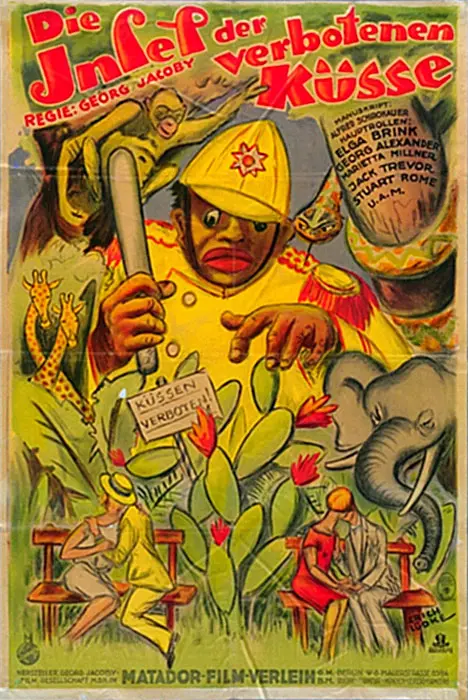
A definitive 1.2/10 rating for a film that redefined the boundaries of cult cinema. Die Insel der verbotenen Küsse remains a cornerstone of transgressive art.
Should you invest your time in a silent melodrama from 1927 that has largely been relegated to the footnotes of film history? Short answer: yes, but only if you are a dedicated enthusiast of Weimar-era aesthetics or a student of Georg Jacoby’s expansive filmography. This film is for those who find beauty in the flickering grain of nitrate and the exaggerated pathos of silent performance; it is not for the modern viewer who demands narrative efficiency or CGI-driven spectacle.
1) This film works because of its lush production design and the evocative chemistry between Marietta Millner and Jack Trevor.
2) This film fails because its pacing often grinds to a halt during the second act, relying too heavily on repetitive intertitles to explain emotions that the actors have already conveyed.
3) You should watch it if you want to see a prime example of how 1920s European cinema attempted to reconcile domestic drama with exotic adventure.
Yes, Die Insel der verbotenen Küsse is worth watching for its historical value and visual composition. It represents a specific bridge in German cinema between the heavy expressionism of the early 20s and the more polished, commercial style that would dominate the 1930s. While the plot is predictable by modern standards, the craft on display remains impressive.
By 1927, Georg Jacoby was a veteran of the industry, having already directed massive projects like The Tiger Band. In 'Die Insel der verbotenen Küsse,' we see a director trying to pivot toward a more intimate, character-driven style of storytelling. He isn't always successful. The film often feels caught between two worlds: the grand scale of an epic and the claustrophobic tension of a drawing-room drama.
Jacoby’s direction is at its best when he lets the camera linger on the faces of his cast. He understands that in silent cinema, a twitch of the lip or a furrowed brow is worth a thousand words. However, he occasionally falls into the trap of over-staging his scenes, making them feel more like a filmed play than a dynamic cinematic experience. It lacks the fluid kineticism found in contemporary works like Madame Doesn't Want Children, yet it maintains a certain gravitas that is hard to ignore.
Marietta Millner is the beating heart of this film. Her performance is a masterclass in silent era restraint. In a scene where she looks out over the ocean, her eyes tell a story of regret and longing that the script by Alfred Schirokauer barely scratches the surface of. She possesses a screen presence that rivals the greats of the era, though she never quite achieved the global fame of some of her peers.
Jack Trevor provides a sturdy, if somewhat stolid, foil to Millner’s emotional depth. His performance is reminiscent of the leading men in Nurse Marjorie—dependable, handsome, but occasionally lacking the fire necessary to make the 'forbidden' romance truly sizzle. The supporting cast, including Georg Alexander and Elga Brink, add necessary texture to the film. Alexander, in particular, brings a lightness to the proceedings that prevents the film from sinking under the weight of its own melodrama.
The cinematography in 'Die Insel der verbotenen Küsse' is where the film truly shines. The use of light and shadow to delineate the 'civilized' world from the 'island' world is striking. In the European scenes, the lighting is flat, sharp, and unforgiving. Once the narrative shifts to the island, the lighting becomes softer, more diffused, and inherently more dangerous. It creates an atmosphere of dreamlike unreality.
This visual shift is a common trope in films of this era, such as L'île enchantée, but Jacoby and his cinematographer use it to great effect here. The 'island' isn't just a place; it's a psychological state. The sets are meticulously designed, blending natural beauty with an artificiality that underscores the characters' inability to truly go 'native.' It’s a beautiful film to look at, even when the story falters.
Alfred Schirokauer was a prolific writer, and his fingerprints are all over this production. The script is heavy on thematic duality. It constantly pits the 'pure' against the 'corrupt,' the 'old world' against the 'new.' However, this binary approach makes the film feel incredibly dated. The way it handles its exotic setting is, through a 21st-century lens, undeniably colonialist and reductive.
But as a critic, one must judge the work within its context. In 1927, this was high drama. The film deals with 'forbidden' themes that were genuinely scandalous for the time. It doesn't have the spiritual weight of a film like Christus, but it occupies a similar space in the cultural zeitgeist—attempting to use the medium of film to explore the limits of human morality. It works. But it’s flawed.
If there is one area where the film truly struggles, it is the pacing. At over 100 minutes, the narrative feels stretched thin. There are long stretches where very little happens, and the film relies on the novelty of its setting to carry the audience's interest. It lacks the tautness of In the Balance or the whimsical energy of Im weißen Rößl.
There is a specific scene in the middle of the film—a long dinner sequence on the island—that perfectly encapsulates this issue. The tension is palpable, but the sequence goes on for several minutes longer than necessary, repeating the same emotional beats until they lose their impact. It is a film that would have benefited immensely from a more ruthless editor.
Pros:
- Stunning visual composition and use of light.
- A nuanced lead performance by Marietta Millner.
- Fascinating historical insight into Weimar-era social anxieties.
- High production values for the time period.
Cons:
- Glacial pacing in the middle chapters.
- Dated and occasionally problematic portrayal of exotic locales.
- Over-reliance on intertitles to explain basic plot points.
'Die Insel der verbotenen Küsse' is a ghost of a film. It haunts the periphery of the silent era, offering a glimpse into a style of filmmaking that was soon to be silenced by the arrival of 'talkies.' It is not a masterpiece, but it is a deeply competent and visually arresting piece of work. It is a film of textures—the grain of the sand, the silk of a dress, the sweat on a brow. If you can surrender yourself to its slow, rhythmic pulse, you will find a rewarding experience. It is a flawed gem, but a gem nonetheless. It’s a film that reminds us that even in 1927, we were already obsessed with the idea of escaping ourselves, only to find that we are the one thing we can never leave behind.
IMDb 2.6
1926
Community
Log in to comment.