DbcultAccessing Vault...
8.1/10
Senior Film Conservator
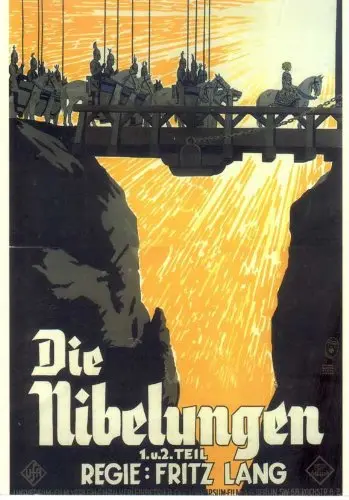
A definitive 8.1/10 rating for a film that redefined the boundaries of cult cinema. Die Nibelungen: Siegfried remains a cornerstone of transgressive art.
The cinematic landscape of the 1920s, a crucible of innovation and artistic fervor, bore witness to the birth of countless masterpieces, yet few resonate with the sheer monumental ambition and visionary execution of Fritz Lang's Die Nibelungen: Siegfried. This isn't merely a film; it is a colossal tapestry woven from ancient Germanic myths, brought to life with an architectural grandeur and a meticulous eye for detail that remains breathtaking nearly a century later. To approach Lang's epic is to confront a foundational text of fantasy cinema, a work that not only defined its era but laid down blueprints for generations of filmmakers to follow.
Lang, in collaboration with his frequent writing partner Thea von Harbou, delved deep into the venerable Nibelungenlied, extracting its essence to craft a narrative of unparalleled scope and tragic inevitability. The story, at its core, chronicles the journey of Siegfried (Paul Richter), son of King Siegmund of Xanten, a hero whose very name is synonymous with valor and mythical prowess. His initial quest, ostensibly a romantic one, to seek the hand of the beautiful Princess Kriemhild (Margarete Schön) from her brother, King Gunther (Bernhard Goetzke) of Burgundy, quickly unfurls into a sprawling saga of destiny, betrayal, and the inexorable march towards a fated doom. The genius of Lang and von Harbou lies in their ability to distill the sprawling, often contradictory, source material into a coherent, dramatically potent cinematic experience, focusing on the human (and superhuman) elements that drive the epic forward.
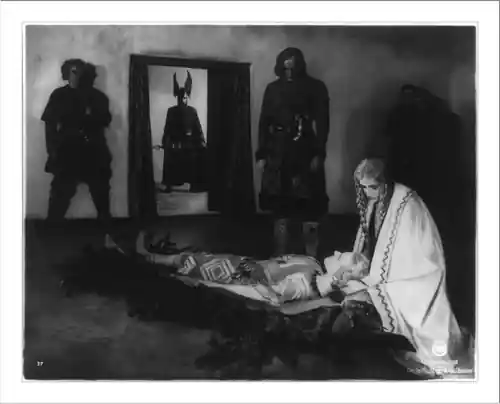
What immediately strikes the viewer, even today, is the film's utterly audacious visual style. This is German Expressionism writ large, a testament to the power of mise-en-scène and architectural design to convey mood, character, and narrative. Lang's sets are not mere backdrops; they are characters in themselves, towering structures that dwarf the human figures, emphasizing the mythic scale of the events unfolding. The forest where Siegfried slays the dragon Fafnir, for instance, is a geometrically precise, almost abstract arboreal labyrinth, a far cry from naturalistic depiction. This deliberate artificiality imbues the film with a dreamlike, almost operatic quality, establishing a world distinct from our own, where fate is visibly etched into the very landscape.
The legendary sequence involving the dragon Fafnir is a masterclass in early special effects and practical filmmaking. Rather than relying on then-nascent photographic tricks, Lang opted for a colossal, articulated dragon puppet, operated by a team of technicians. The sheer physicality of this creation, its movements ponderous and menacing, lends an incredible weight to Siegfried's confrontation. The subsequent bathing in the dragon's blood, granting Siegfried invulnerability save for a single spot, is rendered with a stark, almost ritualistic simplicity that underscores its fateful significance. This scene, more than any other, cemented Siegfried's status as a quintessential heroic figure, a benchmark against which all subsequent fantasy heroes would be measured.
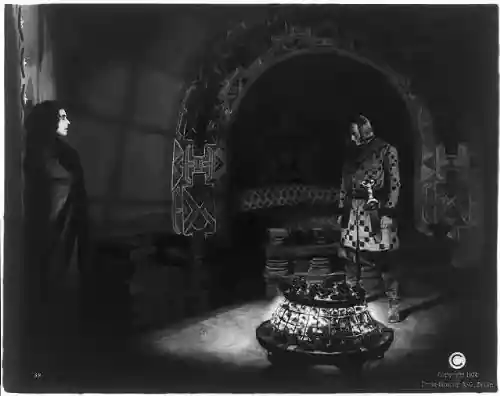
Lang's direction is characterized by an almost obsessive control over every frame. His compositions are meticulously balanced, often employing deep focus and dramatic lighting to create stark contrasts and emphasize the monumental scale. The pacing, while deliberate, is never languid; instead, it builds with a relentless, inexorable rhythm, mirroring the unfolding of destiny itself. His use of visual motifs—the recurring imagery of towering gates, vast halls, and the symbolic serpent—creates a cohesive aesthetic language that guides the audience through this complex mythological world. In an era where many films, like Piccadilly Jim or Hoppla, Herr Lehrer, focused on more intimate, character-driven narratives or lighthearted comedies, Lang's unflinching commitment to epic tragedy and grand spectacle set Die Nibelungen: Siegfried apart as a truly singular achievement.
The performances, while adhering to the more theatrical conventions of silent cinema, are remarkably effective. Paul Richter embodies Siegfried with a blend of youthful vigor, unwavering courage, and an almost naive nobility that makes his eventual downfall all the more tragic. Margarete Schön's Kriemhild is initially portrayed with a serene beauty, her innocence a stark contrast to the dark machinations that will later consume her. Bernhard Goetzke's King Gunther is suitably regal and conflicted, while Theodor Loos, as Hagen Tronje, delivers a performance of chilling, understated malevolence, his piercing gaze and stoic demeanor hinting at the dark heart of the Burgundian court. The supporting cast, including Hanna Ralph as Brunhild and Georg John as the Nibelung dwarf Alberich, contribute significantly to the film's rich tapestry of characters, each playing their part in the unfolding tragedy.

The narrative is not merely a succession of heroic deeds but a profound exploration of human folly, pride, and the destructive power of ambition. Siegfried's invulnerability, a gift of the gods, ironically becomes the very instrument of his undoing, highlighting the ancient Greek concept of hubris. The complex web of alliances, deceptions, and broken vows at the Burgundian court—set in motion by Siegfried's arrival and Gunther's desire for the formidable Queen Brunhild—foreshadows the inevitable tragedy. Lang masterfully uses visual cues and subtle character interactions to build this tension, making the audience keenly aware of the impending doom, even as Siegfried revels in his triumphs.
Comparing the scope and dramatic weight, one might find a distant echo in a film like The Indian Wars, which also attempts to capture a grand historical struggle, albeit in a different context and with a vastly different aesthetic. However, Lang's film elevates its source material to a mythic plane that few others have achieved. The meticulous attention to detail extends beyond the sets to the costumes, props, and even the carefully choreographed crowd scenes, all contributing to an immersive experience. The sheer scale of the production was unprecedented for its time, requiring enormous resources and a dedicated team of artisans, a testament to Lang's persuasive vision and the financial backing of UFA.
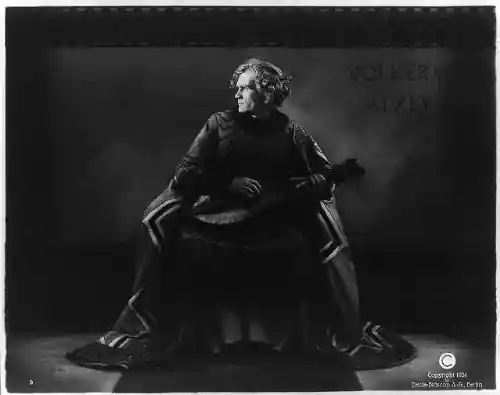
The film's impact on subsequent cinema is undeniable. Its visual vocabulary, particularly its use of stylized sets and dramatic lighting, profoundly influenced not only other German Expressionist works but also the burgeoning fantasy genre. The depiction of mythical creatures, the heroic archetype, and the exploration of grand, operatic themes set a high bar for epic filmmaking. One can trace its lineage through films like Der Tänzer, which, while focusing on a different narrative, shares a certain theatricality and dramatic intensity, though perhaps not the same mythic grandeur. Lang's meticulous world-building and narrative structure provided a template for how to adapt complex literary sources into compelling visual stories.
Beyond its technical and artistic achievements, Die Nibelungen: Siegfried is a powerful meditation on fate, heroism, and the cyclical nature of violence. The narrative, even in this first part, hints at the dark retribution that will follow, transforming a tale of love and valor into one of vengeful tragedy. The film’s exploration of power dynamics, the fragility of honor, and the destructive consequences of deceit resonate across centuries, making it a timeless work. The contrast between Siegfried's almost innocent pursuit of love and the political machinations of the Burgundian court provides a rich dramatic tension that keeps the audience captivated.
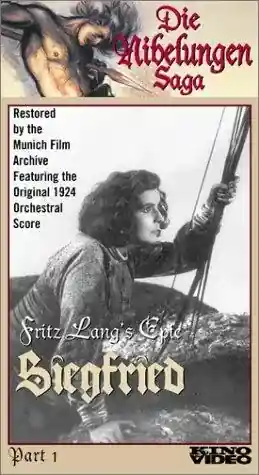
The influence of Die Nibelungen: Siegfried stretches far beyond the silent era. Its grand scale and ambition can be seen as a precursor to modern blockbusters, particularly those in the fantasy genre. The intricate production design, the use of larger-than-life characters, and the commitment to creating a fully realized mythical world have left an indelible mark. Films like Almost Heroes, though comedic, still tap into archetypal hero journeys, albeit with a different tone, highlighting how deeply these foundational myths have permeated storytelling. Lang’s film, however, treats its subject with a gravitas and artistic seriousness that is rarely matched.
The collaborative dynamic between Fritz Lang and Thea von Harbou is particularly noteworthy. Their partnership yielded some of the most iconic films of the Weimar era, and Die Nibelungen: Siegfried stands as a testament to their shared vision. Von Harbou’s screenplay is remarkably structured, balancing the epic sweep with moments of intimate drama, ensuring that the characters, despite their mythic stature, remain relatable in their desires and flaws. This balance is crucial in preventing the film from becoming merely a spectacle; it maintains its emotional core amidst the grandeur.
Viewing Die Nibelungen: Siegfried today is not just a historical exercise; it is an immersive experience into a bygone era of filmmaking where ambition knew few bounds. The meticulous restoration efforts have allowed contemporary audiences to appreciate the film's visual splendor in a way that was perhaps not possible for decades. The intricate details of the costumes, the subtle expressions of the actors, and the sheer scale of the set pieces are all brought to vivid life, making it clear why this film remains a cornerstone of cinematic history.
In conclusion, Fritz Lang's Die Nibelungen: Siegfried is more than a film; it is a cinematic landmark, a towering achievement that defies easy categorization. It is a synthesis of art, mythology, and technical prowess, a work that continues to captivate, inspire, and provoke thought. Its enduring legacy is a testament to the visionary genius of its creators and its profound impact on the language of cinema. For any serious student of film, or indeed anyone with an appreciation for epic storytelling and breathtaking visuals, this silent masterpiece remains an essential, unforgettable journey into the heart of myth and the dawn of cinematic art.
IMDb 7
1930
Community
Log in to comment.