DbcultAccessing Vault...
Cult Review
Senior Film Conservator
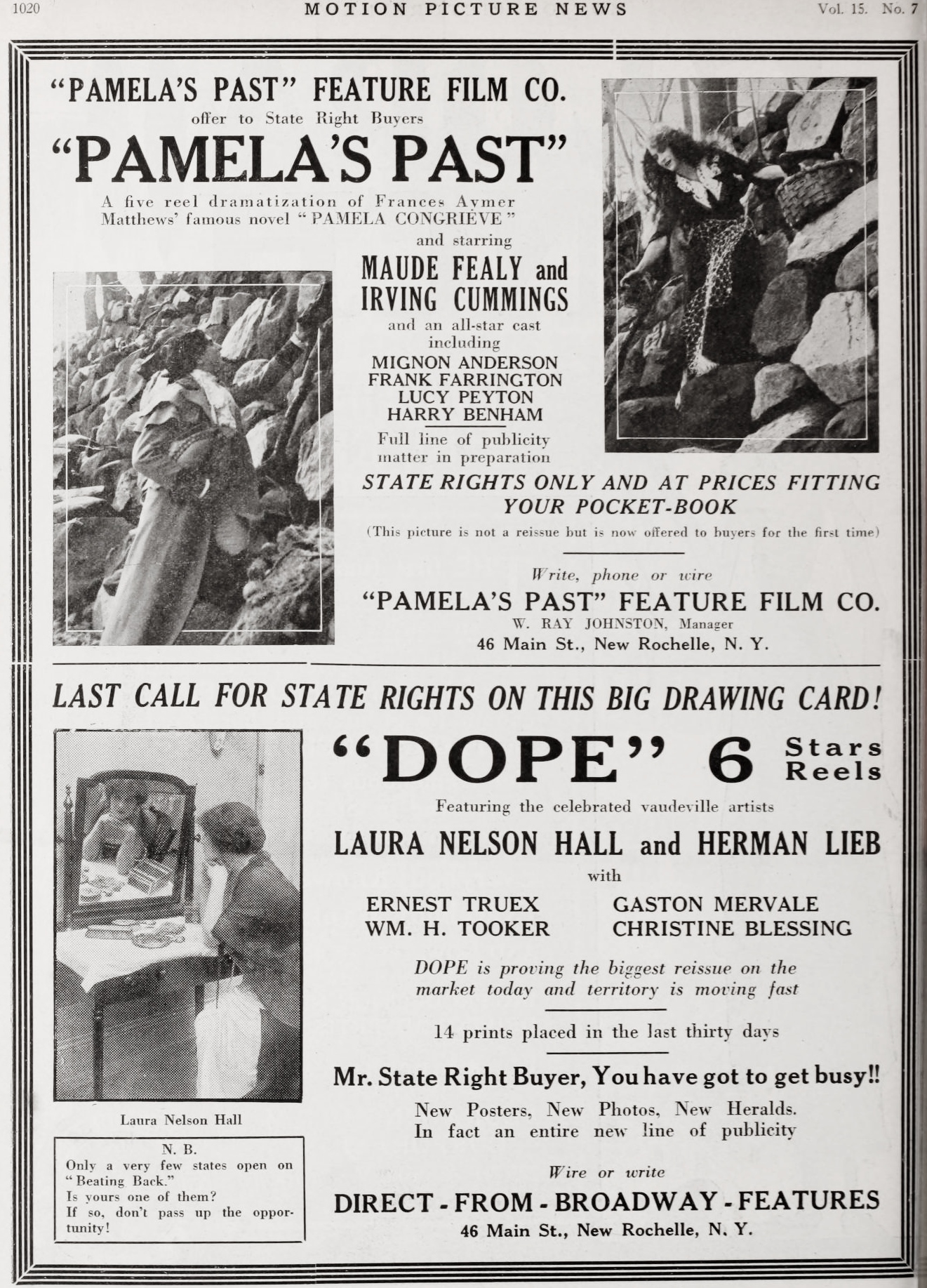
In the annals of early cinema, where melodrama often reigned supreme and narratives frequently leaned into the saccharine or the overtly moralistic, a film like 'Dope' emerges as a stark, almost brutal, anomaly. Released in 1917, it plunges headfirst into the murky, often-ignored underbelly of society, daring to confront the harrowing realities of drug addiction with an unflinching gaze that was both pioneering and profoundly unsettling for its time. This isn't a mere cautionary tale; it's a visceral, deeply empathetic exploration of human frailty, the seductive whispers of escape, and the devastating consequences that echo through every facet of a life consumed by vice.
The film centers on Arthur Sterling, portrayed with a compelling vulnerability by William H. Tooker. Sterling is introduced as a burgeoning sculptor, a sensitive soul brimming with artistic potential, yet simultaneously plagued by the insidious doubts and pressures inherent in creative pursuits. His struggle with inspiration, the relentless quest for that elusive spark of genius, makes him ripe for exploitation. Into this void steps Silas Thorne, a character played with a chilling, understated menace by Gaston Mervale. Thorne isn't a cartoonish villain; he's a smooth operator, a serpent in the garden who offers Sterling not just a drug, but a false promise of liberation, a shortcut to unlocking the profound depths of his artistic soul. This initial seduction, depicted with a subtle insidious creep rather than an overt act of evil, sets the stage for Sterling's precipitous fall.
What 'Dope' achieves with remarkable efficacy is its portrayal of the gradual, yet inexorable, erosion of Sterling's being. Initially, the opium appears to be a benevolent muse, momentarily granting him bursts of inspiration, a heightened sense of perception. His studio, once a sanctuary of creativity, transforms, mirroring his internal decay. The vibrant light that once streamed through its windows gives way to a perpetual twilight, a metaphor for the encroaching darkness within him. Tooker's performance here is particularly poignant, capturing the fleeting moments of drug-induced euphoria that quickly devolve into twitching desperation, the hollowed eyes, the trembling hands, the slow, agonizing surrender of his very essence.
The film doesn't shy away from the grim realities of addiction. We witness Sterling's desperate machinations to secure his next dose, his descent into the squalid, smoke-filled opium dens that represent the nadir of his existence. These scenes are rendered with a stark realism that must have been shocking for audiences of the era. The cinematography, though nascent by modern standards, effectively uses shadows and close-ups to convey the claustrophobia and moral decay of these environments. One could draw parallels here to the social realism attempted in later films like Sperduti nel buio, though 'Dope' pushes the boundaries of its subject matter even further into the realm of the truly taboo.
Crucial to the narrative's emotional weight are the characters orbiting Sterling's tragedy. Eleanor Vance, his steadfast fiancée, played with a compelling blend of grace and anguish by Laura Nelson Hall, embodies the collateral damage of addiction. Her transformation from hopeful partner to a woman consumed by heartbreak and worry is subtly yet powerfully conveyed through her expressions and body language. Hall avoids histrionics, instead portraying a quiet, internal suffering that is perhaps more devastating than overt displays of grief. Her unwavering love, even in the face of Sterling's increasingly erratic and cruel behavior, serves as a poignant reminder of what he stands to lose, and what he has already lost.
Dr. Alistair Finch, a compassionate physician portrayed by Ernest Truex, represents the voice of reason and the struggle for intervention. Truex imbues Finch with a quiet authority and a genuine concern that makes his efforts to save Sterling all the more heartbreaking when they are met with resistance. His medical knowledge and moral compass provide a necessary counterpoint to Thorne's destructive influence. Christine Blessing, perhaps as Sterling's concerned mother or a close family friend, also delivers a performance steeped in a deep, maternal sorrow, her silent pleas and tearful gazes underscoring the universal pain addiction inflicts upon loved ones. Herman Lieb's contribution, though perhaps a smaller role, likely adds to the tapestry of urban decay or the societal forces at play, grounding the film in a broader social context.
'Dope' is a fascinating study in early cinematic technique. While lacking the elaborate visual effects or complex camera movements of later eras, it employs the tools at its disposal – lighting, editing, and the raw power of facial expression – with considerable skill. The use of intertitles, far from being a mere plot device, often serves as a moralistic chorus, punctuating Sterling's decline with stark pronouncements on the dangers of his chosen path. The film's pacing, initially measured, accelerates with Sterling's addiction, mirroring the frantic, desperate rhythm of his life. The editing becomes choppier, the cuts more abrupt, reflecting the fractured state of his mind.
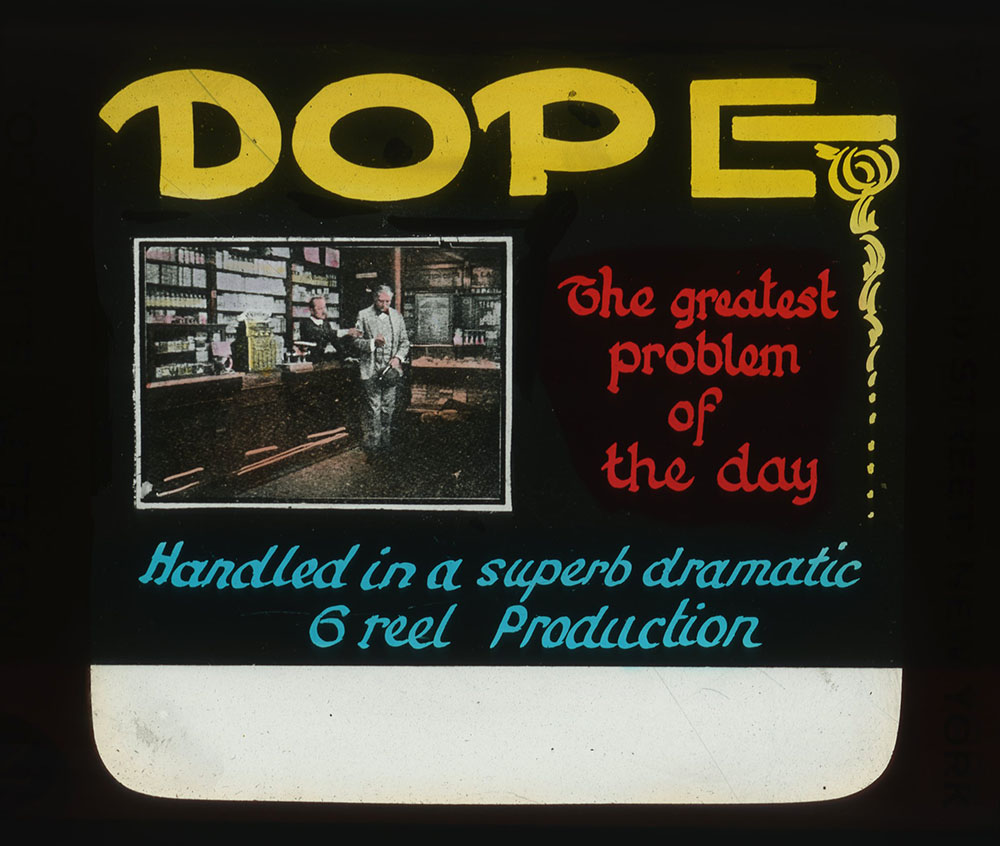
One of the most remarkable aspects of 'Dope' is its daring social commentary. In an era when such topics were often swept under the rug or sensationalized for cheap thrills, this film attempts a more nuanced, albeit still dramatic, exploration of addiction as a societal ill rather than just a personal failing. It implicitly critiques the conditions that lead individuals like Sterling to seek solace in drugs – the pressures of artistry, the loneliness of the urban landscape, the ease with which illicit substances could be obtained. While films like The Active Life of Dolly of the Dailies might have explored the challenges of modern life, 'Dope' delves into its destructive undercurrents with a far darker lens.
The film's climax is a harrowing, protracted battle for Sterling's soul. It's not a sudden epiphany, but a grueling, agonizing struggle for sobriety, depicted with a realism that would resonate even today. The withdrawal symptoms, the psychological torment, the overwhelming temptation to relapse – these are not glossed over. Tooker's portrayal of this internal war is truly remarkable, conveying the sheer physical and mental agony with an intensity that transcends the limitations of silent film. The audience is made to feel every tremor, every bead of sweat, every moment of despair and fleeting hope.
The resolution, while offering a glimmer of hope, is far from simplistic. It suggests that redemption is not a destination but a continuous journey, a daily battle won through sheer force of will and the unwavering support of others. Eleanor's steadfast love becomes not a miraculous cure, but a crucial anchor, a reason for Sterling to fight. Dr. Finch's continued guidance underscores the importance of professional help and compassionate understanding. This nuanced ending elevates 'Dope' beyond mere propaganda, transforming it into a more profound statement on human resilience and the complexities of overcoming profound personal demons.
Comparing 'Dope' to other films of its era, its boldness truly stands out. While many films, like perhaps Neptune's Daughter, focused on escapist fantasies or lighthearted romance, 'Dope' chose to confront a grim social reality head-on. Even dramas like East Lynne, while dealing with moral failings, often did so through the lens of societal scandal rather than the raw, internal struggle of addiction. The willingness of Joseph Medill Patterson and Herman Lieb, the writers, to tackle such a thorny subject with a degree of psychological insight is commendable.
'Dope' is more than just a historical curiosity; it's a vital piece of cinematic history that showcases the nascent power of film to engage with complex social issues. It challenged audiences to look beyond the glittering facades of urban life and confront the darkness lurking beneath. Its impact on subsequent films exploring addiction, even decades later, cannot be overstated. The film's enduring power lies in its ability to evoke empathy for its flawed protagonist, to portray the devastating toll of addiction not just on the individual but on the entire fabric of their relationships and community.
In an age dominated by spectacle and often simplistic narratives, 'Dope' chose a path less traveled, a path of gritty realism and profound human drama. It stands as a testament to the courage of early filmmakers to use their new medium as a tool for social commentary, a mirror held up to society's less flattering reflections. For anyone interested in the evolution of cinema, the history of social issues on screen, or simply a compelling human story, 'Dope' remains an essential, albeit unsettling, viewing experience. Its influence, though perhaps subtle, undeniably paved the way for more nuanced portrayals of addiction in film, distinguishing it as a significant, pioneering work that dared to speak truth to power, even in silence.
The performances, particularly from Tooker and Hall, transcend the typical melodramatic trappings of the era, lending a gravitas and emotional authenticity that elevates the material. Mervale's Thorne, too, is a memorable antagonist, not for overt villainy but for his quiet, insidious manipulation. The film's ability to create such nuanced character arcs and provoke such strong emotional responses without spoken dialogue is a powerful reminder of the artistry inherent in the silent era. It demonstrates that the most potent stories are often those that confront the uncomfortable truths of the human condition, even when those truths are delivered in a world without sound.
Ultimately, 'Dope' is a stark, powerful, and deeply moving cinematic experience. It is a film that demands engagement, not merely passive observation. It forces its audience to confront the destructive nature of addiction and to ponder the societal responsibilities in both its genesis and its potential mitigation. Its place in film history is assured not just for its subject matter, but for its bold, artful execution of a story that remains tragically relevant, a timeless echo of human vulnerability and the enduring struggle for redemption.
IMDb 5.3
1897
Community
Log in to comment.