DbcultAccessing Vault...
Cult Review
Senior Film Conservator
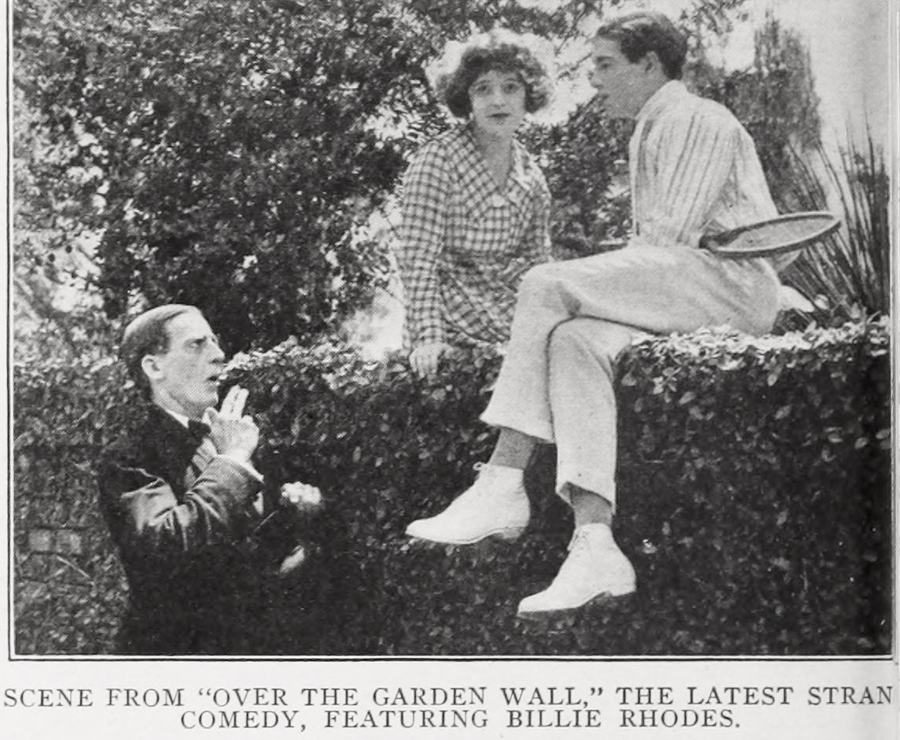
Stepping into the flickering glow of early cinema, one occasionally unearths a gem that, despite its age, still sparkles with an irreverent wit and a surprisingly modern sensibility. Such is the case with 'Over the Garden Wall', a silent film from 1919 that, on its surface, appears to be a quaint romantic comedy, but beneath the charming veneer, pulsates with a delightfully subversive spirit. It’s a testament to the enduring power of narrative that a century later, its simple premise of love conquering all—even a stubborn father and the village jail—can still elicit a knowing smile.
The film introduces us to Mary, a character who, even in an era often characterized by more demure heroines, stands out for her sheer force of will. She is not merely the damsel in distress; she is the architect of her own destiny, a proactive protagonist who refuses to let societal expectations or paternalistic control dictate her romantic fate. Her beloved, Jack, finds himself in the unenviable position of a young man smitten, yet ensnared by the law—specifically, the village jail, courtesy of a trumped-up speeding charge instigated by Mary's disapproving father. This is where the film truly begins to unfurl its comedic wings, moving beyond the conventional boy-meets-girl trope into something far more inventive and, dare I say, anarchic.
Mary's response to this predicament is anything but passive. Instead of weeping or pleading, she orchestrates a remarkably audacious plan. Her targets? Two unwitting burglars, whose criminal enterprise is swiftly co-opted for a far nobler, if equally illegal, cause. This ingenious plot point immediately elevates the film from a mere domestic drama to a caper, showcasing Mary's resourcefulness and a delicious disregard for conventional morality when love is on the line. The sequence of her 'recruitment' of these reluctant henchmen must have been a highlight for audiences of the time, blending suspense with a palpable sense of comedic absurdity.
The successful liberation of Jack is, of course, merely the first act of Mary's grand design. The true stroke of genius, and the film's most memorable comedic twist, comes with the immediate incarceration of her own father. This reversal of fortunes, placing the oppressive patriarch behind the very bars he used to thwart his daughter's happiness, is a moment of pure, unadulterated cinematic satisfaction. It's a delightful, if perhaps ethically dubious, form of poetic justice, allowing the audience to revel in the comeuppance of the antagonist. This particular narrative beat reminds one of the playful subversions found in other early comedies, where authority figures are often the butt of elaborate pranks or unexpected reversals of power. One might even draw a parallel to the mischievous spirit seen in films like The Kid Is Clever, where youthful ingenuity often outmaneuvers adult obstinacy.
The climax, however, is where 'Over the Garden Wall' truly cements its place as a unique piece of early comedic filmmaking. With Jack free and Dad imprisoned, the final hurdle remains: gaining the father's consent to the wedding. How does one persuade an unyielding figure from behind bars? With a smudge-pot, of course. The image of Mary and her accomplices literally 'smoking out' the father until he capitulates to the marriage proposal is an inspired piece of physical comedy. It's a whimsical, almost surreal, method of negotiation that perfectly encapsulates the film's playful spirit. This scene, more than any other, highlights the film's willingness to embrace the outlandish for comedic effect, a trait that would resonate through decades of slapstick and situational humor.
The performances are central to selling this delightful absurdity. Billie Rhodes as Mary is a revelation. Her portrayal imbues Mary with a vibrant energy and an unwavering determination that makes her audacious actions entirely believable within the film's comedic framework. She's not just pretty; she's powerful, a woman who knows what she wants and isn't afraid to bend the rules—or break them—to get it. Her expressive face and dynamic physicality would have been crucial in conveying her character's inner turmoil and outward resolve without the benefit of spoken dialogue. One can imagine her subtle glances and determined strides speaking volumes to the audience, drawing them into her spirited crusade.
Cullen Landis, as the beleaguered but ultimately triumphant Jack, provides the perfect foil. His character's initial helplessness in jail makes Mary's rescue all the more heroic, and his subsequent joy and participation in the 'smudge-pot' persuasion lend a charming camaraderie to their romantic pairing. Landis's performance, likely relying on broad gestures and earnest expressions typical of the era, would have effectively conveyed his character's plight and his deep affection for Mary. The chemistry between Rhodes and Landis, even in the absence of dialogue, must have been palpable, driving the romantic engine of the plot forward with convincing sincerity.
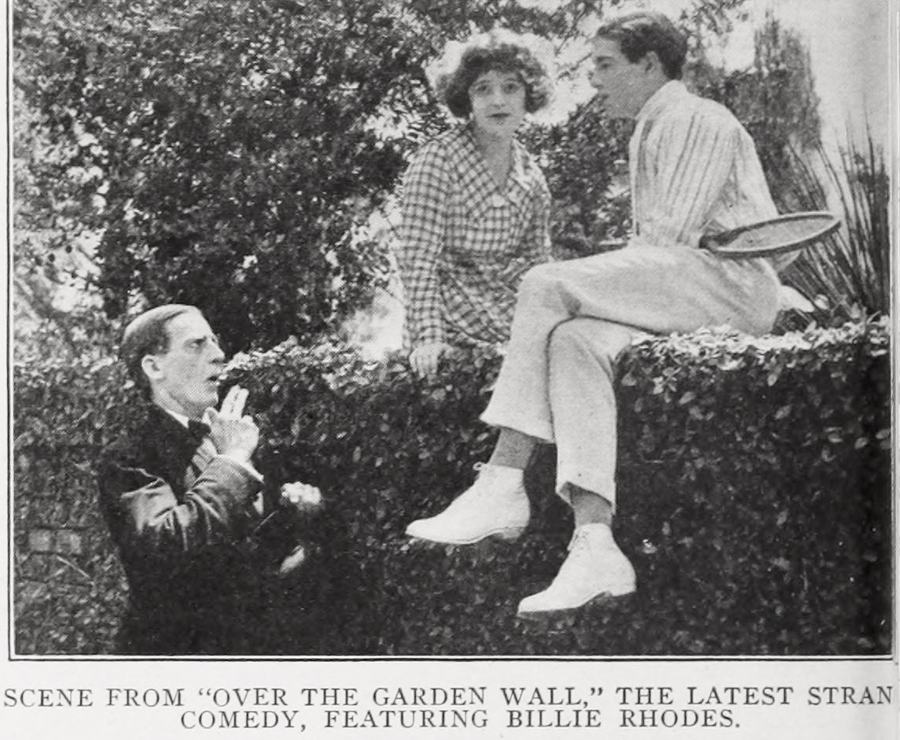
'Over the Garden Wall' is more than just a comedic romp; it’s a fascinating snapshot of early 20th-century entertainment and societal attitudes. The film implicitly touches upon themes of youthful rebellion against elder authority, the sometimes arbitrary nature of justice, and the burgeoning idea of female agency. While not a radical feminist text, Mary’s character embodies a nascent spirit of independence that was undoubtedly appealing to audiences of the time, especially as women were gaining more rights and a stronger voice in society. It’s a subtle nod to the changing times, woven into a seemingly simple love story.
Technically, the film, as a product of 1919, would have relied heavily on intertitles to convey dialogue and crucial plot points, a technique that required concise writing and clear exposition. The cinematography, while perhaps rudimentary by today's standards, would have focused on clear framing to convey action and emotion, utilizing close-ups for emphasis on the actors' expressive faces. The pacing, though often slower than modern films, would have been carefully constructed to build comedic tension and release, especially during the jailbreak and smudge-pot scenes. The ingenuity of silent filmmakers to tell compelling stories with such limited tools is always remarkable, and 'Over the Garden Wall' seems to be a fine example of this artistry.
Comparing it to other films of its era, one might see echoes of its romantic defiance in the intense emotional stakes of a film like Kiss or Kill, though 'Over the Garden Wall' leans heavily into comedy rather than overt drama. The lighthearted approach to law and order, and the clever subversion of expectations, also brings to mind the often-ingenious plots found in films like Mister 44, where intricate schemes drive the narrative. It’s a period where filmmakers were still defining the language of cinema, experimenting with what could be achieved visually and narratively, and 'Over the Garden Wall' clearly benefits from this fertile creative environment.
What truly makes 'Over the Garden Wall' stand out, beyond its specific plot points, is its embrace of a fundamental human desire: the triumph of love and personal will against external obstacles. It taps into that universal fantasy of taking matters into one's own hands, especially when faced with perceived injustice. The film doesn't preach; it simply entertains, inviting the audience to cheer for Mary's audacious spirit and Jack's eventual freedom. It's a delightful escapist fantasy, perfectly crafted for an audience seeking a lighthearted reprieve from the complexities of everyday life.
The film's title itself, 'Over the Garden Wall,' evokes a sense of innocent transgression, of peering into forbidden spaces, or perhaps of simply finding a way around an obstacle. It's a charming metaphor for Mary's entire approach to her predicament: rather than confronting the wall head-on through conventional means, she finds an unconventional route 'over' it. This metaphorical interpretation adds another layer to the film's seemingly straightforward narrative, suggesting a deeper, more whimsical understanding of problem-solving. It’s a film that, in its simplicity, offers a surprising depth of character and thematic resonance.
In an era when cinema was rapidly evolving, 'Over the Garden Wall' likely served as a pleasant diversion, a comedic balm for audiences still grappling with the aftermath of global conflicts and societal shifts. Its optimistic tone and triumphant resolution would have been particularly welcome. While it may not possess the dramatic gravitas of a Remorse, a Story of the Red Plague or the grand spectacle of a Thais, its strength lies in its unassuming charm and its ability to tell a compelling, humorous story with clarity and panache. It reminds us that sometimes, the most enduring tales are those that simply make us smile, offering a glimpse into a world where love, ingenuity, and a little bit of smoke can indeed conquer all.
The movie's lasting appeal is perhaps its greatest achievement. It's a small, intimate story, yet it manages to convey big emotions and even bigger laughs. The sheer audacity of Mary's plan, coupled with the comedic timing inherent in silent film storytelling, ensures that the film remains engaging. It’s a testament to the fact that compelling characters and an original plot can transcend the limitations of technology and time. For anyone interested in the foundational elements of romantic comedy or the sheer inventiveness of early cinema, 'Over the Garden Wall' offers a delightful and insightful viewing experience, proving that even the simplest stories can hold profound and entertaining truths. It is a genuine pleasure to revisit this spirited piece of cinematic history, and to appreciate the enduring power of a story well told, even without a single spoken word.
Indeed, the film serves as a charming reminder that the battle for love often requires a dash of rebellion and a sprinkle of mischief. It's a whimsical journey that proves that when it comes to matters of the heart, sometimes the most unconventional path leads directly to happiness, even if it involves a jailbreak and a very smoky cell. The film's message, delivered with such playful conviction, resonates still: true love, backed by fierce determination, can indeed scale any garden wall, or even smoke out the most stubborn of fathers.
IMDb 7.4
1936
Community
Log in to comment.