DbcultAccessing Vault...
Cult Review
Senior Film Conservator
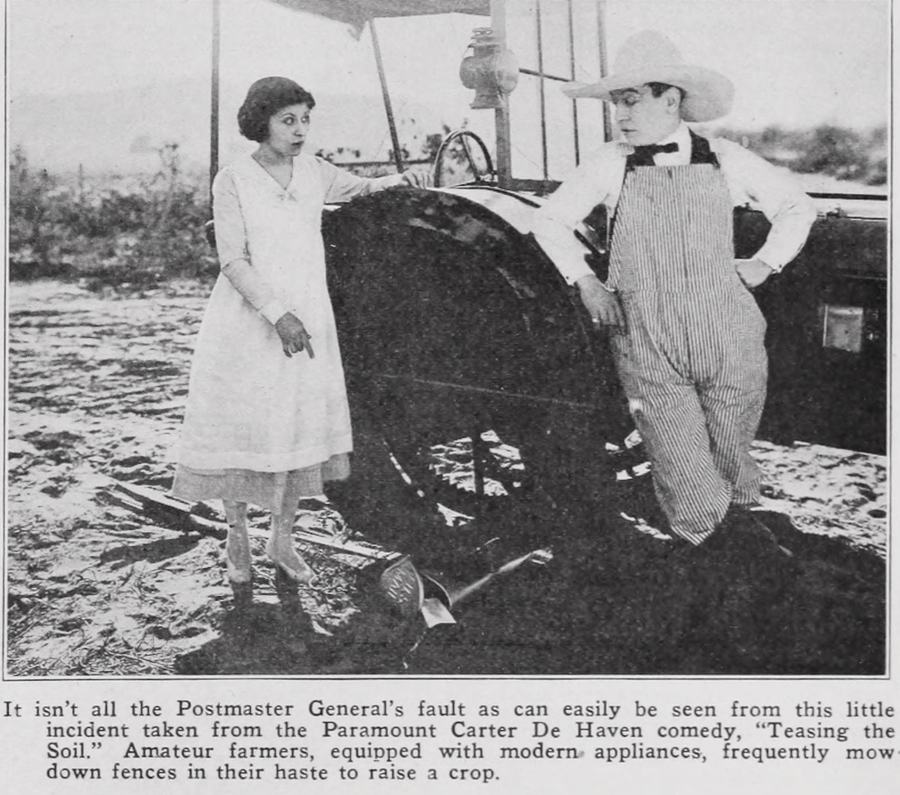
There is a moment, about ten minutes in, when Carter DeHaven’s would-be yeoman stands ankle-deep in what the intertitle coyly calls “the udder unknown,” a squelching close-up of city-slicker oxford shoes turning into sponges. That single shot is the Rosetta Stone of Teasing the Soil: a silent gag that whispers the entire economic thesis of the picture—every step toward self-sufficiency merely squeezes new expenses out of the earth.
Released in the exhausted summer of 1920, when headlines screamed post-war inflation louder than any nickelodeon piano, the film arrives like a vaudeville pamphlet stapled to a ledger book. Flora Parker DeHaven, batting lashes that could sell war bonds, tallies the family accounts: butter at ninety cents the pound, milk at twenty the quart, eggs a dollar-ten per dozen—numbers that throb like abscesses. The Brewsters do not merely balance a budget; they drag a household ledger across the screen like a corpse. Their solution—swap the city house for a “farm with cow and chickens”—reads today like a Craigslist fever dream, but in 1920 it was the original #VanLife fantasy, only with more manure.
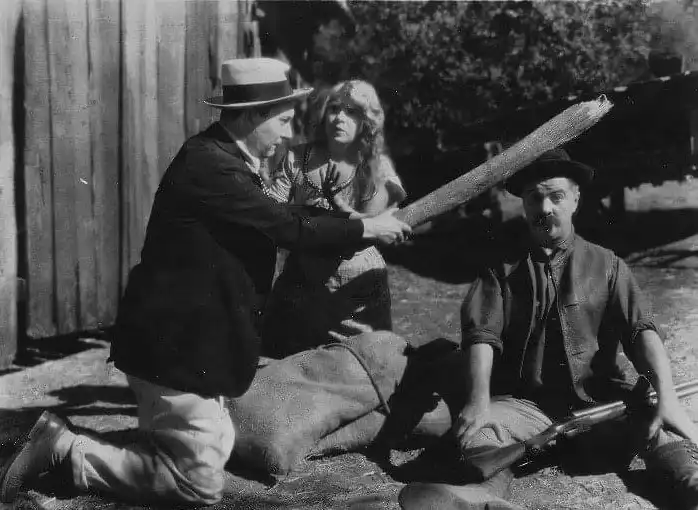
Directors Robert F. McGowan and Keene Thompson, both moonlighting from Hal Roach’s comedy boiler-room, refuse to photograph the countryside as pastoral balm. Instead they frame it as a vertical labyrinth: fence rails that slice the frame into panes of stress, barn doors yawning like court judges, a sun that never sets without editorializing. The first morning on the farm is cut like a horror sequence—low-angle shots of the cow’s head eclipsing the sky, udder swinging like a wrecking ball. Cow as capitalist, cow as creditor, cow as cosmic punch-line.
Silent comedy lives or dies on the taxonomy of objects, and here the taxonomy is merciless. The milk pail is not a prop but a contract: dent it, and you breach the covenant of breakfast. The DeHavens treat it like a hand-grenade. Carter’s attempt at a 5 a.m. milking session becomes a fugue of slipping boots, tail-swats to the face, and a geyser of milk that arcs in perfect parabolic sarcasm across the lens. Intertitles, normally the killjoy of visual wit, here serve as rim-shots: “He squeezes the cow—the cow squeezes back.” The pun lands harder than any sound effect could.
Flora Parker DeHaven, often relegated to wide-eyed spouse in contemporary reviews, is the film’s stealth economist. Watch her calculate the trajectory of an escaping chicken: eyes flick left, right, measuring opportunity cost with every wing-flap. When she finally hurls a tin washtub over a hen, the gesture carries the triumph of a trader cornering the market. Gloria Swanson got sunglasses; Flora got poultry—history should adjust the glamour metric accordingly.
Mid-picture arrives the obligatory montage-of-failure, but McGowan refuses the sentimental accordion of most silents. Instead he cross-cuts three economic vectors: the dwindling cash jar (a glass cylinder fogging with fingerprints), the multiplying feed bills (taped like wanted posters to the door), and the ever-expanding compost heap, a ziggurat of dashed dreams. Each cut lands like a debit in a ledger you cannot close. The soundtrack—assuming you’re lucky enough to catch a live accompanist—should ideally be played in the minor key of a Tale of Two Cities dirge, because this is Paris and London in one barn, aristocrats and peasants sharing the same splintered stall.
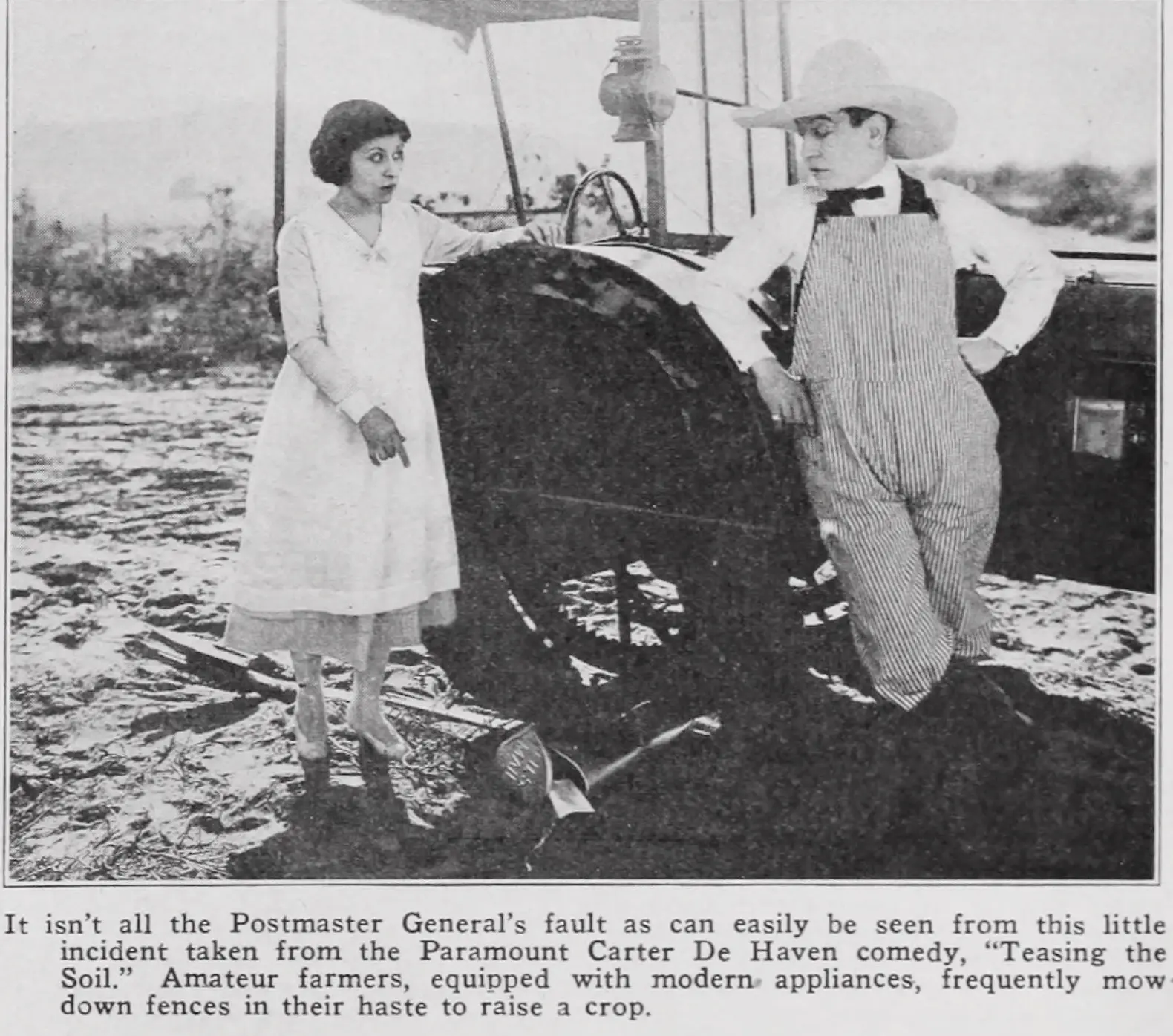
By reel three, the Brewsters’ farm produces nothing but slapstick, yet the expenses metastasize. A single lost goat munches through a neighbor’s cabbage patch; restitution is demanded in the form of—what else—cash. The circular trap is immaculate: flee the market, and the market trots after you on cloven hoof. The film’s genius lies in never letting us forget that the true antagonist is not nature, nor even ignorance, but the price index ghosting every frame.
Place Teasing the Soil beside Sunlight’s Last Raid and you see two diverging caricatures of American panic: the latter externalizes ruin onto outlaw posses, whereas Soil internalizes it into the very digestive tract of the household. Both films climax with a conflagration—one of barn, one of bank—but only Soil bothers to show the embers still smoldering in the pocketbook. Meanwhile In Wrong (1919) toys with urban misemployment, yet its jokes float free of supply curves; Soil grafts pratfall to price curve with surgical sadism.
Even across the Atlantic, silent cinema was diagnosing the same fever. Compare the Danish Det døde Skib, where maritime decay stands in for economic wreckage, or the Russian Der Leibeigene, turning feudal memory into post-revolution anxiety. Soil stands proudly in that transatlantic gallery, a barn-raising Beckett, chickens substituted for existential tramps.
Modern viewers, jaded by reality-TV farm swaps, may assume they know the punch lines. They don’t. The silent era’s absence of safety nets—no crop insurance, no agricultural extension hotline—renders every mishap a potential deathblow. When Carter’s foot plunges through a rotting loft board, the stakes are real; tetanus was not a metaphor in 1920. That unspoken menace, humming beneath the laughter, is what gives the film its lingering metallic tang.
Restoration houses occasionally tint the final scene a sickly amber, suggesting dusk both literal and fiscal. The Brewsters, bedraggled and straw-laced, trudge back toward the city they fled, their cow trotting behind like a bailiff. No intertitle pronounces moral; none is needed. The camera simply cranes up to reveal a freshly tilled field, the furrows forming a perfect bar graph of effort expended for zero yield. The image is silent, but it shouts across a century: the cost of living is non-negotiable, and the soil, like the market, always collects its interest.
Watch it for the economics. Rewatch it for the cow. Somewhere between the two, you’ll find the first great American film about the price of breakfast—and realize we’re still paying in installments today.
IMDb —
1914
Community
Log in to comment.