DbcultAccessing Vault...
6.4/10
Senior Film Conservator
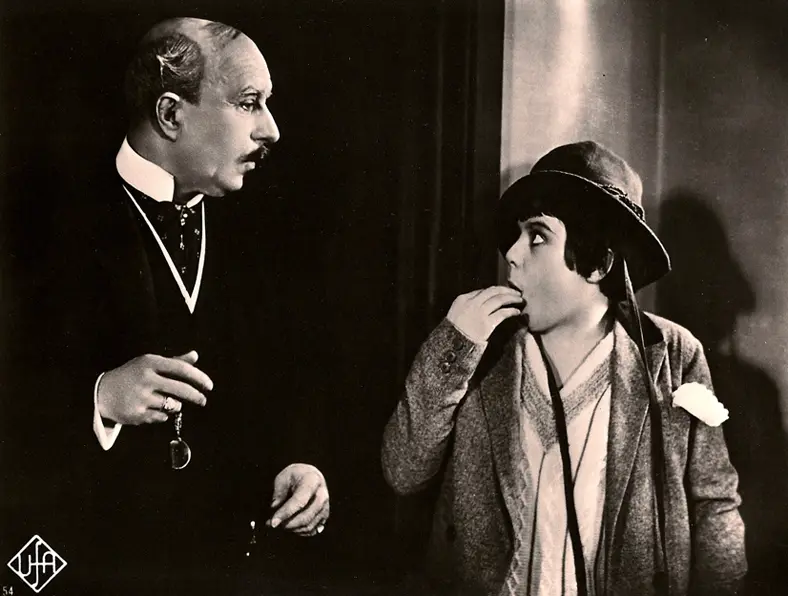
A definitive 6.4/10 rating for a film that redefined the boundaries of cult cinema. Die selige Exzellenz remains a cornerstone of transgressive art.
Is 'Die selige Exzellenz' worth watching today? Short answer: yes, but with significant caveats that demand a certain appreciation for cinematic history. This film is an essential, albeit imperfect, window into early 20th-century German filmmaking, offering a unique blend of social commentary and romantic comedy.
It is unequivocally for the dedicated silent film enthusiast, the film historian, and anyone with a keen interest in the cultural nuances of the Weimar Republic. However, those accustomed to modern pacing, dialogue-driven narratives, or pristine visual quality will likely find its charms elusive.
The silent era, often dismissed as primitive by casual viewers, frequently harbored sophisticated narratives and deeply expressive performances. 'Die selige Exzellenz' stands as a testament to this, a film that, despite its age and the inevitable wear on its surviving prints, still manages to communicate with surprising clarity.
Its strength lies in its ability to paint a vivid picture of a particular social stratum, using exaggerated gestures and meticulously crafted mise-en-scène to convey complex emotions and societal critiques.
This film works because of its exceptional ensemble cast, particularly the nuanced comedic timing of Albert Paulig as Baron von Hohenfels and the vibrant energy brought by Nathalie Lissenko. Their performances elevate what could have been a simplistic farce into a genuinely engaging character study.
This film fails because its pacing can feel sluggish by contemporary standards, particularly in its expositional first act, which demands patience. Some of its more overt comedic tropes also haven't aged gracefully, occasionally feeling more quaint than genuinely humorous.
You should watch it if you are prepared to immerse yourself in a piece of cinematic history, appreciate visual storytelling over verbal exposition, and are fascinated by the cultural landscape of post-WWI Europe. It’s a time capsule. Flawed, but essential.
Wilhelm Thiele, working from a script by Adolf E. Licho, L.W. Stein, and Rudolf Presber, demonstrates a keen understanding of silent film's unique language. The direction is often precise, using blocking and camera placement to underscore social hierarchies and character dynamics.
Consider the scene where the 'niece' first arrives at the Baron's opulent estate. Thiele masterfully frames her small, almost rebellious figure against the vast, imposing architecture, instantly establishing the central conflict between free spirit and rigid tradition. This visual contrast is a recurring motif, subtly reinforcing the film's satirical edge.
The writing, for its part, is surprisingly sharp. While the overarching plot device of mistaken identity or an unconventional arrival isn't groundbreaking, the dialogue cards (where they survive) are often witty, and the character motivations, though broad, are consistent. The film’s commentary on class distinctions and the suffocating nature of aristocratic expectations feels genuinely perceptive, even today.
It’s not as overtly political as some of its Weimar contemporaries, but its gentle mockery of the upper crust resonates. The film doesn't preach; it observes with a knowing smile. This subtlety prevents it from becoming a mere caricature, instead allowing moments of genuine pathos to shine through, particularly as the Baron begins to question his own values.
The true heart of 'Die selige Exzellenz' lies within its cast. Albert Paulig, as Baron von Hohenfels, delivers a masterclass in physical comedy and understated emotional depth. His transformation from a stiff, bewildered patriarch to a man softened by affection is genuinely compelling.
Paulig’s ability to convey a world of internal conflict with a mere twitch of an eyebrow or a slight slump of the shoulders is remarkable. His performance is the anchor, grounding the more farcical elements in a believable human experience.
Nathalie Lissenko, as the 'niece,' is a revelation. She radiates an infectious vivacity that cuts through the film's formal atmosphere. Her gestures are expansive, her expressions radiant, embodying a spirit of freedom that challenges the Baron's carefully constructed world. Her comedic timing is impeccable, particularly in scenes where she inadvertently disrupts formal dinners or social gatherings, such as the memorable teacup incident that sends crockery (and decorum) scattering.
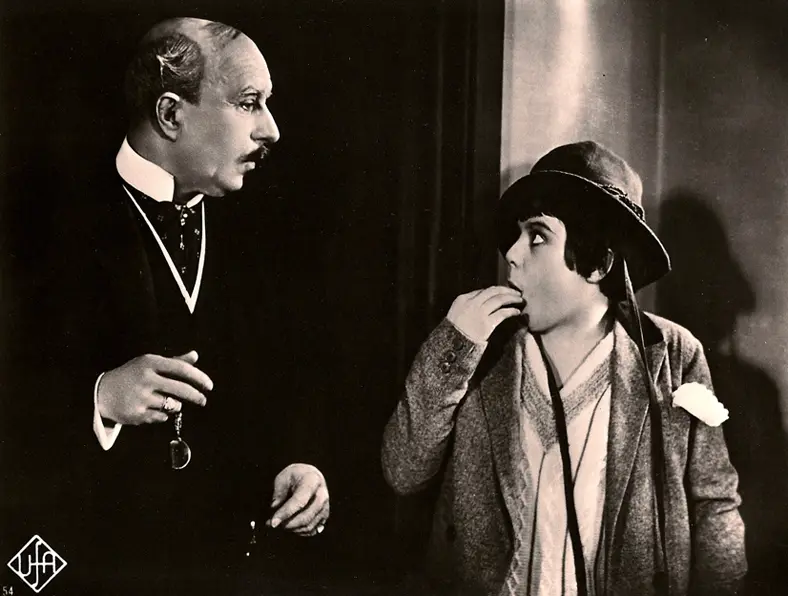
Willy Fritsch, though in a supporting role as the cunning suitor, brings his characteristic charm and effortless charisma. His performance is a delightful counterpoint to Paulig's stiffness, adding a layer of romantic intrigue that feels less predatory and more playful. His gaze, even in silent film, conveys a roguish appeal that explains his enduring popularity.
The supporting cast, featuring talents like Olga Tschechowa and Julanne Johnston, also contributes significantly to the film's texture. Their performances, while sometimes leaning into broader stereotypes, are consistently engaging, filling out the world of the Baron's household with distinct personalities. Tschechowa, in particular, has a few moments of captivating screen presence that hint at her later stardom, even in a relatively minor role.
The cinematography, though not groundbreaking for its era, is consistently effective. The camera work, largely static, knows when to move to heighten drama or comedy. Close-ups are used judiciously to emphasize key emotional beats, drawing the audience into the characters' internal worlds.
The lighting, while simple, effectively creates mood, from the bright, airy scenes of the countryside to the more formal, slightly shadowed interiors of the Baron's mansion. There's a particular shot of the Baron looking out a window at a blossoming garden, his face half-lit, that perfectly captures his internal struggle between his rigid past and a yearning for something more vibrant.
The production design is equally impressive, meticulously recreating the opulent interiors of a wealthy German estate. The costumes are exquisite, reflecting the fashion and social standing of each character. These visual details are crucial in a silent film, as they must convey information and atmosphere without dialogue. The film excels in this regard, immersing the viewer in its specific historical and social setting.
The attention to detail, from the antique furniture to the elaborate dinner settings, underscores the film's commitment to portraying its world authentically. This level of craftsmanship is often overlooked in discussions of silent cinema, but it's vital to the overall experience. The visual language of 'Die selige Exzellenz' is its strength, communicating a richness that transcends the absence of sound.
The pacing of 'Die selige Exzellenz' is undeniably a product of its time. It’s deliberate, allowing scenes to unfold at a measured speed, giving viewers ample time to absorb the visual information and the actors' performances. For modern audiences, this might feel slow, especially in the initial setup.
However, once the central conflict is established and the comedic elements begin to build, the film finds a more engaging rhythm. The comedic sequences are well-timed, building to satisfying payoffs. There's a particular extended sequence involving a misunderstanding during a formal ball – reminiscent of similar scenes in Parisette – that showcases the film's ability to orchestrate complex physical comedy with grace.
The tone is consistently lighthearted, even when delving into themes of social pressure and personal identity. It’s a gentle satire, never mean-spirited, which makes it an amiable viewing experience. The film maintains a charming optimism, suggesting that even the most entrenched traditions can be softened by genuine human connection.
This tonal consistency is one of its greatest strengths. It never veers into melodrama or heavy-handed moralizing, instead opting for a subtle, almost whimsical approach to its narrative. This makes it a pleasant, if not always thrilling, watch.
Yes, 'Die selige Exzellenz' is absolutely worth watching today, particularly for those with an interest in silent cinema or the cultural history of the Weimar Republic. It offers a rare glimpse into a specific moment in European filmmaking, showcasing the talents of actors and directors who shaped the nascent art form.
While its pacing demands patience and some of its humor is dated, its strong performances, engaging visual storytelling, and charming social commentary make it a valuable historical artifact and an enjoyable experience for the right audience. It's not a film to casually put on; it's a film to study and appreciate.
"Die selige Exzellenz" is not a film that will convert silent cinema skeptics, nor does it aim to. What it offers is a delightful, if somewhat sedate, journey back to a specific moment in film history. Its strengths lie in its charismatic performances, particularly Paulig's nuanced portrayal of the Baron and Lissenko's infectious energy, which together breathe life into a familiar comedic premise.
The film's satirical gaze upon the rigid conventions of aristocracy, while gentle, is effective, providing more than just superficial laughs. It serves as a valuable document of Weimar-era sensibilities, both comedic and social. While it demands patience due to its period-specific pacing and the inherent limitations of silent film preservation, the rewards for the engaged viewer are considerable.
Ultimately, 'Die selige Exzellenz' is a film that charms more than it excites. It’s an elegant, well-crafted piece of cinema that, for the right audience, offers a compelling blend of historical insight and understated entertainment. Consider it a quiet recommendation, a film that whispers its virtues rather than shouts them, much like the subtle societal critiques it so artfully portrays.
IMDb 6.5
1929
Community
Log in to comment.