DbcultAccessing Vault...
Cult Review
Senior Film Conservator
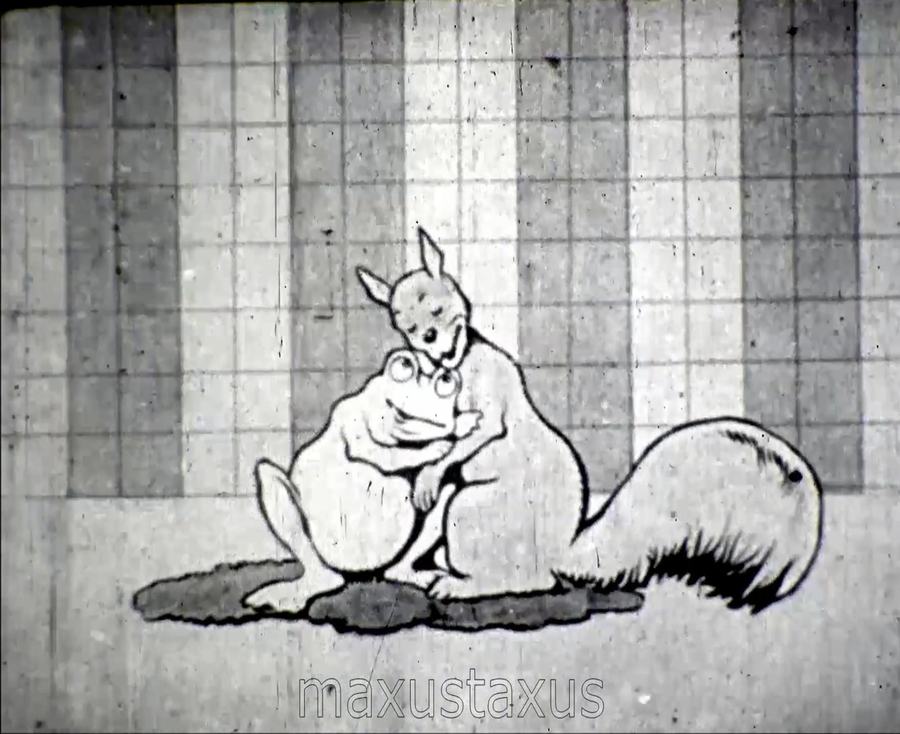

Runtime: 12 min | Country: France | Year: 2024
Benjamin Rabier’s Coeur de grenouille arrives like a slap from a velvet glove: a twelve-minute animated provocation that distills the entire toxic history of courtly love into one claustrophobic menagerie. The film’s governing paradox is that we are never allowed to forget we are watching drawings—ink lines quiver, colors bleed, the frame itself jitters as though the celluloid were alive—yet the emotional payload lands with sledgehammer immediacy. Reinette’s bowl is not merely a prop; it is a panopticon, a snow-globe of erotic doom, an aquarium where desire is magnified and oxygen slowly thins.
Rabier, best known for century-old editorial cartoons, here weaponizes nostalgia. The palette evokes hand-tinted postcards: bruise-violets, absinthe-greens, the arterial red of a squirrel’s underbelly fur. But nostalgia curdles fast. The opening shot—an extreme close-up of Reinette’s throat inflating like a pink balloon—feels almost pornographic, a ribbit turned into a gasp. We understand, instinctively, that this is a film about consumption: the way lovers consume each other, the way cinema consumes its subjects, the way audiences gulp down tragedy like comfort food.
Arthur the rat is introduced mid-chiaroscuro, tail slashing across moonlit cobblestones. His plan is Sisyphean: push the glass orb uphill toward the garden gate, shatter it against the iron rail, liberate the beloved. Gaston, by contrast, is a flâneur of the canopy. He trades in gossip and trinkets, bartering acorns for information, convincing the magpie to swoop down and lift the bowl skyward. Both strategies are riddled with blind spots: Arthur underestimates the curvature of the path, Gaston forgets that magpies are kleptomaniacs loyal only to shimmer. Their competing architectures of rescue become, in effect, two opposing philosophies of love—one grounded in muscular martyrdom, the other in aerial seduction.
The showdown is staged like a miniature Fall of Babylon: a tilted courtyard, shadows elongating, a soundtrack stripped to heartbeats and claw-scrapes. When Gaston’s acorn barrage cracks the bowl’s lip, a single droplet of water escapes—an image so fragile it feels like watching time leak out of an hourglass. The rodent and the squirrel collide in a tangle of claws and incisors; the camera refuses to look away, holding on a shot of their tails knotting, then going limp. Death arrives not as grand opera but as a sigh, a sudden stillness that makes the ensuing silence feel radioactive.
Many viewers will leave the theater murmuring about the goose, that absurd deus ex digestio waddling in from the margins. Yet the bird’s appearance is foreshadowed with Hitchcockian rigor: feathers caught on brambles in frame two, honking off-screen during every failed escape attempt, a discarded eggshell half-buried in the compost. By the time the goose gulps the bowl—glass, frog, and remaining water—the act feels less like random cruelty and more like the inevitable triumph of digestive capitalism. We are reminded that every fairy tale is, at bottom, a food chain.
Rabier’s punchline is cosmic: the translucent bulge sliding down the bird’s esophagus resembles a miniature planetarium. Stars (air bubbles) swirl around Reinette’s silhouetted despair, a cosmos trapped in a gullet. The end credits roll over that lump, unmoving, while the goose placidly paddles away. No moral, no rescue, no reincarnation. Just the slow acid bath of time.
Place Coeur de grenouille beside Nobody’s Wife and you begin to see how confinement mutates across genres. The latter traps its heroine in matrimonial amber; Rabier traps his in literal glass. Both films understand that the most sadistic prison is the one that allows you to see the outside world, to brush against it, to be perpetually reminded of its unattainability. Similarly, the rat-squirrel death spiral rhymes with the political bloodletting in Ministerpresidenten: idealists devouring each other while the true oppressor—bureaucracy, or in this case waterfowl—looms unchecked.
Yet Rabier’s cynicism makes El precio de la gloria look like a Capra spin-off. Where the Mexican melodrama implies that sacrifice can purchase transcendence, Rabier insists that sacrifice merely purchases a larger serving dish. The closest spiritual cousin might be the Expressionist hell of The Painted World, another short that used hand-scratched celluloid to suggest the universe itself is indigestible.
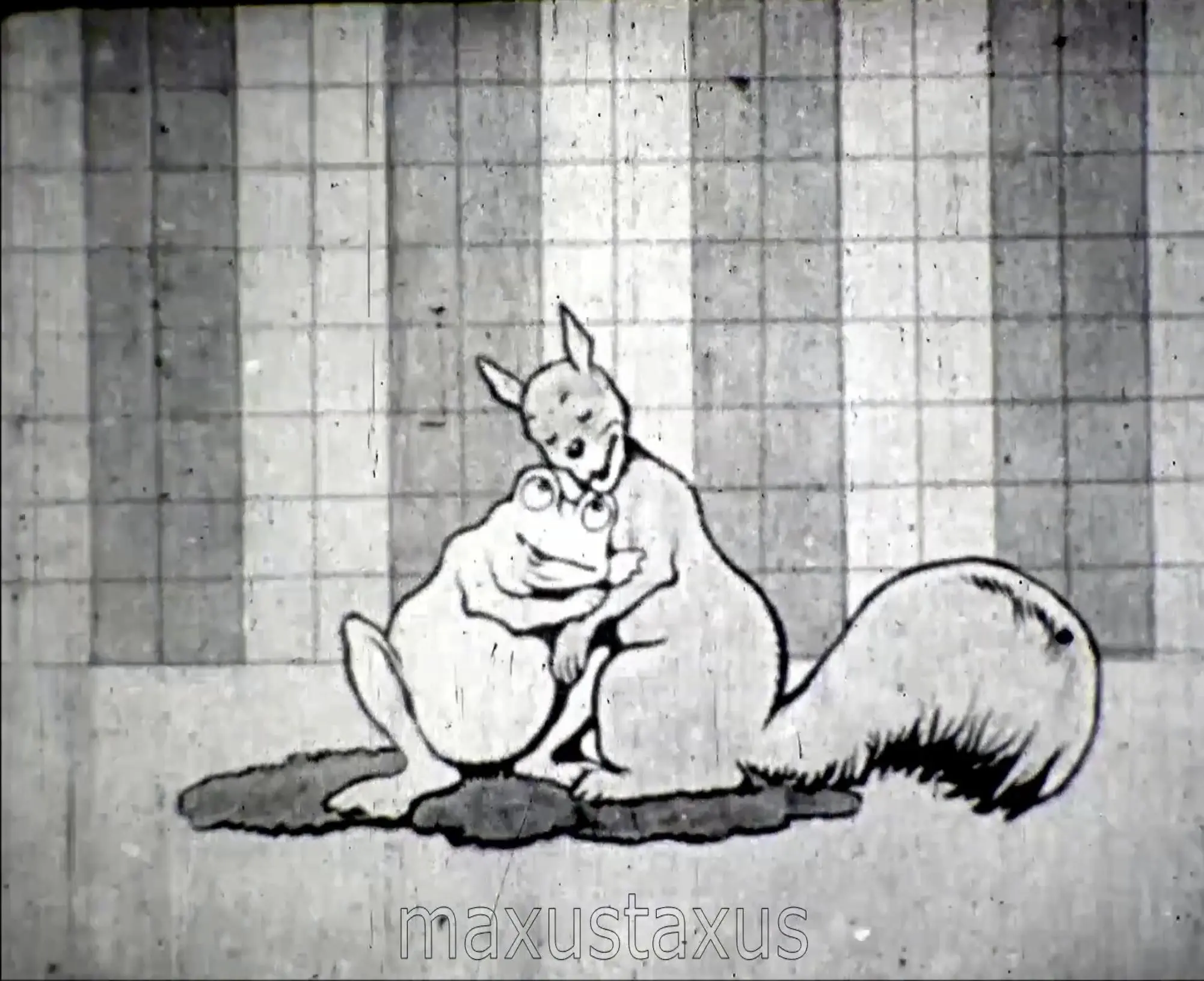
Turn off the picture and the film still crawls under your skin. The Foley artists microwaved jelly to simulate the wet squelch of amphibian skin against glass; they rubbed a balloon with wet walnuts to approximate wing-flaps. Every auditory cue is amplified, humid, uncomfortably intimate. When Reinette’s pulse quickens, the accompanying thump is not her heart but a watermelon being thudded with a rubber mallet—an absurdist choice that somehow feels more truthful than literalism. The goose’s honk, by contrast, is pitch-shifted downward until it resembles a tuba played through a tomb door. You hear it in your collarbone.
Some early festival reviews celebrated Reinette as a feminist icon trapped in a patriarchal petri dish. That reading, while tempting, flattens the film’s more venomous implications. Reinette is not merely passive; she weaponizes passivity. Her limpid stare, her delicately trembling dewlap, her calculated pauses—they seduce both rodent and squirrel into ever more reckless feats. She is Sadeian in her stillness, a black hole in a green skin suit. The bowl’s curvature magnifies her eyes until they become convex mirrors, reflecting back the boys’ fantasies in grotesque distortion. In that sense, the film aligns with the lethal seductress of Dockan eller Glödande kärlek, another short where erotic fascination ends in anatomical rearrangement.
Yet Rabier refuses to grant her agency in the end. The goose’s gullet is the great equalizer, swallowing both femme fatale and macho posturers alike. Gender, species, intention—all dissolve in hydrochloric acid. The film’s final jest is that the only true subject is the digestive tract.
At a lean twelve minutes, the picture is engineered for the TikTok attention span yet stuffed with enough visual Easter eggs to reward frame-by-frame scrutiny. Rabier financed it via a consortium of indie collectives and French regional subsidies, proving that austerity can be a muse. The budget constraints manifest as creative flourishes: instead of crowd scenes, we get echoing off-screen honks; instead of ornate backgrounds, a single over-exposed sky that looks like nicotine-stained parchment. The result feels like a lost Georges Méliès trick film cross-bred with a TikTok thirst trap, a union both obscene and irresistible.
Notice how the yellows only appear when violence is imminent: Gaston’s tail flickers ochre before he hurls an acorn; Arthur’s incisors glow amber under candlelight as he plots sabotage. Rabier’s调色板 is a mood ring dipped in blood. The sea-blue of the magpie’s wing hints at transcendence, but it’s a con-job—every glimpse of sky is followed by a cut to the bowl’s imprisoning curve. Color becomes a metronome of hope and despair, ticking toward the inevitable orange of the goose’s beak.
Days after watching, I caught myself flinching at every honk on the riverfront. I saw reflections in wine glasses as potential prisons. I considered, briefly, that love itself might be a form of indigestion. Few films rewire perception at such micro dosage; Shot in the Dumbwaiter does it via claustrophobic suspense, Coeur de grenouille via the erotics of entrapment. Both are reminders that brevity can be a scalpel.
This is not comfort cinema. It offers no catharsis, no hashtag-able uplift. What it offers is a bruise shaped like your own reflection. You will laugh—because the goose waddle is inherently comedic—then hate yourself for laughing. You will replay the rat’s final squeak in your head at 3 a.m. and wonder if your own romantic gestures are just as deluded. And yet, paradoxically, you will press share, because cruelty this elegantly compressed demands witnesses. Rabier has crafted a film that eats its viewers whole, and we, like Reinette, bob helplessly inside the glass of our screens, hoping the next swipe will crack the curvature.
Seek it out at whatever micro-cinema or Vimeo paywall hosts it. Invite a first date, then never speak again. Or watch alone on a cracked phone while rain taps your window like impatient claws. Either way, the bowl will roll, the bowl will crack, and something with wings will inherit the earth.
“A love triangle with three sharp corners, all of them pointing at your throat.” —Parade of Cinephiles
Re-release Trailer Drop? Rumor has it Rabier is expanding the universe into a triptych: Liver of Newt, Spleen of Toad, each focusing on a digestive organ and its romantic corollary. If true, we are witnessing the birth of the Gastrointestinal Trilogy, a franchise destined to ruin appetites for years.
El Verdugo ended with a drum-roll to the neck; Coeur de grenouille ends with a gulp. The hangman’s knot or the avian esophagus—choose your terminus, but choose wisely. Love, like lunch, is only ever a brief seasoning before the swallow.

IMDb 6.9
1932
Community
Log in to comment.